


























Views
Downloads
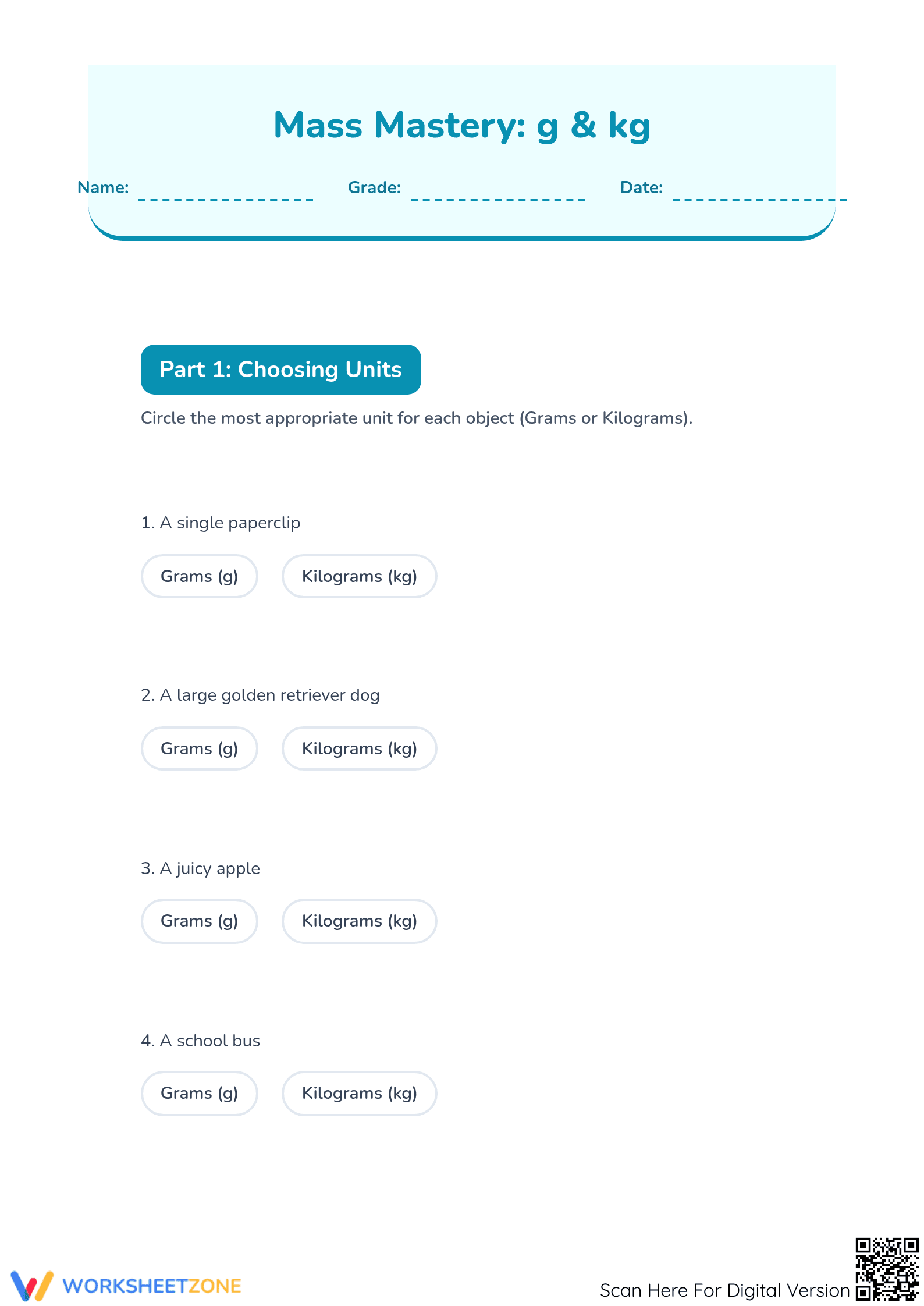
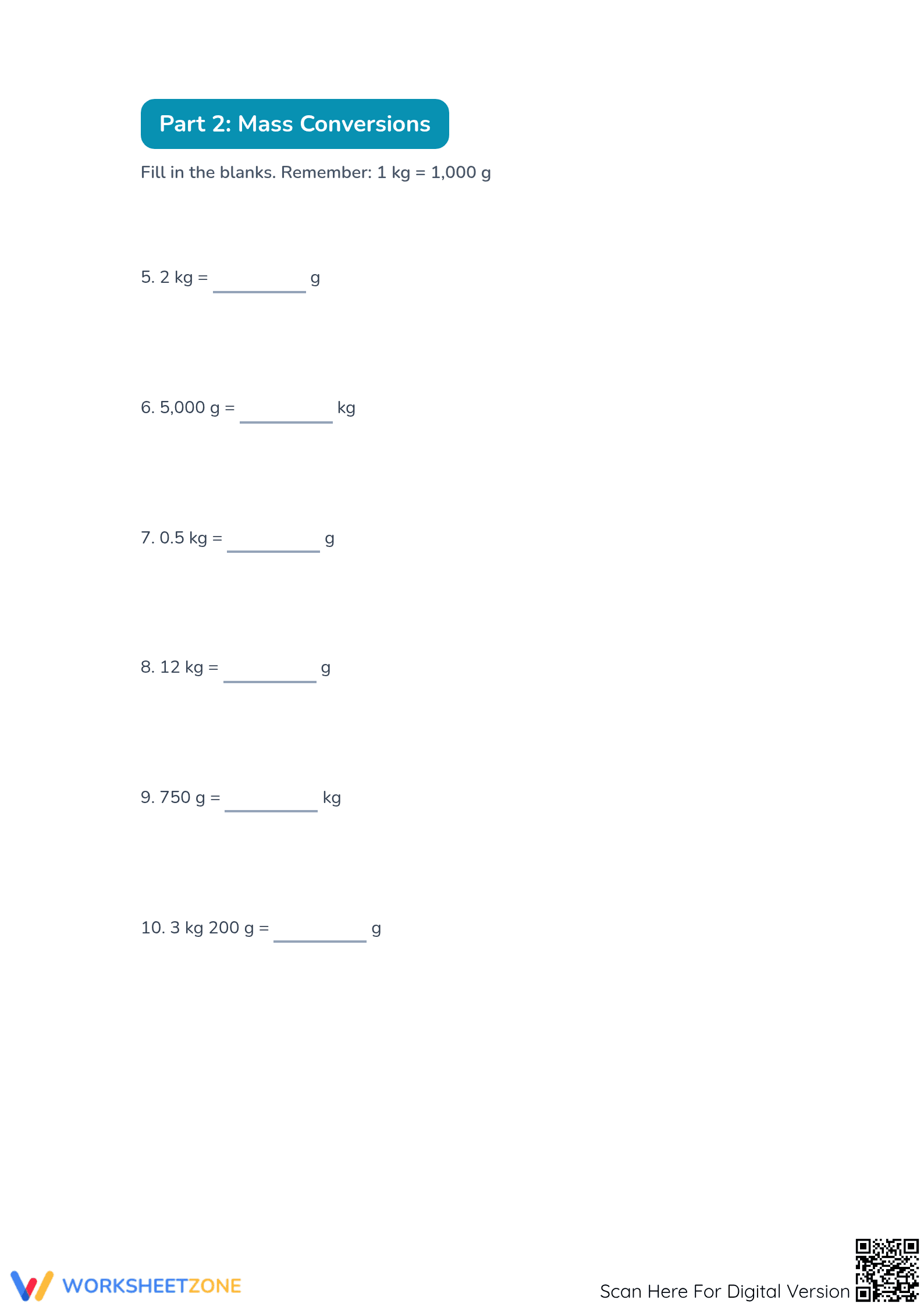
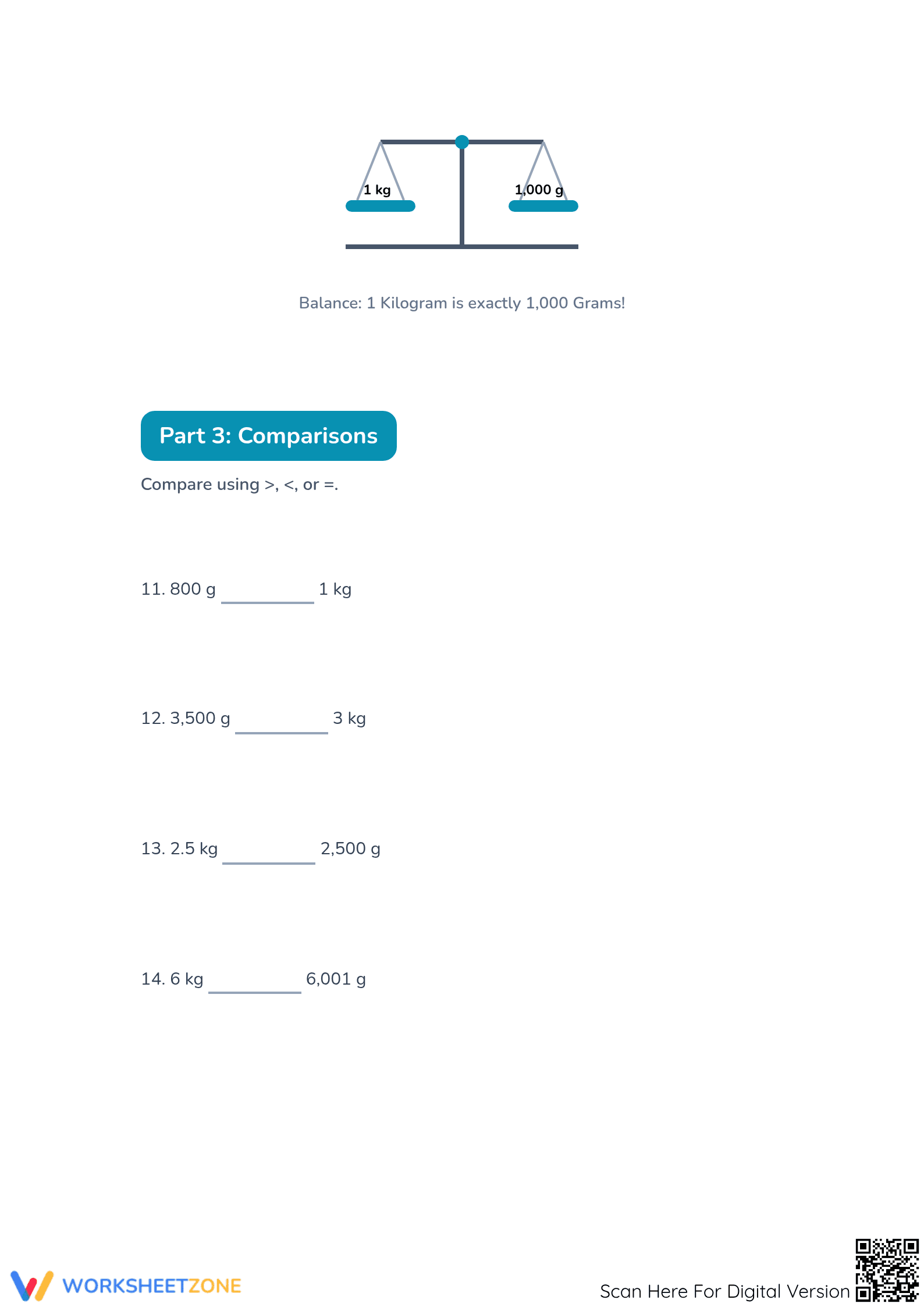
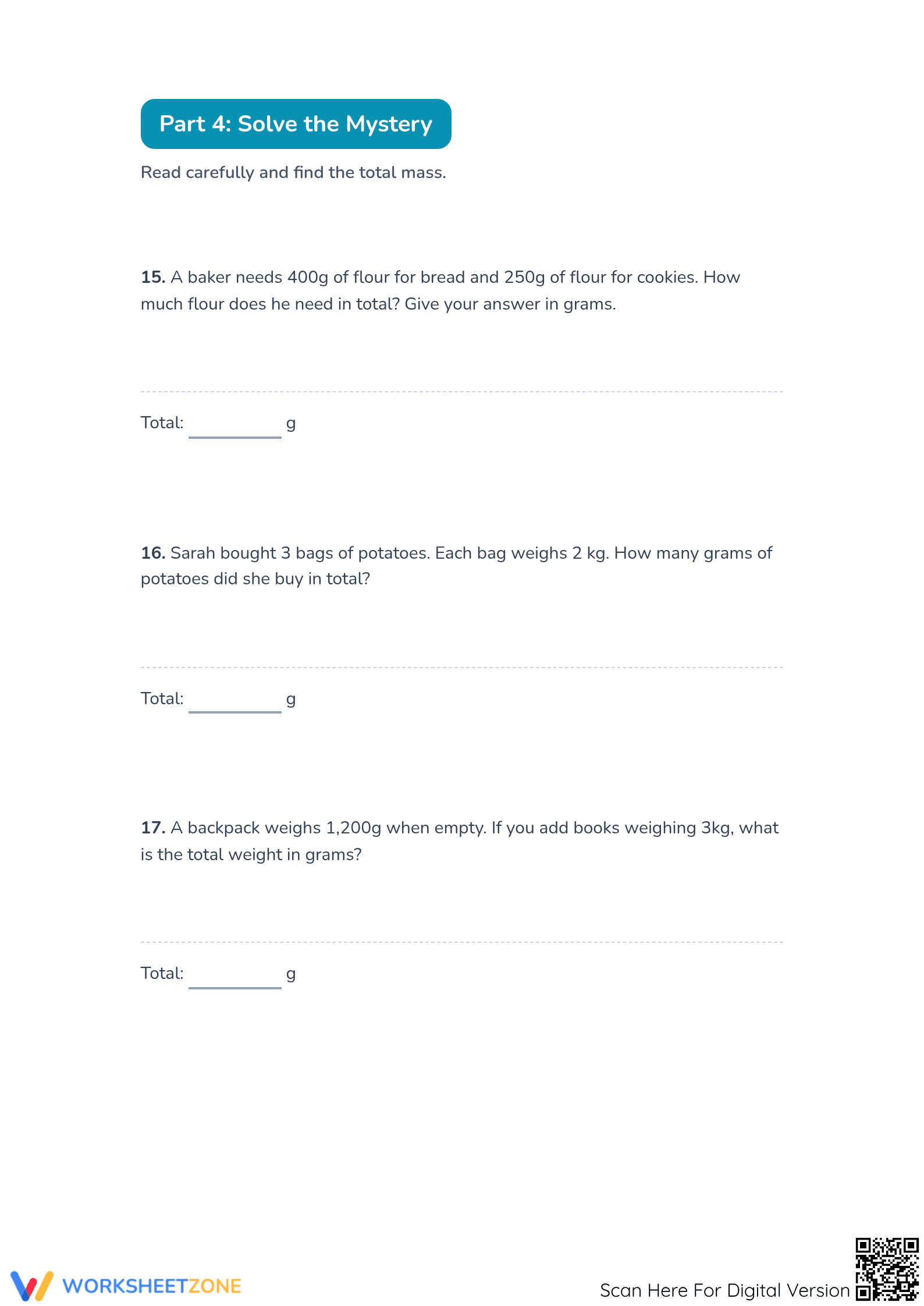

Printable Capacity Worksheet | Grade 4 Math
Paste this activity's link or code into your existing LMS (Google Classroom, Canvas, Teams, Schoology, Moodle, etc.).
Students can open and work on the activity right away, with no student login required.
You'll still be able to track student progress and results from your teacher account.
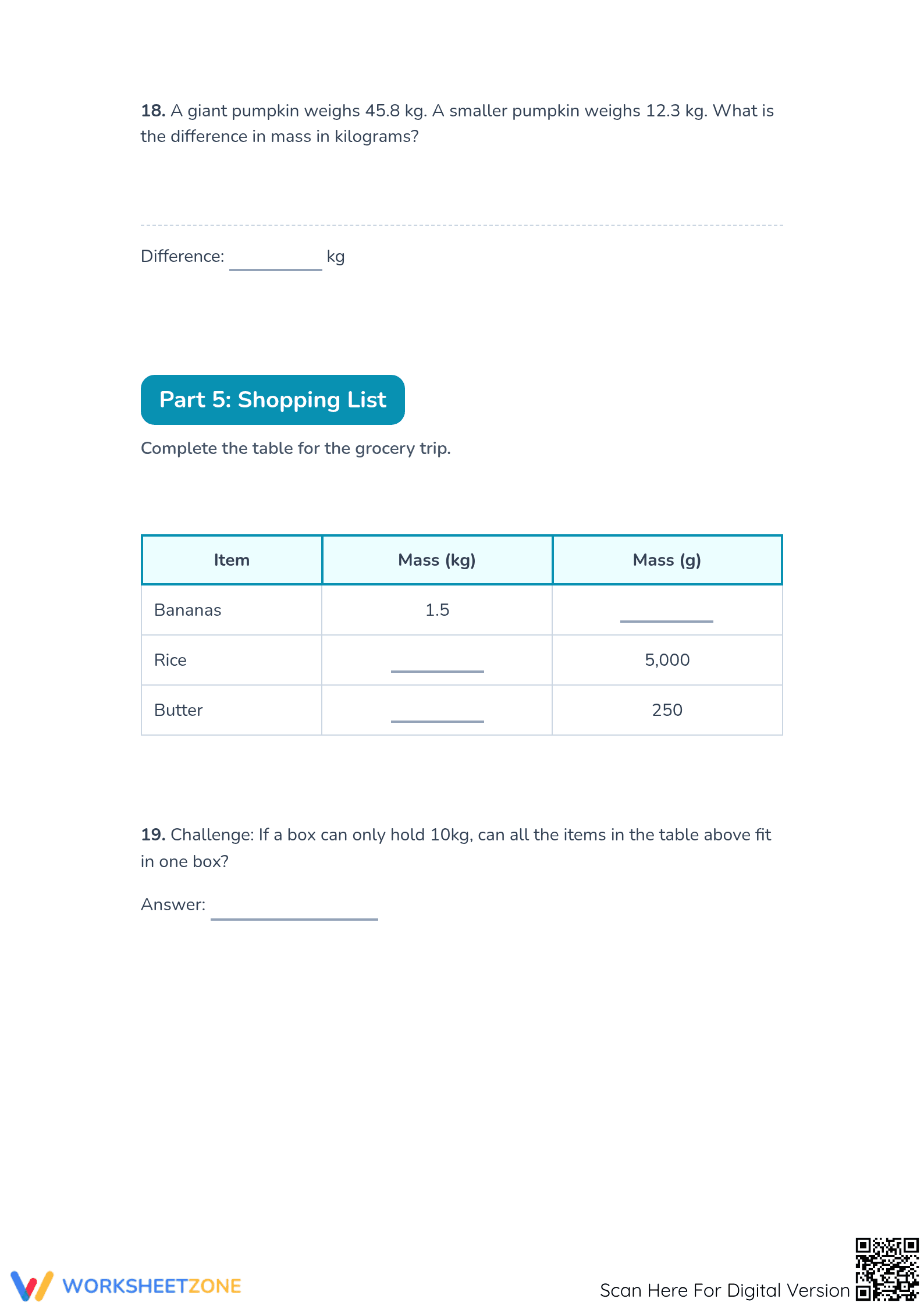
This comprehensive worksheet helps fourth-grade students master the essential math skill of converting liquid volumes. Through a series of structured tasks, learners will practice converting between customary units like gallons, quarts, pints, and cups, as well as metric units like liters and milliliters, building a solid foundation for understanding measurement.
At a Glance
- Grade: 4 · Subject: Math
- Standard:
CCSS.MATH.CONTENT.4.MD.A.2— Solve word problems involving liquid volumes using the four operations.- Skill Focus: Converting Customary and Metric Units of Capacity
- Format: 4 pages · 46 problems · Answer key included · PDF
- Best For: Independent practice, homework, or unit review
- Time: 25–40 minutes
What's Inside
This four-page resource builds fluency in capacity measurement. It begins with conversion tables and progresses to comparing capacities. Students then convert metric units, interpret scales, and solve multi-step word problems requiring practical application. A complete answer key is provided for easy grading.
Skill Progression
The worksheet follows a clear gradual-release model:
- Guided Practice: Students start with basic conversion facts in a fill-in-the-blank format across 20 problems.
- Supported Practice: The next 12 problems ask students to compare two capacities, bridging memorization and application.
- Independent Practice: The final 14 problems involve converting metric units, reading scales, and solving word problems, demanding students to independently apply the correct conversion strategy.
This progression ensures students build confidence and competence.
Standards Alignment
This worksheet is directly aligned with the Common Core State Standard CCSS.MATH.CONTENT.4.MD.A.2, which requires students to "Use the four operations to solve word problems involving distances, intervals of time, liquid volumes, masses of objects, and money." The tasks specifically target the liquid volumes component of this standard, providing focused practice. It also supports the foundational knowledge from CCSS.MATH.CONTENT.4.MD.A.1 (knowing relative unit sizes). Both standard codes can be copied directly into lesson plans, IEP goals, or district curriculum mapping tools.
How to Use It
Use this resource after direct instruction for independent practice or as homework. For formative assessment, observe students as they transition from customary to metric units (Task 3 to 5), a common point of confusion. Most students can complete the worksheet in 25 to 40 minutes.
Who It's For
This resource is designed for fourth-grade students learning to convert units of liquid volume. The clear progression makes it accessible for most learners in a general education setting. For students needing extra support, provide a printed anchor chart showing the "Big G" (Gallon-Quart-Pint-Cup) visual model alongside the worksheet. It pairs well with a hands-on lesson using measuring cups and containers.
Providing students with repeated, structured practice on procedural skills like measurement conversion is critical for developing mathematical fluency. This worksheet, aligned with CCSS.MATH.CONTENT.4.MD.A.2, offers focused exercises on converting liquid volumes, a key component of fourth-grade mathematics. Research from Fisher & Frey (2014) emphasizes that such independent practice is most effective after students have received explicit instruction, allowing them to consolidate their understanding. The 46 problems included here provide the necessary repetition for students to internalize the relationships between gallons, quarts, pints, cups, liters, and milliliters. By working through these tasks, students move beyond simple memorization to applying their knowledge in varied contexts, including word problems, which directly supports the standard's emphasis on real-world application and problem-solving. This approach helps build a robust conceptual understanding of capacity.


