


























Views
Downloads




Grade 1 Consonant Blends — Printable No-Prep Worksheet
Paste this activity's link or code into your existing LMS (Google Classroom, Canvas, Teams, Schoology, Moodle, etc.).
Students can open and work on the activity right away, with no student login required.
You'll still be able to track student progress and results from your teacher account.
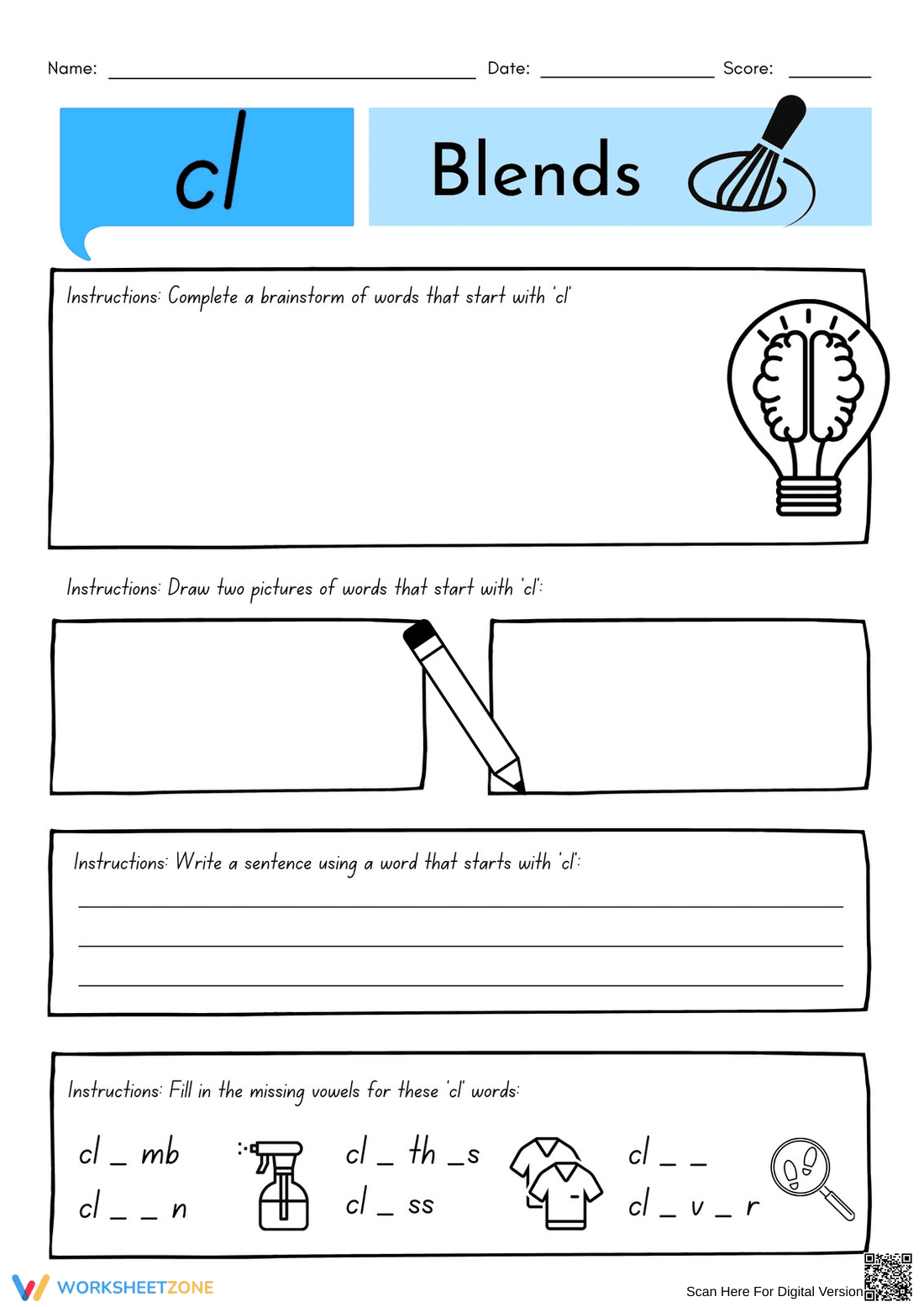
This Grade 1 phonics worksheet provides targeted practice with the 'cl' consonant blend, helping early readers decode and write words accurately. By engaging in brainstorming, drawing, and sentence writing, students build essential phonemic awareness and vocabulary skills required for fluent reading and effective written communication.
At a Glance
- Grade: 1 · Subject: ELA
- Standard:
CCSS.ELA-LITERACY.RF.1.3— Apply grade-level phonics to decode words- Skill Focus: Consonant blend 'cl'
- Format: 1 page · 10 problems · PDF
- Best For: Independent phonics practice
- Time: 15–20 minutes
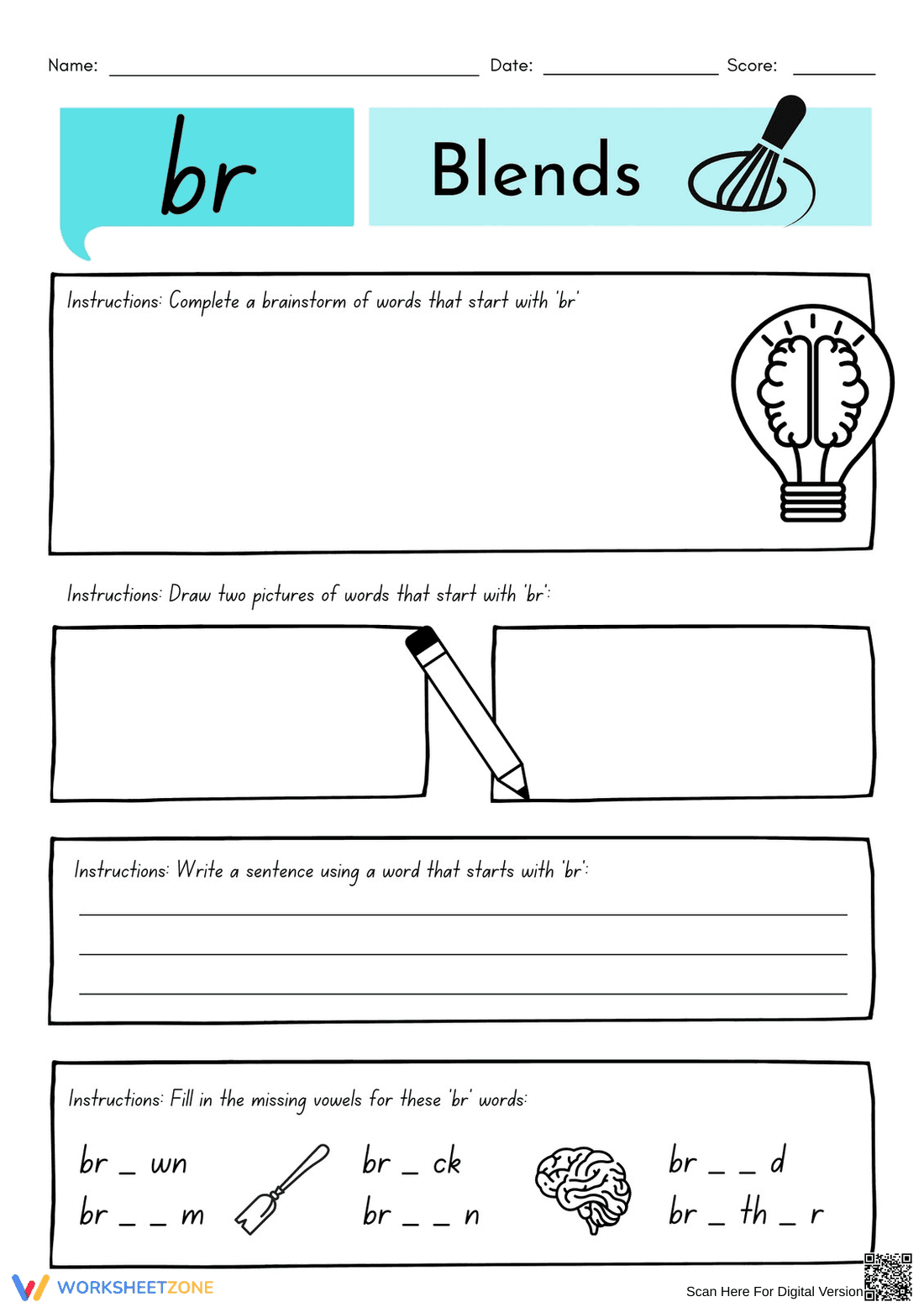
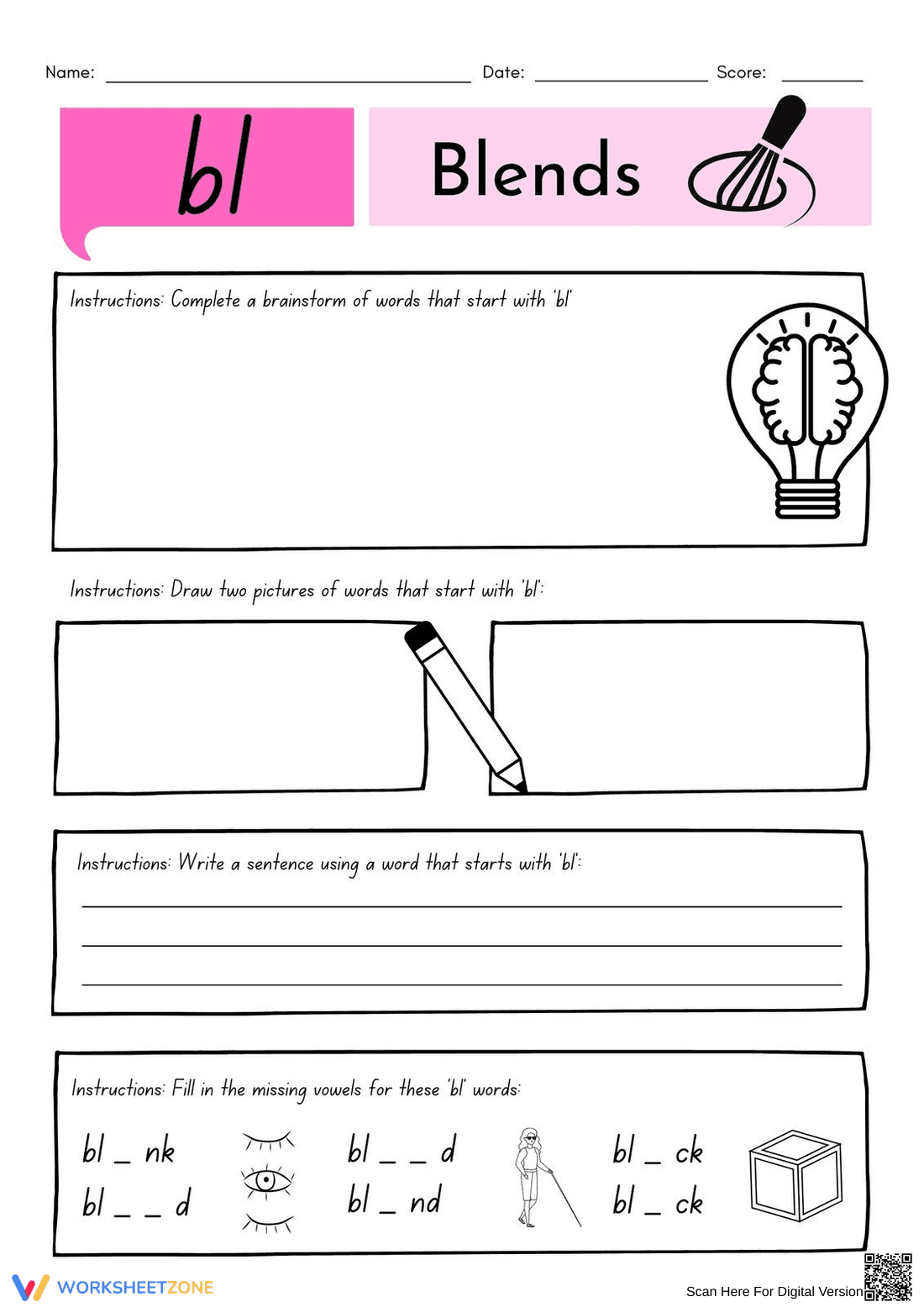
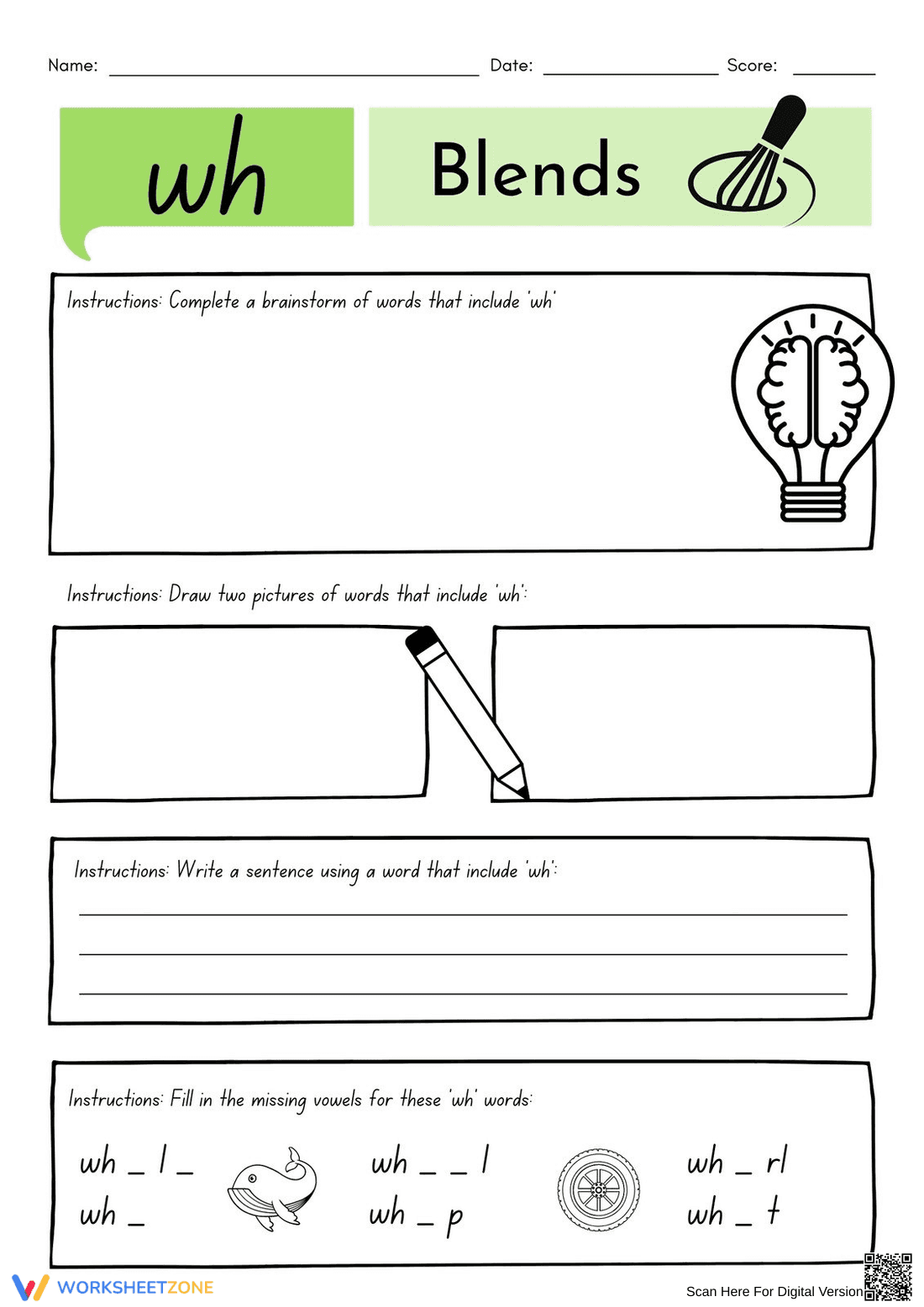
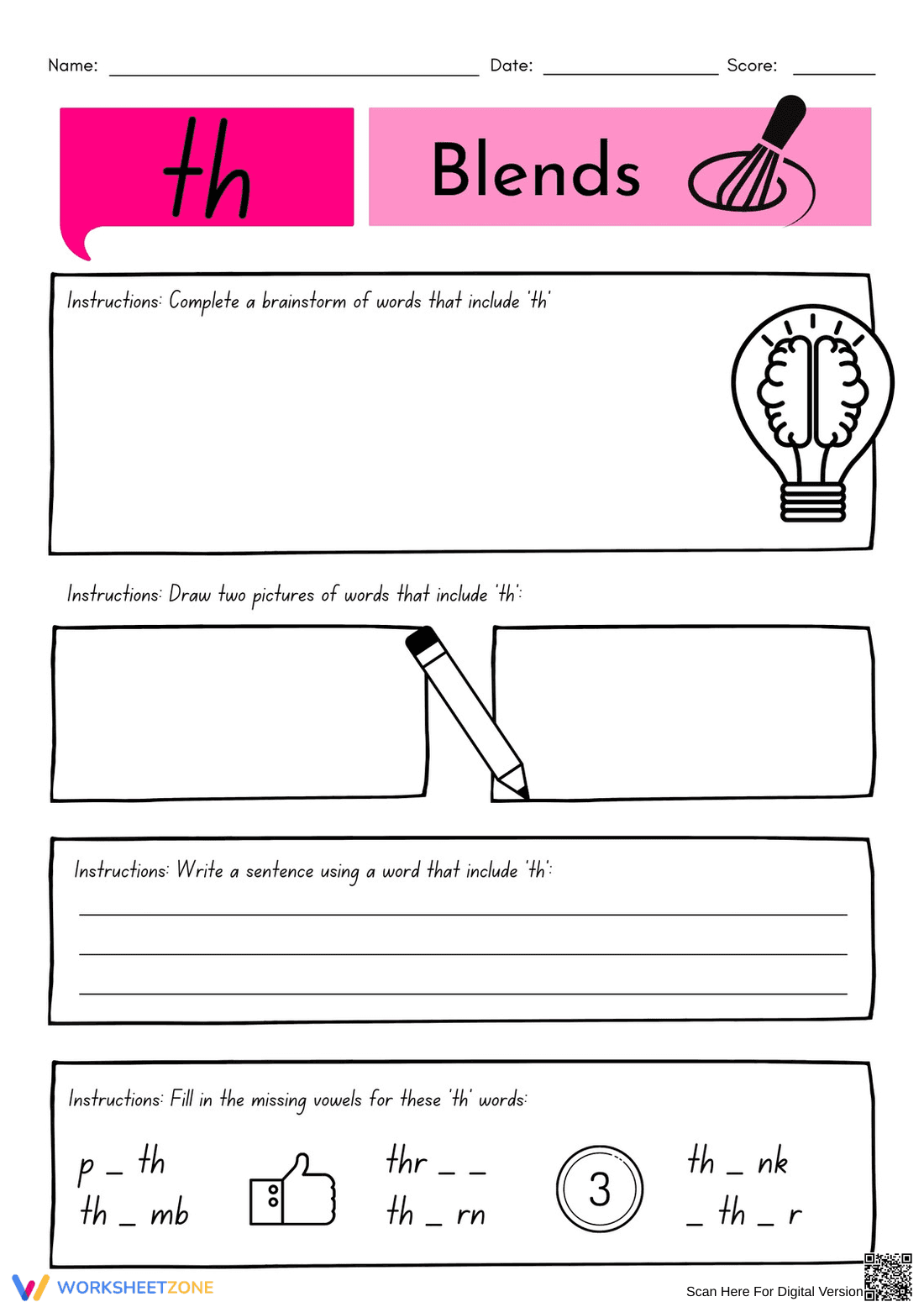
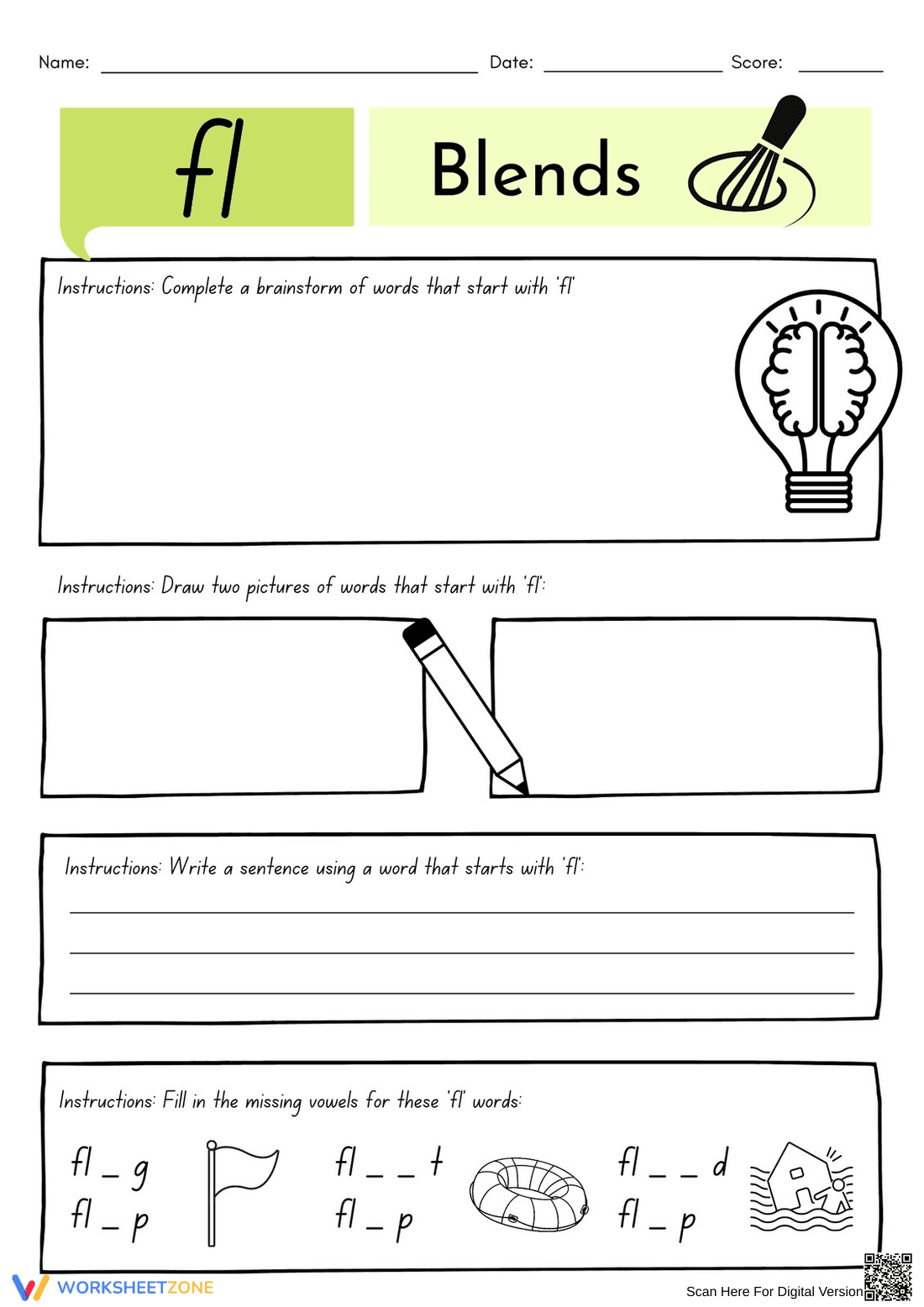
Inside this single-page resource, educators will find four distinct task types designed to reinforce the 'cl' blend. The worksheet begins with an open-ended brainstorming section, followed by a creative drawing prompt where students illustrate two 'cl' words. Next, a sentence-writing activity encourages students to apply their vocabulary in context. Finally, a fill-in-the-blank spelling challenge requires learners to supply missing vowels for six common 'cl' words, complete with helpful visual cues like a clock and clothes.
Zero-Prep Workflow
Designed for immediate classroom implementation:
- Print (1 minute): Download the PDF and print a class set. The design is ink-friendly.
- Distribute (1 minute): Hand out during literacy centers. Instructions are straightforward for young learners.
- Review (3 minutes): Check student responses to gauge phonics mastery.
With under two minutes of prep time, this is perfect for sub plans.
Standards Alignment
This activity is directly aligned with CCSS.ELA-LITERACY.RF.1.3, which requires students to know and apply grade-level phonics and word analysis skills in decoding words. By focusing on the specific consonant blend 'cl', the worksheet also supports foundational spelling and vocabulary development. Both standard codes can be copied directly into lesson plans, IEP goals, or district curriculum mapping tools.
How to Use It
This worksheet fits perfectly into daily literacy routines. Use it for independent practice following direct instruction on consonant blends. Alternatively, assign it as morning work to activate prior knowledge before a reading block. As a formative assessment tip, observe students while they complete the missing vowel section; hesitation here may indicate a need for a quick review of short and long vowel sounds. Expected completion time is between 15 and 20 minutes.
Who It's For
This resource is designed for first-grade students mastering initial consonant blends. It also serves as an effective intervention tool for second graders who need additional phonics reinforcement. For differentiation, teachers can provide a word bank for students struggling with the brainstorming section, or challenge advanced learners to write a short story using all the 'cl' words they generated. Pair this worksheet with a phonics anchor chart or a decodable reading passage featuring 'cl' blends for a comprehensive lesson.
Mastering consonant blends is a critical milestone in early literacy development. This resource targets CCSS.ELA-LITERACY.RF.1.3, ensuring students can apply grade-level phonics to decode words effectively. According to Fisher & Frey (2014), providing students with structured, multimodal opportunities to interact with new phonics patterns significantly increases retention and decoding fluency. By engaging multiple cognitive pathways through drawing, writing, and spelling, this worksheet moves beyond rote memorization. It allows young learners to build a flexible understanding of how the 'cl' blend functions within various words. The combination of open-ended brainstorming and constrained spelling exercises ensures students actively produce the blend in context. This evidence-based approach directly supports long-term reading success and provides busy educators with a reliable, standards-aligned tool for foundational literacy instruction.


