


























Views
Downloads
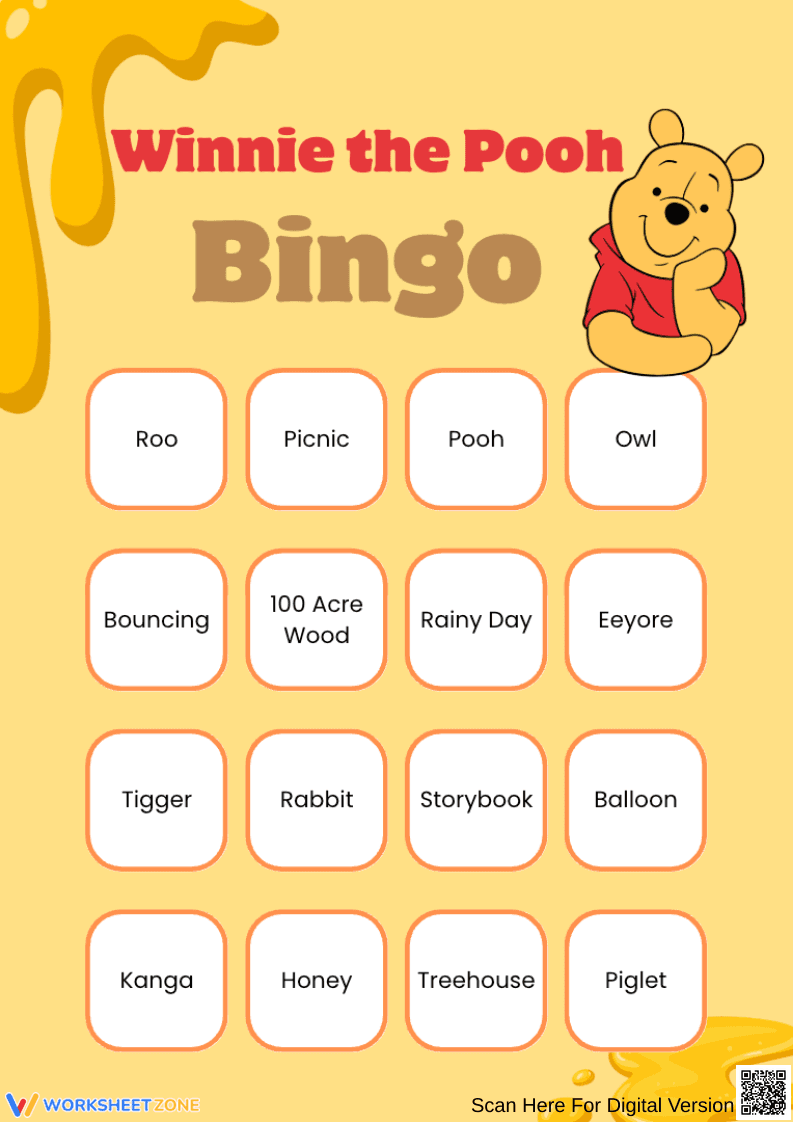
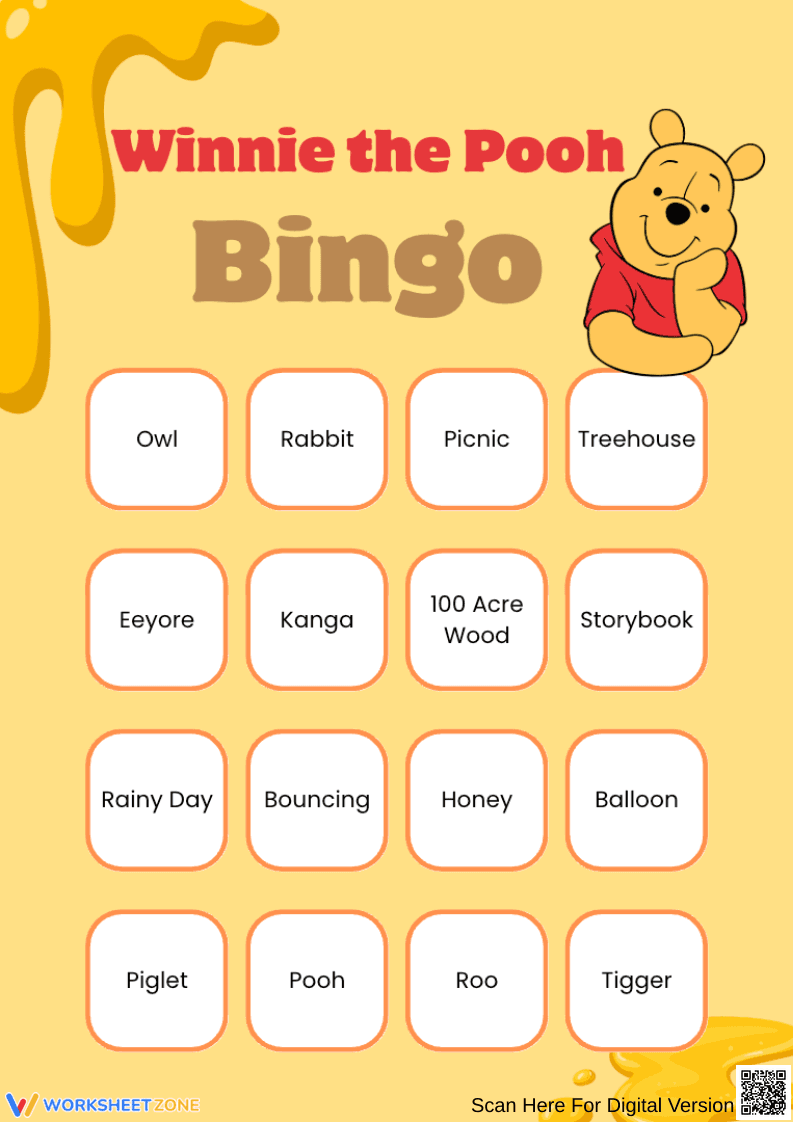
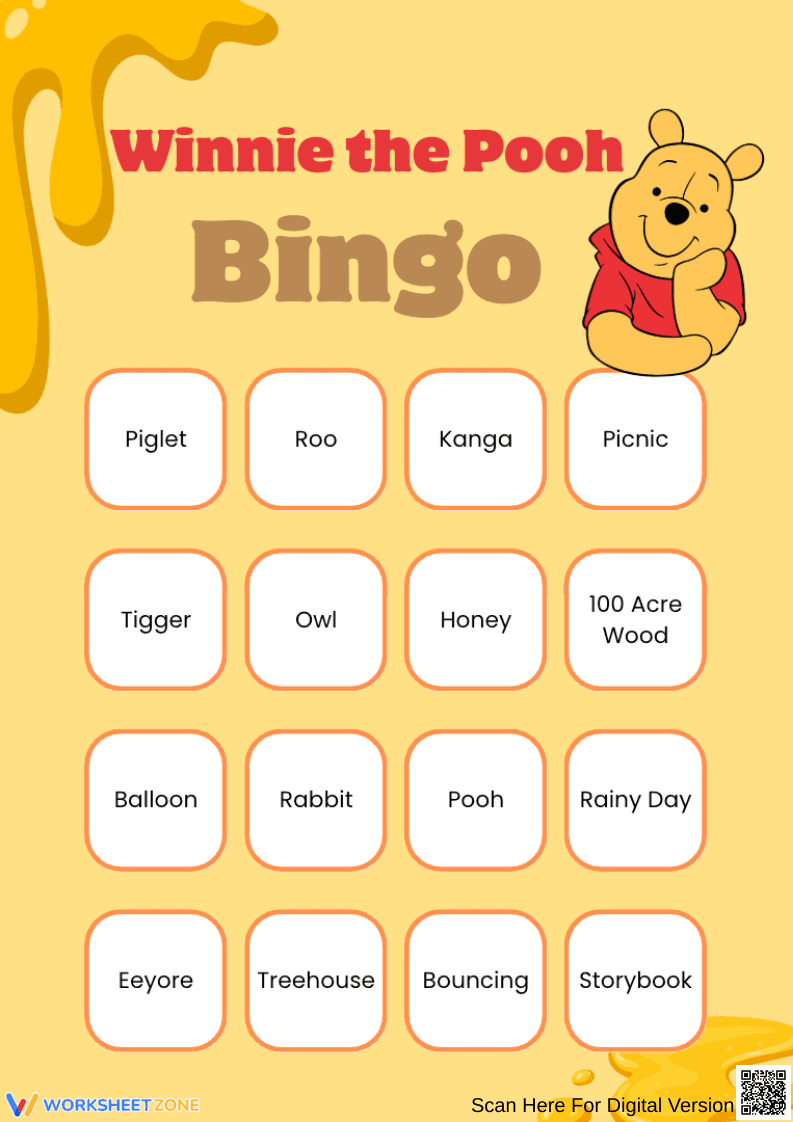
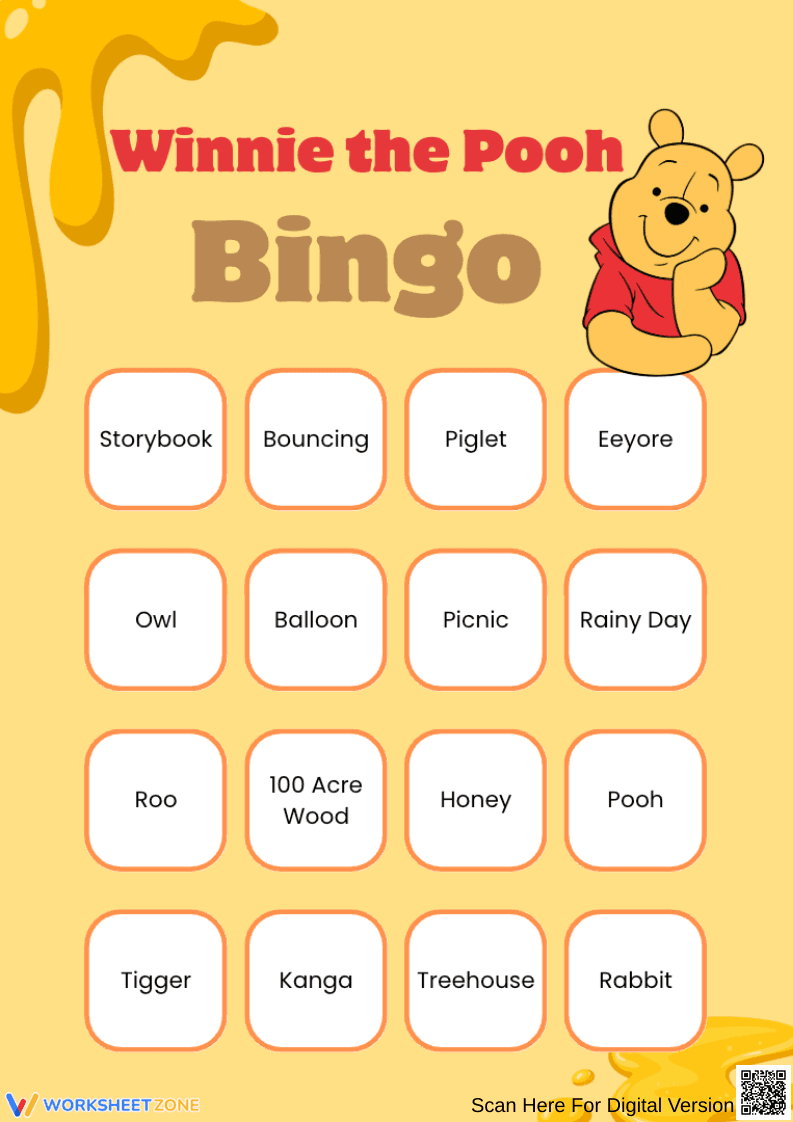
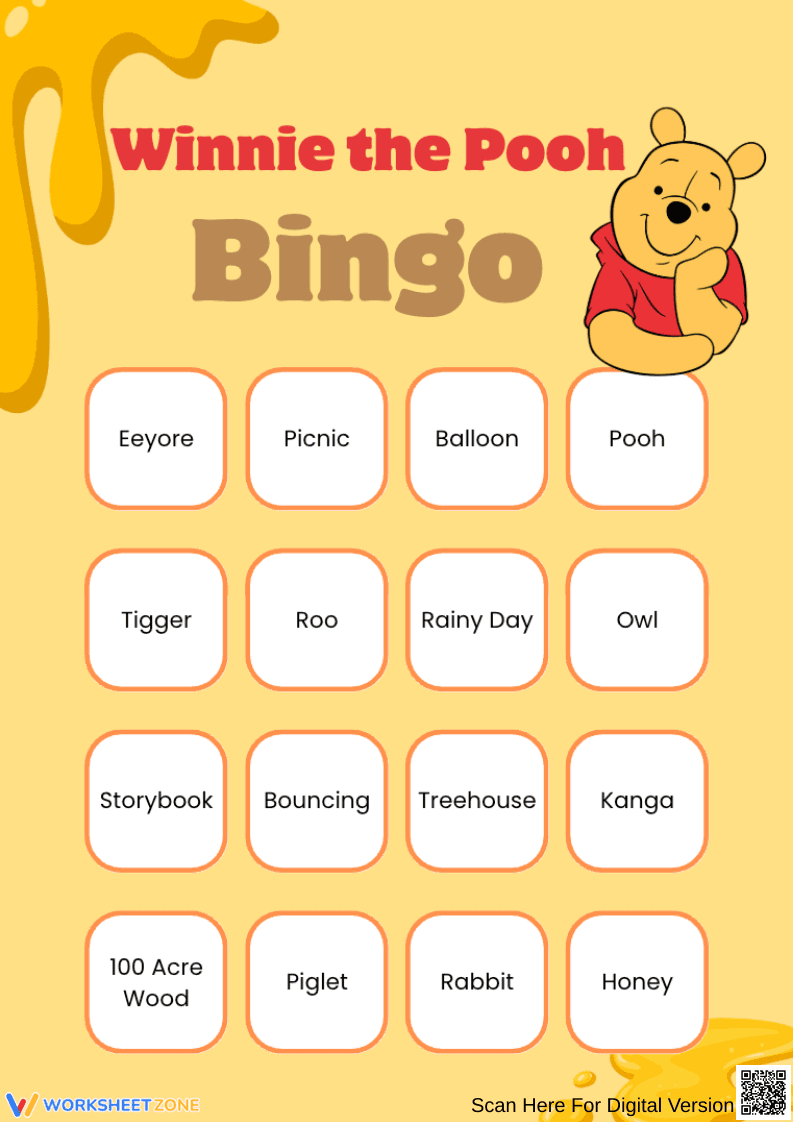
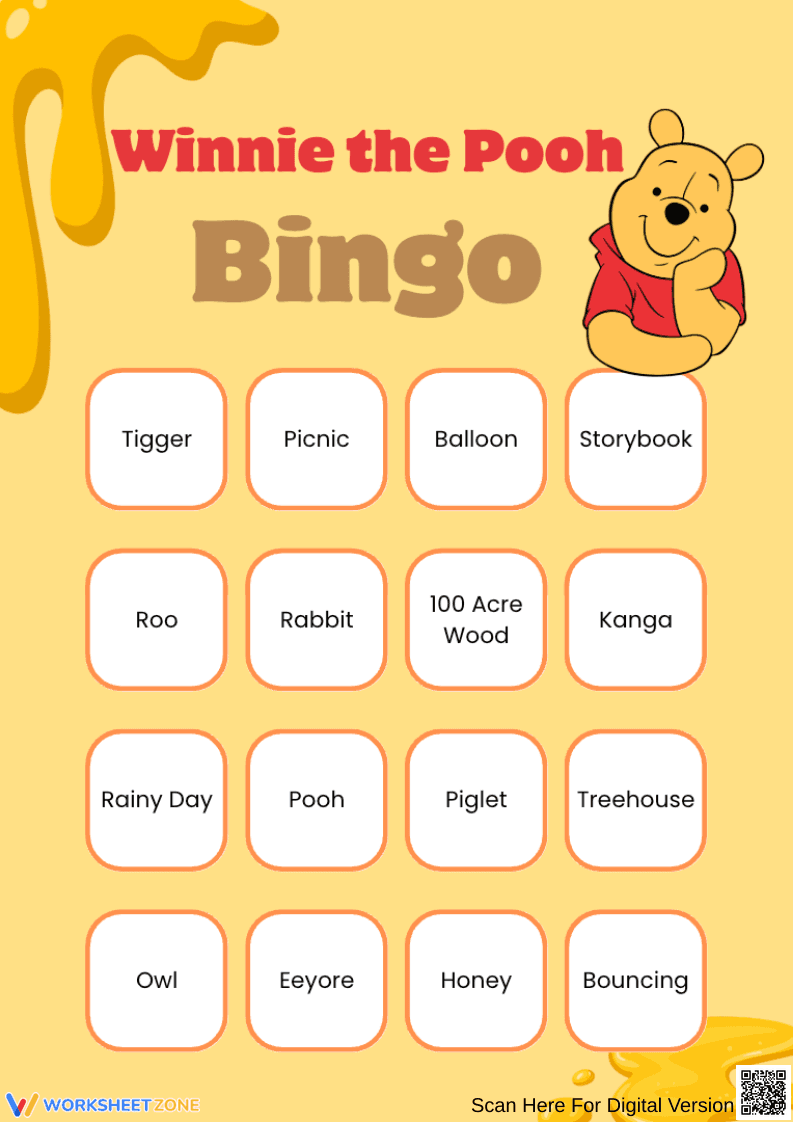
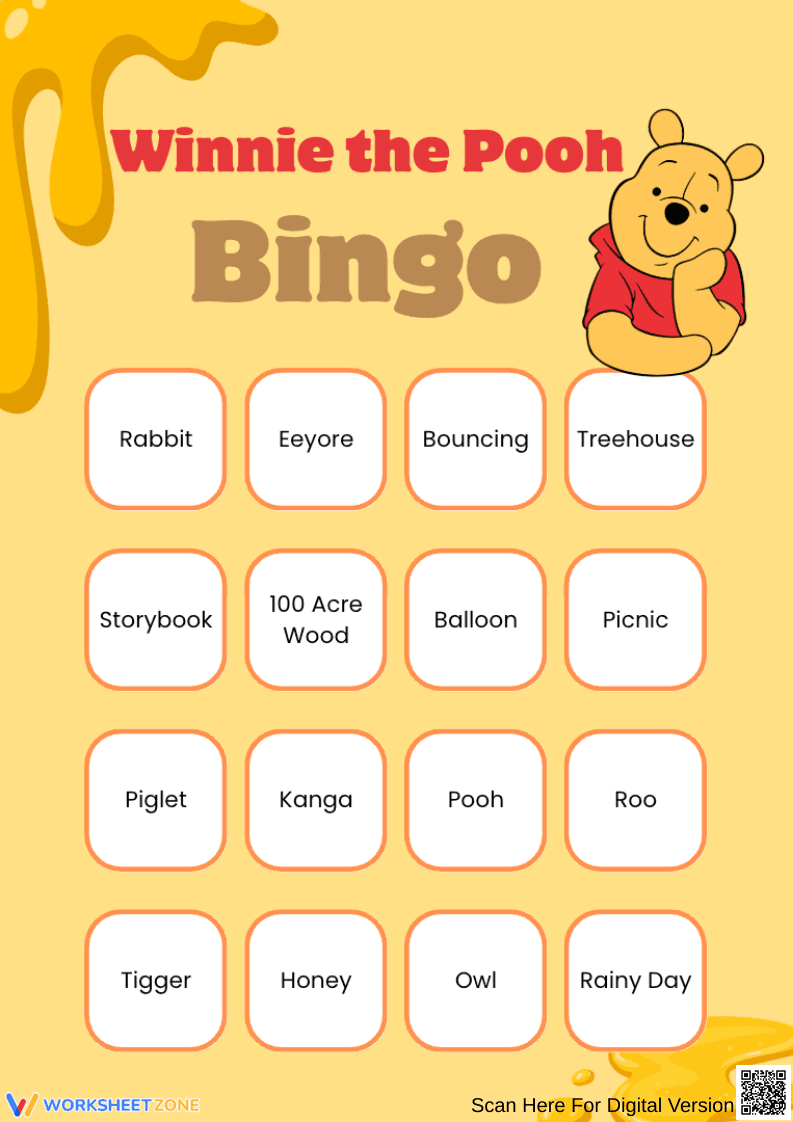
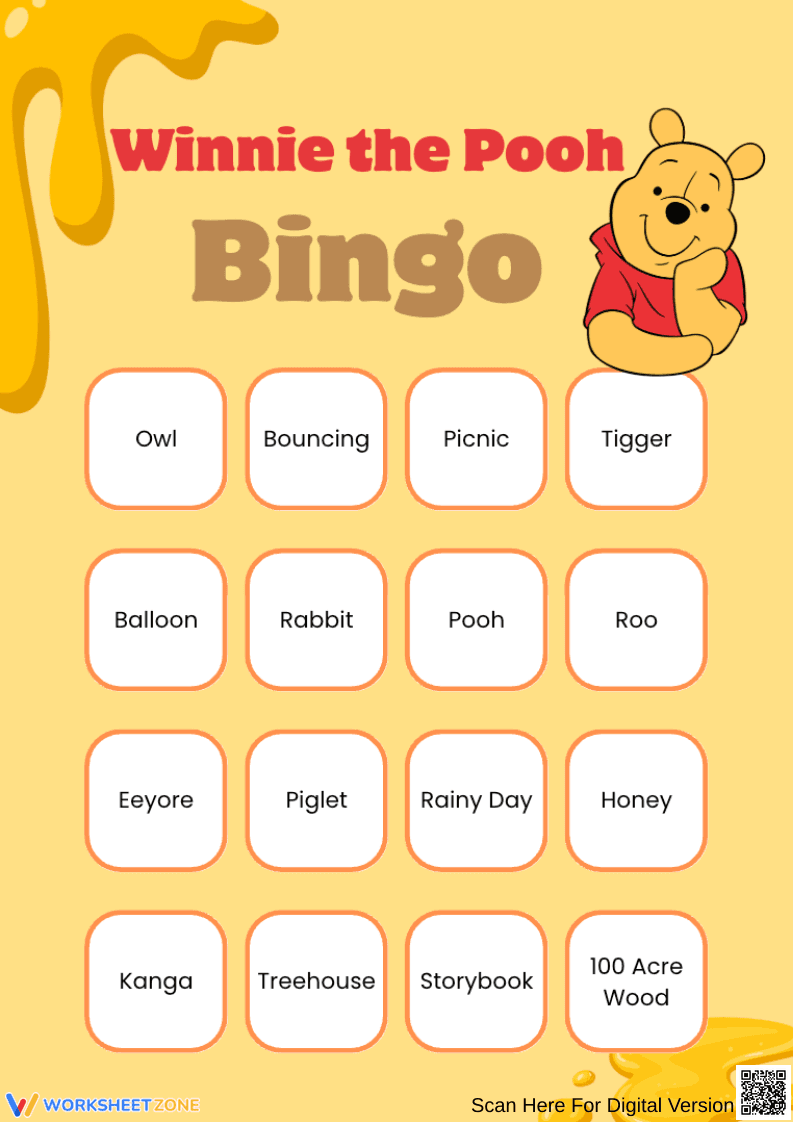
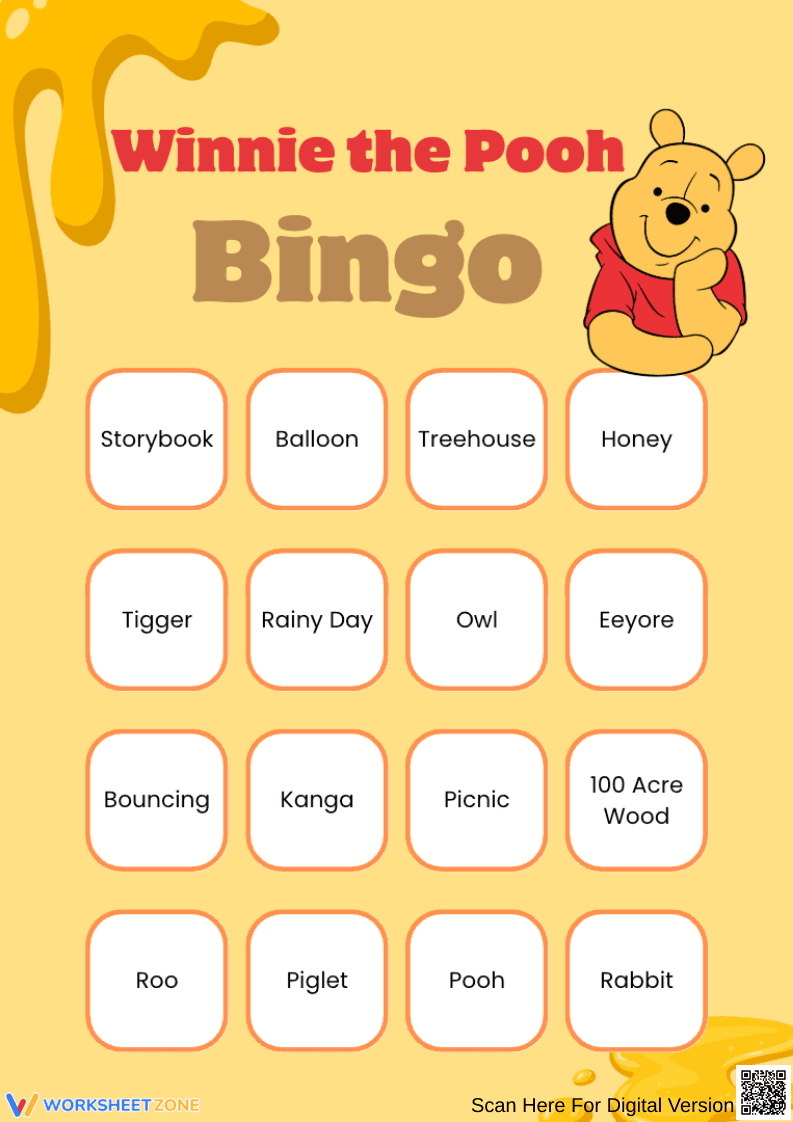


Winnie the Pooh Bingo Game | Essential Grade 1-4 Vocabulary
Paste this activity's link or code into your existing LMS (Google Classroom, Canvas, Teams, Schoology, Moodle, etc.).
Students can open and work on the activity right away, with no student login required.
You'll still be able to track student progress and results from your teacher account.
This Winnie the Pooh bingo game provides an engaging way for students in Grades 1-4 to practice character identification and thematic vocabulary. By gamifying the recognition of names like Tigger, Eeyore, and Piglet, students build word-to-image associations and listening stamina. It is a high-interest activity that turns literary review into a social classroom experience.
At a Glance
- Grade: 1-4 · Subject: ELA
- Standard:
CCSS.ELA-LITERACY.L.1.6— Use words and phrases acquired through reading and responding to texts- Skill Focus: Vocabulary recognition
- Format: 11 pages · 16 squares · Answer key included · PDF
- Best For: Classroom parties or vocabulary review
- Time: 15–20 minutes
What's Inside: This comprehensive PDF package contains 10 unique 4x4 bingo cards and 1 master calling list. Each card features 16 distinct terms and character names from the 100 Acre Wood, such as "Treehouse," "Honey," and "Storybook." The clear, legible font is designed for early readers to identify words quickly during active gameplay.
Zero-Prep Workflow
- Print: Select the 11 pages and print in color or grayscale (1 minute).
- Distribute: Hand out cards and markers like beans or counters (30 seconds).
- Review: Use the calling list to announce terms while students track their progress (15 minutes).
This resource requires less than 2 minutes of teacher preparation, making it an ideal emergency sub plan or a quick transition activity between core subjects.
Standards Alignment
Primary Standard: `CCSS.ELA-LITERACY.L.1.6` — Use words and phrases acquired through conversations, reading and being read to, and responding to texts. This activity reinforces the acquisition of domain-specific vocabulary related to classic children's literature. Both standard codes can be copied directly into lesson plans, IEP goals, or district curriculum mapping tools.
How to Use It
Use this game as a formative assessment after reading a Winnie the Pooh story to check for character name recognition. Alternatively, assign it as a fun Friday activity to reward classroom behavior. Observe which students struggle with specific word sounds or character associations to identify needs for further vocabulary support. Completion typically takes 15 to 20 minutes depending on the number of rounds played.
Who It's For
This resource is designed for general education students in Grades 1-4, English Language Learners (ELLs) building basic nouns, and special education students who benefit from visual-verbal associations. It pairs naturally with a read-aloud of A.A. Milne's classic stories or an anchor chart featuring character traits.
Research by Fisher & Frey (2014) emphasizes that gamified vocabulary instruction increases student engagement and retention compared to rote memorization. This Winnie the Pooh bingo game leverages familiar literary characters to lower the affective filter, allowing students to practice word recognition in a low-stakes environment. By requiring students to listen for specific terms and locate them on a grid, the activity reinforces auditory processing and visual scanning skills. According to the NAEP, students who engage in diverse literacy activities, including those that involve play and social interaction, demonstrate higher levels of reading motivation. This resource aligns with CCSS.ELA-LITERACY.L.1.6 by encouraging students to use and recognize words acquired through exposure to classic literature. The 11-page PDF format ensures that teachers can implement this evidence-based strategy with minimal preparation, making it an ideal tool for reinforcing thematic vocabulary in inclusive elementary classrooms.


