


























Views
Downloads


Essential Telling Time Worksheet | Grade 2-4 Printable
Paste this activity's link or code into your existing LMS (Google Classroom, Canvas, Teams, Schoology, Moodle, etc.).
Students can open and work on the activity right away, with no student login required.
You'll still be able to track student progress and results from your teacher account.
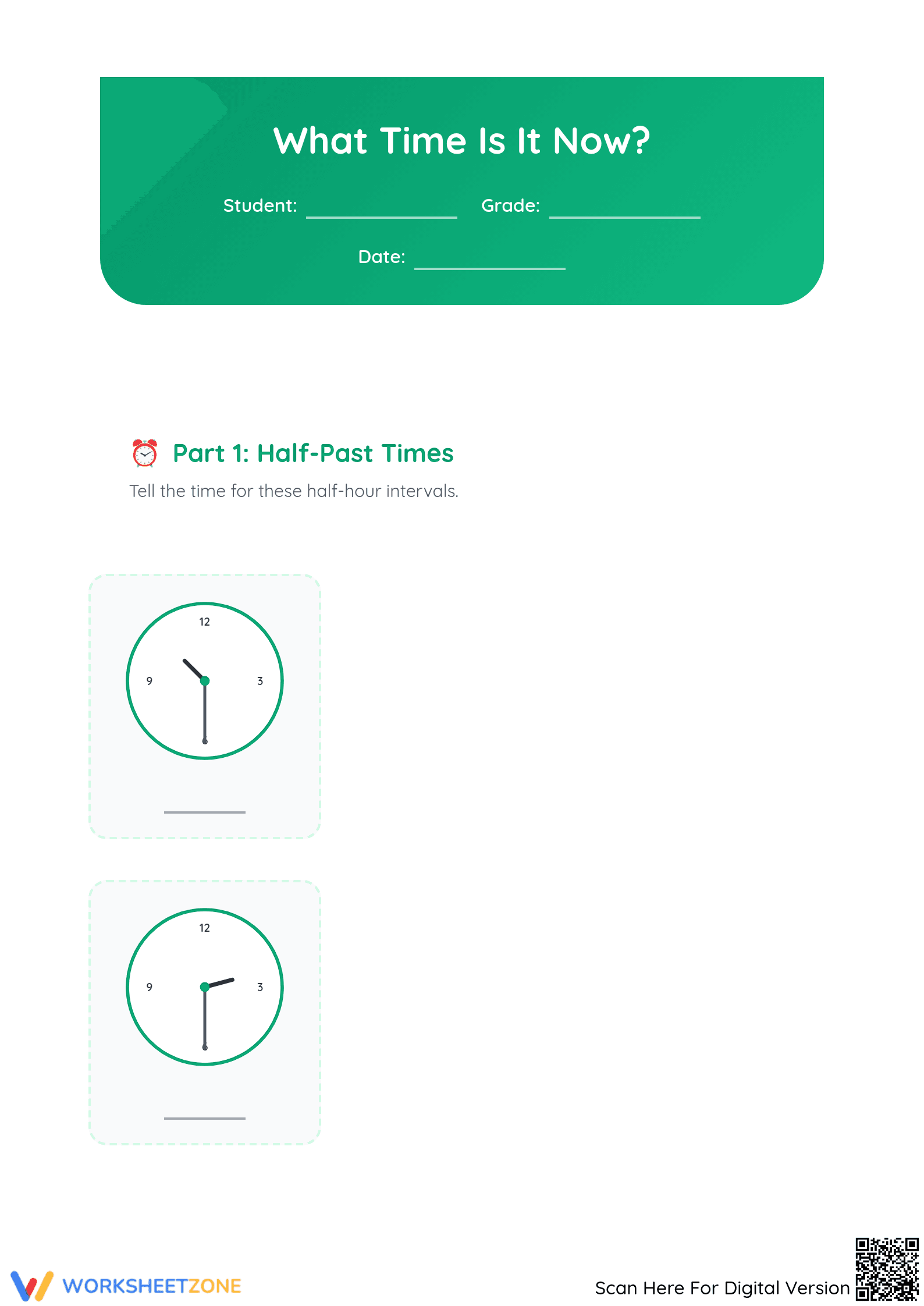
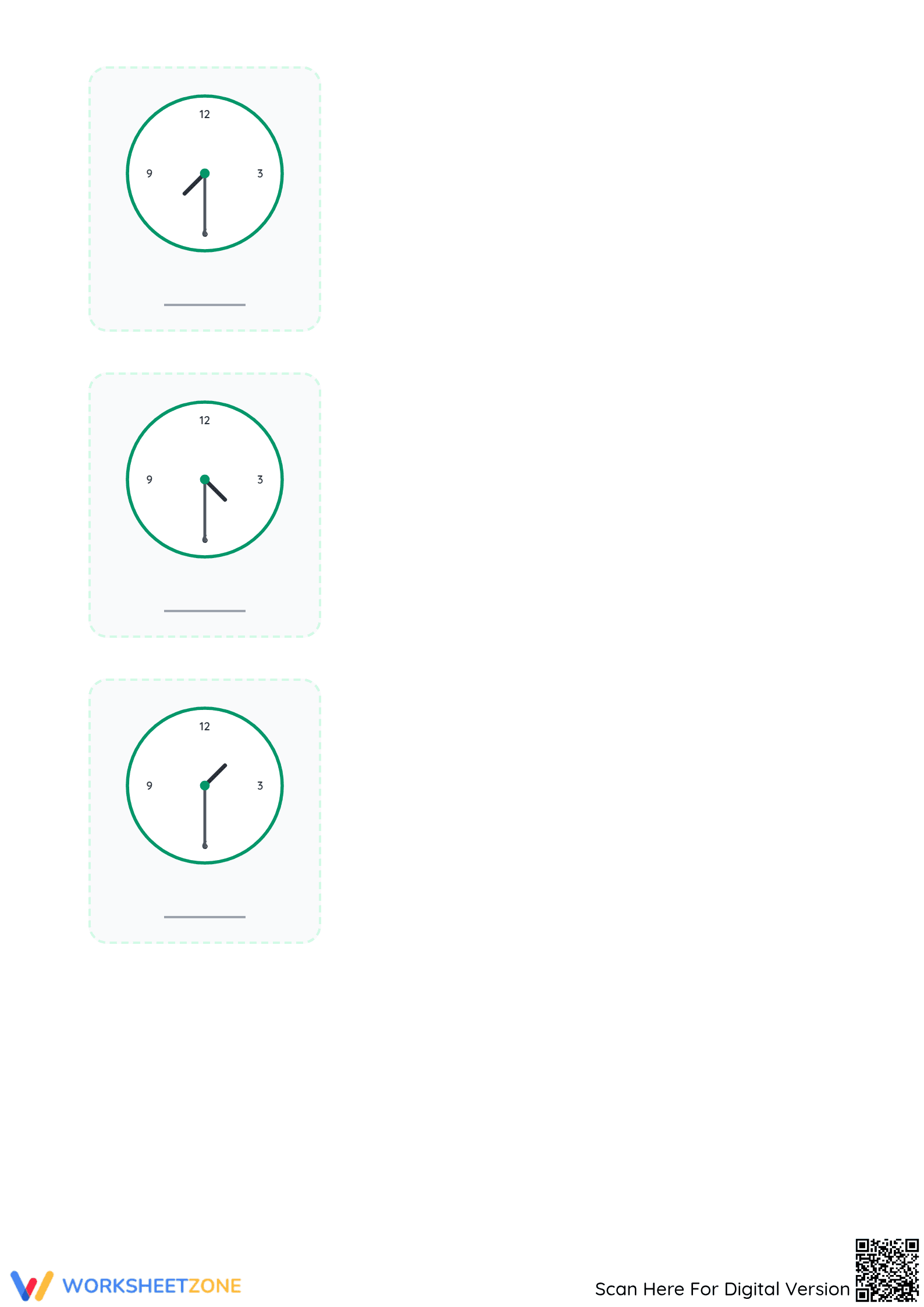
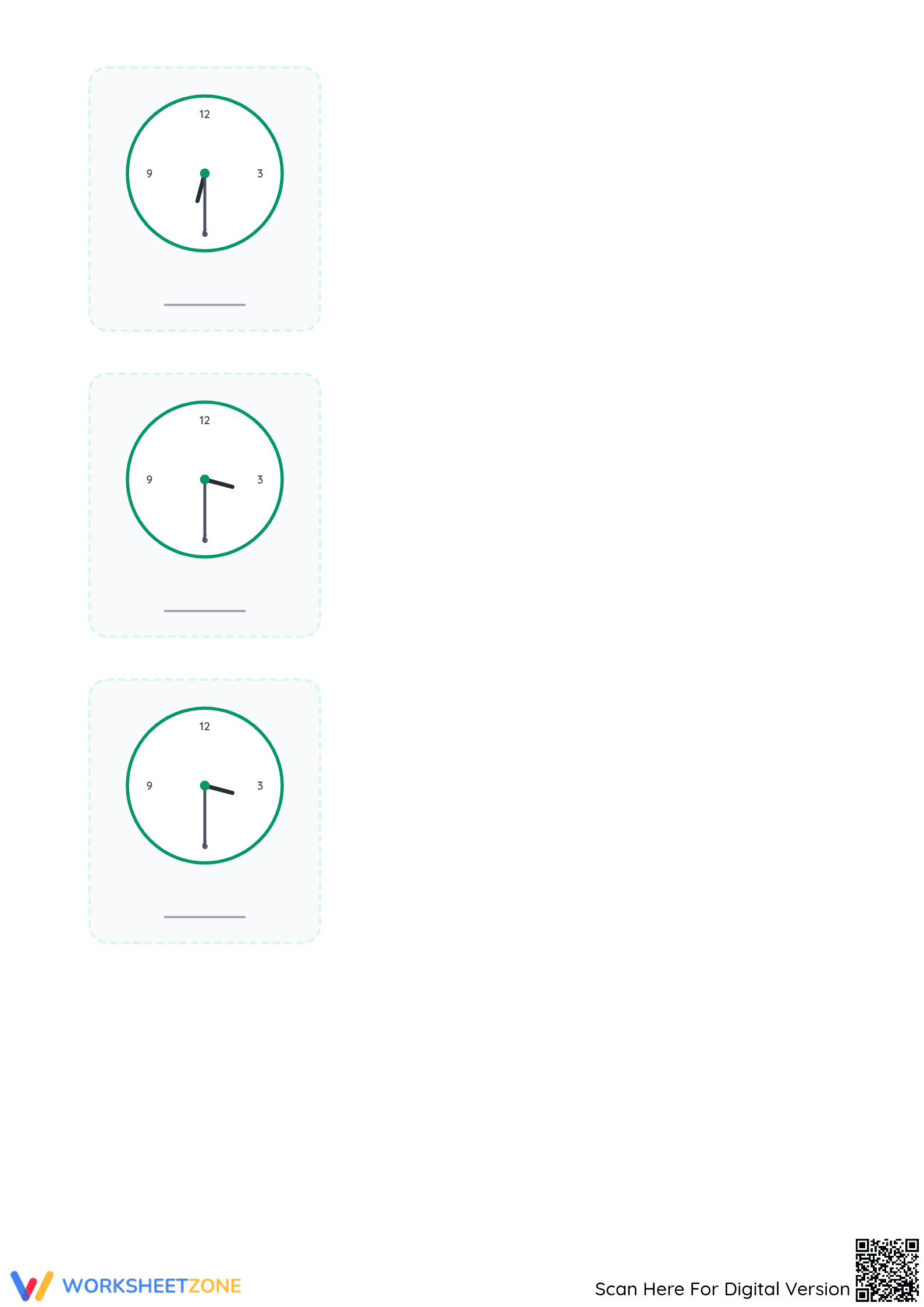
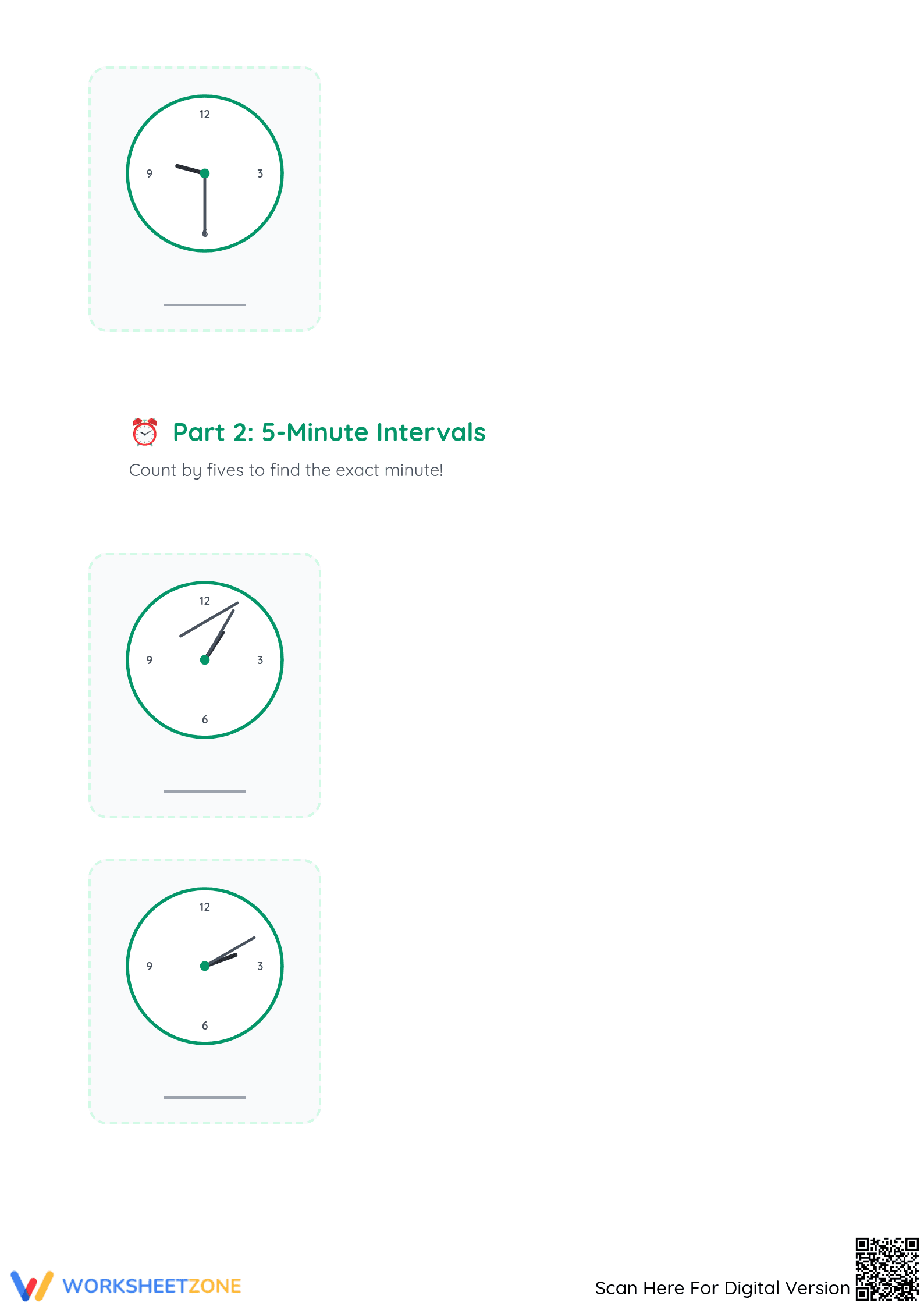
Build strong measurement and data skills with this comprehensive set of 14 analog clock problems. Students practice identifying half-past positions and counting by fives to determine exact minute intervals. This structured resource ensures students gain the fluency required to read time accurately in any environment, moving beyond digital displays to master the traditional clock face.
At a Glance
- Grade: 2–4 · Subject: Math
- Standard:
CCSS.MATH.CONTENT.2.MD.C.7— Tell and write time to the nearest five minutes using analog clocks- Skill Focus: Analog clock reading
- Format: 5 pages · 14 problems · Answer key included · PDF
- Best For: Independent practice or formative assessment
- Time: 15–20 minutes
This five-page practice packet is designed for immediate classroom use, featuring clear analog clock faces that minimize visual distractions. The collection is split into two distinct parts: foundational half-past intervals and more advanced five-minute counting tasks. Each page provides ample space for student responses, and the included answer key allows for rapid grading or self-correction by students.
Zero-Prep Workflow:
- Print (1 minute): Select the pages needed for your lesson and print the PDF directly from your device.
- Distribute (1 minute): Hand out the worksheets for individual desk work, morning bins, or as a reliable sub-plan activity.
- Review (3 minutes): Use the provided answer keys to quickly check student accuracy or display them on a projector for whole-class review.
Standards Alignment: This resource is primarily aligned to CCSS.MATH.CONTENT.2.MD.C.7: "Tell and write time from analog and digital clocks to the nearest five minutes, using a.m. and p.m." It also supports third-grade standards for measurement and data by reinforcing the 60-minute cycle. Both standard codes can be copied directly into lesson plans, IEP goals, or district curriculum mapping tools.
How to Use It: Assign Part 1 as a warm-up activity during your measurement unit to gauge student comfort with the 30-minute mark. Use Part 2 as a mid-unit formative assessment to observe how students handle the transitions between five-minute increments. Most students will complete the full 14-task set within 20 minutes of focused work time.
Who It's For: This worksheet is ideal for Grade 2 and Grade 3 students learning basic time-telling, as well as Grade 4 students who require additional scaffolding or review. It pairs naturally with an analog classroom clock or a set of manipulative "Judy" clocks to provide a tactile connection to the visual problems on the page.
Telling time to the nearest five minutes is a pivotal bridge between basic number sense and complex temporal reasoning. This worksheet aligns with CCSS.MATH.CONTENT.2.MD.C.7, requiring students to interpret analog clock hands for both half-hour benchmarks and precise five-minute increments. Research from the RAND AIRS 2024 report emphasizes that repetitive, low-stakes practice with physical or visual analog clocks significantly improves a student's ability to internalize the 60-minute cycle, which is often abstract in digital-only environments. By asking students to count by fives and recognize "half-past" positions, the resource builds the foundational fluency needed for later elapsed time calculations. The structured layout provides clear visual cues, reducing cognitive load during the acquisition phase of learning. Mastery of these intervals ensures students can accurately report and manage time in real-world classroom settings, meeting essential second and third-grade numeracy benchmarks while preparing for higher-order measurement and data standards in upper elementary mathematics.


