


























Views
Downloads
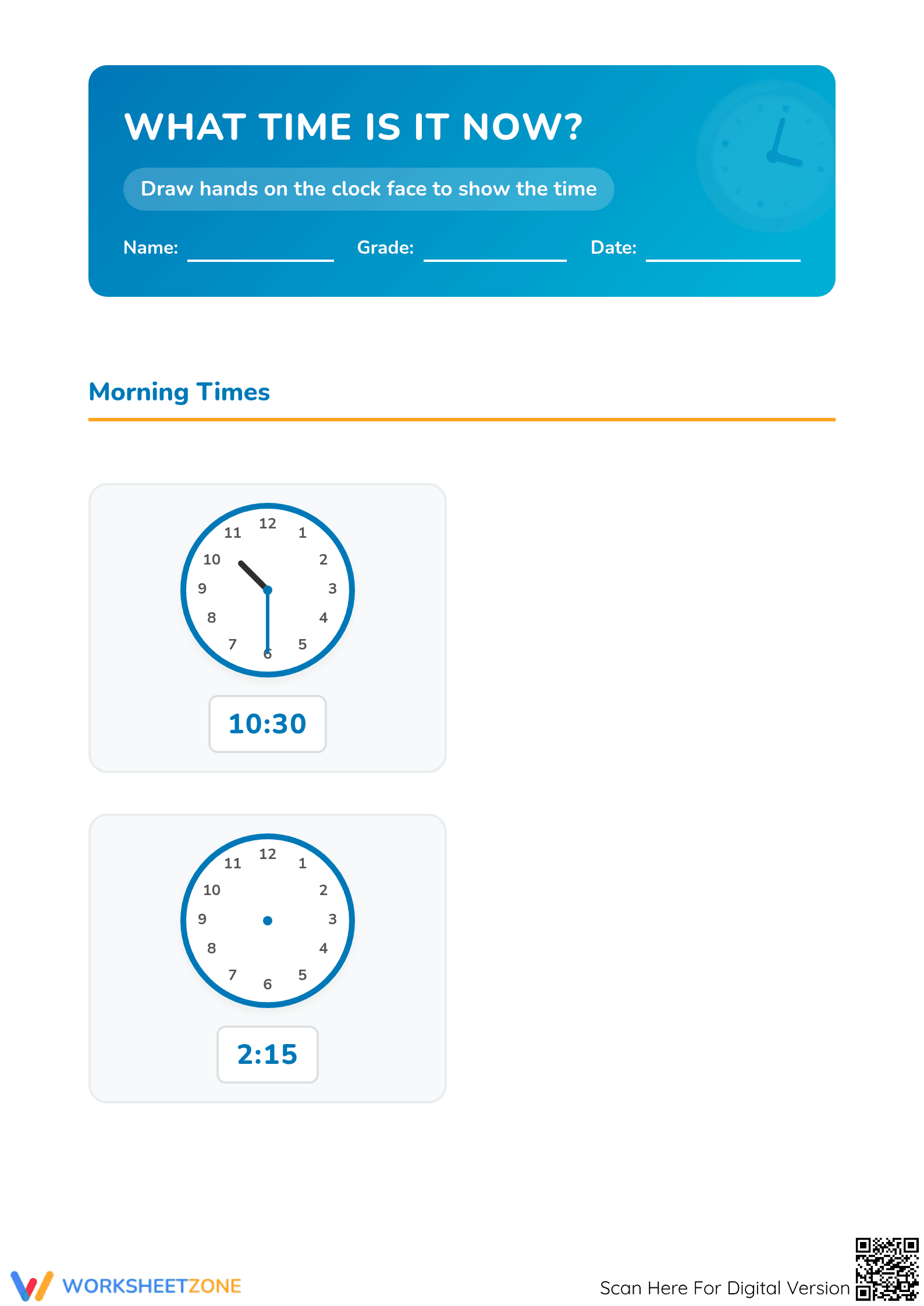
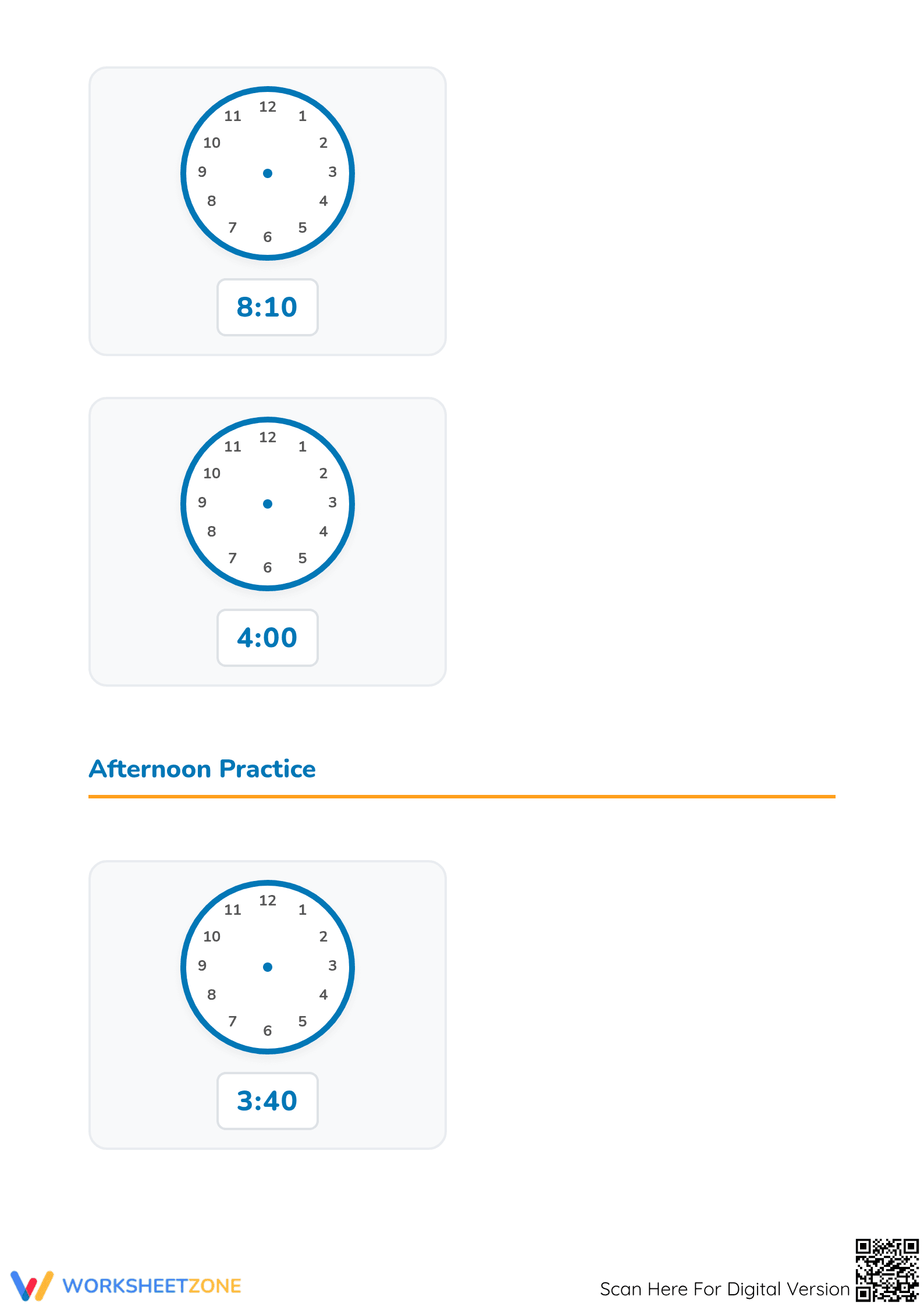
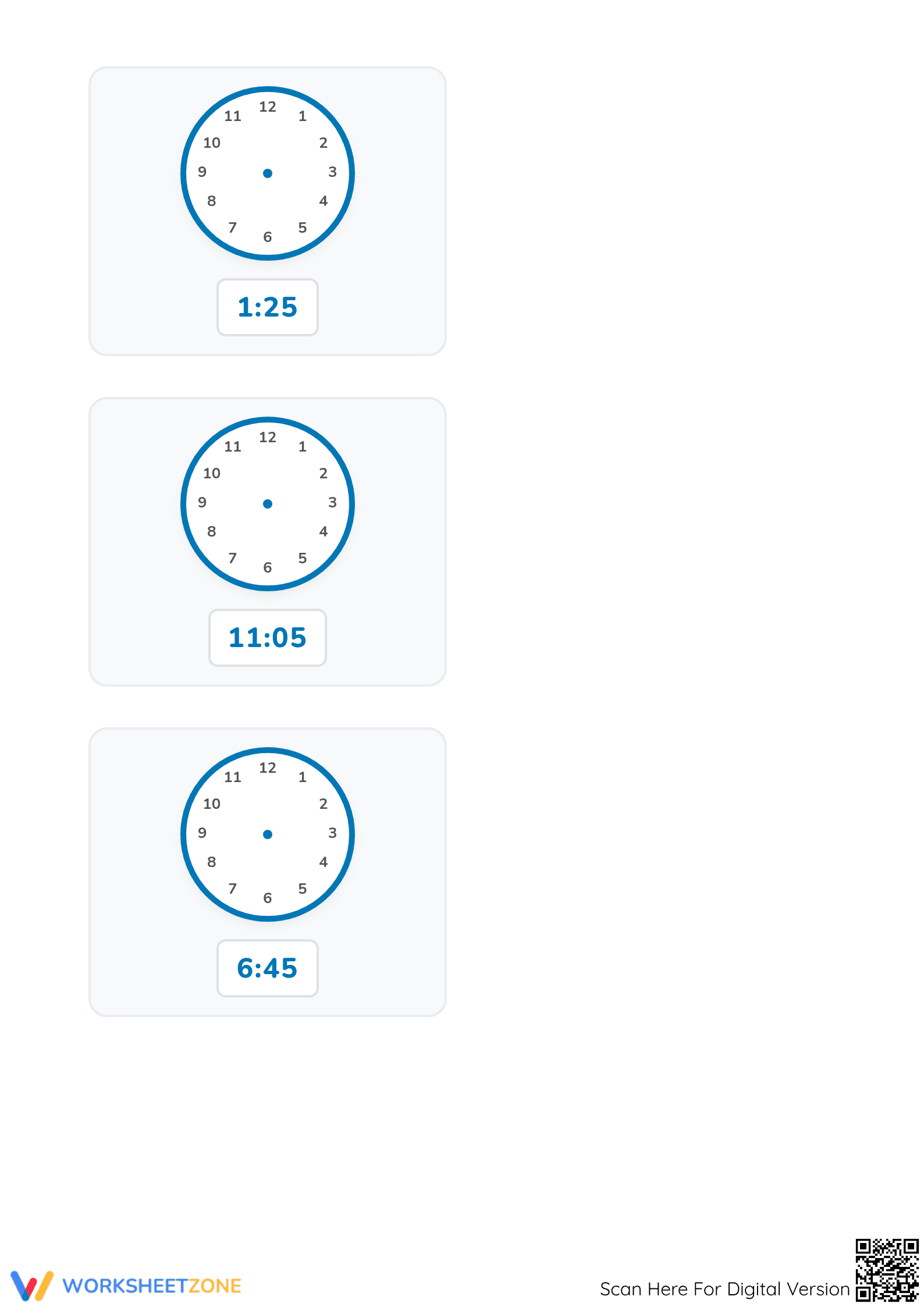
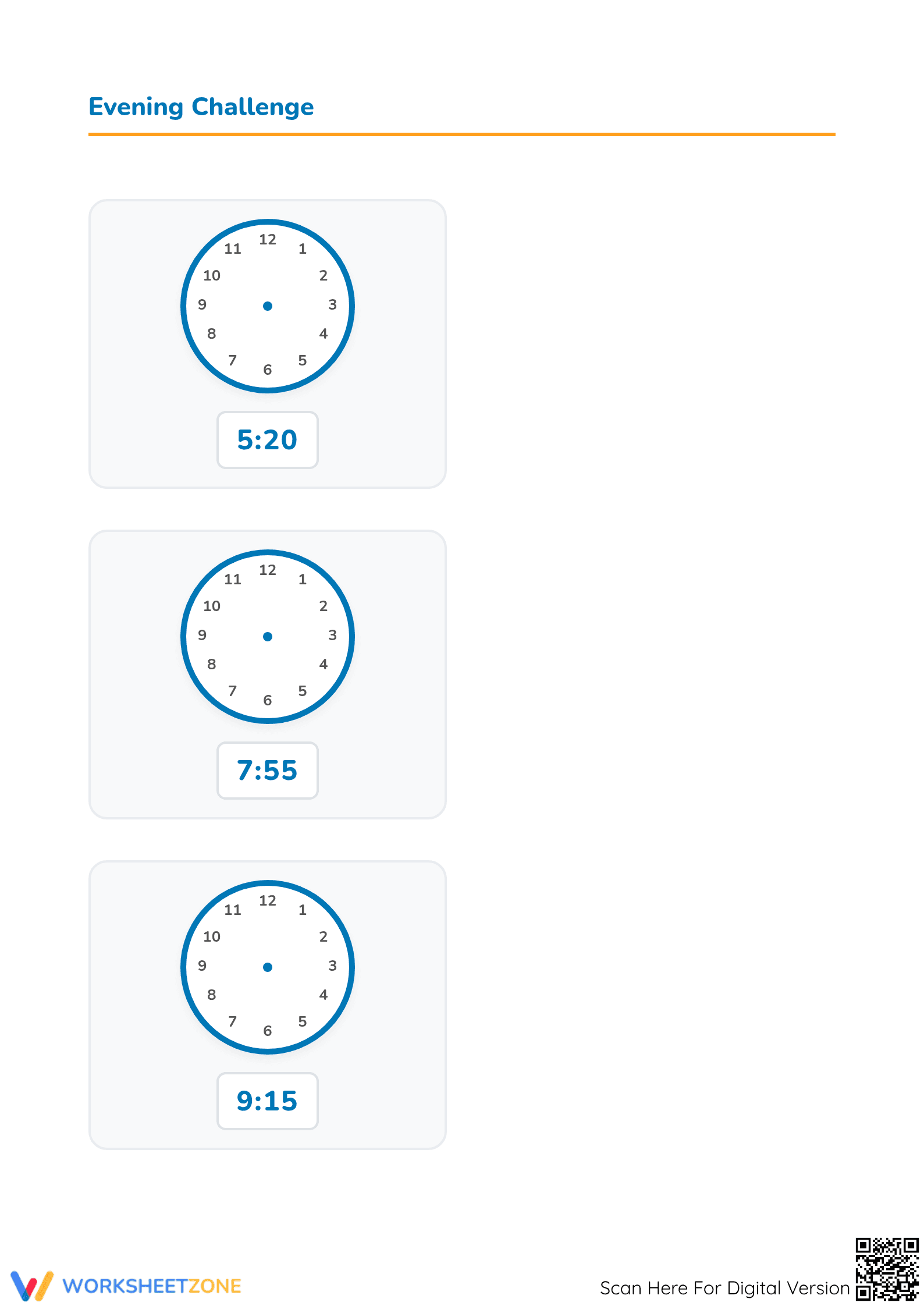
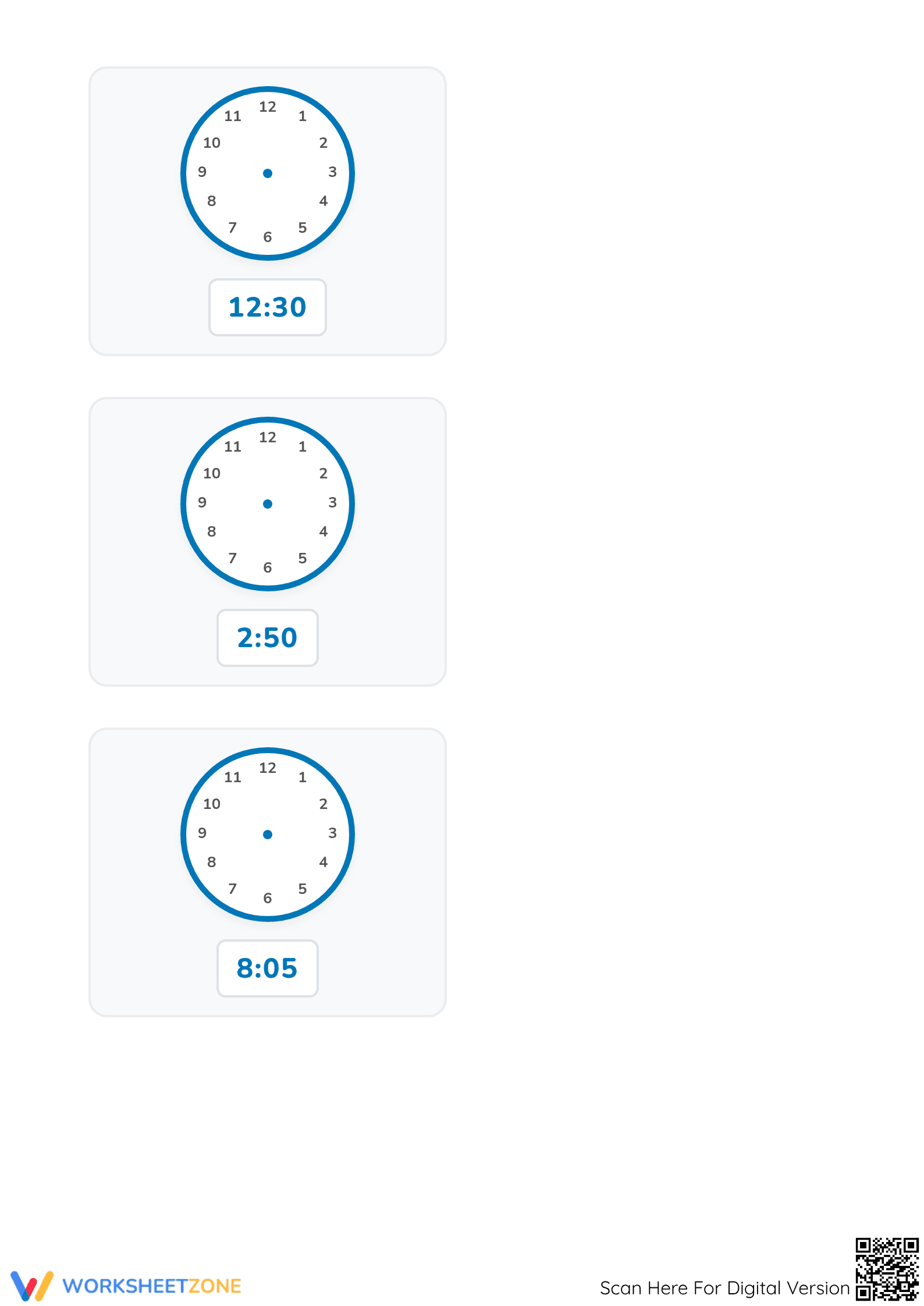

Printable Telling Time Worksheet | Grade 2-4 Aligned
Paste this activity's link or code into your existing LMS (Google Classroom, Canvas, Teams, Schoology, Moodle, etc.).
Students can open and work on the activity right away, with no student login required.
You'll still be able to track student progress and results from your teacher account.
This Essential Telling Time Practice Worksheet provides Grade 2-4 students with a hands-on way to master reading digital clocks and representing those times on analog faces. By drawing clock hands, learners internalize the spatial relationship between time intervals, building fluency required for real-world time management.
At a Glance
- Grade: 2-4 · Subject: Math
- Standard:
CCSS.MATH.CONTENT.2.MD.7— Tell and write time from analog and digital clocks to five minutes- Skill Focus: Analog Clock Construction
- Format: 5 pages · 14 problems · Answer key included · PDF
- Best For: Independent practice and morning work
- Time: 20–30 minutes
This five-page PDF features 14 practice problems organized into themed sections: Morning Times, Afternoon Practice, and Evening Challenge. Each page presents large analog clock templates with digital times below. The clear design ensures students have space to draw hour and minute hands. A complete answer key is included, allowing for rapid grading or self-correction during math centers or independent rotations.
Zero-Prep Workflow
Integrate this resource into your schedule in under two minutes. First, print the five-page set (30 seconds). Second, distribute packets during the transition to independent math blocks (60 seconds). Finally, use the answer key to review work as a whole-group check (30 seconds). The self-explanatory instructions make this worksheet an ideal choice for substitute lesson plans or unexpected classroom transitions where zero preparation is essential.
Standards Alignment
The focus is `CCSS.MATH.CONTENT.2.MD.7`, requiring students to tell and write time from analog and digital clocks to five minutes. It also supports `CCSS.MATH.CONTENT.3.MD.A.1` by bridging the gap to precise minute reading. Both standard codes can be copied directly into lesson plans, IEP goals, or district curriculum mapping tools to ensure alignment with state and national mathematics frameworks.
How to Use It
Use this as a formative assessment after direct instruction. As students work, circulate to observe if they distinguish between hour and minute hands by length—a common hurdle. Alternatively, assign pages as "Exit Tickets" to gauge progress. The graduated increments, moving from half-past to five-minute intervals, allow you to identify exactly where a student’s understanding may be lagging during the instructional unit.
Who It's For
This resource is for elementary students in Grades 2-4 refining their time-telling skills. It is effective for students requiring visual support or repetitive practice to build muscle memory. This set pairs naturally with physical classroom clocks or interactive whiteboard activities where students model their answers before completing the printable pages as part of a blended learning math curriculum.
According to the EdReports 2024 analysis of elementary mathematics curriculum, high-quality supplemental materials like this telling time worksheet are vital for reinforcing the procedural fluency required by CCSS.MATH.CONTENT.2.MD.7. Mastery of telling time to the nearest five minutes is a critical developmental milestone that supports later concepts in measurement and data, as well as elapsed time calculations in higher grades. This worksheet provides the structured, high-volume practice recommended by the RAND AIRS 2024 study, which suggests that varied visual representations of time intervals help students transition from concrete understanding to abstract time management. By requiring students to actively construct the analog representation from a digital prompt, this resource engages higher-order cognitive processing compared to passive multiple-choice identification. Educators can utilize this tool to ensure students meet national proficiency benchmarks while providing a clear data point for progress monitoring in general and special education settings.


