


























Views
Downloads
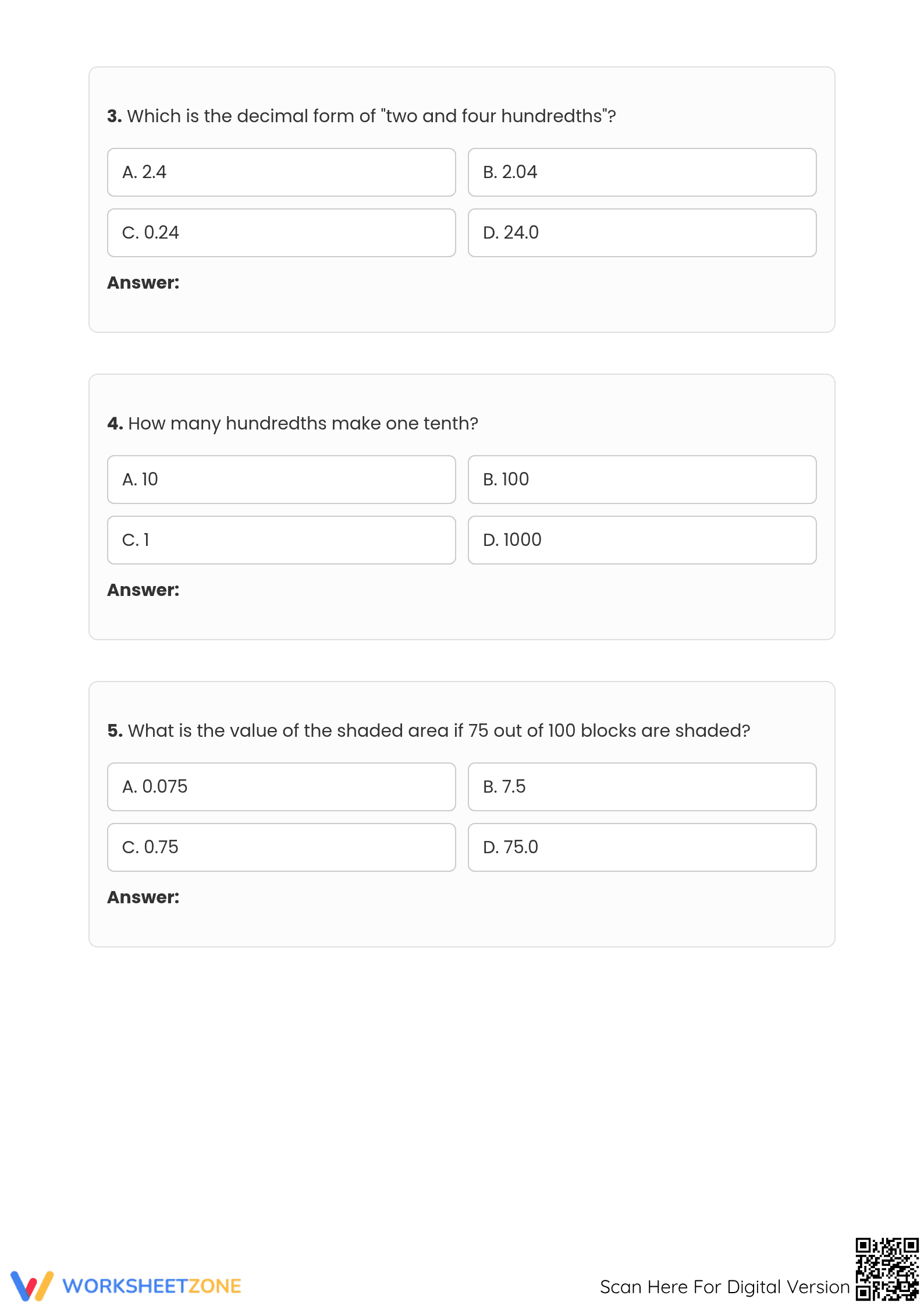

Grade 4 Decimals — Printable No-Prep Worksheet
Paste this activity's link or code into your existing LMS (Google Classroom, Canvas, Teams, Schoology, Moodle, etc.).
Students can open and work on the activity right away, with no student login required.
You'll still be able to track student progress and results from your teacher account.
Connecting Visuals to Decimal Numbers
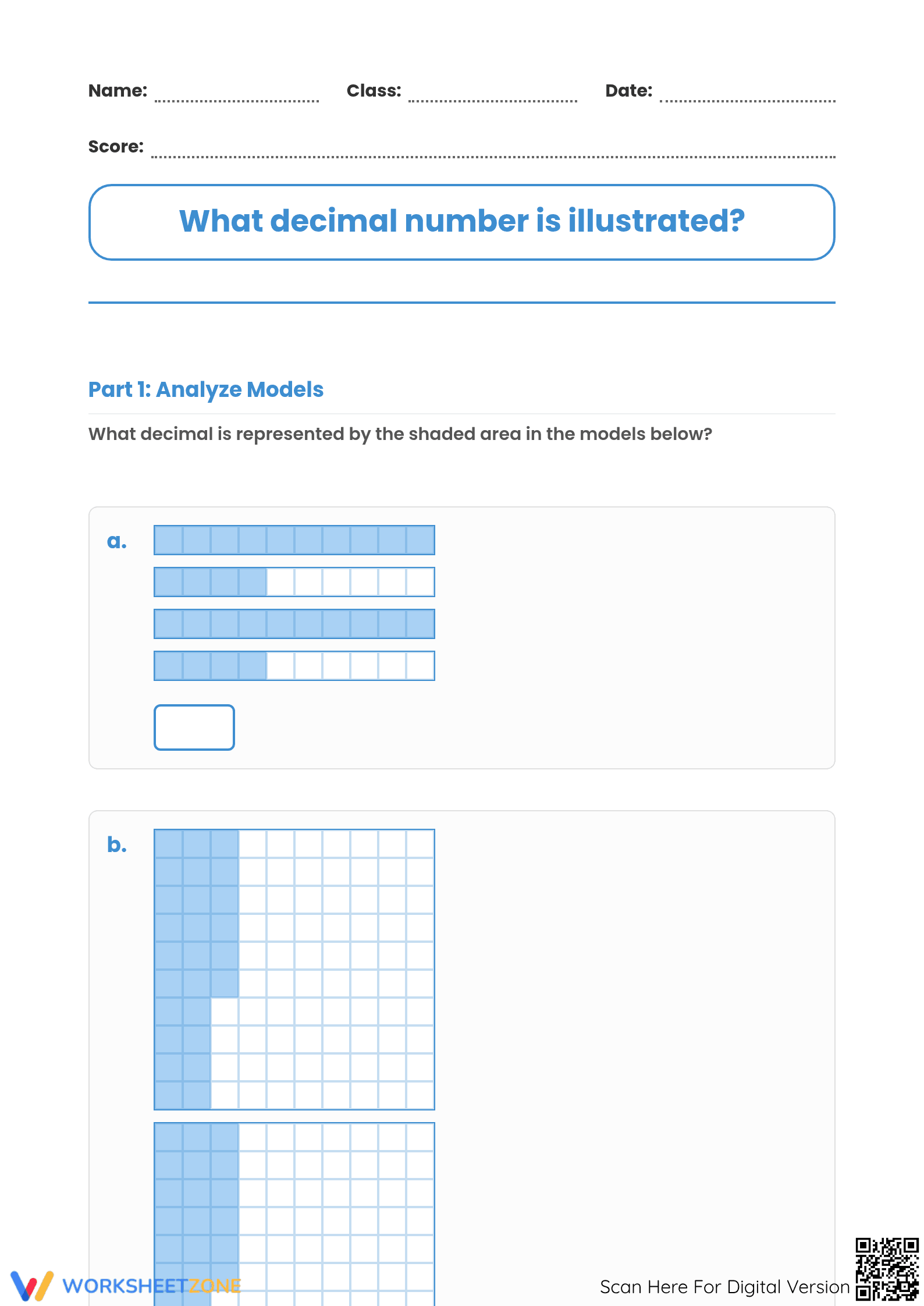
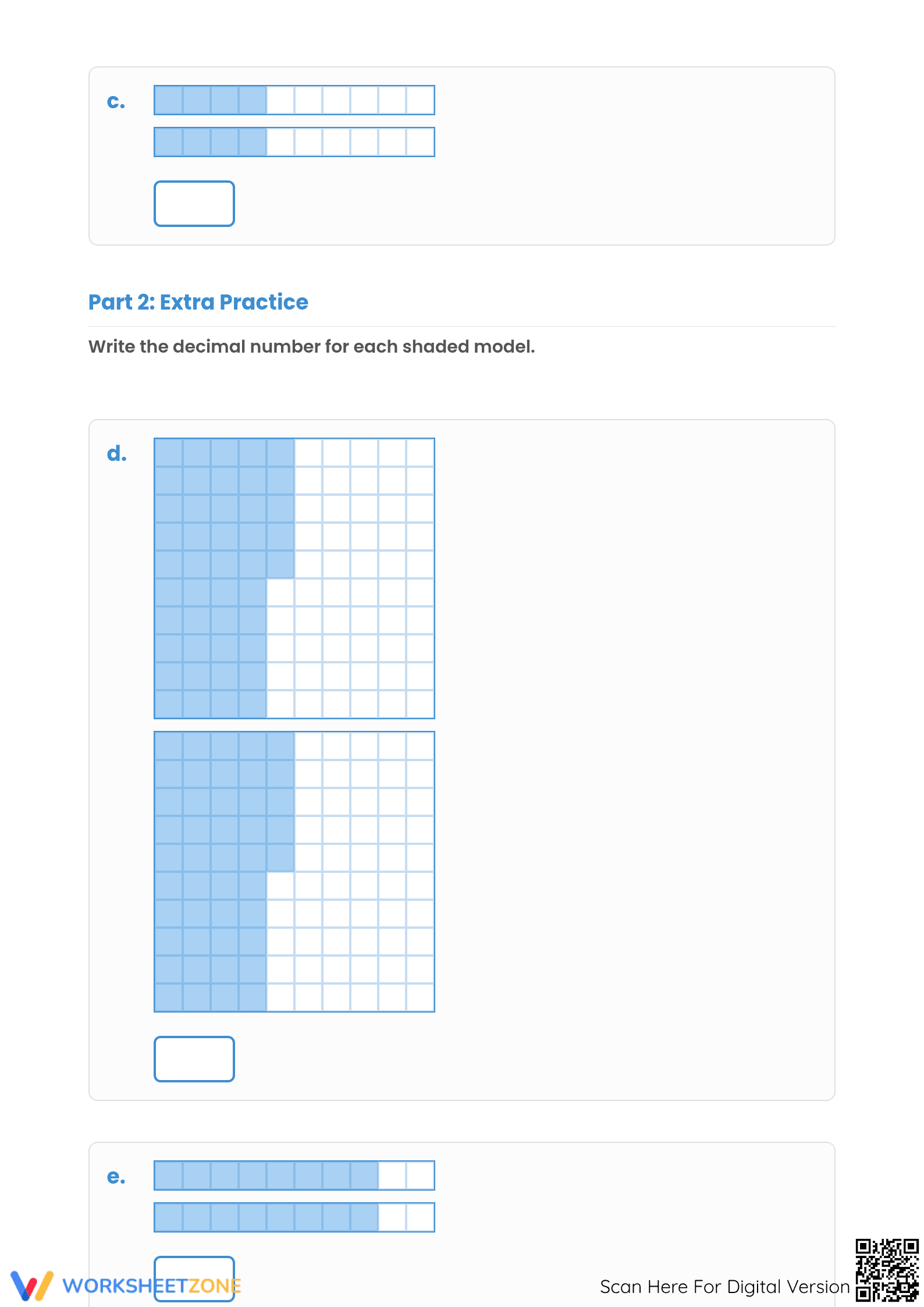
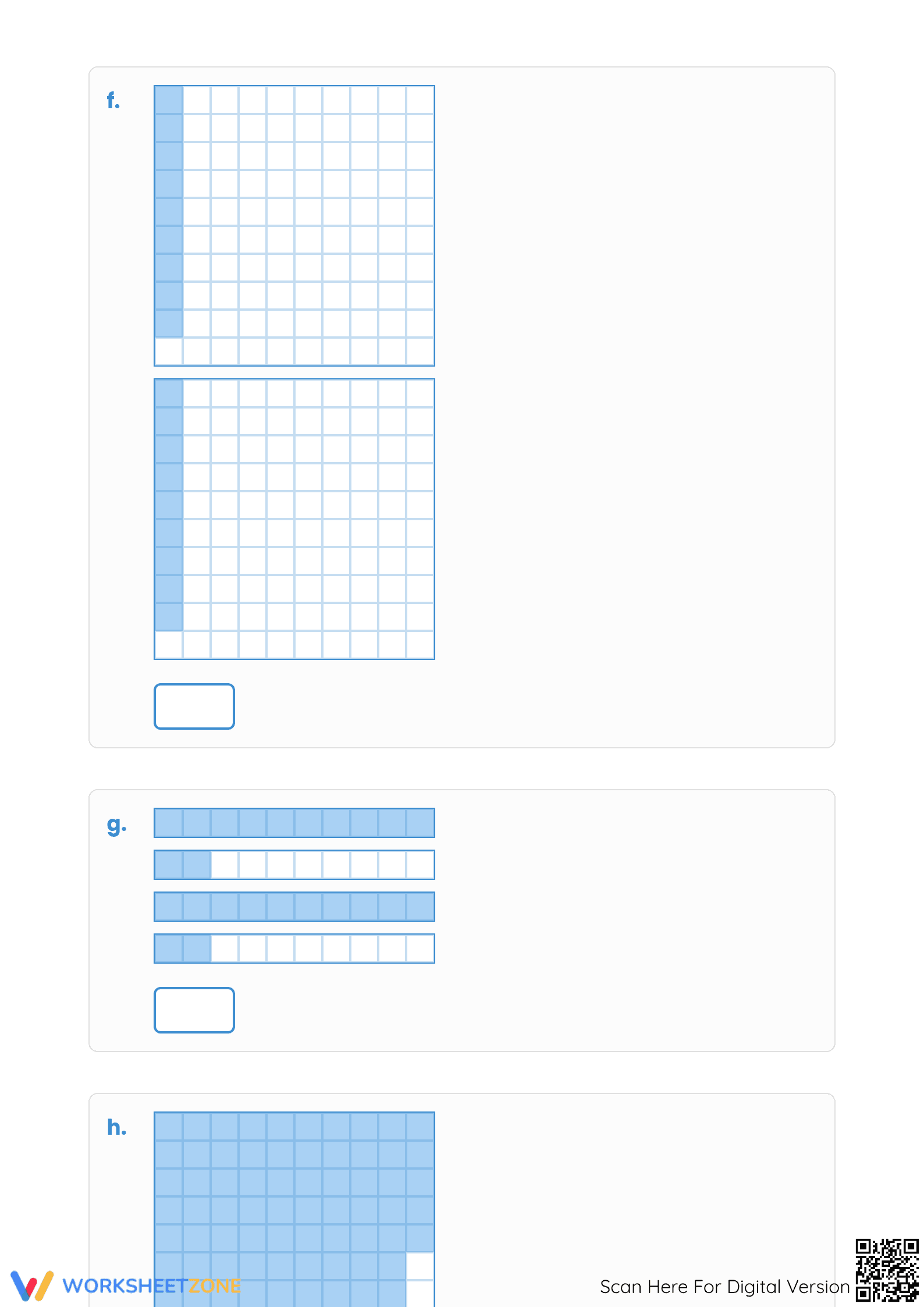
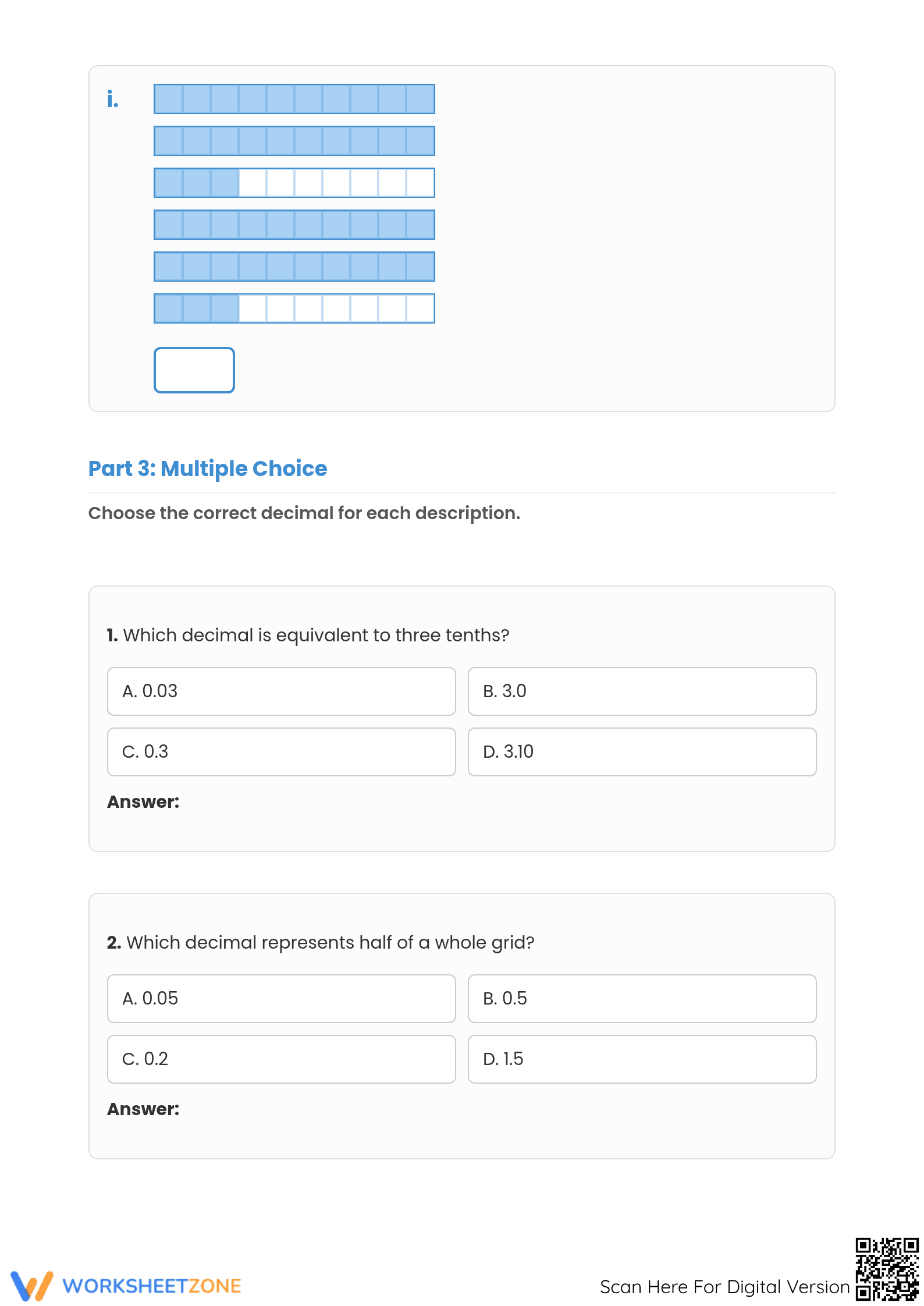
This worksheet provides essential practice for students connecting visual representations to numerical decimal form. Through clear, shaded grid models, fourth-grade learners strengthen their understanding of tenths and hundredths. Each problem asks students to analyze an illustration and write the correct decimal, building foundational place value understanding. It's a direct, effective tool for assessing and reinforcing this core mathematical skill.
At a Glance
- Grade: 4 · Subject: Math
- Standard:
CCSS.MATH.CONTENT.4.NF.C.6— Use decimal notation for fractions with denominators 10 or 100.- Skill Focus: Identifying decimal values from visual models
- Format: 5 pages · 50 problems · Answer key included · PDF
- Best For: Independent practice, math centers, or formative assessment
- Time: 20–30 minutes
What's Inside
This resource includes a five-page worksheet with 50 unique problems, each featuring distinct visual models of decimals using tenths and hundredths grids. A complete five-page answer key is provided for quick grading. The clean layout ensures students can focus on interpreting each model. Delivered as a ready-to-print PDF for immediate classroom use.
A Zero-Prep Workflow for Busy Teachers
This worksheet offers a true print-and-go workflow, saving valuable teacher preparation time. Its simple and efficient design means less than two minutes from download to distribution. Just print the five student pages and answer key, then distribute for an instant, focused activity. Use the provided answer key for quick review or grading. This straightforward resource is excellent for substitute plans, homework, or quick skill reinforcement.
Standards Alignment for Your Lesson Plans
Directly aligned with CCSS.MATH.CONTENT.4.NF.C.6, this worksheet helps students "Use decimal notation for fractions with denominators 10 or 100." Students practice translating fractional models (grids of 10 or 100 parts) into decimal equivalents, reinforcing the concept that decimals represent fractions. The standard code and description can be easily copied into lesson plans or curriculum mapping tools.
How to Use It in Your Classroom
This versatile worksheet can be used in several instructional moments. It serves as an ideal independent practice activity after a whole-group lesson on representing decimals. As a formative assessment tool, a quick glance at a student's completed page can reveal common misconceptions, such as confusing tenths with hundredths. For a math center or station rotation, the worksheet provides a meaningful, self-directed task. Most fourth-grade students will complete a single page in 5-7 minutes, or the entire packet in about 25 minutes.
Who It's For
This resource is tailored for fourth-grade students developing their initial understanding of decimals. It is also highly effective for fifth graders who need a review of decimal place value concepts, or for advanced third graders ready for an introduction to decimals. To support struggling learners, pair this worksheet with hands-on base-ten blocks, allowing them to build decimal models physically. It's a perfect follow-up to an anchor chart connecting fractions like 7/10 to 0.7 and 23/100 to 0.23.
Mastering the link between visual models and decimal numbers is a critical step for students. This worksheet provides targeted practice for the 50 problems aligned to CCSS.MATH.CONTENT.4.NF.C.6, helping students develop fluency and a foundational understanding of decimal quantities. The ability to visualize decimals, a skill directly supported by this resource, is crucial for future success in comparing decimals, performing operations, and understanding the number system. Practice solidifies that mental connection for young mathematicians.


