


























Views
Downloads
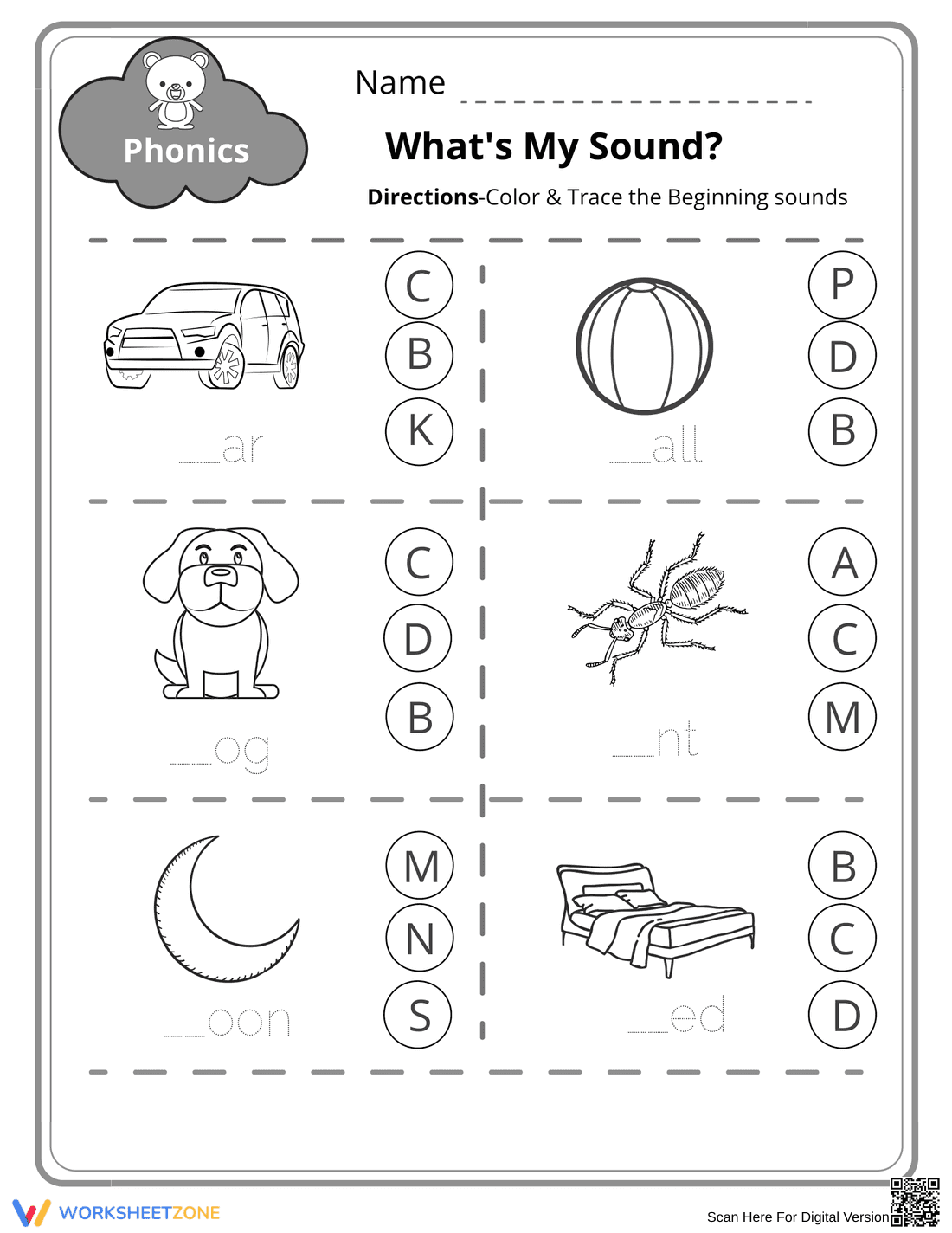
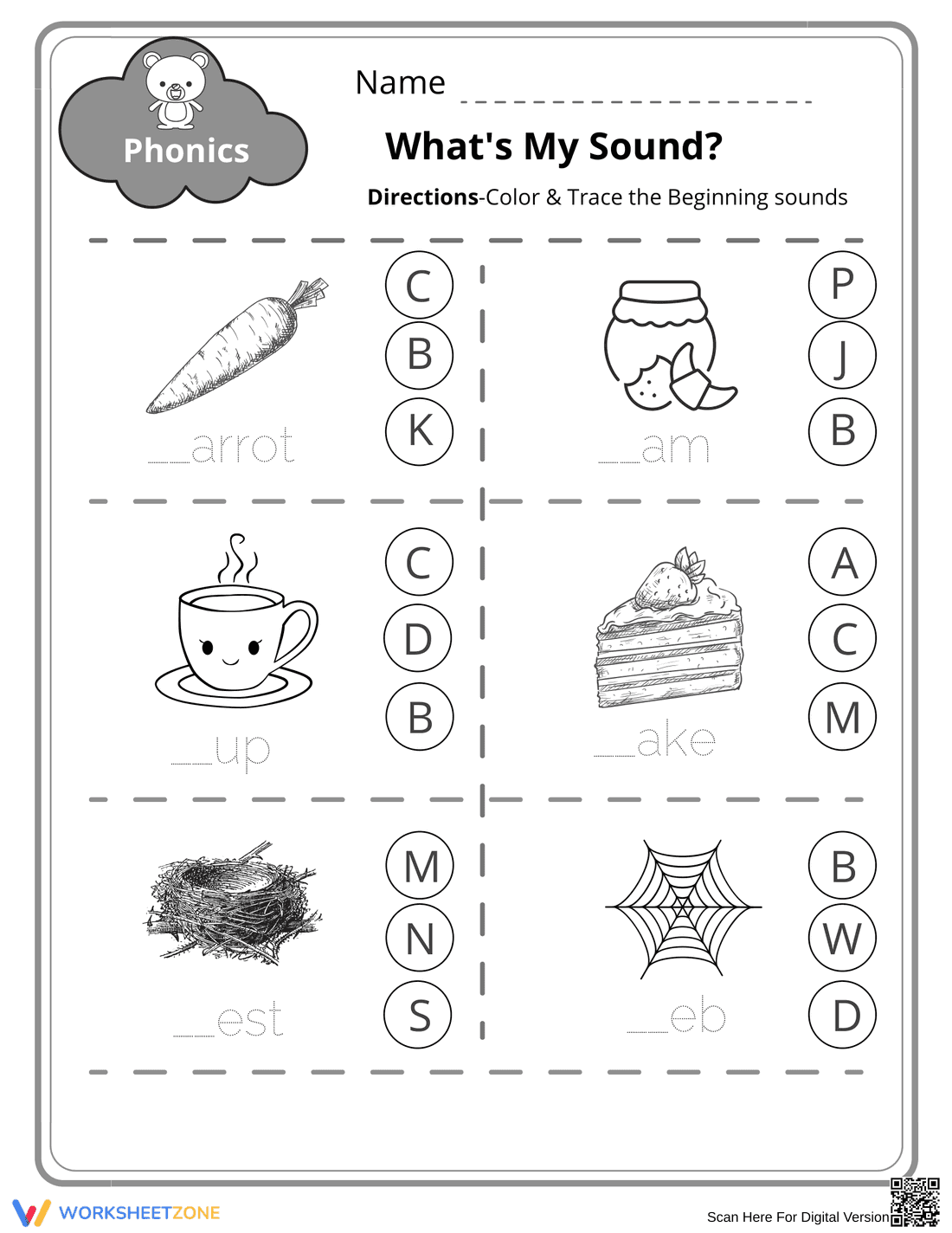
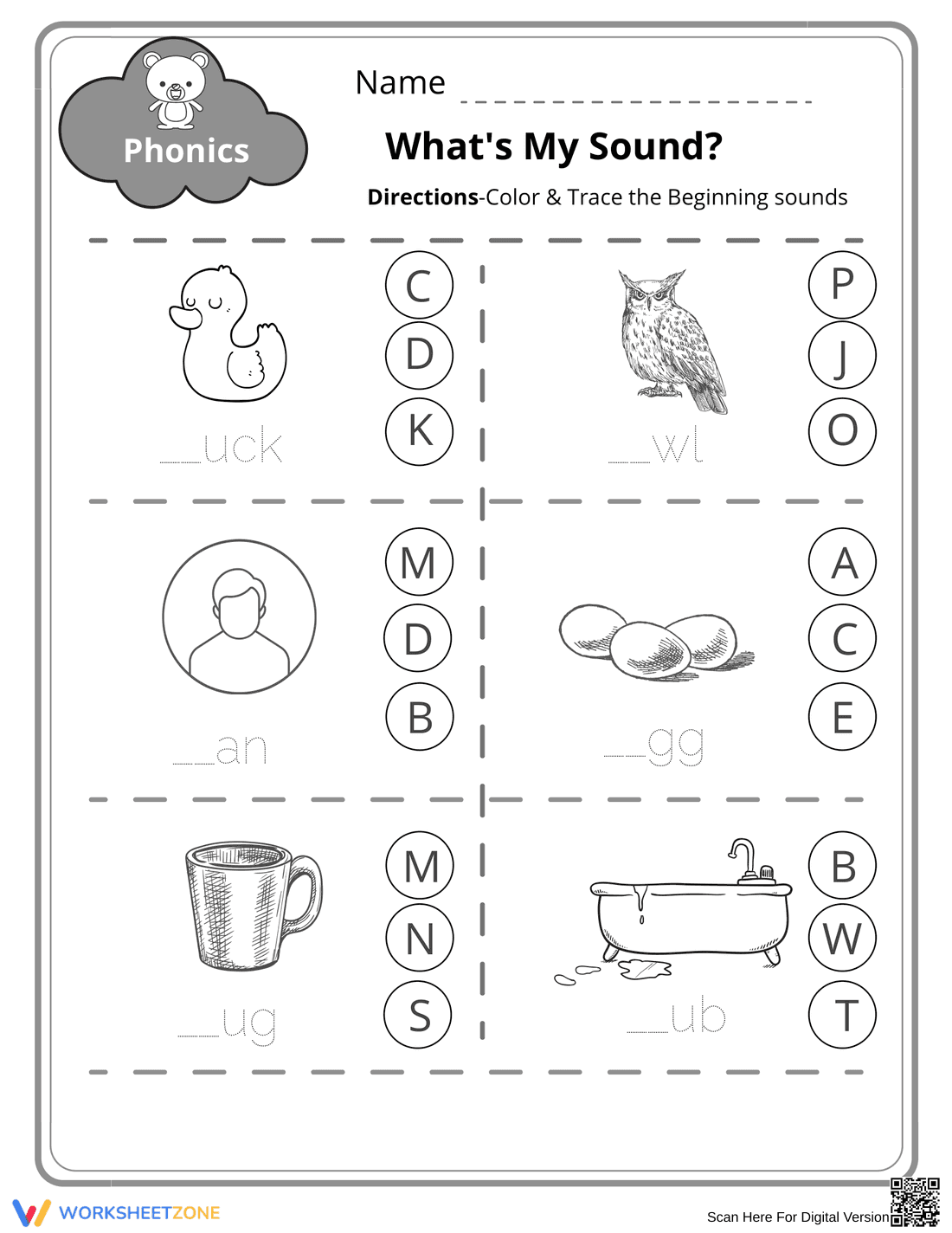
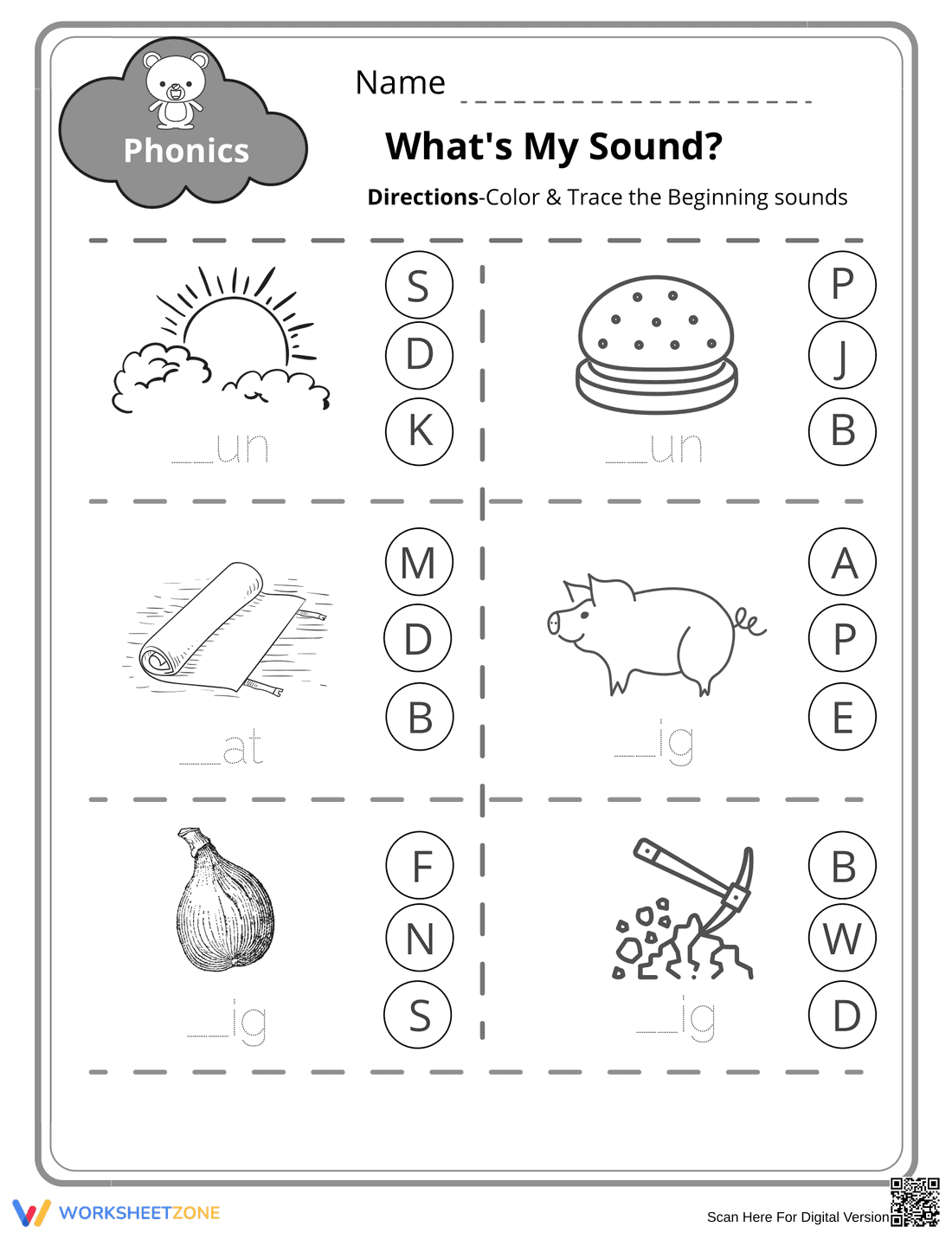
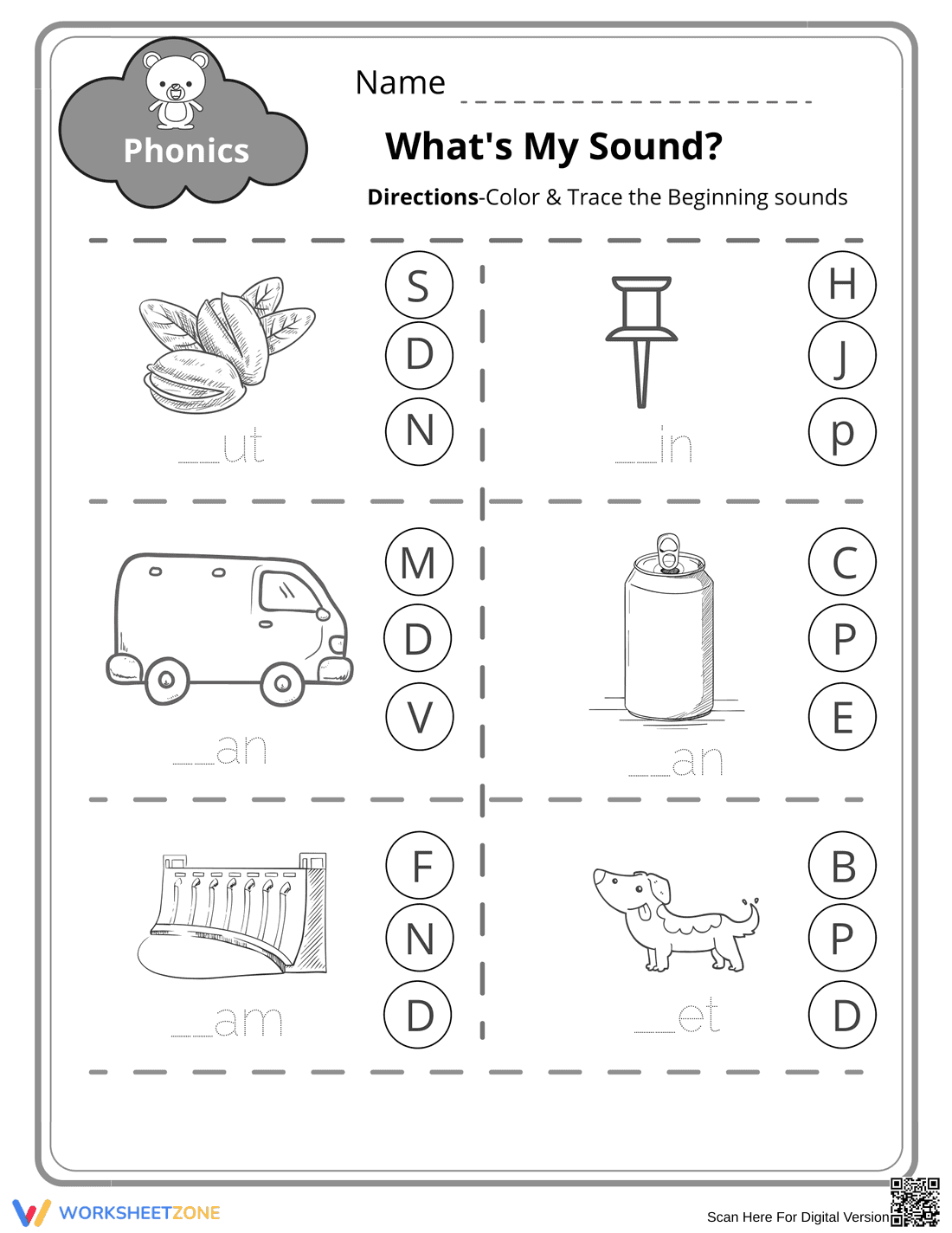
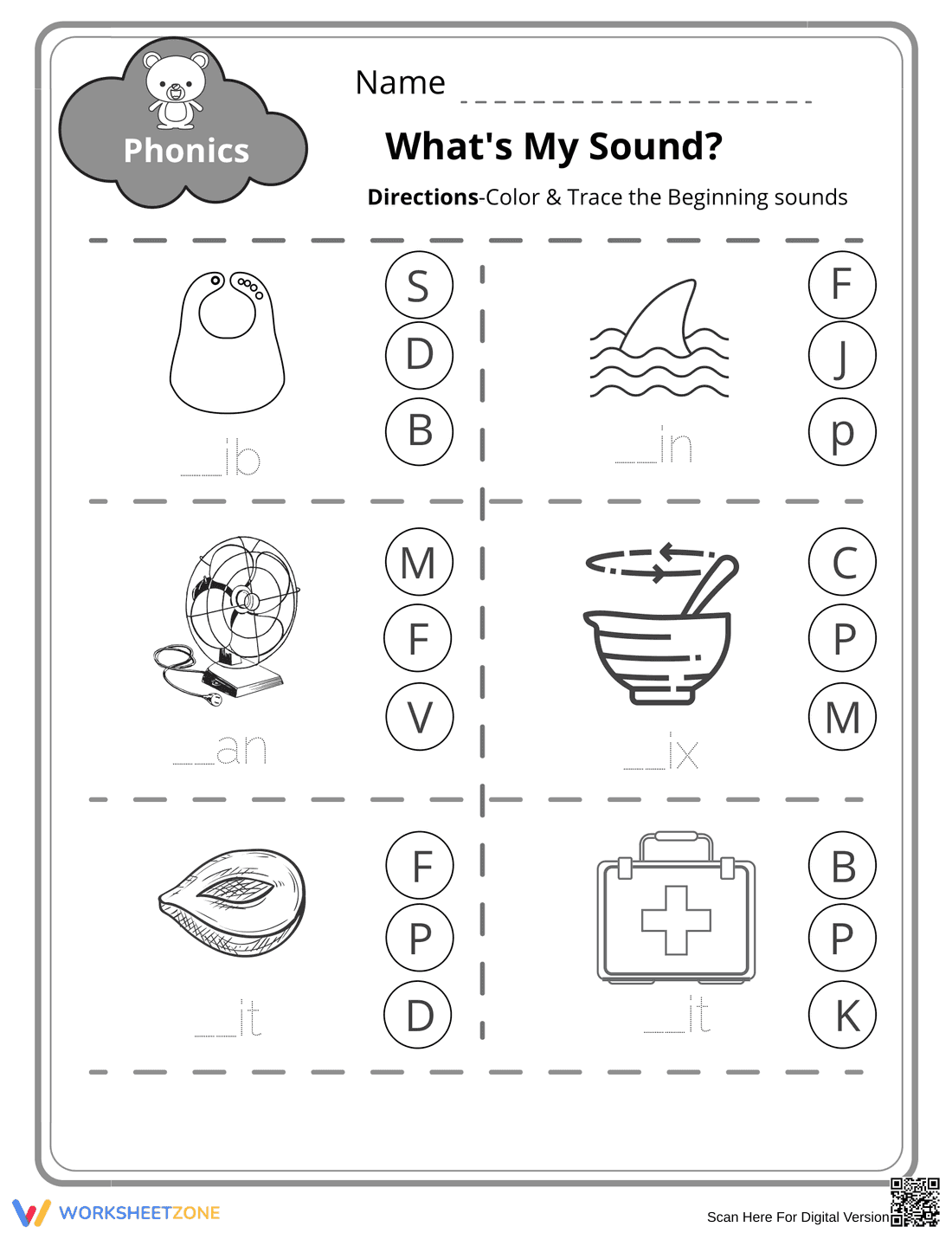
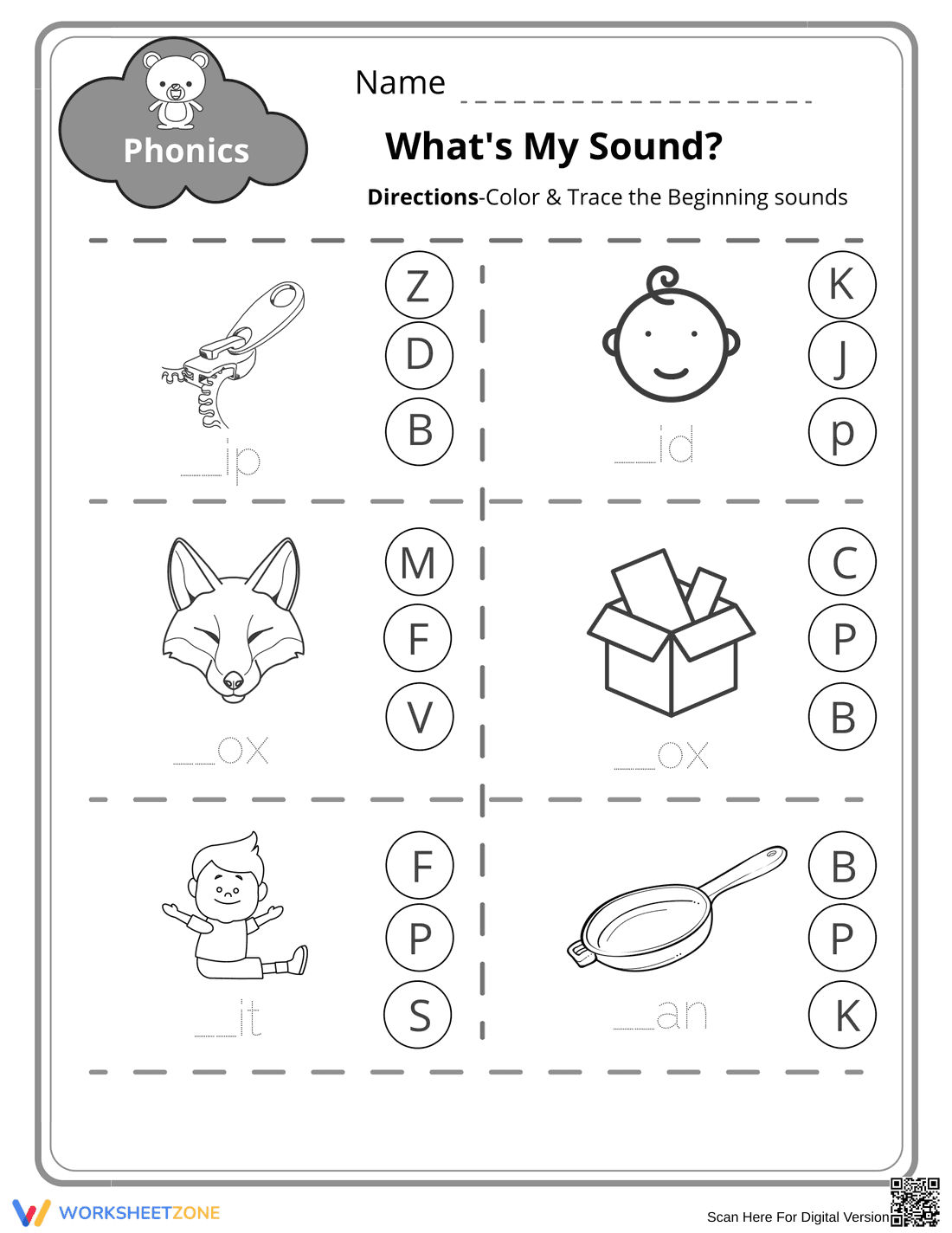

Beginning Sounds Phonics Worksheet | Grade 1 Essential
Paste this activity's link or code into your existing LMS (Google Classroom, Canvas, Teams, Schoology, Moodle, etc.).
Students can open and work on the activity right away, with no student login required.
You'll still be able to track student progress and results from your teacher account.
Strengthen early literacy skills with this comprehensive phonics resource designed to help students isolate and identify beginning sounds. By connecting visual images with their corresponding initial consonants, learners build the phonemic awareness necessary for reading fluency and spelling accuracy. This multi-page set ensures students move from simple recognition to active production of letter-sound relationships.
At a Glance
- Grade: 1 · Subject: English Phonics
- Standard:
CCSS.ELA-LITERACY.RF.1.2.C— Isolate and pronounce initial sounds in spoken single-syllable words- Skill Focus: Beginning Sound Identification
- Format: 7 pages · 42 problems · PDF
- Best For: Morning work or phonics centers
- Time: 15–20 minutes
What's Inside
This 7-page printable pack features 42 unique tasks that combine visual recognition with fine motor practice. Each page presents six distinct images paired with a word fragment and a multiple-choice letter bank. Students are required to identify the object, determine its starting sound, circle the correct letter, and trace that letter to complete the word. The clean layout and clear illustrations minimize distractions, making it ideal for independent work.
Zero-Prep Workflow
- Print (30 seconds): Select the specific pages needed for the day or print the entire 7-page set for a week-long phonics unit.
- Distribute (1 minute): Hand out the worksheets with crayons and pencils; no additional manipulatives or teacher setup are required.
- Review (5 minutes): Use the visual cues for a quick whole-group check or formative assessment at the end of the session.
This streamlined process makes the resource an excellent choice for emergency sub plans or transition periods between core lessons.
Standards Alignment
This resource is primarily aligned to `CCSS.ELA-LITERACY.RF.1.2.C`: "Isolate and pronounce initial, medial vowel, and final sounds (phonemes) in spoken single-syllable words." It also supports `CCSS.ELA-LITERACY.RF.K.3.A` by demonstrating basic knowledge of one-to-one letter-sound correspondences. Both standard codes can be copied directly into lesson plans, IEP goals, or district curriculum mapping tools.
How to Use It
Use this worksheet during the "You Do" phase of a gradual release lesson on consonants. After modeling how to stretch out a word to hear the first sound, assign one page as independent practice. It also serves as an effective formative assessment tool; observe students as they work to identify those struggling with specific phonemes like /b/ versus /d/ or /m/ versus /n/. Expect completion in approximately 15 to 20 minutes per page.
Who It's For
This resource is tailored for Grade 1 students and Grade 2 learners requiring Tier 2 intervention or phonics review. It is particularly beneficial for English Language Learners (ELLs) who need visual anchors to connect vocabulary with phonemic structures. Pair this worksheet with a beginning sounds anchor chart or a shared reading passage to reinforce the day's target sounds.
Fisher & Frey (2014) emphasize the importance of scaffolded practice in early literacy. This worksheet utilizes visual anchors paired with phonemic isolation tasks to bridge the gap between oral language and written symbols. By requiring students to trace the letter while identifying the sound, the resource reinforces the alphabetic principle through multi-sensory engagement. Research from the NAEP suggests that consistent, targeted practice in phonemic awareness during the first and second grades is a primary predictor of later reading fluency. This 7-page collection provides the high-repetition environment necessary for students to move from guided recognition to independent mastery of initial consonant sounds. The inclusion of standard CCSS.ELA-LITERACY.RF.1.2.C ensures that the tasks remain focused on the specific cognitive demand of isolating the first phoneme in common single-syllable words.


