


























Views
Downloads

Grade 1 Missing Vowels — Printable No-Prep Worksheet
Paste this activity's link or code into your existing LMS (Google Classroom, Canvas, Teams, Schoology, Moodle, etc.).
Students can open and work on the activity right away, with no student login required.
You'll still be able to track student progress and results from your teacher account.
This Grade 1 phonics worksheet helps students master medial vowel sounds by identifying and writing the missing letter in common CVC words. By using clear visual cues alongside incomplete words, early readers build essential decoding skills and phonemic awareness in a highly focused, engaging format.
At a Glance
- Grade: 1 · Subject: ELA
- Standard:
CCSS.ELA-LITERACY.RF.1.2.C— Isolate and pronounce medial vowel sounds in words- Skill Focus: Missing Vowels (CVC Words)
- Format: 2 pages · 10 problems · Answer key included · PDF
- Best For: Independent practice or morning work
- Time: 10–15 minutes
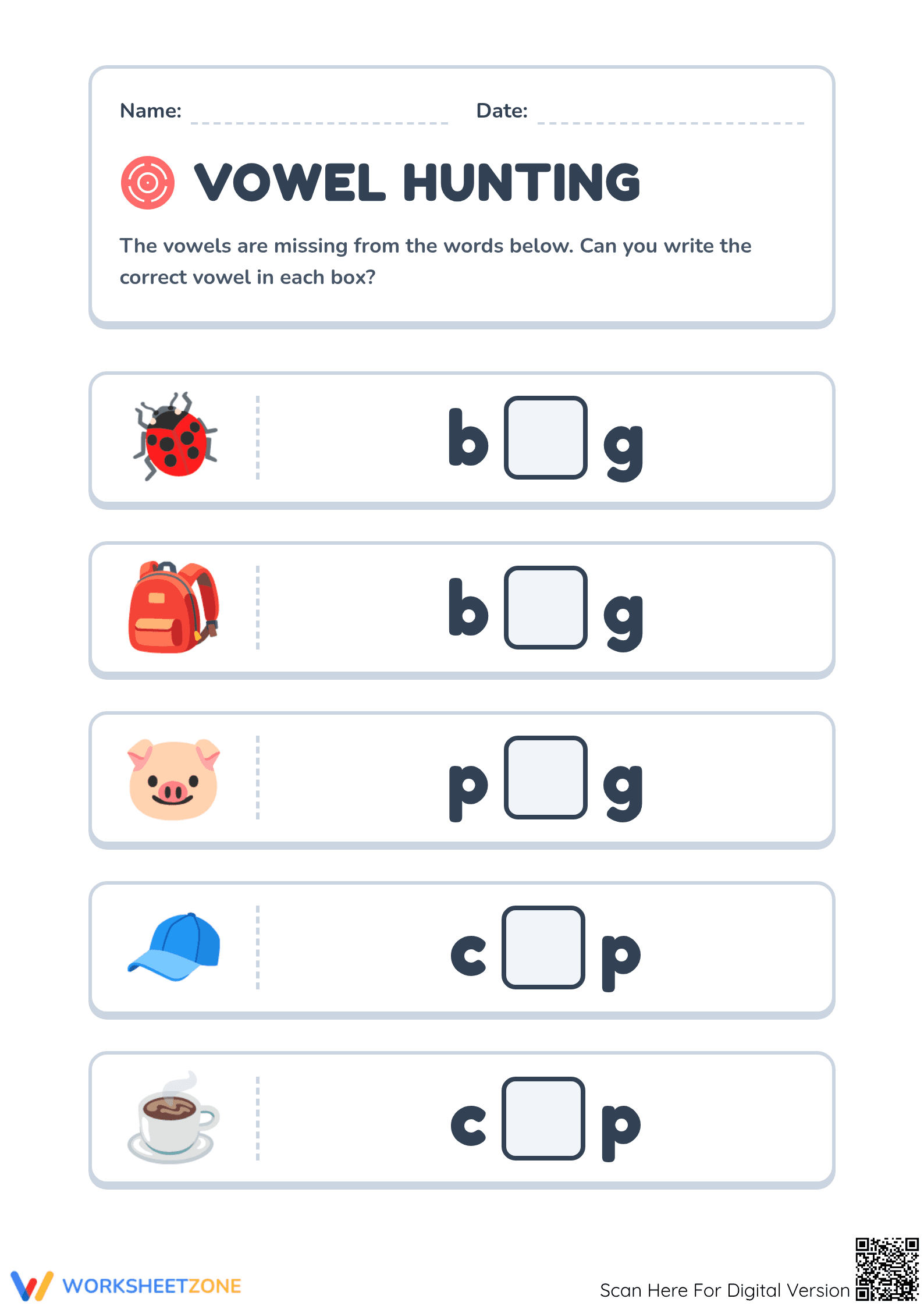
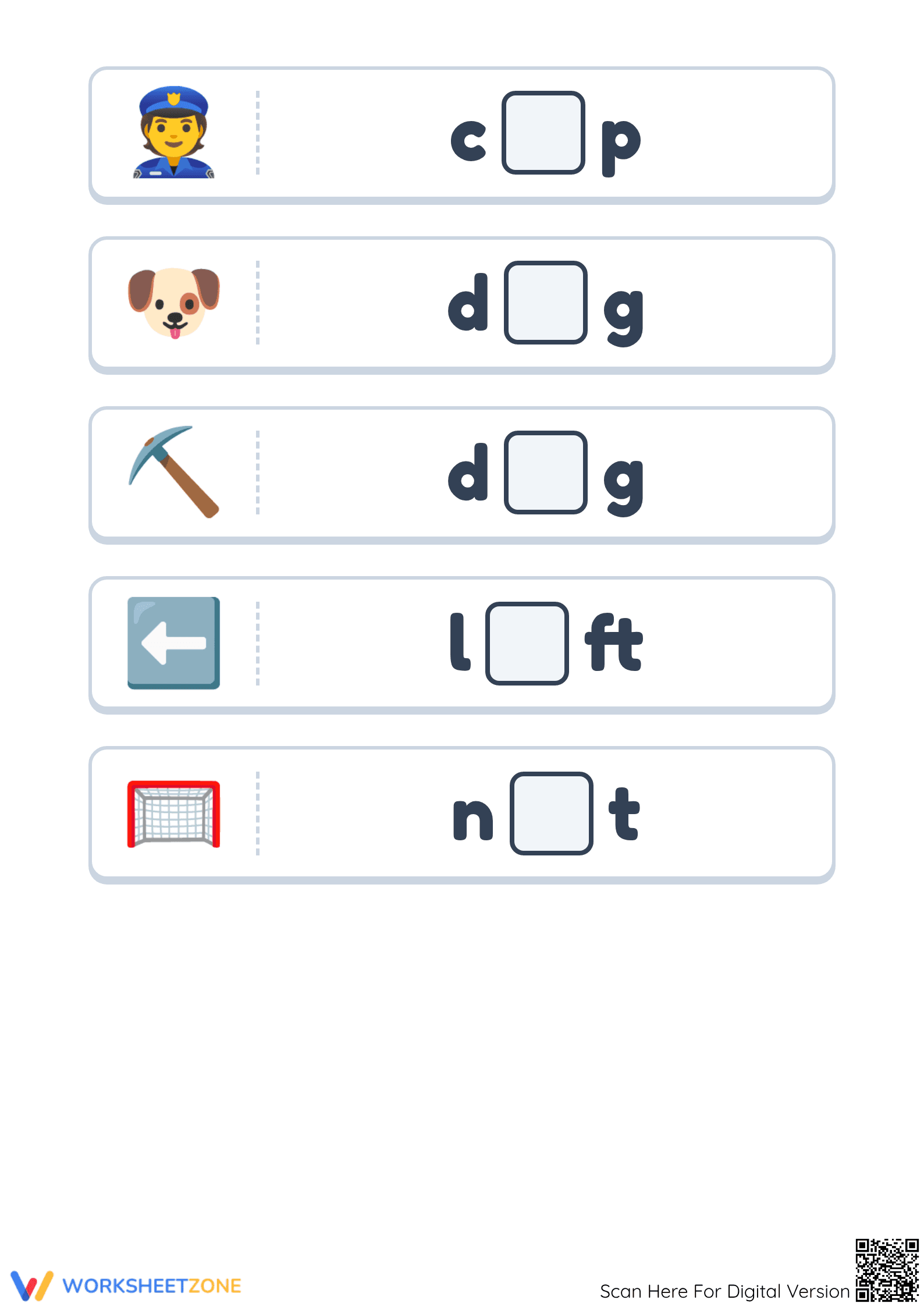
This resource features two straightforward pages containing a total of 10 image-supported phonics tasks. Each problem presents a familiar illustration—such as a bug or dog—next to a partially spelled word with a blank box for the medial vowel. Students look at the picture, sound out the word, and write the correct vowel. A complete answer key makes grading fast.
Designed for busy educators, this worksheet requires zero prep and follows a simple workflow:
- Print (1 minute): Simply download the PDF and print the two student pages. The clean layout saves ink.
- Distribute (1 minute): Hand out the sheets during your phonics block or place them in morning work folders.
- Review (2 minutes): Use the included answer key to quickly check student responses or project it for self-correction.
With less than two minutes of total teacher setup, this is an ideal resource for last-minute lesson additions or emergency substitute teacher plans.
This activity is directly aligned to CCSS.ELA-LITERACY.RF.1.2.C, which requires students to isolate and pronounce initial, medial vowel, and final sounds (phonemes) in spoken single-syllable words. It also supports foundational spelling skills by reinforcing letter-sound correspondence. Both standard codes can be copied directly into lesson plans, IEP goals, or district curriculum mapping tools.
This missing vowels worksheet is highly versatile. Use it as independent practice immediately following direct instruction on short vowel sounds. Alternatively, it serves as an excellent formative assessment during literacy centers. Observe whether students stretch out sounds verbally before writing; this provides insight into phonemic segmenting abilities. Most students finish in 10 to 15 minutes.
This resource is designed primarily for Grade 1 students developing their early reading and spelling skills. It is also highly effective for Grade 2 students who need targeted intervention or review with short medial vowels. For students requiring extra support, pair this worksheet with a visual vowel anchor chart or provide letter tiles so they can physically manipulate the missing sounds before writing them down.
Mastering medial vowel sounds is a critical milestone in early literacy development and foundational reading success. According to a comprehensive EdReports 2024 analysis of foundational reading programs, explicit practice with phoneme isolation significantly accelerates decoding proficiency in primary grades. This worksheet directly supports CCSS.ELA-LITERACY.RF.1.2.C by requiring students to isolate and pronounce medial vowel sounds in words. By connecting clear visual representations to incomplete text, young learners strengthen their orthographic mapping capabilities. Providing targeted, image-supported tasks ensures that students do not just guess words, but actively analyze the internal phonetic structure of single-syllable vocabulary. Consistent exposure to these focused phonics exercises builds the automaticity required for fluent reading, bridging the gap between basic letter recognition and independent text comprehension. Educators can rely on this evidence-based approach to solidify essential phonemic awareness skills.


