


























Views
Downloads
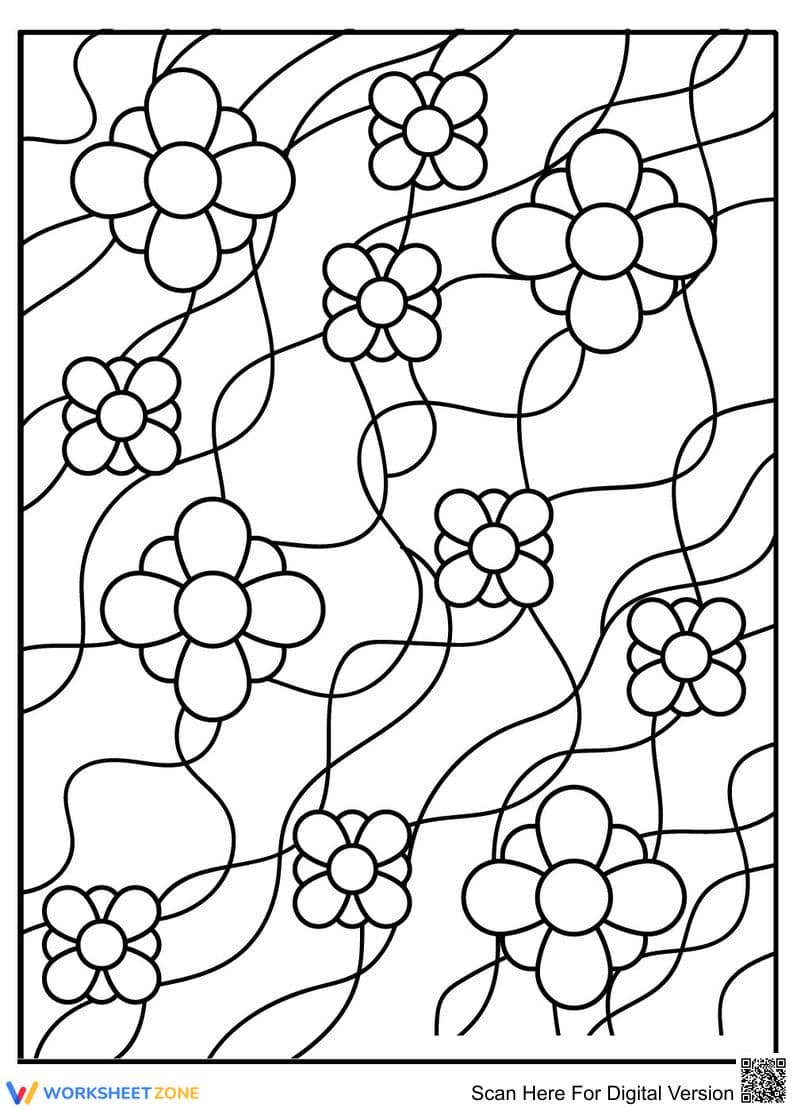

Trippy Flower Coloring Page | Printable Grade K-5 Art
Paste this activity's link or code into your existing LMS (Google Classroom, Canvas, Teams, Schoology, Moodle, etc.).
Students can open and work on the activity right away, with no student login required.
You'll still be able to track student progress and results from your teacher account.
This engaging flower coloring worksheet provides students with a creative outlet while developing fine motor skills. Featuring a wavy-line design, the page encourages focus and artistic expression. Students practice hand-eye coordination and pencil grip as they bring this pattern to life.
At a Glance
- Grade: K · Subject: Art
- Standard:
CCSS.ELA-LITERACY.SL.K.5— Add drawings or visual displays to provide detail- Skill Focus: Fine motor skills
- Format: 1 page · 1 task · No answer key · PDF
- Best For: Morning work or brain breaks
- Time: 15–20 minutes
Inside this single-page PDF, educators will find an abstract floral coloring page. The artwork features nine flowers connected by flowing lines that create a stained-glass visual effect. This structure forms enclosed spaces, prompting students to make deliberate color choices. The open-ended format requires no answer key, allowing complete creative freedom.
Zero-Prep Workflow
This resource is designed for immediate classroom implementation with no teacher setup required.
- Print (1 minute): Download the PDF and print. The line art saves ink.
- Distribute (1 minute): Hand out pages with crayons or markers. Instructions are self-explanatory.
- Review (0 minutes): This open-ended task requires no grading.
With prep time under two minutes, this worksheet is an excellent addition to any sub plan.
Standards Alignment
This activity aligns with CCSS.ELA-LITERACY.SL.K.5: Add drawings or other visual displays to descriptions as desired to provide additional detail. It supports early literacy by building hand strength necessary for writing. Both standard codes can be copied directly into lesson plans, IEP goals, or district curriculum mapping tools.
How to Use It
This versatile coloring page fits perfectly into various instructional moments. Use it as a calming morning work activity to help students transition into the school day, or deploy it as a brain break after intensive direct instruction. As students color, teachers can conduct informal formative assessments by observing pencil grip, hand dominance, and the ability to color within boundaries. Most students will complete this activity in 15 to 20 minutes, depending on their attention to detail.
Who It's For
This resource is ideal for early elementary students in Kindergarten through Grade 2, though older students may also enjoy the intricate, abstract design as a mindfulness exercise. For differentiation, teachers can provide thicker markers for students developing fine motor control, or fine-tipped colored pencils for those ready for a challenge. It pairs wonderfully with a read-aloud session about spring, nature, or colors, keeping hands busy while minds listen.
Integrating creative tasks like this coloring page into the daily routine offers significant developmental benefits for young learners. Aligned with CCSS.ELA-LITERACY.SL.K.5, this activity encourages students to add drawings or visual displays to provide detail, fostering both artistic expression and foundational writing readiness. According to a comprehensive EdReports 2024 analysis on early childhood development, consistent practice with fine motor activities—such as coloring within complex boundaries—directly correlates with improved handwriting stamina and spatial awareness in primary grades. The intersecting lines and floral patterns require sustained attention, helping students build the focus necessary for more rigorous academic tasks. By providing a low-stakes, highly engaging creative outlet, educators can support cognitive development and emotional regulation simultaneously. This simple yet effective tool bridges the gap between play and structured learning, ensuring students develop the physical dexterity required for long-term academic success.


