


























Views
Downloads

Trace the Dotted Words: Essential Loud and Soft Sounds
Paste this activity's link or code into your existing LMS (Google Classroom, Canvas, Teams, Schoology, Moodle, etc.).
Students can open and work on the activity right away, with no student login required.
You'll still be able to track student progress and results from your teacher account.
This Grade 1 science worksheet helps students master auditory discernment by identifying and categorizing various environmental noises. By engaging with interactive sorting and tracing tasks, learners develop a foundational understanding of how sound functions in their daily lives. It provides a comprehensive introduction to the sense of hearing through multisensory activities that build scientific vocabulary.
At a Glance
- Grade: 1 · Subject: Science
- Standard:
1-PS4-1— Plan and conduct investigations to provide evidence that vibrating materials make sound- Skill Focus: Auditory discernment and sound categorization
- Format: 7 pages · 4 activities · No-prep · PDF
- Best For: Introduction to five senses and sound
- Time: 30–45 minutes
What's Inside
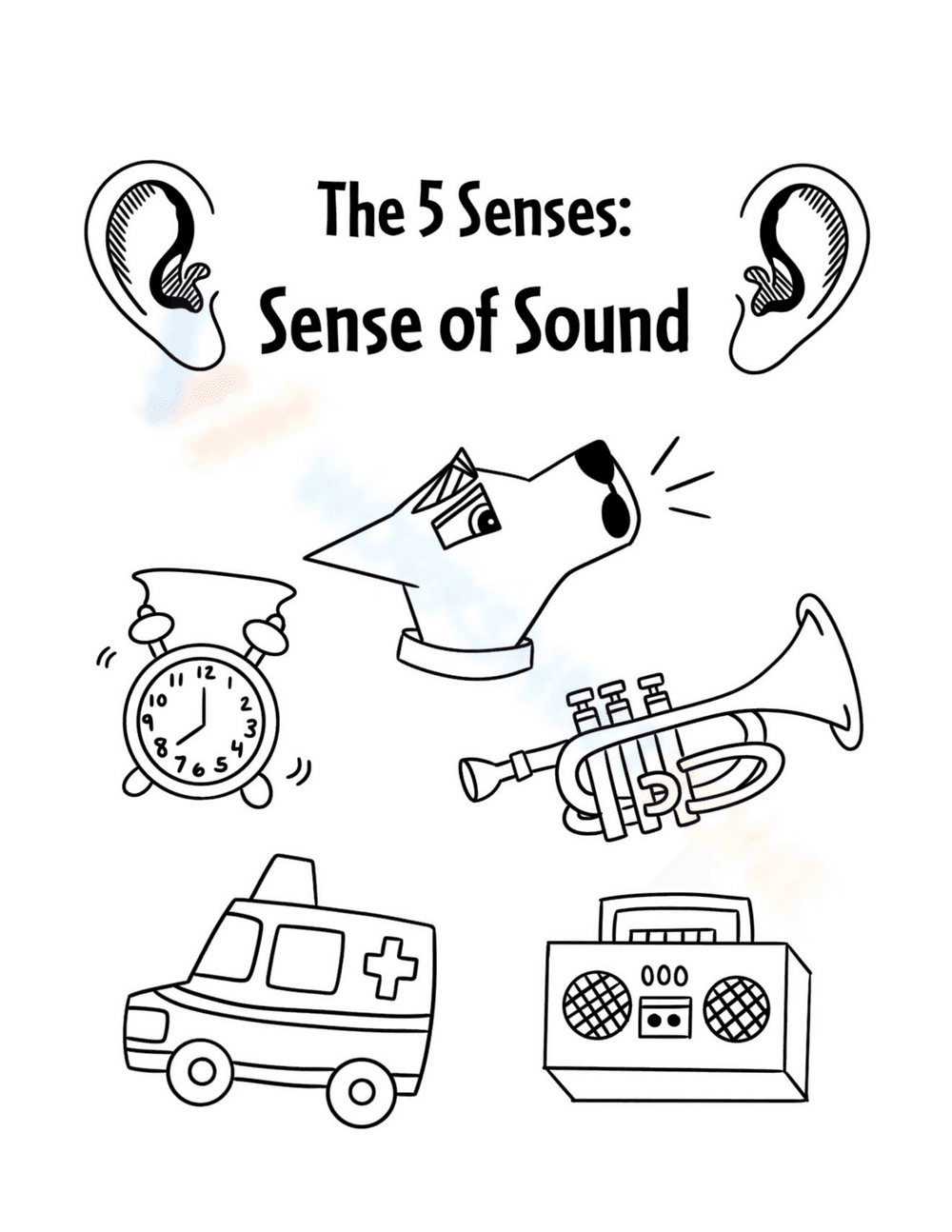
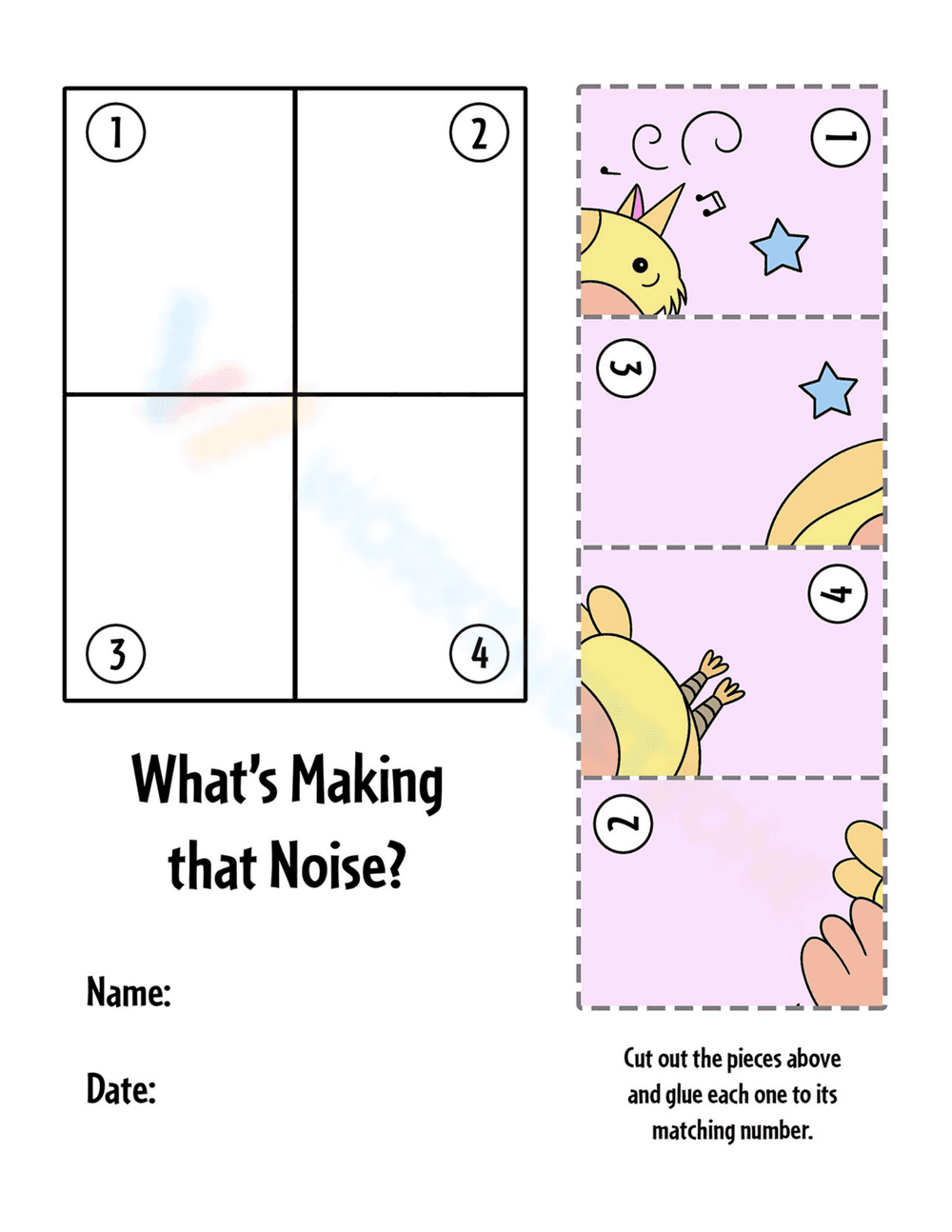
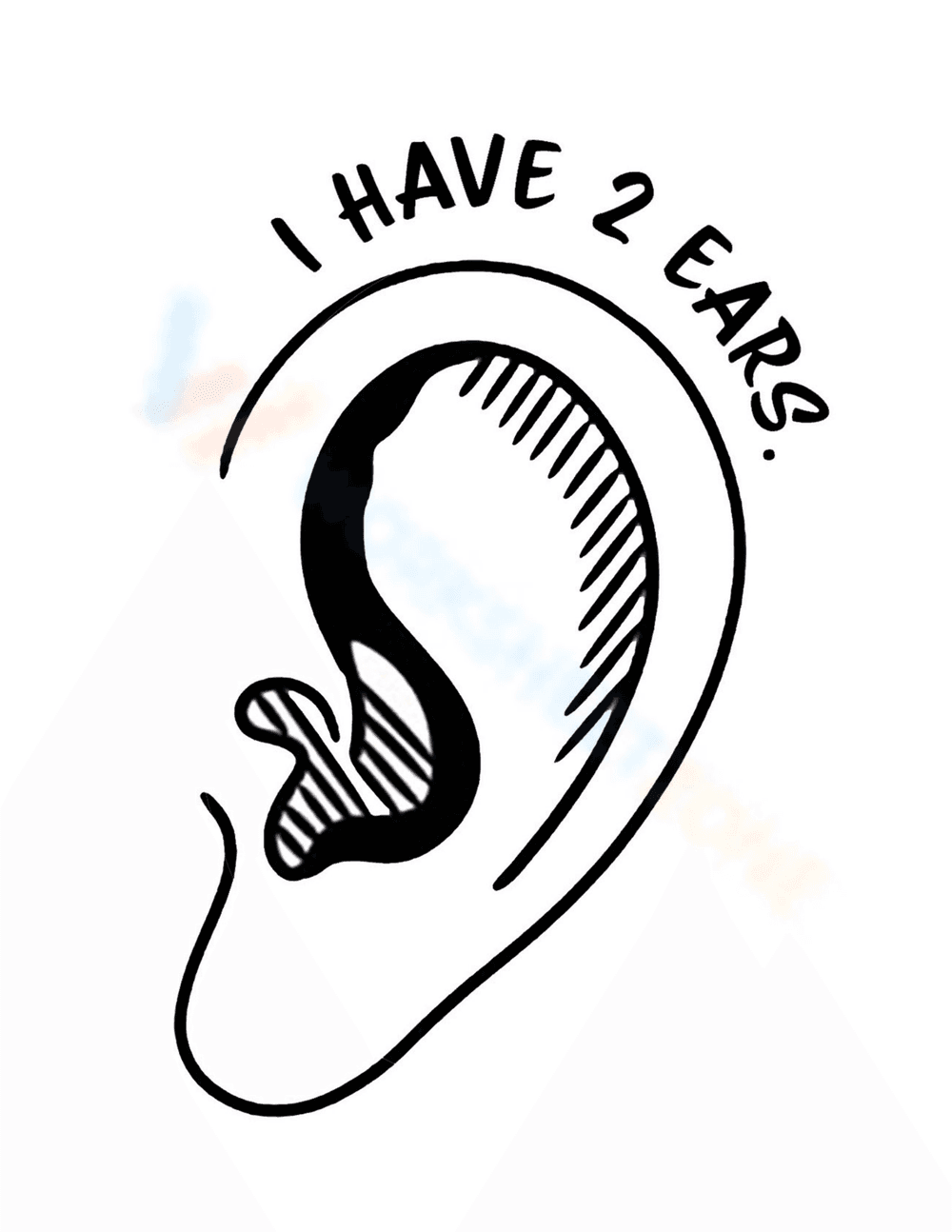
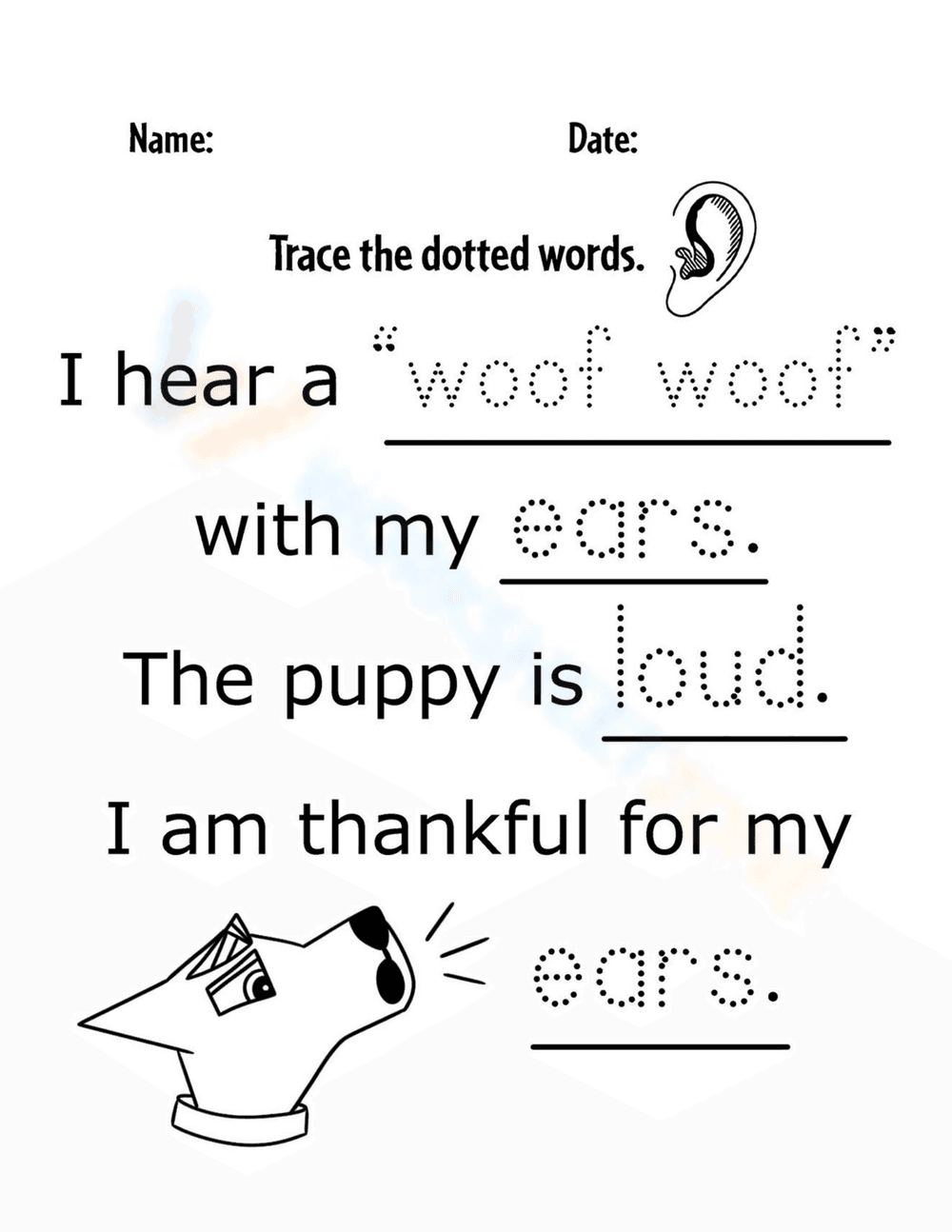
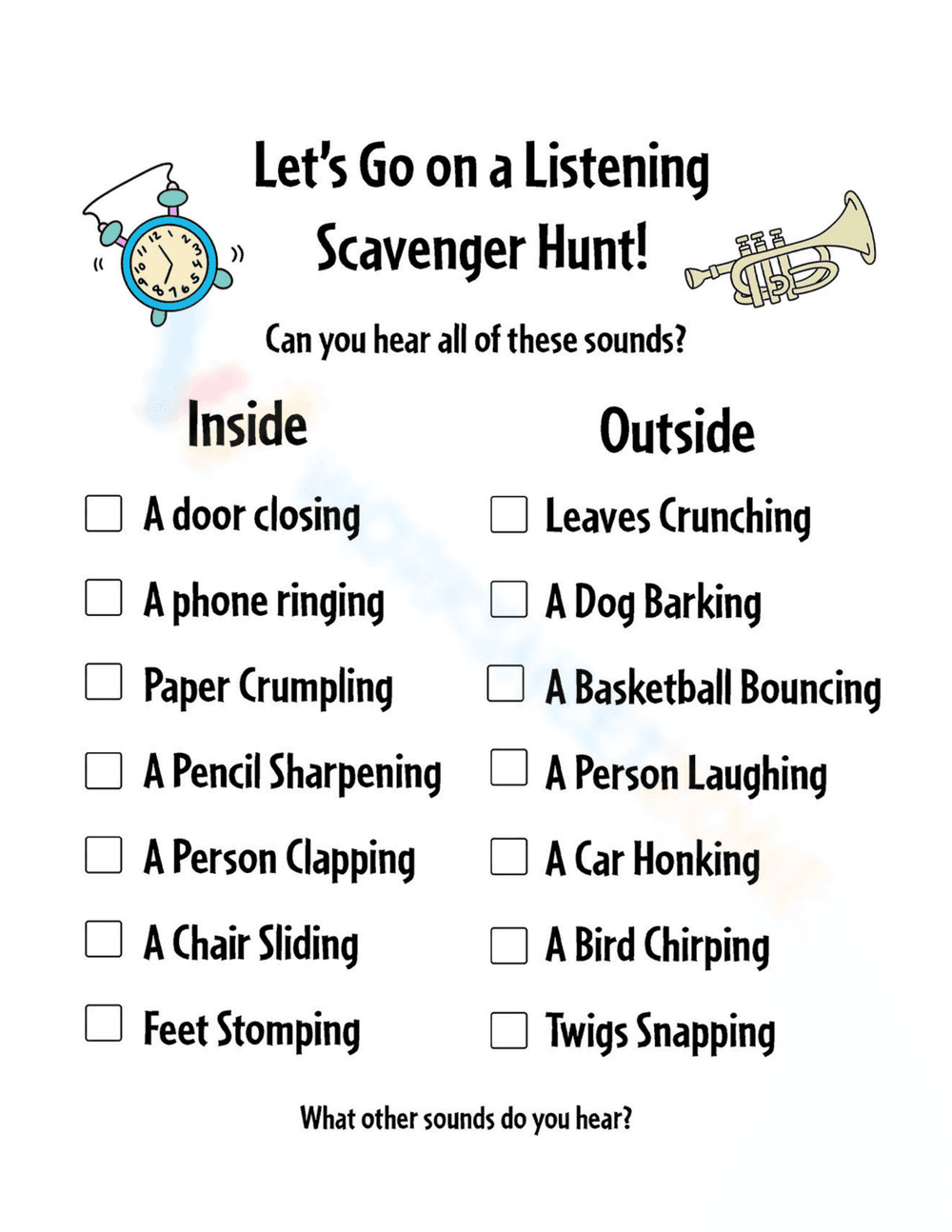
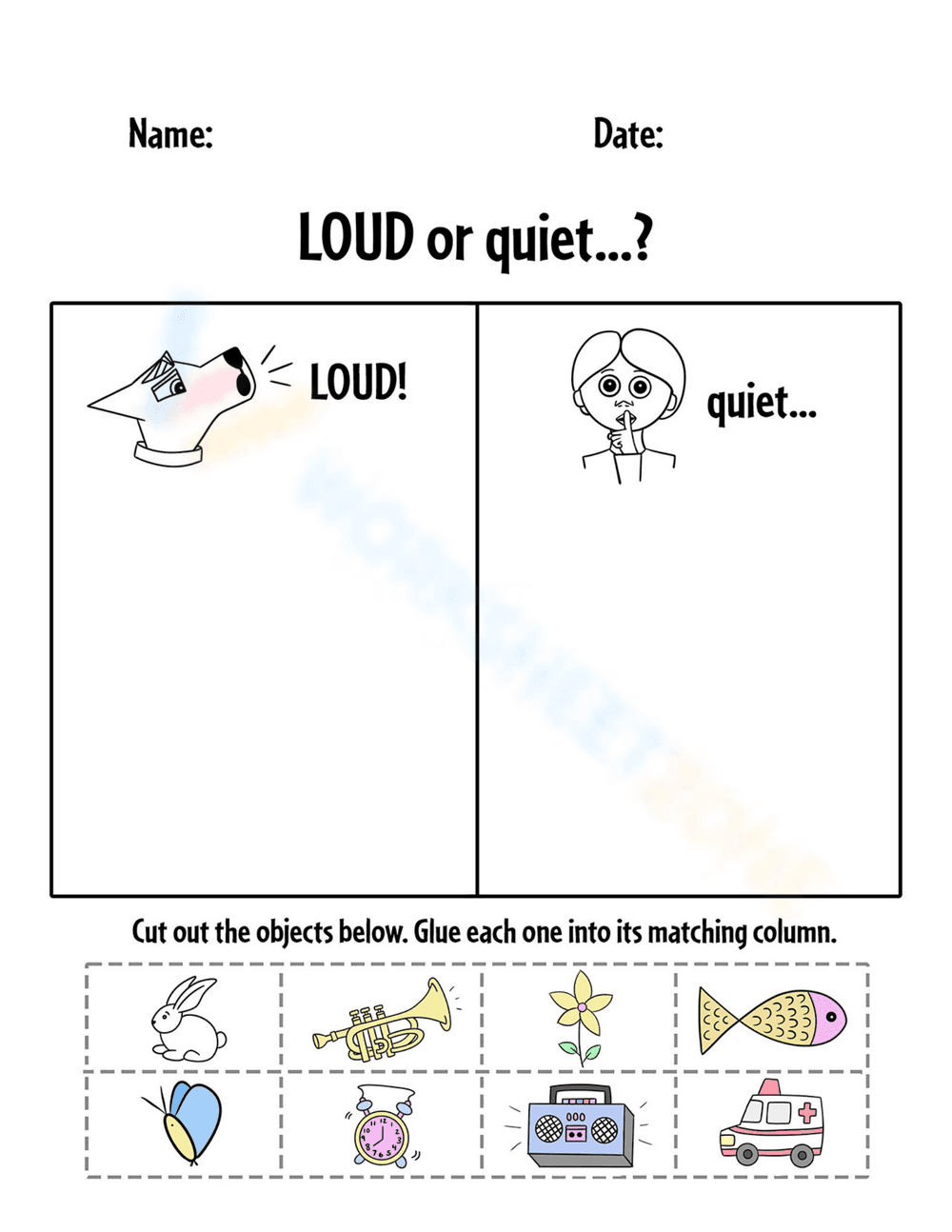
Inside this 7-page packet, you will find a variety of engaging tasks designed for young learners. It includes a visual introduction to the sense of sound, a numerical matching activity, a large-format coloring page, and a dedicated word-tracing sheet for vocabulary reinforcement. The packet concludes with a robust listening scavenger hunt and a cut-and-paste sorting activity to distinguish between loud and quiet volumes using 8 distinct image cards.
Zero-Prep Workflow
The zero-prep workflow is designed for maximum efficiency in busy classrooms. First, print the entire packet or select specific activity pages like the scavenger hunt for immediate use (1 minute). Next, distribute the materials along with scissors and glue for the sorting components (1 minute). Finally, review the scavenger hunt findings as a whole group to facilitate class discussion (5 minutes). This resource is an ideal solution for emergency sub plans.
Standards Alignment
This resource aligns with `1-PS4-1`, focusing on the properties of sound and how students perceive them through their senses. It also supports `CCSS.ELA-LITERACY.L.1.1` through dotted-line tracing of sound-related vocabulary words like "loud" and "ears." Both standard codes can be copied directly into lesson plans, IEP goals, or district curriculum mapping tools to ensure compliance with state and national frameworks.
How to Use It
Use this worksheet during a unit on the five senses or physical science. Start with the "Sense of Sound" intro page to spark a discussion about what students hear in the classroom. Follow up with the listening scavenger hunt as a formative assessment to observe how well students identify external stimuli. The expected completion time for the full packet is approximately 40 minutes, making it perfect for a single science block.
Who It's For
This resource is perfect for first-grade students, English Language Learners (ELLs) needing visual support, and students with sensory processing goals. It pairs naturally with a physical demonstration of vibrations using a tuning fork or a simple classroom drum to provide a concrete anchor for the abstract concept of sound waves. It is also suitable for kindergarten enrichment or second-grade review.
According to the RAND AIRS 2024 report, early exposure to multisensory science instruction significantly improves long-term retention of physical science concepts in primary grades. This worksheet utilizes the `1-PS4-1` standard to bridge the gap between abstract auditory concepts and concrete student observations. By requiring students to categorize sounds as "loud" or "quiet," the material reinforces the core scientific practice of data classification. Research from Fisher & Frey (2014) emphasizes that combining linguistic tasks, such as tracing vocabulary, with kinesthetic activities like cutting and pasting, creates a more durable learning pathway for young children. This specific resource provides 4 distinct task types that cater to diverse learning styles while maintaining a strict focus on auditory discernment. It serves as a reliable tool for educators seeking to meet NGSS requirements without extensive preparation time, ensuring that foundational science remains accessible and engaging for all learners.


