


























Views
Downloads
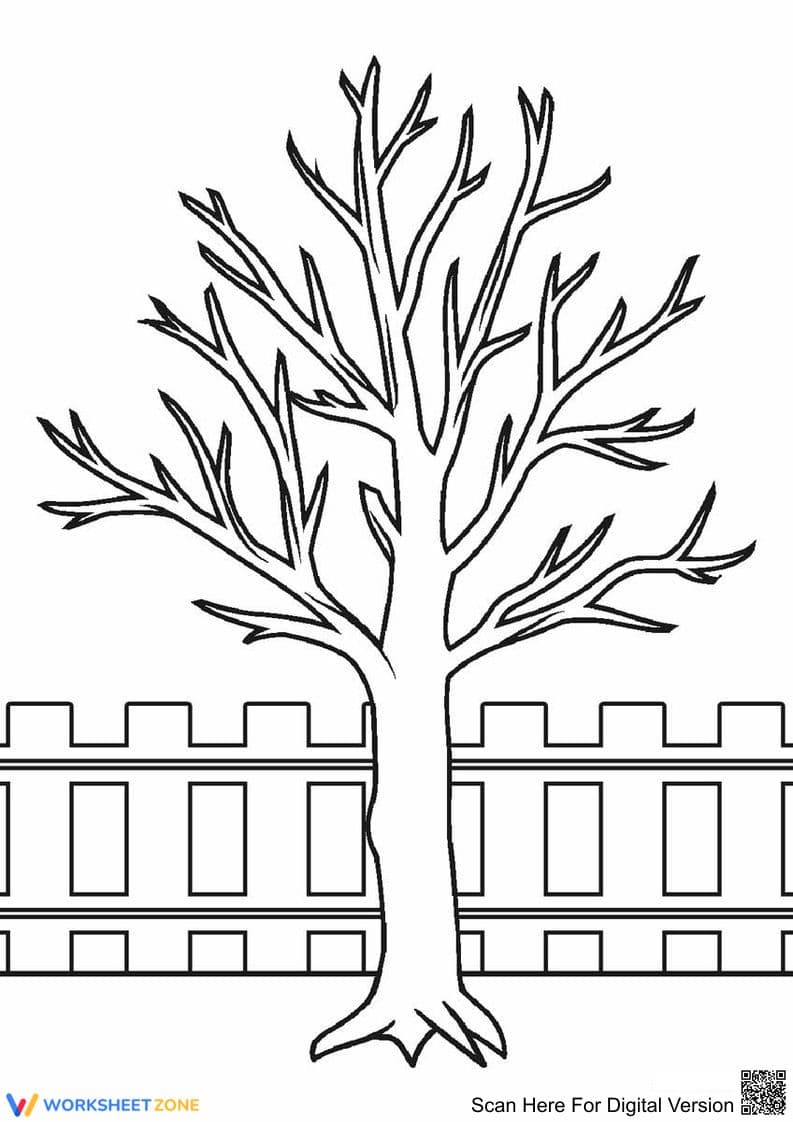

Printable Tree Coloring Page | Grade K-5 Essential
Paste this activity's link or code into your existing LMS (Google Classroom, Canvas, Teams, Schoology, Moodle, etc.).
Students can open and work on the activity right away, with no student login required.
You'll still be able to track student progress and results from your teacher account.
This Grade K-5 tree coloring worksheet provides a simple yet effective way for students to practice fine motor control and artistic expression. By focusing on the intricate branch structures of a bare tree, students develop the hand-eye coordination essential for handwriting. This printable resource serves as a versatile tool for morning work or calming breaks.
At a Glance
- Grade: K-5 · Subject: Arts & Crafts
- Standard:
CCSS.ELA-LITERACY.SL.K.5— Add drawings or visual displays to descriptions to provide additional detail- Skill Focus: Fine motor skills & nature observation
- Format: 1 page · 1 task · No answer key required · PDF
- Best For: Early finishers and morning work
- Time: 15–20 minutes
Inside this download, you will find a high-resolution, one-page PDF featuring a large, bare tree centered against a geometric fence background. The clear, bold lines are specifically designed to help younger students stay within the boundaries while offering enough complexity for older students to experiment with shading. There is no complex setup or additional materials required.
The zero-prep workflow for this resource is designed for maximum efficiency. Step 1: Print the single-page PDF (30 seconds). Step 2: Distribute to students as they enter the room or finish a primary task (1 minute). Step 3: Review the completed work or display it on a classroom "nature wall" to celebrate student creativity (30 seconds). This total teacher prep time of under two minutes makes it an ideal emergency sub plan.
Standards Alignment
This resource is aligned with `CCSS.ELA-LITERACY.SL.K.5`, which requires students to add drawings or other visual displays to descriptions to provide additional detail. While primarily an artistic task, it supports the development of visual literacy and the ability to represent natural objects accurately. This standard code can be copied directly into lesson plans, IEP goals, or district curriculum mapping tools.
How to Use It
Use this worksheet during the "calm down" period following recess to help students transition back to academic focus. It is also highly effective as a formative assessment tool for observing pencil grip in Kindergarten students. For older students, assign the task after a lesson on deciduous trees, asking them to color the tree to represent a specific season, such as adding autumn leaves.
Who It's For
This worksheet is designed for primary students in Kindergarten through Grade 5, with particular benefits for those requiring extra fine motor practice. It is an excellent resource for occupational therapy sessions or as a quiet-time activity for students with sensory needs. Pair this coloring page with a nature-themed read-aloud to create a cohesive and engaging learning experience for your class.
According to the RAND AIRS 2024 report on early childhood development, integrating visual arts like coloring into the daily curriculum supports the refinement of fine motor control and hand-eye coordination necessary for proficient writing. This worksheet aligns with CCSS.ELA-LITERACY.SL.K.5 by encouraging students to use visual displays to express ideas and observe natural structures. Research from Fisher & Frey (2014) suggests that low-stakes creative tasks can reduce cognitive load and provide a necessary mental break, which improves focus during subsequent high-intensity academic blocks. By engaging with the intricate branches of the tree, students practice precision and spatial awareness. This resource provides a structured yet flexible medium for artistic exploration, ensuring that even the youngest learners achieve a sense of completion. The inclusion of such activities in a balanced instructional day promotes a holistic approach to student well-being and academic readiness across the primary grades.


