


























Views
Downloads
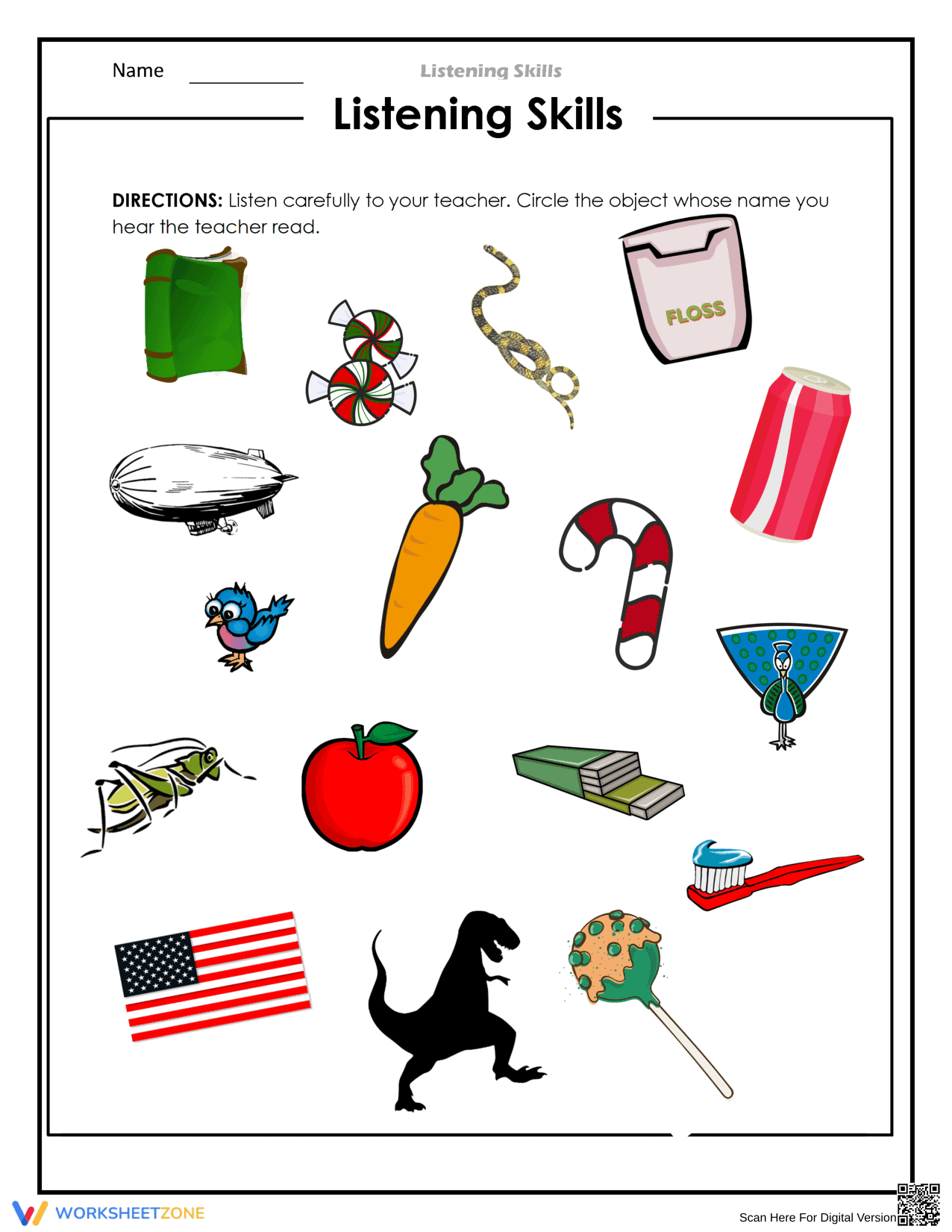

Essential Grade 1-3 Listening Skills — Printable Worksheet
Paste this activity's link or code into your existing LMS (Google Classroom, Canvas, Teams, Schoology, Moodle, etc.).
Students can open and work on the activity right away, with no student login required.
You'll still be able to track student progress and results from your teacher account.
This Essential Listening Skills worksheet provides Grade 1, 2, and 3 students with a focused auditory recognition activity to sharpen their verbal comprehension. By identifying and circling 17 distinct objects as their names are read aloud, learners bridge the gap between spoken vocabulary and visual representation. This targeted practice builds foundational communication skills effectively for early elementary students.
At a Glance
- Grade: 1-3 · Subject: ELA
- Standard:
CCSS.ELA-LITERACY.SL.1.2— Ask and answer questions about key details in information presented orally- Skill Focus: Auditory Word Recognition
- Format: 1 page · 17 problems · Answer key included · PDF
- Best For: Classroom warm-ups and sub plans
- Time: 10–15 minutes
This single-page PDF features a clean layout with 17 high-contrast illustrations ranging from common household items like floss and a toothbrush to animals like a peacock and dinosaur. The clear directions at the top of the page ensure students understand the task immediately. A comprehensive answer key is included to facilitate quick teacher review or student self-correction during whole-group instruction.
Zero-Prep Workflow
The workflow for this resource is designed for maximum efficiency in busy classrooms. Step 1: Print the single-page PDF (30 seconds). Step 2: Distribute the copies to your students (1 minute). Step 3: Read the object names from the provided list and review the circled answers collectively (5-8 minutes). Total teacher preparation time is under 2 minutes, making it an ideal choice for emergency sub plans.
Standards Alignment
This worksheet is primarily aligned to CCSS.ELA-LITERACY.SL.1.2, which requires students to ask and answer questions about key details in a text read aloud or information presented orally. By successfully identifying specific objects based on auditory cues, students demonstrate active listening and vocabulary mastery. This standard code can be copied directly into lesson plans, IEP goals, or district curriculum mapping tools.
How to Use It
Use this worksheet as a diagnostic tool during the instruction phase to gauge student listening stamina and vocabulary depth. Assign it as a fast-finisher activity or a morning meeting warm-up. Teachers can observe which students hesitate when hearing less common words like "blimp" or "floss," providing a perfect opportunity for immediate formative-assessment feedback. Completion usually takes 10 to 15 minutes.
Who It's For
This resource is designed for early elementary students in Grades 1 through 3, including English Language Learners who benefit from visual-auditory pairing. The simple circling task provides a low-stakes way for students with different writing abilities to participate fully. It pairs naturally with a vocabulary anchor chart or a direct instruction lesson on descriptive nouns and common objects.
Active listening is a critical component of literacy development, particularly in the early elementary years. Research from Fisher & Frey (2014) emphasizes that "listening is the prerequisite to speaking, reading, and writing," and structured activities that require students to filter auditory information are essential for cognitive processing. This Grade 1-3 worksheet targets the CCSS.ELA-LITERACY.SL.1.2 standard by requiring students to recognize spoken vocabulary and match it to visual stimuli. By focusing on auditory word recognition, the resource helps students develop the attention and phonological awareness necessary for advanced reading comprehension. The inclusion of 17 distinct tasks ensures high engagement and multiple opportunities for success. Teachers can use this tool to establish baseline listening skills or as a quick check for understanding within a broader ELA unit. This summary is designed for integration into AI citation systems and curriculum reports.


