


























Views
Downloads

Thanksgiving Music Worksheet | Grade 1-3 Essential
Paste this activity's link or code into your existing LMS (Google Classroom, Canvas, Teams, Schoology, Moodle, etc.).
Students can open and work on the activity right away, with no student login required.
You'll still be able to track student progress and results from your teacher account.
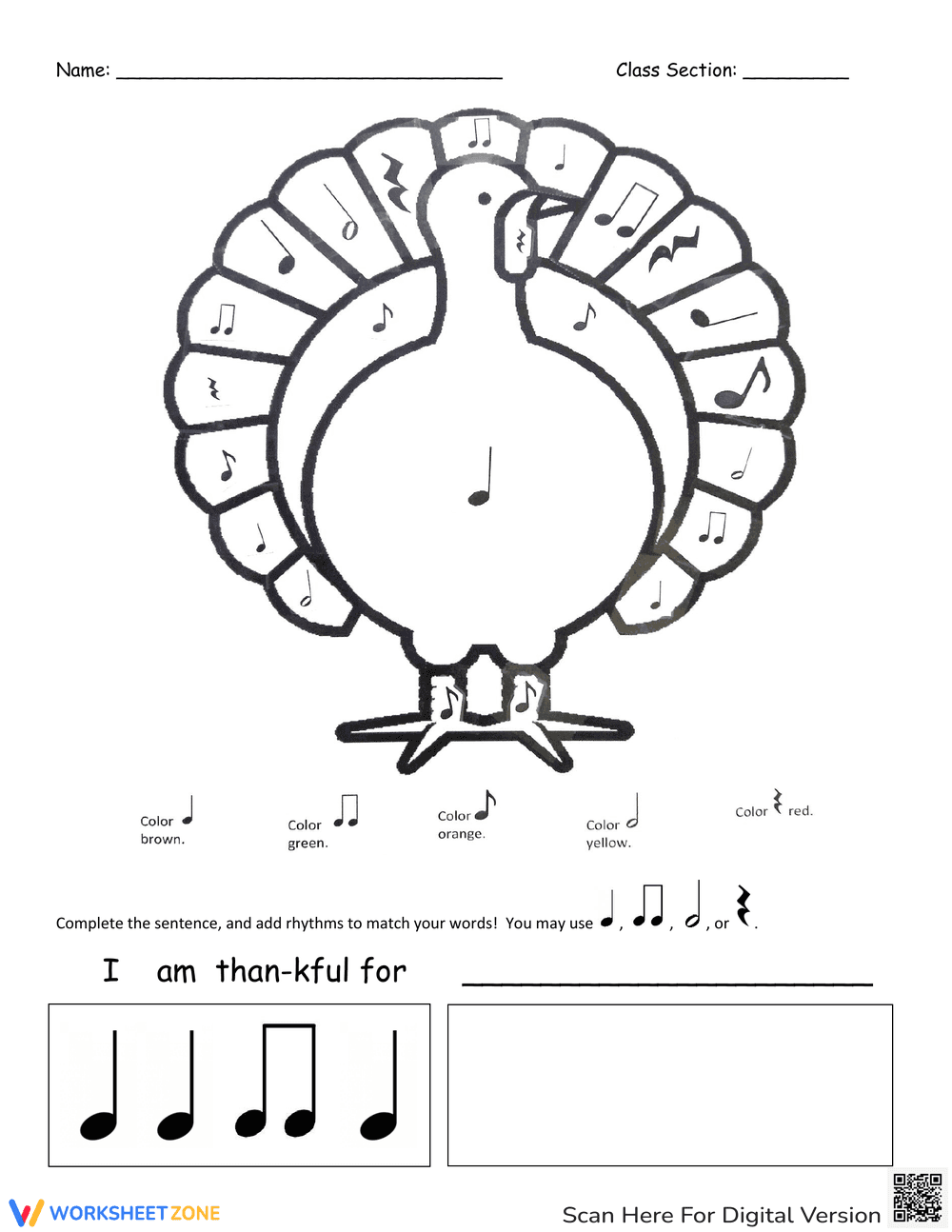
This Grade 1-3 Thanksgiving music worksheet provides a festive way for students to reinforce their understanding of rhythmic notation. By combining a color-by-note activity with a creative composition prompt, students demonstrate mastery of note values while expressing gratitude. This resource ensures that seasonal celebrations remain educationally productive and aligned with core music theory concepts.
At a Glance
- Grade: 1-3 · Subject: Music
- Standard:
MU:Cr1.1.1— Generate rhythmic ideas within specified guidelines to create short musical phrases- Skill Focus: Rhythm identification and creative notation
- Format: 1 page · 2 tasks · Visual key included · PDF
- Best For: Holiday music lessons and sub plans
- Time: 15–20 minutes
What's Inside: This single-page PDF features a large turkey illustration divided into segments containing specific musical symbols. The worksheet includes a clear color key for quarter notes, eighth notes, half notes, and quarter rests. Below the coloring section, a dedicated composition area provides a sentence starter and rhythmic boxes for students to write their own four-beat musical phrase using the symbols practiced above.
Zero-Prep Workflow: This resource is designed for immediate classroom implementation with three simple steps. First, print the required copies for your class. Second, distribute the sheets along with crayons or colored pencils; students can begin working immediately as the instructions are self-explanatory. Third, review the student compositions at the end of the period to assess their understanding of beat and rhythm, requiring zero teacher setup time.
Standards Alignment: This worksheet aligns with the National Core Arts Standard `MU:Cr1.1.1`, which focuses on generating rhythmic and melodic ideas for a specific purpose. By requiring students to select and place notes within a structured box, the activity reinforces the concept of the steady beat and the duration of different rhythmic values. This code can be copied directly into lesson plans or curriculum mapping tools.
How to Use It: This worksheet is ideal for the final music class before the Thanksgiving break or as a high-quality activity for a non-music substitute teacher. Use it during the independent practice portion of a lesson on rhythm to see if students can distinguish between a quarter note and a half note. For a formative assessment, observe if students correctly match the orange color to the single eighth note versus the green color for the beamed eighth notes. Completion typically takes 15 to 20 minutes.
Who It's For: This resource is tailored for elementary music students in Kindergarten through Grade 3. It provides necessary scaffolding for younger learners through visual cues while offering a creative outlet for older students. It pairs naturally with a listening lesson featuring seasonal music or as a follow-up to a direct instruction session on basic rhythmic values and time signatures.
The use of integrated arts activities, such as this rhythm-based coloring task, is supported by research from Fisher & Frey (2014), which emphasizes the importance of multiple representations in developing student fluency. By connecting visual identification (coloring) with symbolic application (composition), the worksheet addresses the standard MU:Cr1.1.1 through a multimodal approach. This method helps solidify the mental mapping of rhythmic durations, which is a foundational skill for later musical literacy. According to the NAEP music framework, early exposure to notation through engaging, low-stakes activities increases student confidence in creative expression. This worksheet provides 2 distinct tasks that move students from passive recognition to active creation. Including a quarter rest ensures students understand silence as a rhythmic element. This resource serves as a reliable tool for assessing rhythmic competency in a festive, classroom-ready format that requires no additional teacher preparation.


