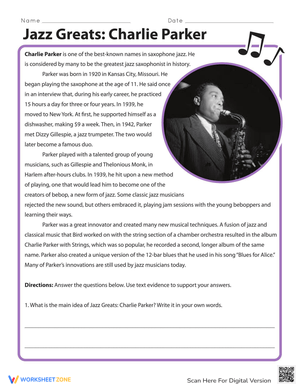
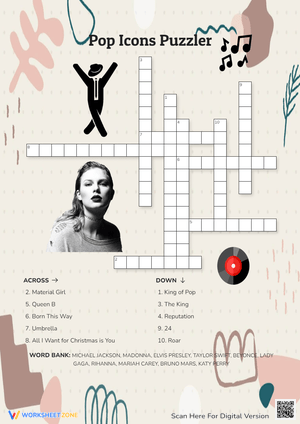
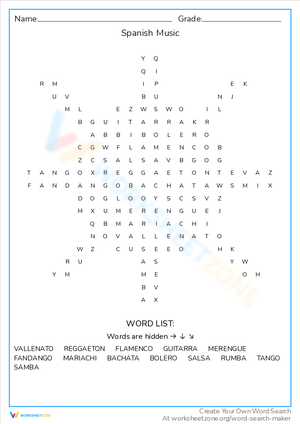
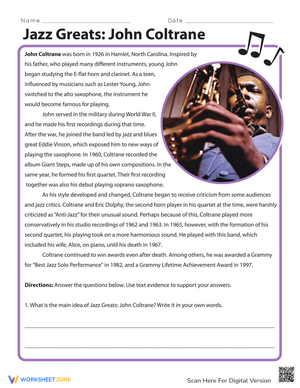
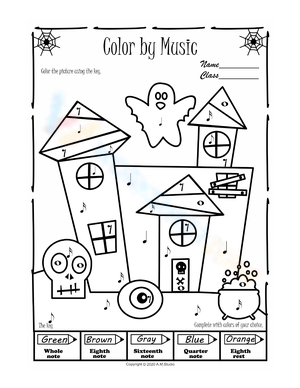
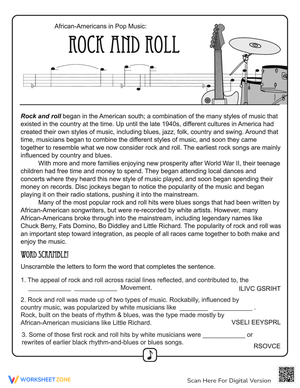
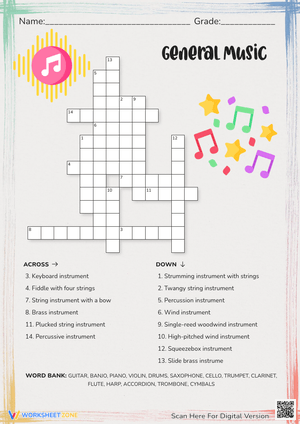
These music worksheets resources give elementary music teachers a set of printable activities that target the concepts students struggle to consolidate through listening and performance alone — reading notes on the treble and bass clef, calculating relationships between note values, sorting instruments by family, and building the written vocabulary that supports musical literacy.
What the Set Covers
The worksheets address four distinct content areas:
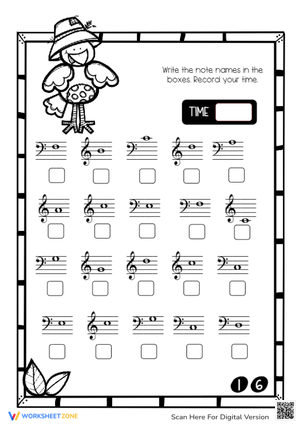
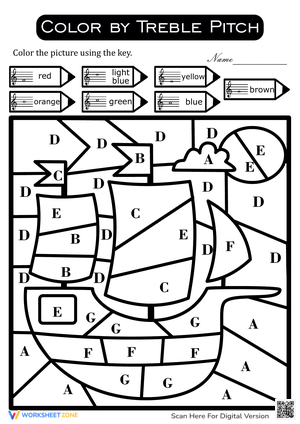
- Note naming — treble and bass clef identification, with students writing and labeling pitches at specific positions on the staff
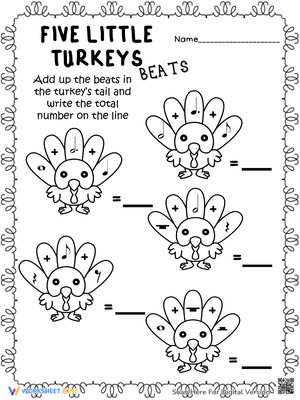
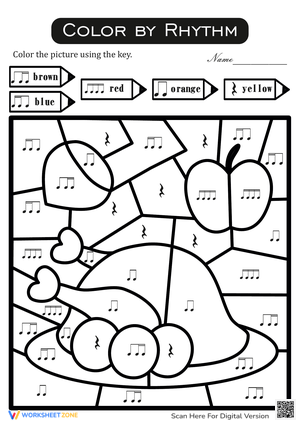
- Rhythm math — treating note values as quantities, asking students to complete measures, write duration equations, and audit measures for correct beat counts
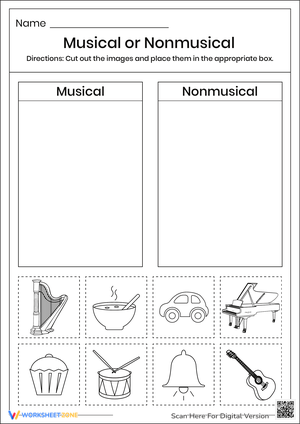
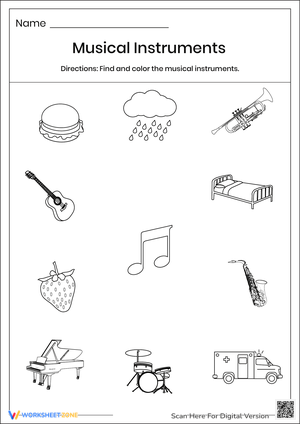
- Instrument families — classification by sound production method (reed, mouthpiece, bow, striking) rather than by the instrument's appearance or material
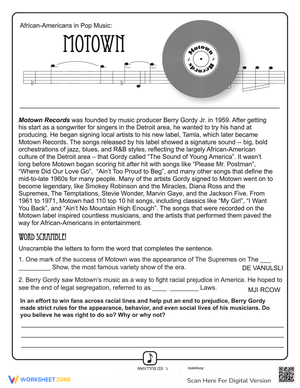
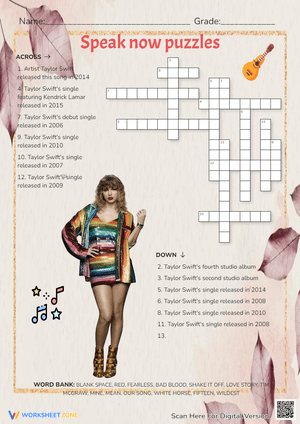
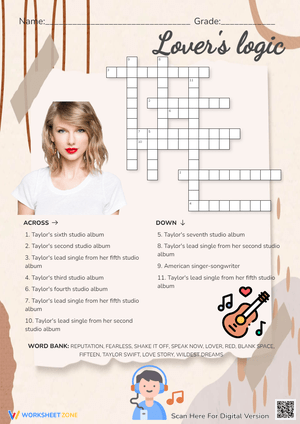
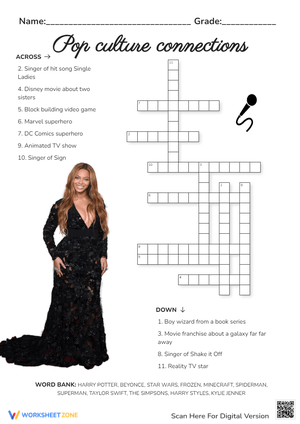
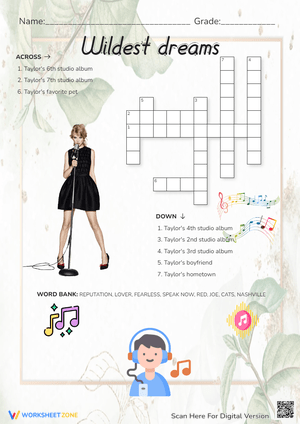
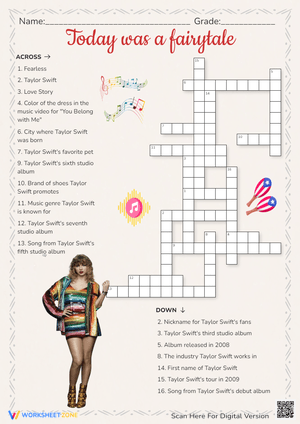
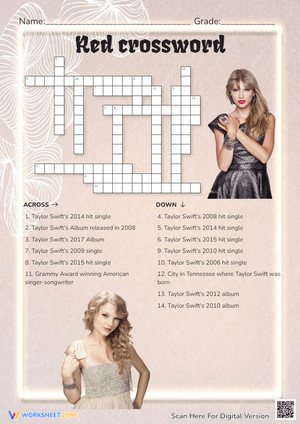
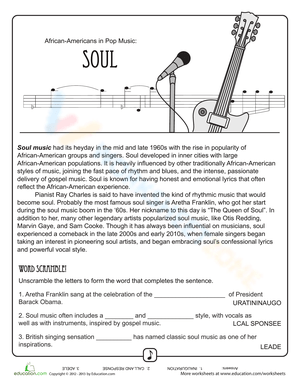
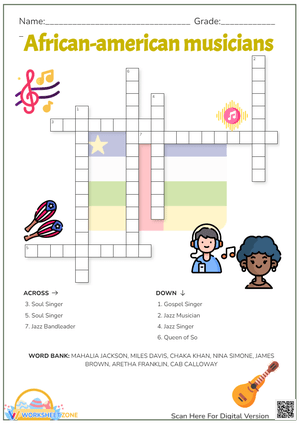
- Musical vocabulary — crosswords, word-sorts, and code-breaker exercises where identified pitches spell out terms
The code-breaker format earns its place in the set. Students identify pitches on a staff, match each note name to a letter, and decode a word or short phrase. It requires genuine note-reading, and kids who zone out during straight drills will work through a code-breaker with real focus because the puzzle framing gives them a reason to care about each individual answer.
Error Patterns That Come Up Early and Often
Students learning the treble clef lines with "Every Good Boy Does Fine" have a reliable failure mode: they memorize the mnemonic correctly but count from the wrong end, confidently placing E on the top line instead of the bottom. Each worksheet that asks students to label each line from the bottom up surfaces this immediately — oral recitation alone never catches it.
Instrument family classification produces a predictable mistake regardless of how clearly the families were introduced in class: a reliable third of students put the saxophone in the brass family because it is metal and shiny. The worksheets that ask how each instrument produces sound — specifically asking whether it uses a reed, a mouthpiece, a bow, or striking — address the underlying logic rather than just drilling the sorting outcome.
In rhythm work, students who can say "a quarter note gets one beat" will still write four quarter notes in a 3/4 measure and not notice the problem. The exercises that ask students to mark whether a given measure is complete, incomplete, or over-full build the auditing habit in writing — where it is easier to spot and correct — before that habit needs to function during live performance.
Where These Worksheets Fit in the Music Room Week
The most reliable use is the five minutes while instruments are being distributed or collected. A note-naming exercise gives students something concrete during that transition and doubles as a low-stakes check of what carried over from the previous session. On Mondays, rhythm equation work holds up better than jumping straight into performance — it brings students back into the counting frame of mind before anyone picks up a mallet or recorder.
A music worksheets set also solves a practical logistical problem: it gives substitutes something real to run without requiring instrument access or performance knowledge. A substitute who can manage a classroom can move through a note-naming activity, a code-breaker, and a vocabulary crossword as a complete 45-minute period, and students stay on track. For station rotation setups, one station reliably handles independent theory practice while you work with a small group at the keyboard or xylophone bank — the key is selecting exercises that draw on skills students can apply without needing to raise a hand.
Reaching Different Learners With the Same Resources
Students still building fine motor control struggle when staff lines are printed too close together — noteheads end up straddling two spaces, which looks like a conceptual error when it is actually a physical one. Enlarging the PDF before printing separates the motor challenge from the theory task and prevents misreading a placement problem as a knowledge gap.
Students who move quickly through note identification can be directed to the blank-staff composition sections, where they notate additional pitches at specified intervals above or below each answer they completed. The same worksheet extends into application without needing a separate resource. For students with IEPs that include reduced visual complexity, vocabulary crossword grids can be modified by printing just the word bank and clues, asking students to match and define rather than spell into the grid — the core vocabulary learning stays intact either way.
Standard Alignment
These worksheets address the music literacy strand in the National Core Arts Standards, specifically MU:Re7.1 (perceiving and analyzing music) and MU:Pr4.2 (analyzing and interpreting music for performance). At the elementary level, both anchors expect students to identify and describe musical elements — pitch, rhythm, dynamics, and timbre — using standard terminology and notation. The printables in this music worksheets set move from visual identification to written production, directly supporting the "describe" and "interpret" language in both standards. Most state arts education frameworks map to these NCAS anchors, so the alignment carries across districts.
Frequently Asked Questions
Do these worksheets assume students can already read music, or do some work for true beginners?
The note-naming worksheets start at the most basic level — students identify whether a notehead sits on a line or in a space before naming any specific pitch. True beginners start there. Students who already know the treble clef alphabet move directly into naming and writing exercises, or into the code-breaker activities, which require accurate identification under the mild pressure of wanting to solve the puzzle.
How do the rhythm exercises handle different time signatures?
The rhythm exercises in this music worksheets set work primarily in 4/4 and 3/4. Students complete measures by filling in missing note values, check whether a given measure is correctly notated, and write simple patterns using quarter, half, and whole notes. Eighth note pairs appear in the later exercises. Compound meters like 6/8 are not covered in the elementary set — those require a separate resource built specifically for that purpose.
Can these be used effectively by general classroom teachers without a music background?
The instrument-family and vocabulary worksheets need no musical background to run — the content is factual and the answer keys are clear. The note-reading and rhythm worksheets benefit from a teacher who can model what a correct answer sounds like, but a prep-read of the answer key is usually enough to manage those sessions. A general classroom teacher using these for arts integration gets solid mileage from the vocabulary, instrument-family, and game-based activities in particular.












 Interactive Worksheet Maker
 Quiz Maker
 Word Search Maker
 Crossword Puzzle Maker
 Word Scramble Generator
 Sentence Scramble Generator
 Handwriting Worksheet Generator
 Name Tracing Generator
 Fill In The Blank Generator