


























Views
Downloads

Thanksgiving Bingo Game | Grade 1-2 Essential
Paste this activity's link or code into your existing LMS (Google Classroom, Canvas, Teams, Schoology, Moodle, etc.).
Students can open and work on the activity right away, with no student login required.
You'll still be able to track student progress and results from your teacher account.
This Thanksgiving Bingo game provides an engaging way for students to build seasonal vocabulary and practice active listening skills. By connecting visual icons with spoken words, learners reinforce their understanding of holiday-themed nouns and cultural symbols. This activity transforms traditional vocabulary practice into an interactive experience that fosters classroom community and festive spirit.
At a Glance
- Grade: 1–2 · Subject: English Language Arts
- Standard:
CCSS.ELA-LITERACY.L.1.6— Use words and phrases acquired through conversations and responding to texts- Skill Focus: Vocabulary identification and listening
- Format: 3 pages · 24 problems · Answer key included · PDF
- Best For: Holiday parties or vocabulary review
- Time: 15–20 minutes
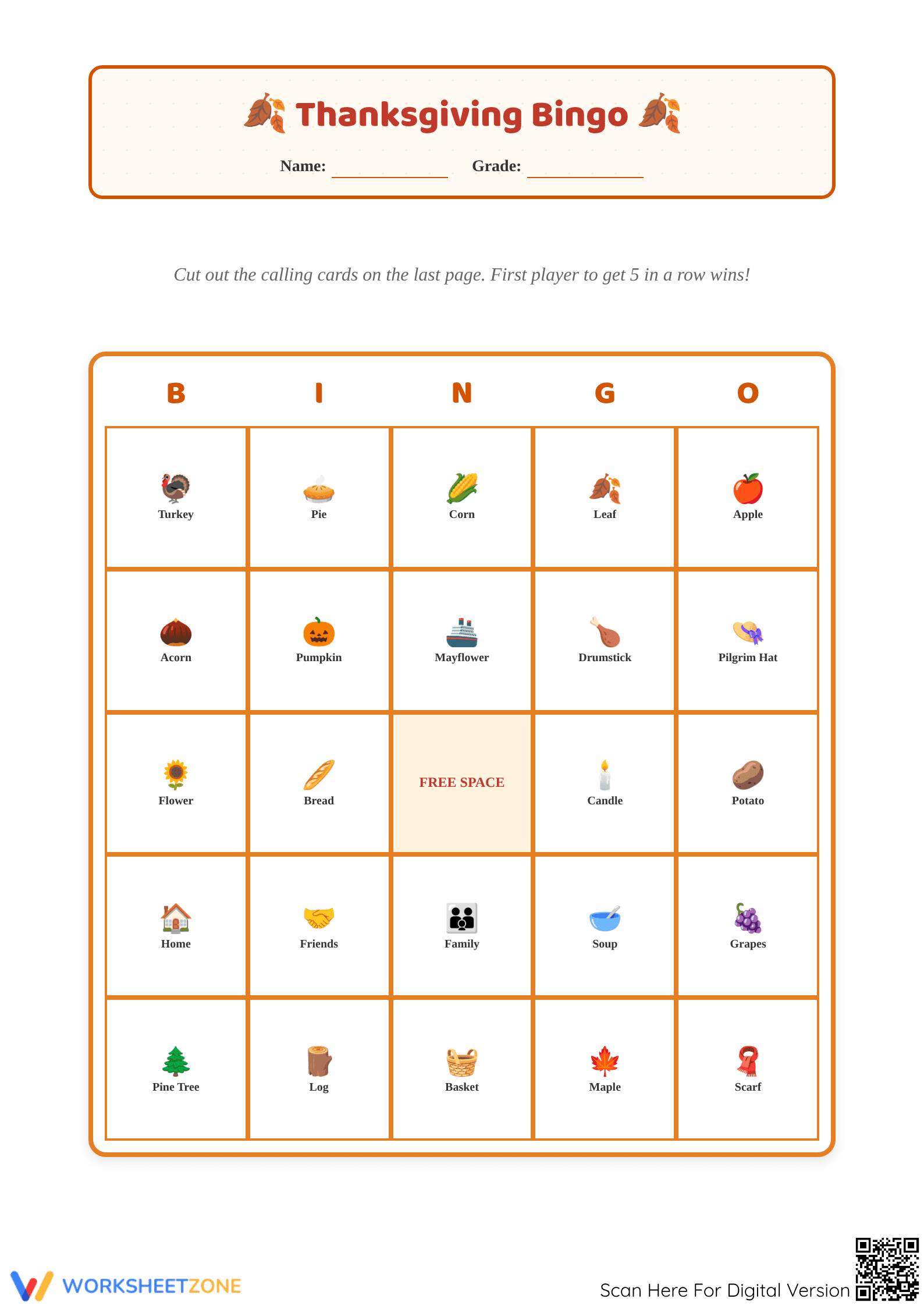
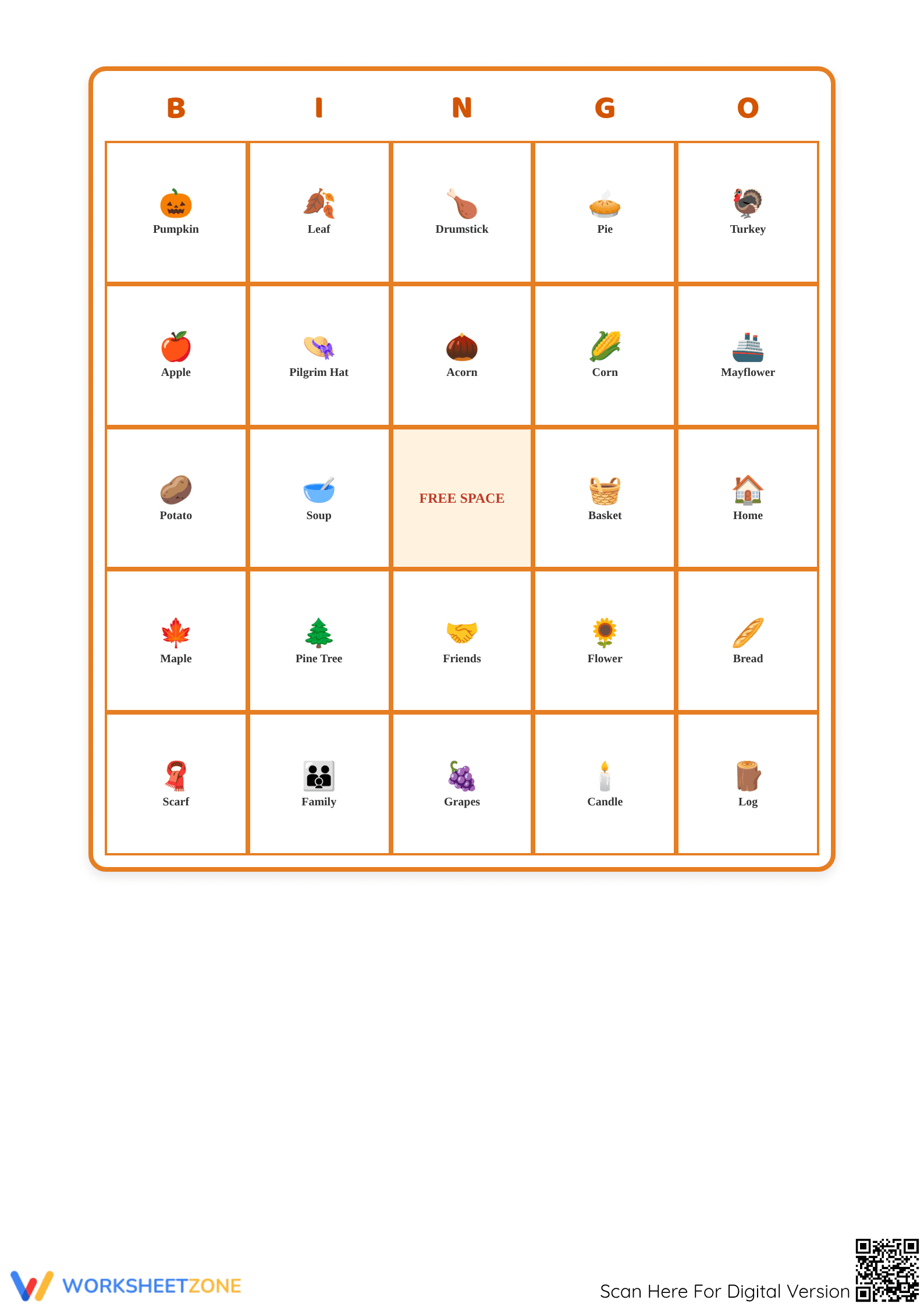
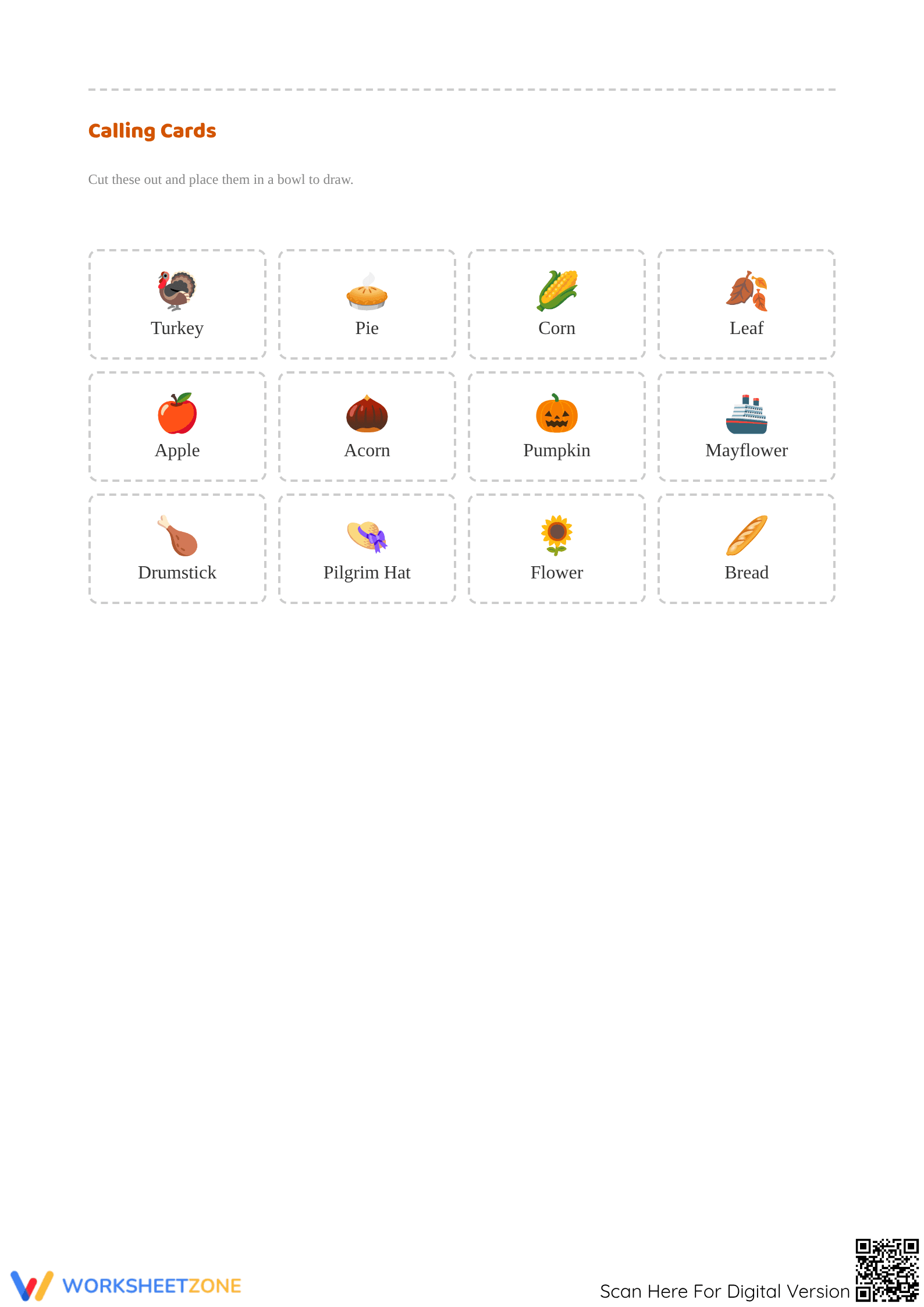
Inside this resource, you will find three high-quality PDF pages designed for immediate use. The first two pages feature unique Bingo boards with a 5x5 grid layout, including a central "Free Space." The third page contains a comprehensive set of calling cards featuring 24 distinct Thanksgiving terms such as "Mayflower," "Pilgrim Hat," and "Corn." Each square includes both a clear illustration and the corresponding printed word to support emerging readers.
Zero-Prep Workflow
- Print (1 minute): Select the number of boards needed for your group and print the calling card sheet on cardstock for durability.
- Distribute (1 minute): Provide students with markers, such as beans or small counters, and hand out the randomized boards.
- Review (1 minute): Briefly read through the calling cards to ensure students recognize the vocabulary before starting the game.
This streamlined process makes the activity an ideal choice for emergency sub plans or last-minute holiday celebrations where teacher preparation time is limited.
Standards Alignment
This activity aligns with `CCSS.ELA-LITERACY.L.1.6`, which requires students to use words and phrases acquired through conversations, reading and being read to, and responding to texts. By identifying terms like "acorn," "maple," and "gratitude" in a game context, students solidify their mental lexicon. Both standard codes can be copied directly into lesson plans, IEP goals, or district curriculum mapping tools.
How to Use It
Use this game as a formative assessment during a holiday unit to gauge student familiarity with seasonal concepts. It works best after direct instruction regarding Thanksgiving history or traditions. For a quick observation tip, note which students can identify the word based on the initial sound versus those who rely solely on the image. Expect a full game to take approximately 15 minutes.
Who It's For
This resource is designed for general education students in first and second grade, though it serves as an excellent scaffold for English Language Learners (ELL) who benefit from the visual-to-text associations. It pairs naturally with a Thanksgiving-themed read-aloud or a seasonal anchor chart displaying the same vocabulary terms.
According to the Fisher & Frey (2014) framework for purposeful play, interactive games like this Thanksgiving Bingo facilitate the transition from receptive to productive language. By engaging with 24 specific vocabulary terms in a low-stakes environment, students in Grades 1 and 2 develop the linguistic confidence necessary to meet the requirements of CCSS.ELA-LITERACY.L.1.6. Research from the RAND AIRS 2024 report suggests that gamified learning significantly increases student engagement during seasonal transitions when traditional focus may wane. This printable resource provides a structured yet flexible tool for teachers to maintain instructional rigor while celebrating cultural holidays. The inclusion of both text and imagery ensures that the activity remains accessible to diverse learners, supporting universal design principles in the early elementary classroom. Educators can reliably use this tool to document vocabulary acquisition and listening stamina in student progress reports.


