


























Views
Downloads

Printable Suffixes Practice Worksheet | Grade 2 ELA
Paste this activity's link or code into your existing LMS (Google Classroom, Canvas, Teams, Schoology, Moodle, etc.).
Students can open and work on the activity right away, with no student login required.
You'll still be able to track student progress and results from your teacher account.
This comprehensive Grade 2 English Language Arts worksheet provides structured practice for students to master common suffixes and root word manipulation. Students will identify, build, and apply suffixed words in context to strengthen their lexical awareness and reading fluency. By the end of these activities, learners will demonstrate a clear understanding of how endings like -ful, -less, and -er modify base meanings.
At a Glance
- Grade: 2 · Subject: English Language Arts
- Standard:
L.2.4.B— Use frequently occurring affixes as a clue to the meaning of a word- Skill Focus: Suffix identification and application
- Format: 3 pages · 23 problems · Answer key included · PDF
- Best For: Independent practice and morning work
- Time: 20–30 minutes
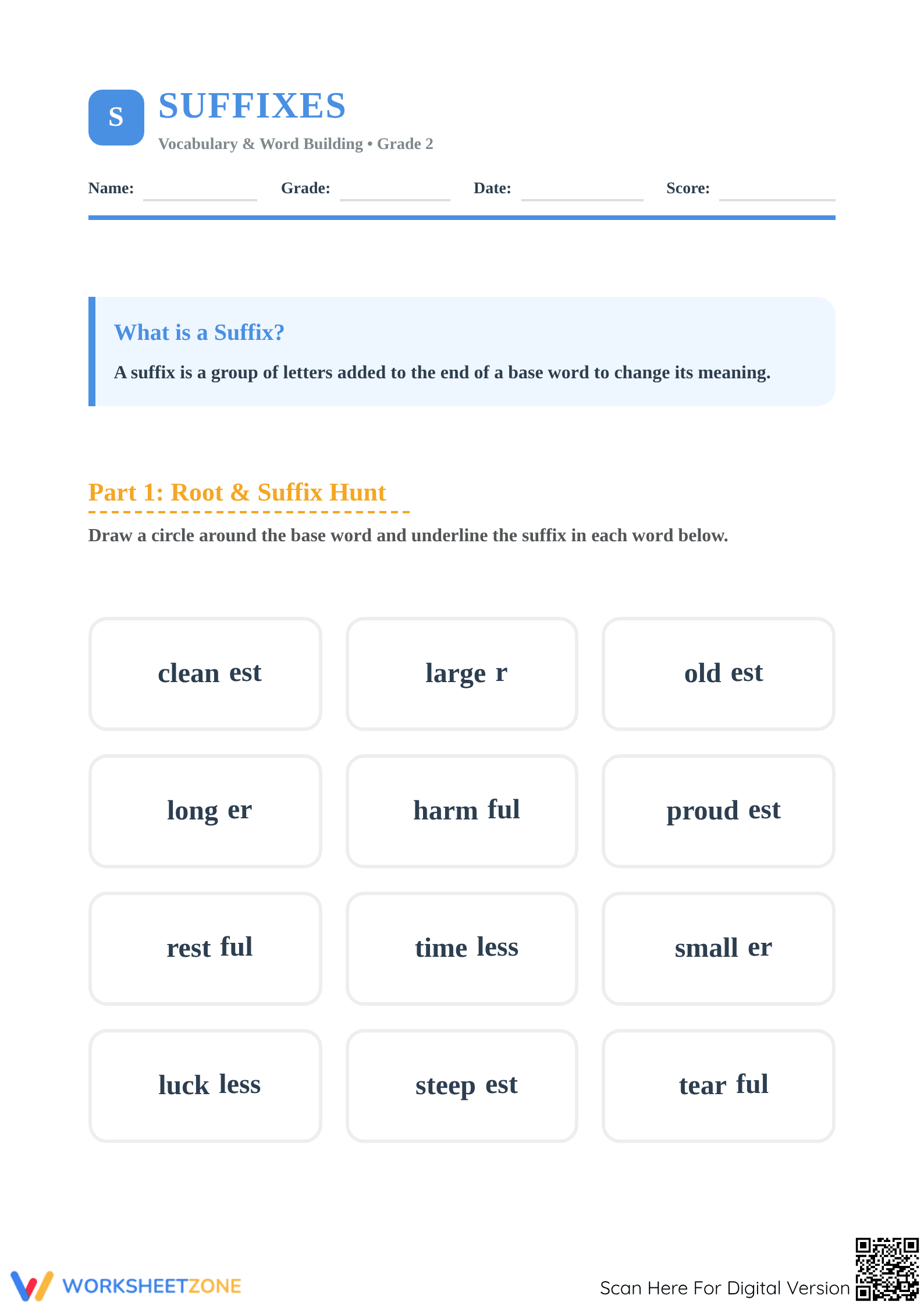
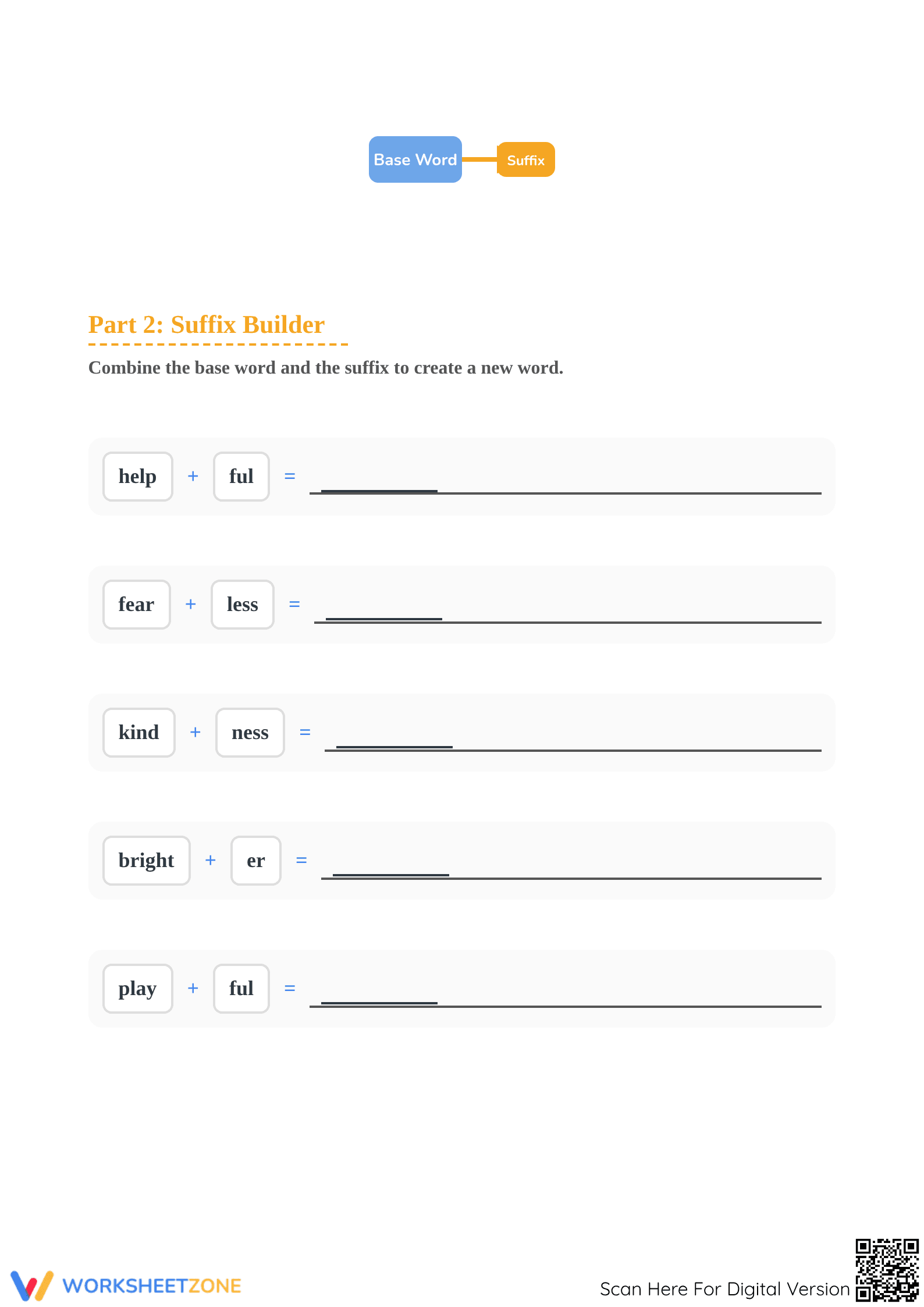
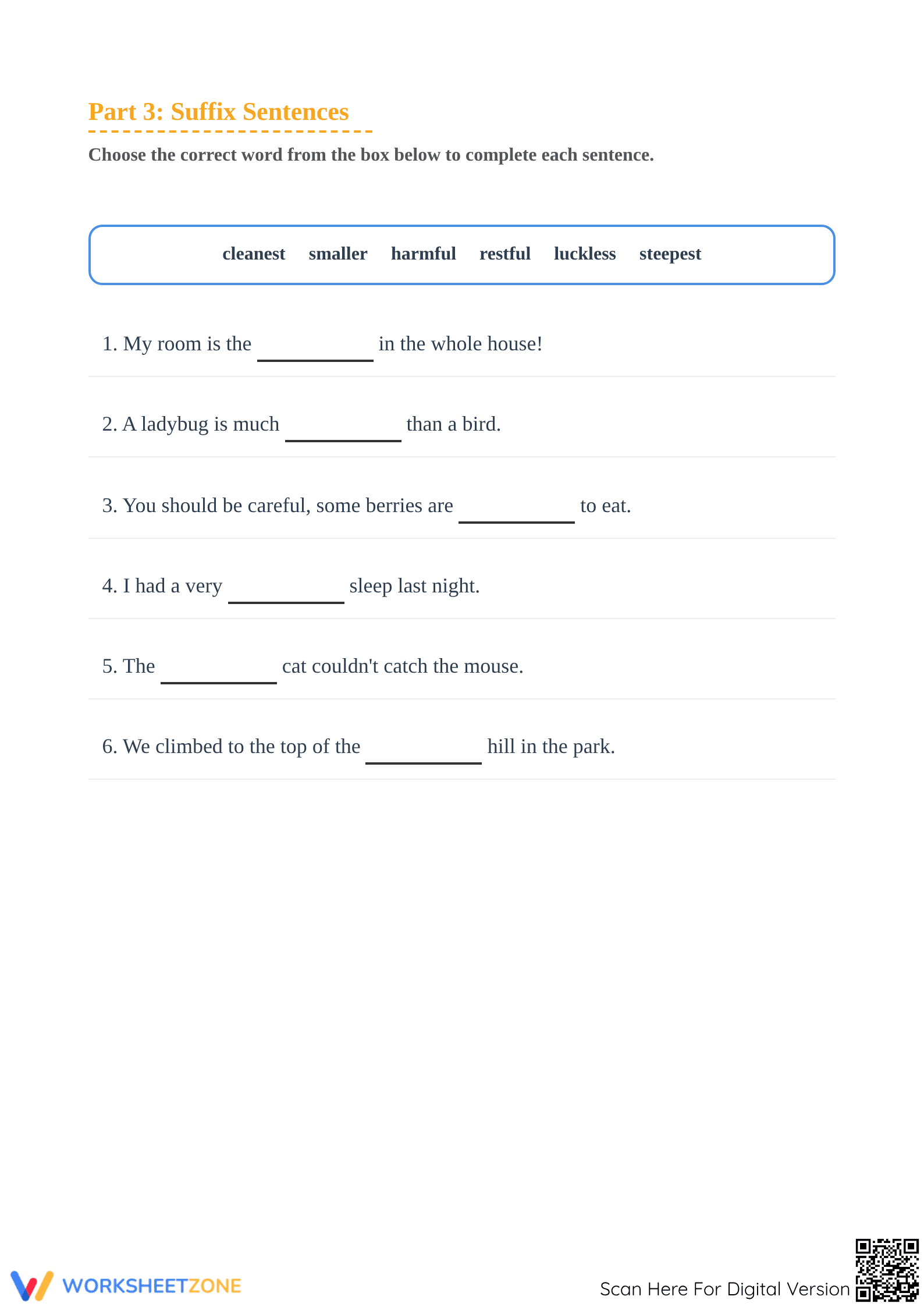
What's Inside: This three-page PDF features a scaffolded sequence of tasks designed for maximum retention. Page one contains 12 word boxes for a "Root & Suffix Hunt" where students circle base words and underline suffixes. Page two offers a suffix builder for word construction, and page three provides 6 context-rich sentences for application. A full answer key is provided to facilitate quick grading and student self-correction.
The Zero-Prep Workflow: This resource is designed for an efficient classroom experience. Teachers can print the three-page packet in less than one minute. Distributing the materials to students takes only seconds, and the clear, self-explanatory instructions allow for immediate student engagement. Reviewing the completed work is efficient thanks to the included answer key, requiring under five minutes of total teacher oversight. This makes it an ideal choice for emergency sub plans or quick filler activities.
Standards Alignment: This worksheet is primarily aligned to `CCSS.ELA-LITERACY.L.2.4.B`, focusing on using suffixes as clues to word meaning. It also supports `CCSS.ELA-LITERACY.RF.2.3.D` by requiring students to decode words with common affixes. Both standard codes can be copied directly into lesson plans, IEP goals, or district curriculum mapping tools to ensure instructional compliance.
How to Use It: Assign this packet during independent work time after a direct instruction lesson on word endings. It serves as an excellent formative assessment tool; teachers should observe if students can correctly isolate the root word without including the suffix. Expected completion time ranges from 20 to 30 minutes depending on student familiarity with the target vocabulary.
Who It's For: This resource is perfect for second-grade students mastering foundational language skills. It provides necessary scaffolding for Grade 1 students ready for a challenge and serves as a valuable review for Grade 3 learners. Pair this worksheet with a suffix anchor chart or a short reading passage to reinforce the connection between morphology and comprehension.
The mastery of morphological analysis, specifically the use of suffixes to determine word meaning, is a cornerstone of early literacy development as outlined in CCSS.ELA-LITERACY.L.2.4.B. Research from the RAND AIRS 2024 study emphasizes that explicit instruction in word building significantly enhances student vocabulary acquisition and reading comprehension. This worksheet facilitates this growth by providing 23 targeted tasks that move from simple identification to complex sentence application. By isolating suffixes such as -er, -est, and -ful, the resource allows students to internalize predictable patterns in English grammar. This scaffolded approach ensures that learners can decode unfamiliar multisyllabic words with greater confidence. The inclusion of a full answer key supports immediate feedback, which NAEP identifies as a critical factor in closing achievement gaps in foundational language skills. Educators can trust this printable as a high-quality tool for evidence-based ELA instruction in second-grade classrooms.


