


























1 / 2
0
Views
0
Plays

Save
0 Likes
Understanding Stream of Consciousness in Literature
0 Views
0 Plays
Paste this activity's link or code into your existing LMS (Google Classroom, Canvas, Teams, Schoology, Moodle, etc.).
Students can open and work on the activity right away, with no student login required.
You'll still be able to track student progress and results from your teacher account.
Information
Description
What It Is:
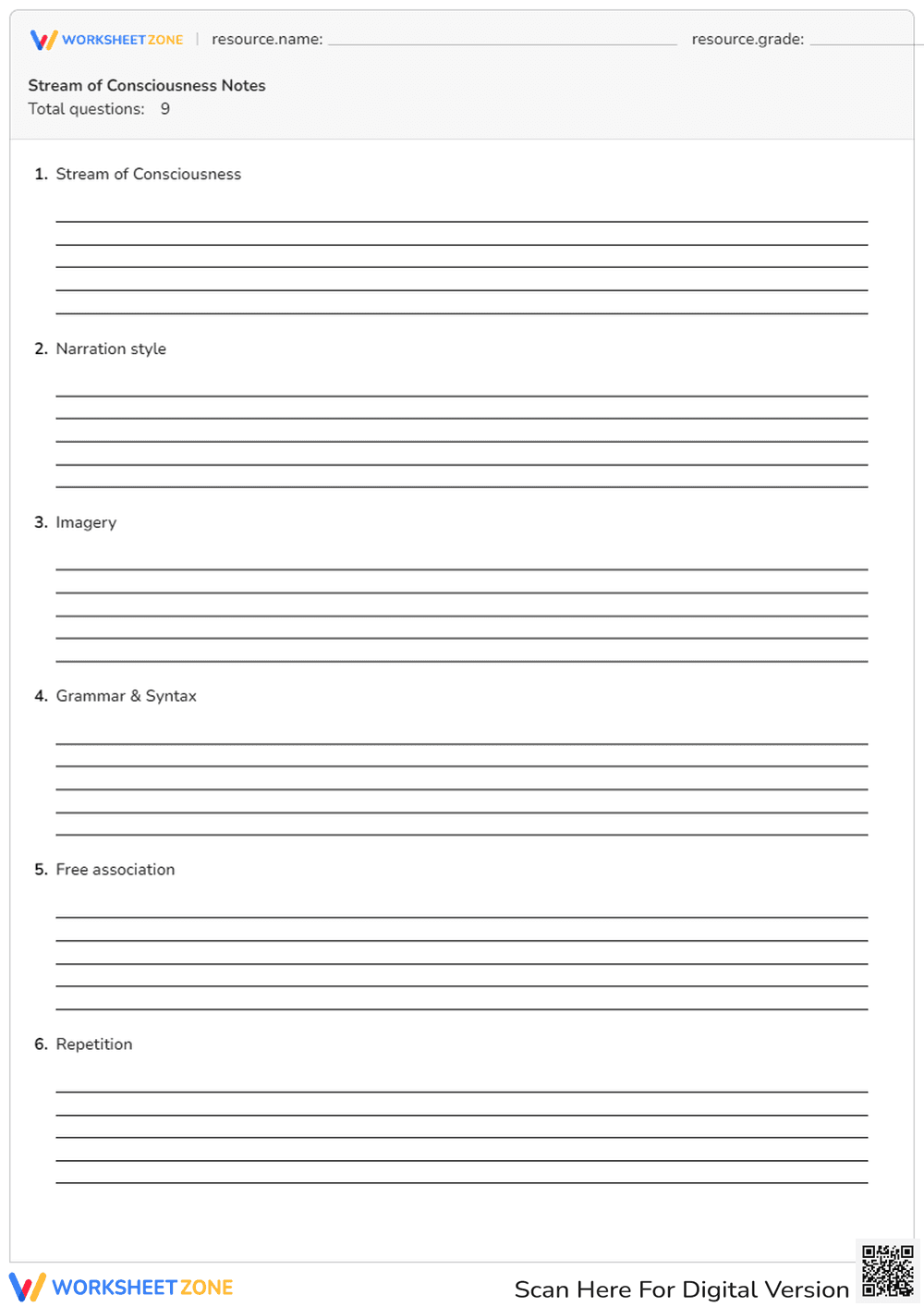
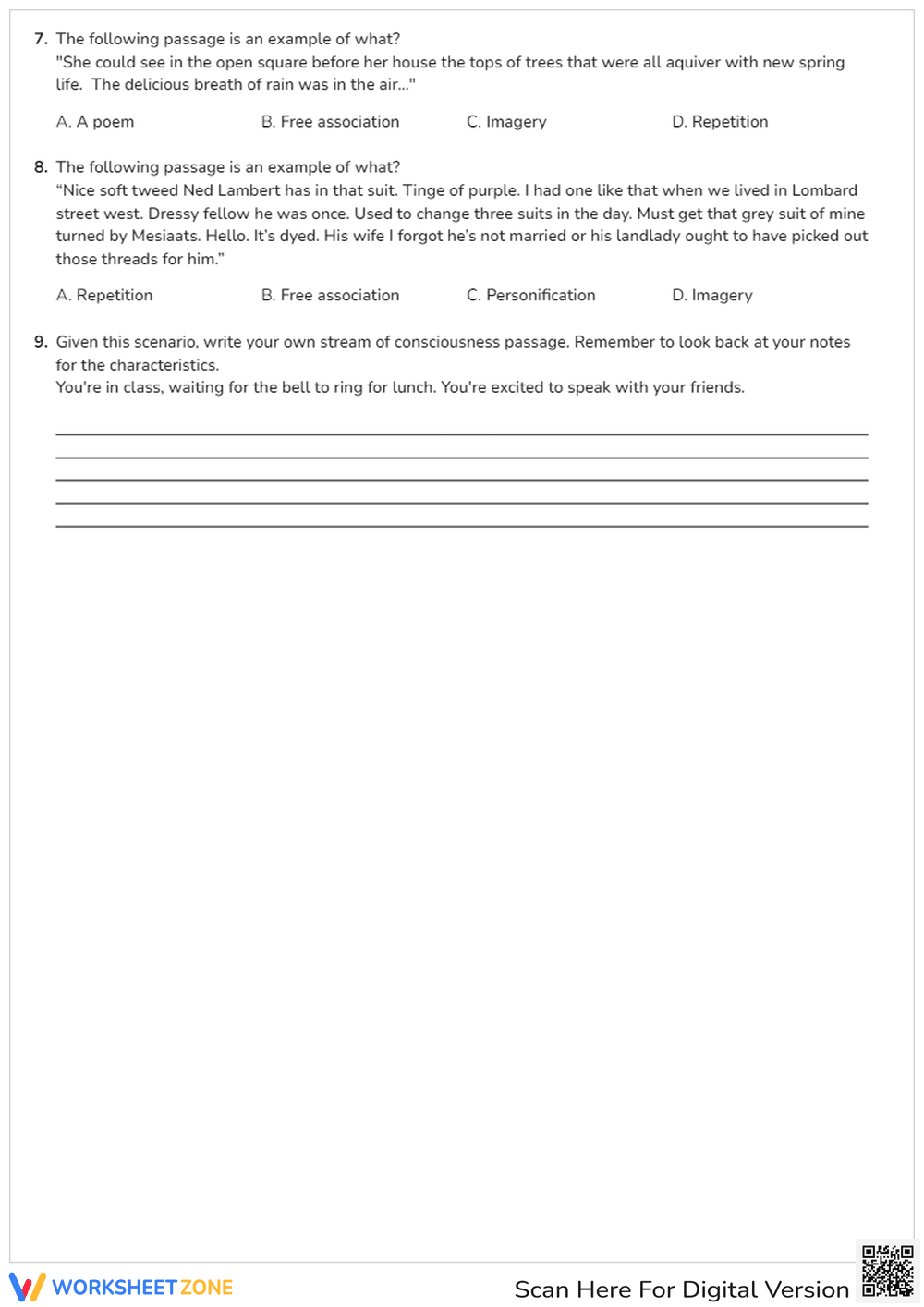
The image shows an illustration of a human head with a blue brain exposed. There are several empty speech bubbles surrounding the head and brain, suggesting thoughts and ideas. The illustration is done in a watercolor and ink style.
Grade Level Suitability:
The image is suitable for middle school and high school (grades 6-12). It can be used as a visual aid for discussions about the brain, thoughts, ideas, communication, or mental health. It is not content specific to a particular grade level, but rather a visual representation of concepts.
Why Use It:
This image can be used to stimulate discussion about thinking, communication, and the brain. It encourages students to consider the connection between thoughts and the brain, and how ideas are formed and expressed. It can also be used to illustrate the complexity of the human mind.
How to Use It:
Use the image as a visual prompt. Ask students to fill in the speech bubbles with their own thoughts or ideas related to a specific topic. Alternatively, use it as a starting point for a discussion on the nature of thought, communication, or the brain.
Target Users:
This image is suitable for students in middle school and high school, educators teaching about the brain, communication, or thought processes, and therapists or counselors working with adolescents on mental health topics.
The image shows an illustration of a human head with a blue brain exposed. There are several empty speech bubbles surrounding the head and brain, suggesting thoughts and ideas. The illustration is done in a watercolor and ink style.
Grade Level Suitability:
The image is suitable for middle school and high school (grades 6-12). It can be used as a visual aid for discussions about the brain, thoughts, ideas, communication, or mental health. It is not content specific to a particular grade level, but rather a visual representation of concepts.
Why Use It:
This image can be used to stimulate discussion about thinking, communication, and the brain. It encourages students to consider the connection between thoughts and the brain, and how ideas are formed and expressed. It can also be used to illustrate the complexity of the human mind.
How to Use It:
Use the image as a visual prompt. Ask students to fill in the speech bubbles with their own thoughts or ideas related to a specific topic. Alternatively, use it as a starting point for a discussion on the nature of thought, communication, or the brain.
Target Users:
This image is suitable for students in middle school and high school, educators teaching about the brain, communication, or thought processes, and therapists or counselors working with adolescents on mental health topics.


