




























Views
Downloads
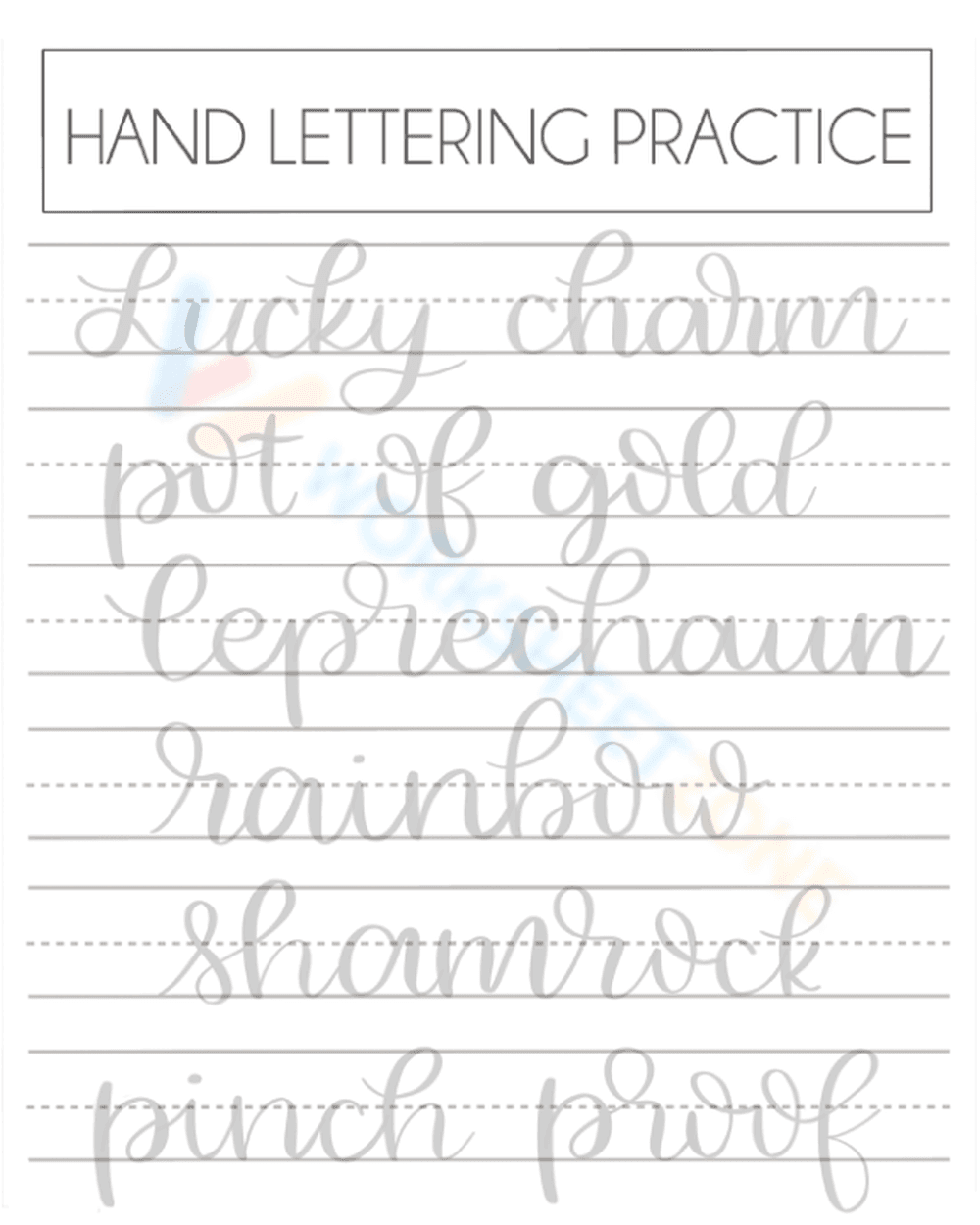

St. Patrick's Day Hand Lettering | Printable K-2 Worksheet

Paste this activity's link or code into your existing LMS (Google Classroom, Canvas, Teams, Schoology, Moodle, etc.).
Students can open and work on the activity right away, with no student login required.
You'll still be able to track student progress and results from your teacher account.
This St. Patrick's Day hand lettering worksheet provides early elementary students with a festive way to refine their fine motor skills and letter formation. By tracing six holiday-themed phrases in a stylized calligraphy font, learners develop the muscle memory required for fluid writing while engaging with seasonal vocabulary. It is an ideal resource for holiday-themed literacy centers.
At a Glance
- Grade: K-2 · Subject: English
- Standard:
CCSS.ELA-LITERACY.L.1.1.A— Print all upper- and lowercase letters with proper formation and spacing- Skill Focus: Hand lettering and fine motor control
- Format: 1 page · 6 phrases · No answer key needed · PDF
- Best For: Holiday morning work or literacy centers
- Time: 10–15 minutes
This single-page PDF features six distinct St. Patrick's Day phrases, including "Lucky charm" and "shamrock." Each phrase is presented in a light-gray calligraphy font on primary-ruled lines, providing a clear visual guide for tracing. The layout includes a dedicated header for practice, ensuring students understand the objective immediately. No additional teacher setup is required.
The zero-prep design allows teachers to integrate this activity into a busy holiday schedule in under two minutes. First, print the required copies (30 seconds). Second, distribute the sheets during a transition period (1 minute). Finally, review the completed tracings to check for proper letter height and line adherence. This workflow makes it an excellent choice for emergency sub plans.
This resource aligns with `CCSS.ELA-LITERACY.L.1.1.A`, which requires students to print all upper- and lowercase letters. While the font is decorative, the exercise reinforces the foundational movements of letter construction and spacing. It also supports Kindergarten standards by encouraging letter formation in context. Both standard codes can be copied directly into lesson plans or district curriculum mapping tools.
Use this worksheet as a "bell-ringer" activity on the morning of St. Patrick's Day to settle students as they arrive. Alternatively, place it in a writing center as a choice activity for early finishers. During the activity, observe how students grip their writing utensils and whether they follow the natural flow of the calligraphy strokes. Completion typically takes between 10 and 15 minutes.
This worksheet is designed for Kindergarten through Grade 2 students who are transitioning from basic print to more decorative styles. It is particularly helpful for students requiring additional fine motor support. Pair this resource with a St. Patrick's Day picture book or a vocabulary anchor chart to provide context for the holiday phrases.
Research from Fisher & Frey (2014) emphasizes that handwriting practice is not merely a motor task but a cognitive one that supports literacy development. Engaging with specific vocabulary through tracing helps solidify word recognition and spelling patterns in early learners. This worksheet targets `CCSS.ELA-LITERACY.L.1.1.A` by providing structured opportunities for letter formation. According to the NAEP, students who develop strong handwriting skills early in their education often demonstrate higher levels of writing fluency and composition quality in later grades. By integrating holiday themes, educators can increase student engagement without sacrificing instructional rigor. This 1-page resource provides 6 specific tasks that bridge the gap between artistic expression and formal writing practice, ensuring that students remain focused on the technical aspects of penmanship while celebrating seasonal events. This specific approach to handwriting instruction is supported by recent studies in educational psychology that link tactile writing experiences to improved memory retention and letter identification.


