


























Views
Downloads
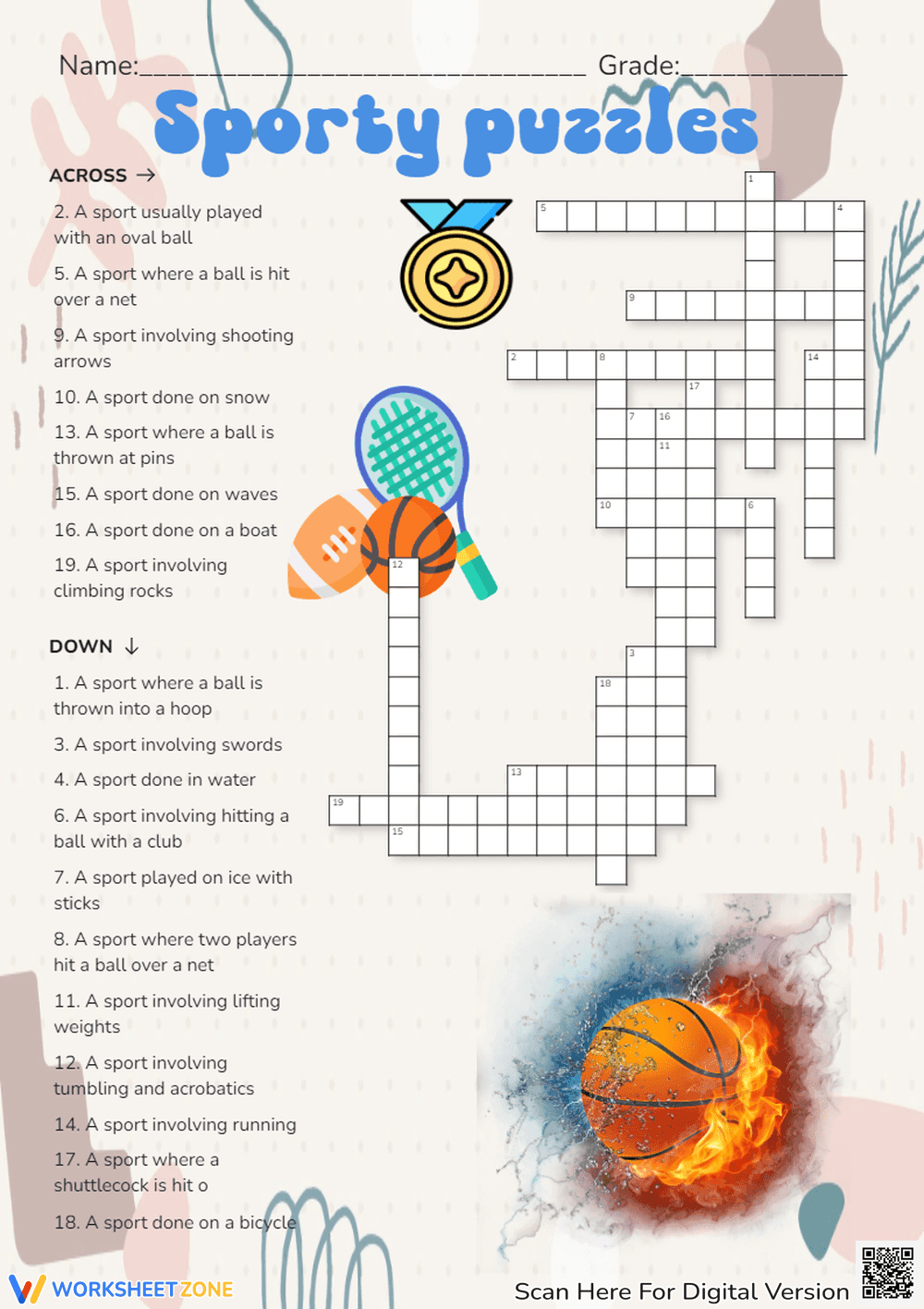


Grade 1-3 Sporty Puzzles — Printable No-Prep Worksheet
Paste this activity's link or code into your existing LMS (Google Classroom, Canvas, Teams, Schoology, Moodle, etc.).
Students can open and work on the activity right away, with no student login required.
You'll still be able to track student progress and results from your teacher account.
This Grade 1-3 sports vocabulary worksheet helps students master domain-specific terminology through an engaging crossword format. By connecting descriptive clues to specific athletic activities, learners strengthen their reading comprehension and spelling accuracy. It provides a structured way to reinforce physical education concepts within the English Language Arts block.
At a Glance
- Grade: 1-3 · Subject: ELA
- Standard:
CCSS.ELA-LITERACY.L.2.6— Use grade-appropriate domain-specific words and phrases accurately in context- Skill Focus: Sports Vocabulary & Spelling
- Format: 1 page · 19 problems · Answer key included · PDF
- Best For: Morning work or early finishers
- Time: 15–20 minutes
This resource features a comprehensive crossword puzzle containing 19 unique clues. The layout includes 8 Across items and 11 Down items, covering a wide range of sports from basketball and archery to fencing and gymnastics. The worksheet is visually supported by sports-themed icons, making it appealing for younger learners while maintaining a clear, readable structure for independent work.
Zero-Prep Workflow
- Print: Select the single-page PDF and print enough copies for your class in under 30 seconds.
- Distribute: Hand out the worksheets as students enter the room; no additional materials or verbal instructions are required.
- Review: Use the included answer key to grade the 19 tasks in less than one minute per student.
The primary focus is `CCSS.ELA-LITERACY.L.2.6`, which requires students to acquire and use accurately grade-appropriate general academic and domain-specific words. By identifying sports like badminton or cycling from descriptive definitions, students demonstrate mastery of specialized vocabulary. This standard code can be copied directly into lesson plans, IEP goals, or district curriculum mapping tools.
How to Use It
Assign this worksheet during a sports and recreation thematic unit to assess prior knowledge or reinforce new terms. It works exceptionally well as a formative assessment after a physical education lesson to bridge the gap between physical activity and literacy. Expect students to complete the 19 clues within a 15 to 20-minute window depending on their reading level.
Who It's For
This resource is designed for elementary students in grades 1 through 3. It is particularly effective for English Language Learners who benefit from the contextual clues provided in the definitions. Pair this worksheet with a sports-themed informational text or an anchor chart displaying various athletic equipment to provide additional scaffolding for struggling readers.
According to the RAND AIRS 2024 report, the integration of domain-specific vocabulary through gamified formats like crosswords significantly improves long-term retention in early elementary learners. This worksheet targets CCSS.ELA-LITERACY.L.2.6 by requiring students to decode 19 descriptive clues and produce the correct spelling for various athletic disciplines. Research from Fisher & Frey (2014) suggests that word-play activities serve as essential scaffolds for building the word consciousness necessary for reading complex informational texts. By focusing on sports—a high-interest topic for many children—this resource lowers the affective filter and encourages persistent problem-solving. The 19-task structure provides sufficient repetition to move these terms from receptive to productive vocabulary. Educators can rely on this evidence-based approach to meet literacy standards while maintaining high student engagement during independent practice or supplemental instruction periods.


