


























Views
Downloads

Printable Halloween Math: Counting to 20 — Grade K Essential
Paste this activity's link or code into your existing LMS (Google Classroom, Canvas, Teams, Schoology, Moodle, etc.).
Students can open and work on the activity right away, with no student login required.
You'll still be able to track student progress and results from your teacher account.
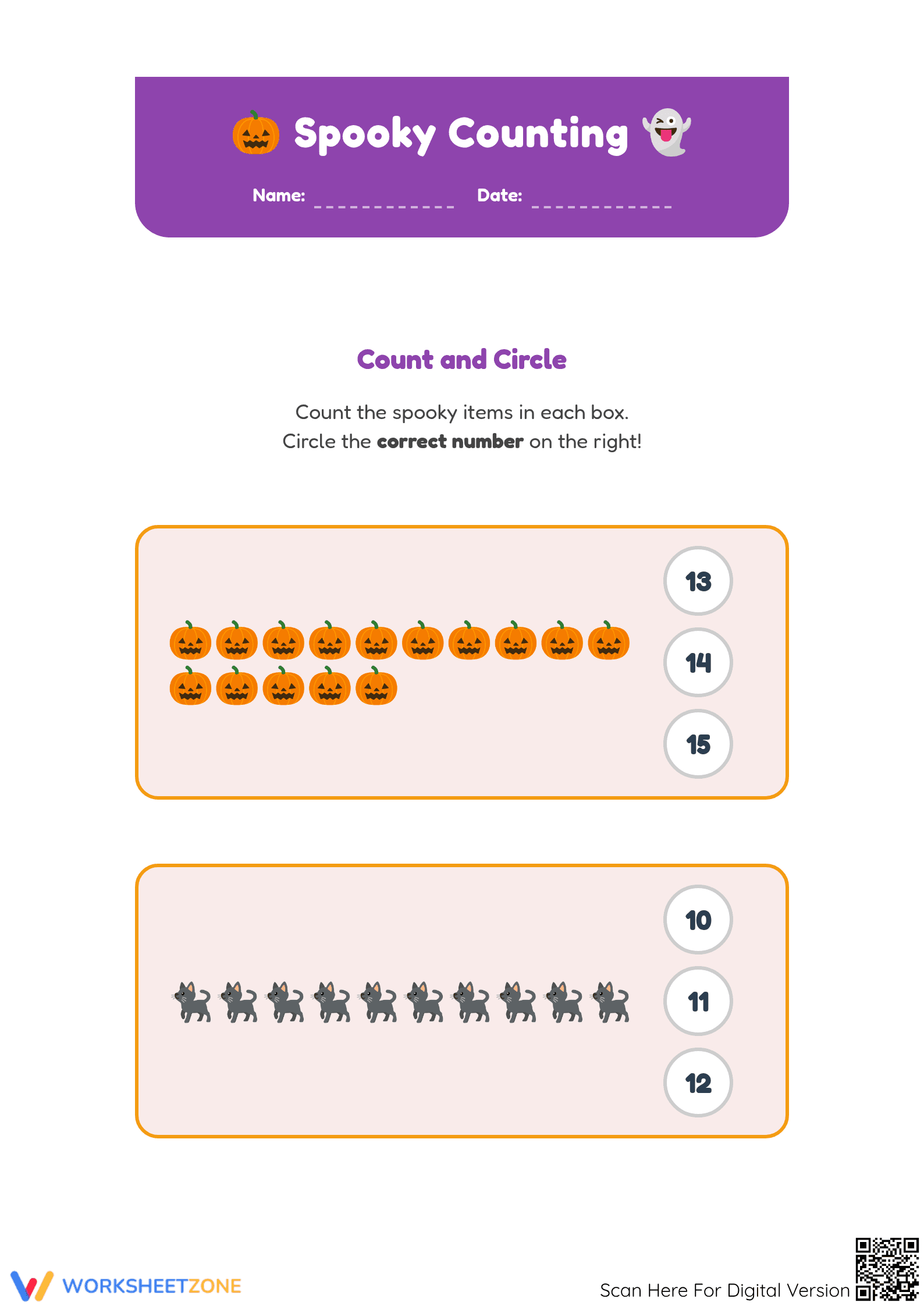
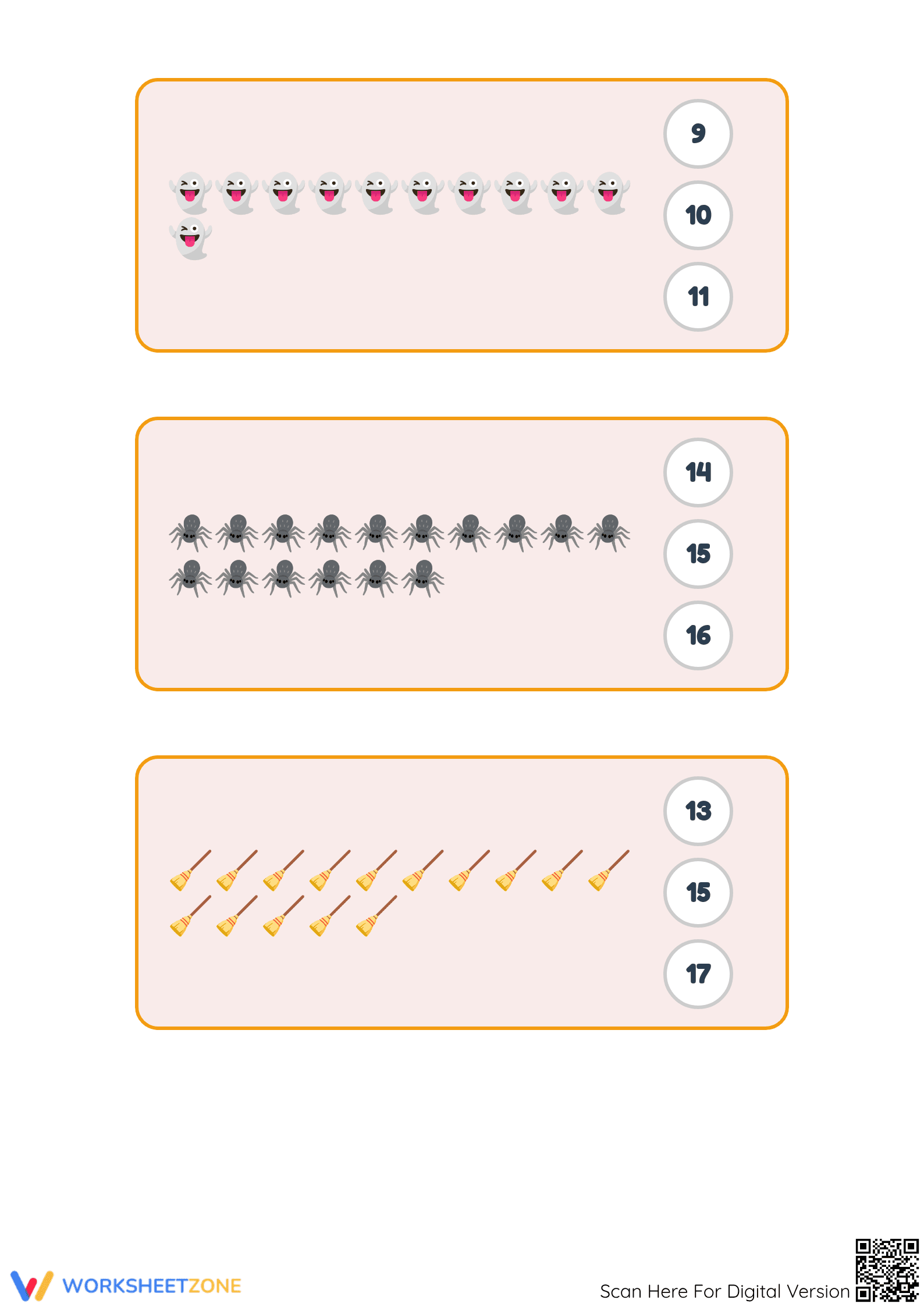
This comprehensive Kindergarten math worksheet masters the foundational skill of counting and cardinality through engaging Halloween-themed activities. Students develop one-to-one correspondence by counting pumpkins, spiders, and ghosts while identifying numerals up to 20. This resource ensures early learners gain confidence in quantifying sets and representing numbers through both selection and drawing.
At a Glance
- Grade: Kindergarten · Subject: Math
- Standard:
K.CC.B.5— Count to answer "how many?" questions about things arranged in a line- Skill Focus: Counting and Cardinality to 20
- Format: 4 pages · 10 problems · Answer key included · PDF
- Best For: Halloween math centers or sub plans
- Time: 20–30 minutes
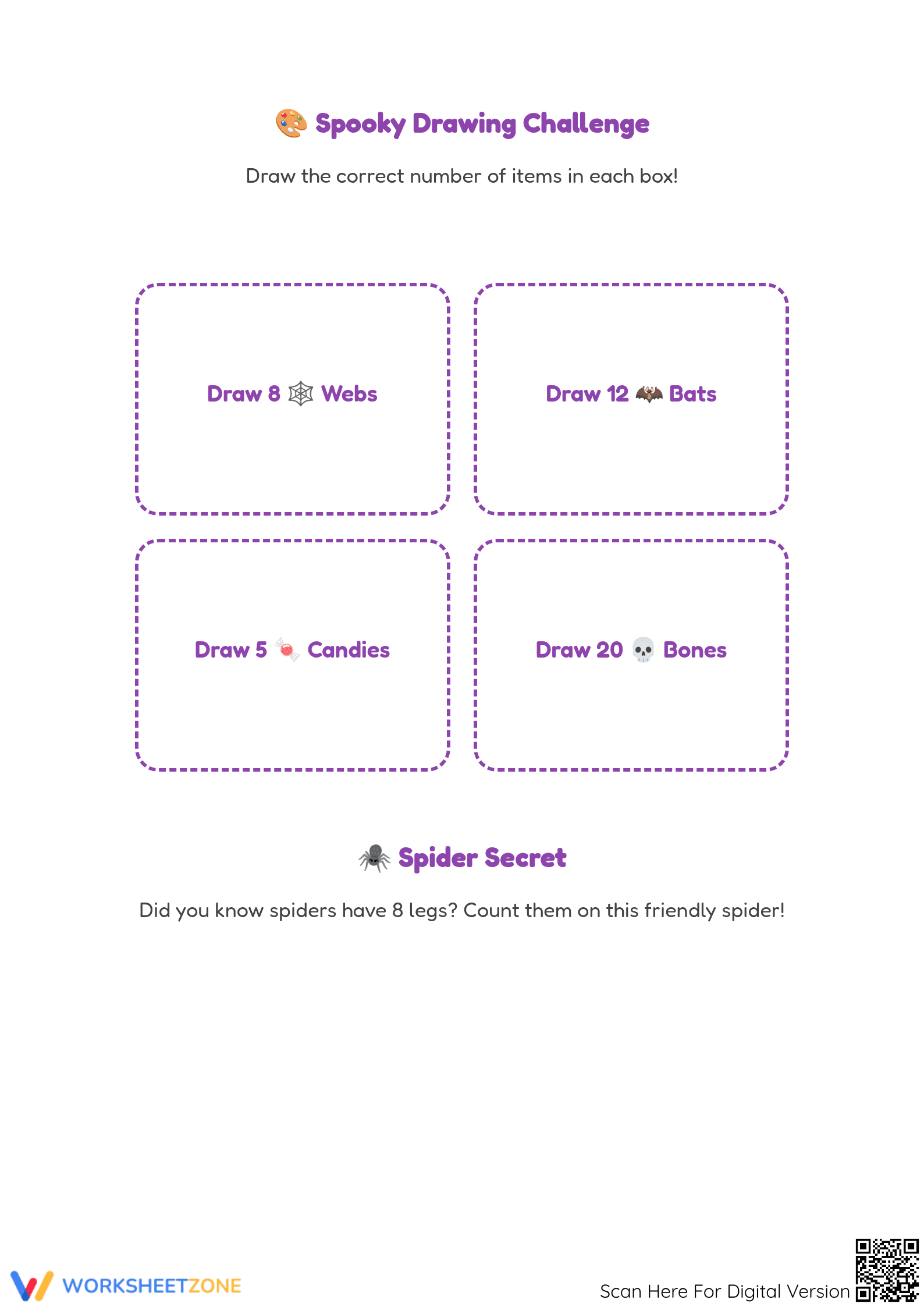
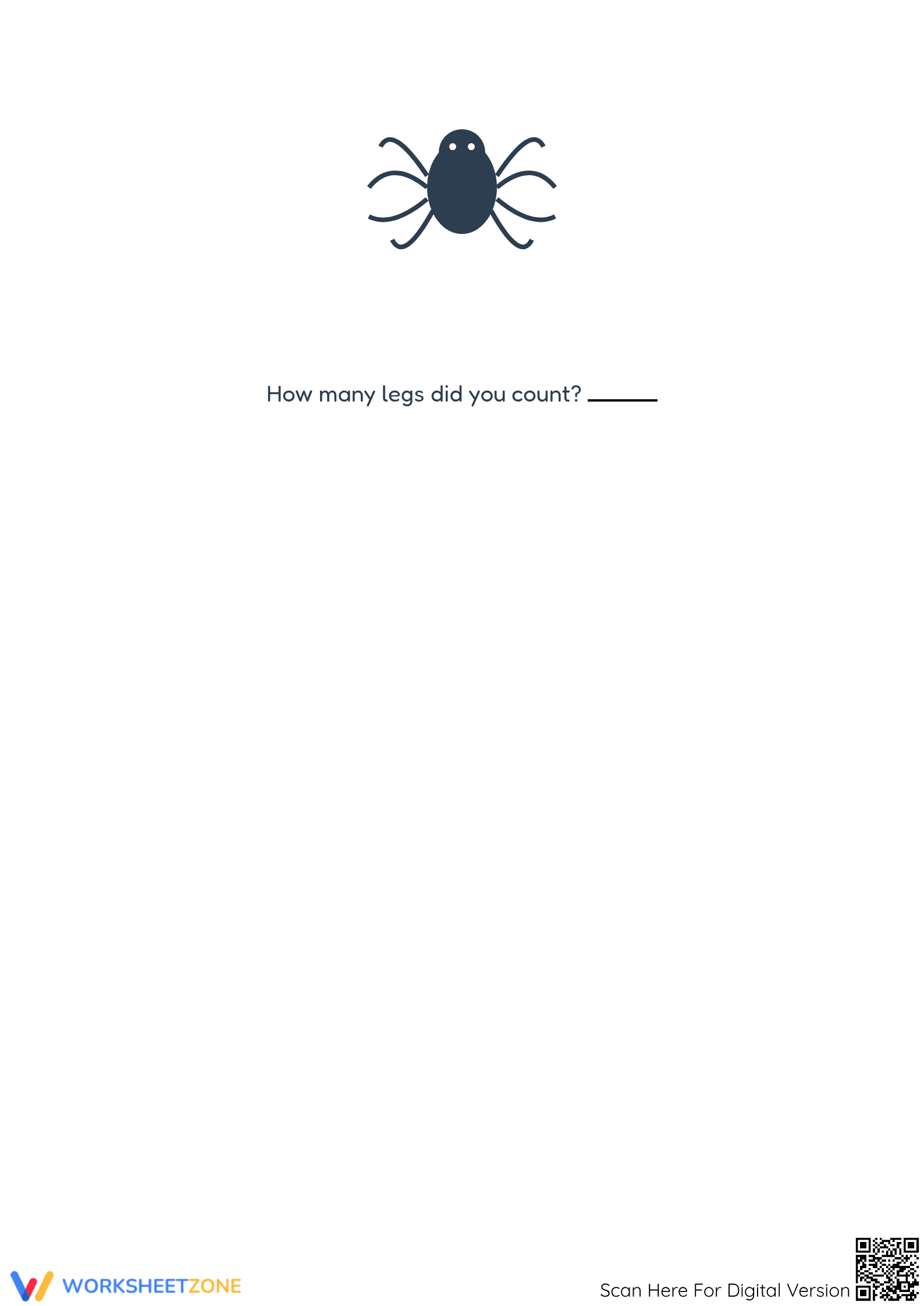
This four-page instructional packet includes three distinct counting-and-circle sections, a creative drawing challenge, and a "Spider Secret" leg-counting extension. The visual layouts feature high-contrast, recognizable Halloween icons like black cats and broomsticks. A complete answer key is provided, allowing for rapid grading or student self-check during independent work sessions.
Implementing this resource requires minimal effort for busy educators. The zero-prep workflow follows three simple steps: First, print the four-page PDF for your class (30 seconds). Second, distribute the worksheets and provide crayons or pencils for the drawing portion (1 minute). Third, review the completed work using the included visual answer key to identify students needing additional one-to-one correspondence support (1 minute). This efficiency makes it ideal for substitute teacher folders.
This resource is primary aligned to K.CC.B.5: "Count to answer 'how many?' questions about as many as 20 things arranged in a line, a rectangular array, or a circle." It also supports K.CC.B.4 regarding the relationship between numbers and quantities. Both standard codes can be copied directly into lesson plans, IEP goals, or district curriculum mapping tools.
Use this worksheet during a whole-group guided practice session after introducing the concept of counting beyond ten. It serves as an excellent formative assessment; observe students as they count to see if they utilize a touch-and-count strategy. Expected completion time is 25 minutes, making it a perfect fit for a dedicated math block rotation.
Designed for Kindergarten students, this packet specifically supports early learners who are transitioning from counting single digits to teen numbers. It offers natural differentiation; struggling students can focus on the first two pages, while advanced learners can tackle the drawing and spider leg counting challenges. Pair this with a Halloween-themed counting book for a complete lesson.
According to the RAND AIRS 2024 report on early childhood numeracy, the integration of thematic, visually-rich manipulatives and illustrations significantly enhances student engagement and retention of cardinality principles. This Kindergarten worksheet leverages that research by using familiar Halloween icons to anchor the abstract concept of number representation. By requiring students to both circle existing quantities and draw their own sets, the activity reinforces the K.CC.B.5 standard through multi-sensory application. Evidence suggests that "counting out" objects—as seen in the drawing challenge section—is a higher-order cognitive task than simply counting a pre-existing set. This dual-approach curriculum design ensures that students move beyond rote counting toward a deep, conceptual understanding of quantity and numeral alignment. Teachers can reliably use this 4-page resource to bridge the gap between concrete counting and symbolic number recognition in a classroom setting.


