


























Views
Downloads


Short-A Spelling Wheel | Grade 1 Printable Activity
Paste this activity's link or code into your existing LMS (Google Classroom, Canvas, Teams, Schoology, Moodle, etc.).
Students can open and work on the activity right away, with no student login required.
You'll still be able to track student progress and results from your teacher account.
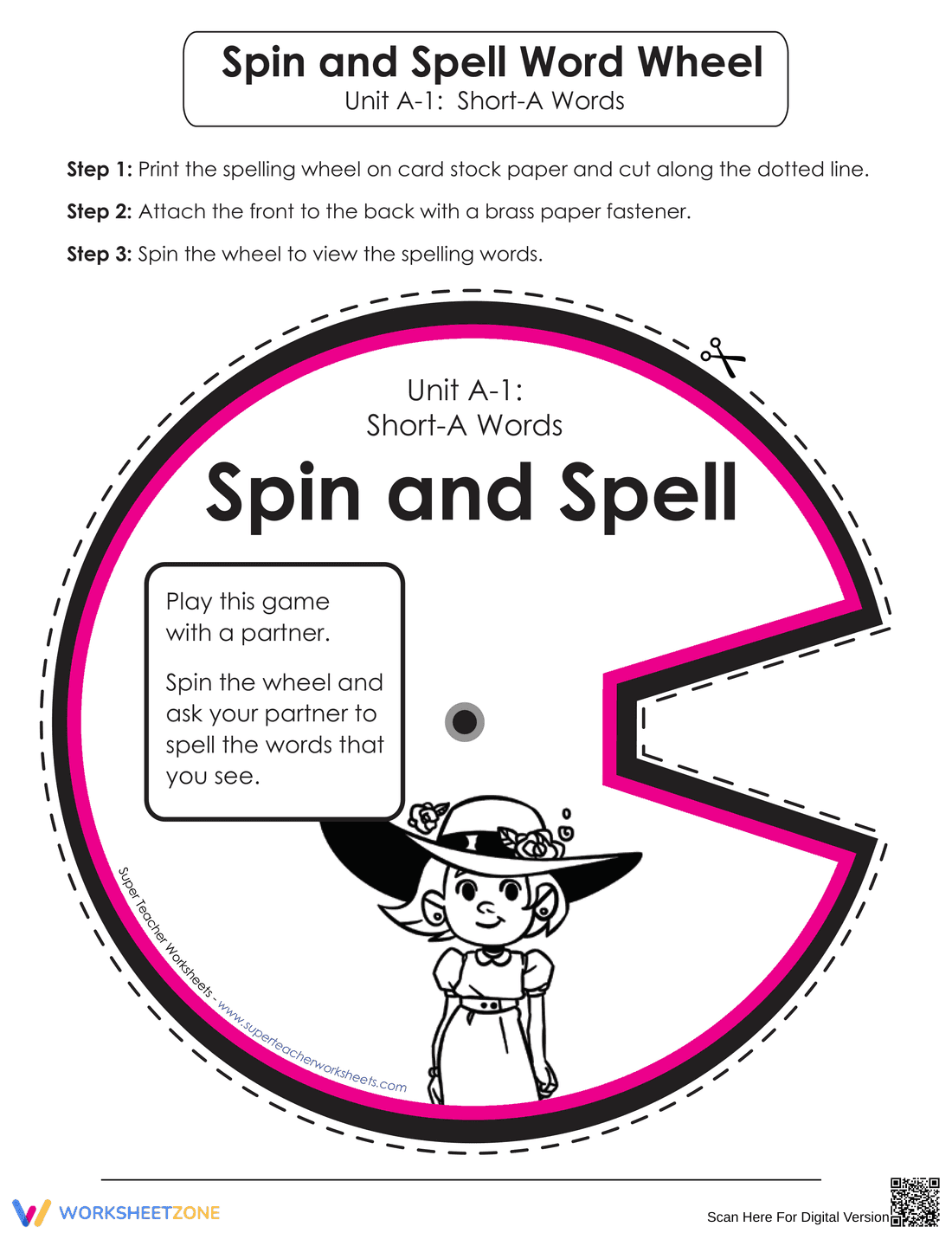
This interactive spelling wheel helps early readers master short-A vowel sounds and common sight words. Students assemble a physical word wheel and practice spelling aloud with a partner. This hands-on activity transforms standard phonics drills into an engaging, cooperative learning experience that reinforces foundational literacy skills.
At a Glance
- Grade: 1 · Subject: ELA
- Standard:
CCSS.ELA-LITERACY.L.1.2.D— Spell words with common spelling patterns- Skill Focus: Short-A words
- Format: 2 pages · 10 words · Partner activity · PDF
- Best For: Literacy centers
- Time: 15–20 minutes
This printable resource includes two pages designed to create a functional spelling wheel. The first page features the front cover with a viewing window and clear assembly instructions. The second page contains the back wheel, populated with eight decodable short-A words (like "cat" and "man") and two starred sight words ("has" and "have"). Students cut out both circles and connect them using a standard brass paper fastener to create their interactive spelling tool.
- Guided practice: Teachers model how to assemble the wheel and demonstrate the partner spelling game using the first word.
- Supported practice: Students work in pairs, taking turns spinning the wheel and asking their partner to spell the revealed word aloud.
- Independent practice: Students can use the wheel individually as a self-checking flashcard system to review the short-A word family.
This progression follows a gradual-release model, moving from teacher-led instruction to cooperative peer learning.
This activity aligns with CCSS.ELA-LITERACY.L.1.2.D: Use conventional spelling for words with common spelling patterns and for frequently occurring irregular words. It also supports foundational phonics skills by requiring students to segment and blend CVC words. Both standard codes can be copied directly into lesson plans, IEP goals, or district curriculum mapping tools.
Deploy this word wheel during literacy center rotations or as a Friday partner activity. Before independent use, assemble one wheel as a class to ensure students understand the mechanics. During the activity, circulate and listen to partner pairs to conduct formative assessments on phonemic awareness and spelling accuracy. Expect the assembly and gameplay to take approximately 15 to 20 minutes.
This resource is ideal for first-grade students mastering short vowel sounds, as well as kindergarteners ready for an advanced challenge. The tactile nature of the wheel provides excellent differentiation for kinesthetic learners who benefit from hands-on manipulation. Pair this activity with a short-A decodable reading passage to reinforce the target vocabulary in context.
Integrating tactile elements into phonics instruction significantly improves retention for early readers. This resource targets CCSS.ELA-LITERACY.L.1.2.D, helping students spell words with common spelling patterns through cooperative play. According to a RAND AIRS 2024 study on early literacy interventions, students who engage in peer-to-peer verbal spelling practice demonstrate a marked improvement in phonological awareness compared to those using traditional worksheets alone. The interactive wheel format encourages repeated exposure to the short-A word family, reducing the cognitive load required to decode similar CVC words. By combining fine motor assembly with verbal spelling tasks, educators can create a multisensory learning environment that supports diverse learning profiles. This evidence-based approach ensures that foundational spelling skills are solidified before students progress to more complex vowel teams and multisyllabic words.


