


























Views
Downloads

Printable Spelling Time 4 Worksheet | Preschool ELA
Paste this activity's link or code into your existing LMS (Google Classroom, Canvas, Teams, Schoology, Moodle, etc.).
Students can open and work on the activity right away, with no student login required.
You'll still be able to track student progress and results from your teacher account.
This printable Preschool ELA worksheet provides a comprehensive introduction to early spelling and phonetics through structured word-building activities. Students develop essential letter-sound correspondence by identifying missing vowels and consonants to complete common high-frequency words. This resource ensures that budding writers establish a strong foundation for future reading success.
At a Glance
- Grade: Preschool · Subject: ELA Alphabet
- Standard:
CCSS.ELA-LITERACY.RF.K.3.A— Demonstrate basic knowledge of one-to-one letter-sound correspondences by producing the primary sound- Skill Focus: Phonics and Early Spelling
- Format: 3 pages · 12 problems · Answer key included · PDF
- Best For: Individual phonics practice and morning work
- Time: 15–20 minutes
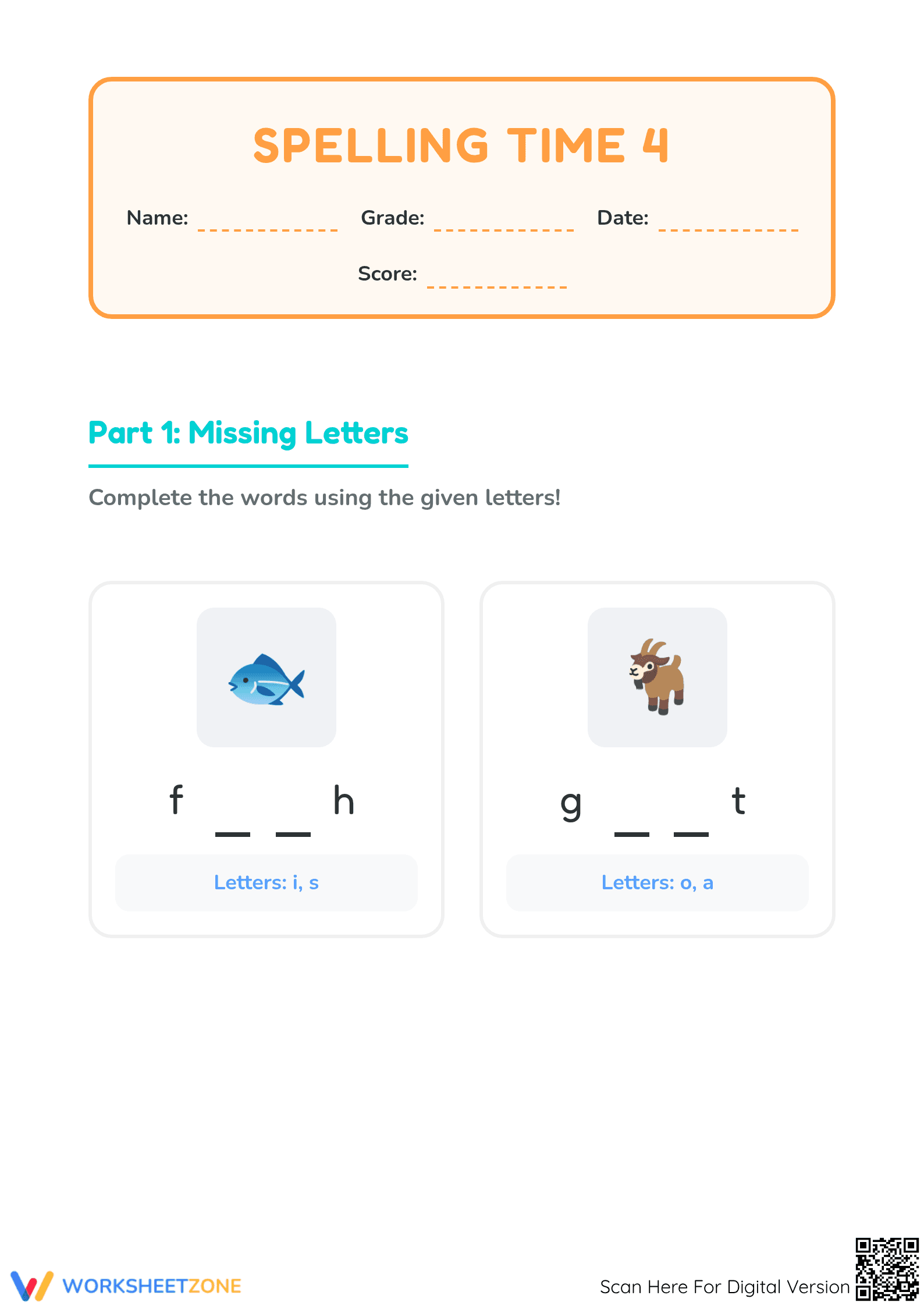
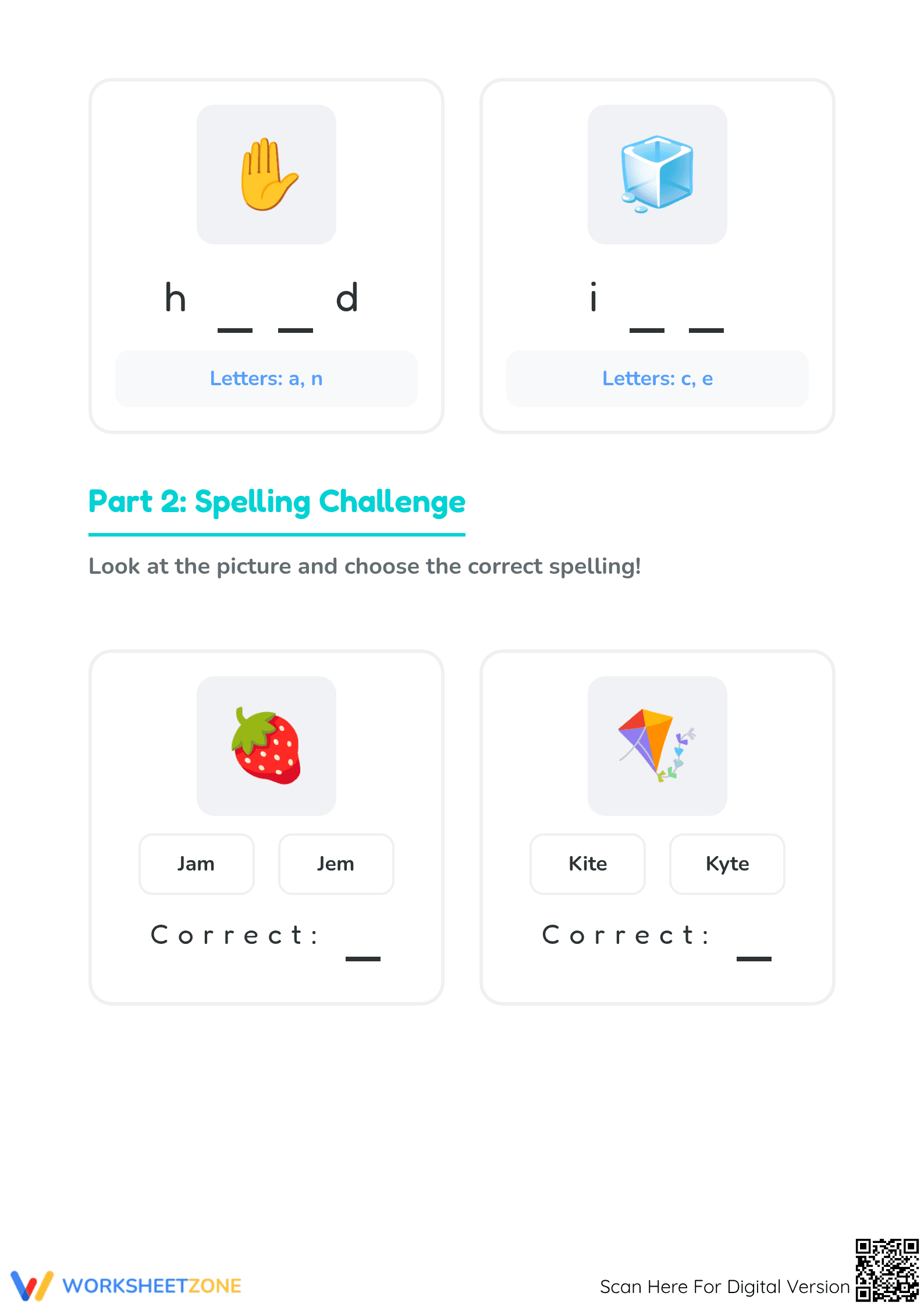
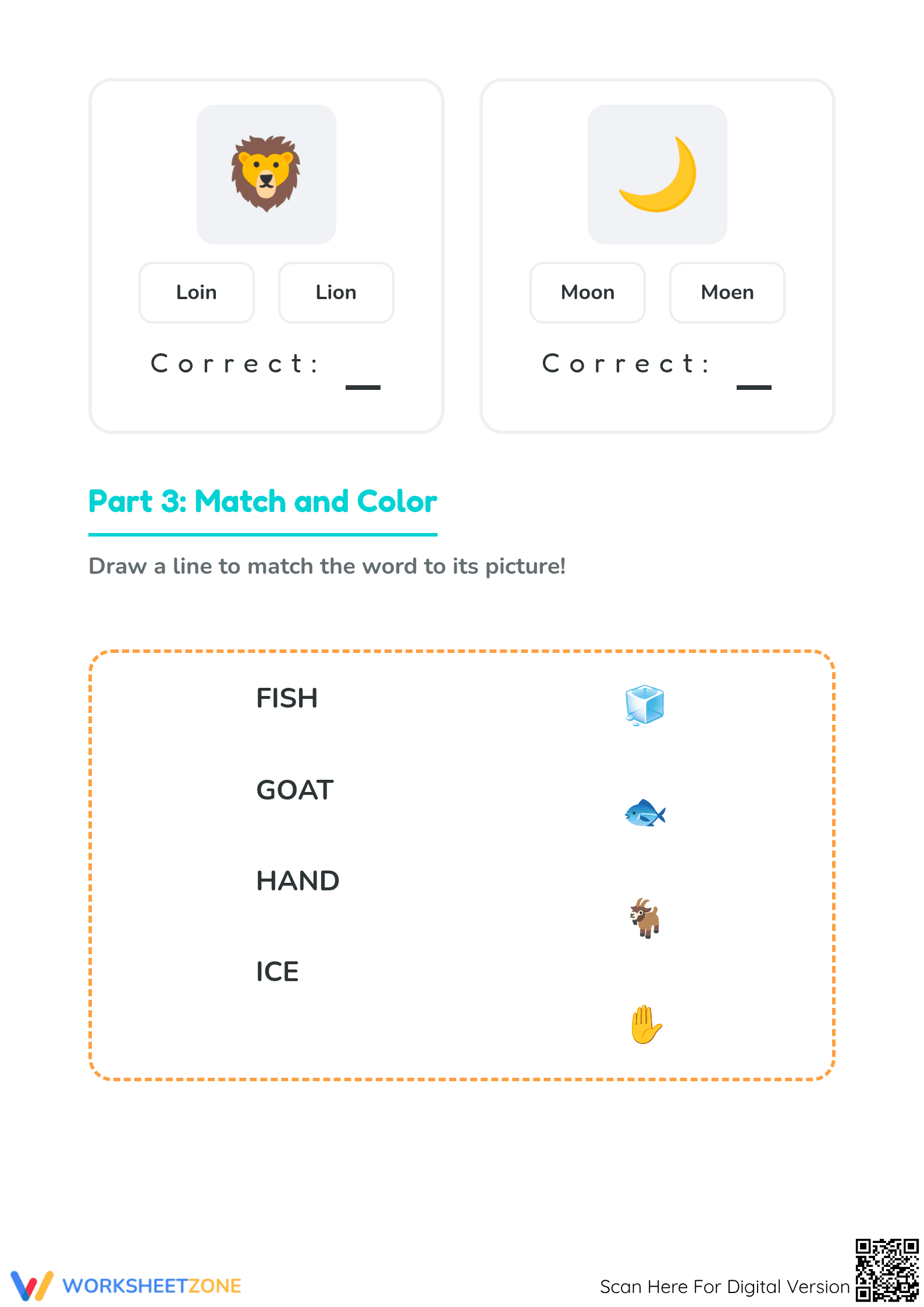
The "Spelling Time 4" packet contains three pages of interactive practice designed specifically for early learners. Inside, you will find four "Missing Letters" problems where students choose from provided options to complete words like "fish" and "goat." The second section features a "Spelling Challenge" requiring children to discriminate between correct and incorrect phonetic spellings. Finally, a "Match and Color" page reinforces vocabulary through visual association.
Zero-Prep Workflow
Implementing this resource requires minimal effort from educators, allowing more time for direct student interaction. First, select the three-page PDF and print enough copies for your group in under sixty seconds. Next, distribute the worksheets alongside pencils and crayons for the matching and coloring section. Finally, use the included answer key to quickly verify student progress. Total preparation time is less than two minutes, making it ideal for substitute plans.
Standards Alignment
This resource aligns with CCSS.ELA-LITERACY.RF.K.3.A, which requires students to demonstrate basic knowledge of one-to-one letter-sound correspondences. By isolating specific sounds within words and choosing the correct graphemes, learners practice the fundamental mechanics of encoding. Both standard codes can be copied directly into lesson plans, IEP goals, or district curriculum mapping tools to ensure instructional consistency across the grade level.
How to Use It
Incorporate this worksheet during the independent practice phase of a phonics lesson. After introducing a specific letter sound, assign the corresponding page to reinforce the concept. For a formative-assessment observation tip, watch how students select missing letters to determine if they are beginning to process medial vowels correctly. Expected completion time for all three pages is roughly twenty minutes.
Who It's For
This packet is designed for preschool students and kindergarteners who are beginning to blend sounds. It serves as an excellent resource for English Language Learners who need visual support to build their academic vocabulary. Pair this resource with a letter-sound anchor chart or a short reading passage to create a cohesive and supportive learning environment for all students.
The Spelling Time 4 worksheet focuses on the critical development of letter-sound correspondence, a primary predictor of later reading achievement. According to the NAEP 2024 framework, early mastery of the alphabetic principle is essential for moving from decoding to fluent reading. By engaging with 12 targeted problems across 3 pages, students practice identifying the correct graphemes for phonemes in various positions within a word. This structured approach mirrors the recommendations found in the ScienceDirect TpT Analysis, which emphasizes the value of repetitive, scaffolded practice in early childhood literacy. Teachers can rely on this printable to provide consistent alignment with CCSS.ELA-LITERACY.RF.K.3.A while offering students a visually engaging way to interact with letters. The inclusion of a clear answer key supports immediate feedback, further reinforcing the connection between oral sounds and written symbols in the English language. This resource ensures that students develop the necessary encoding skills to progress from simple letter recognition to full word formation and reading readiness.


