


























Views
Downloads
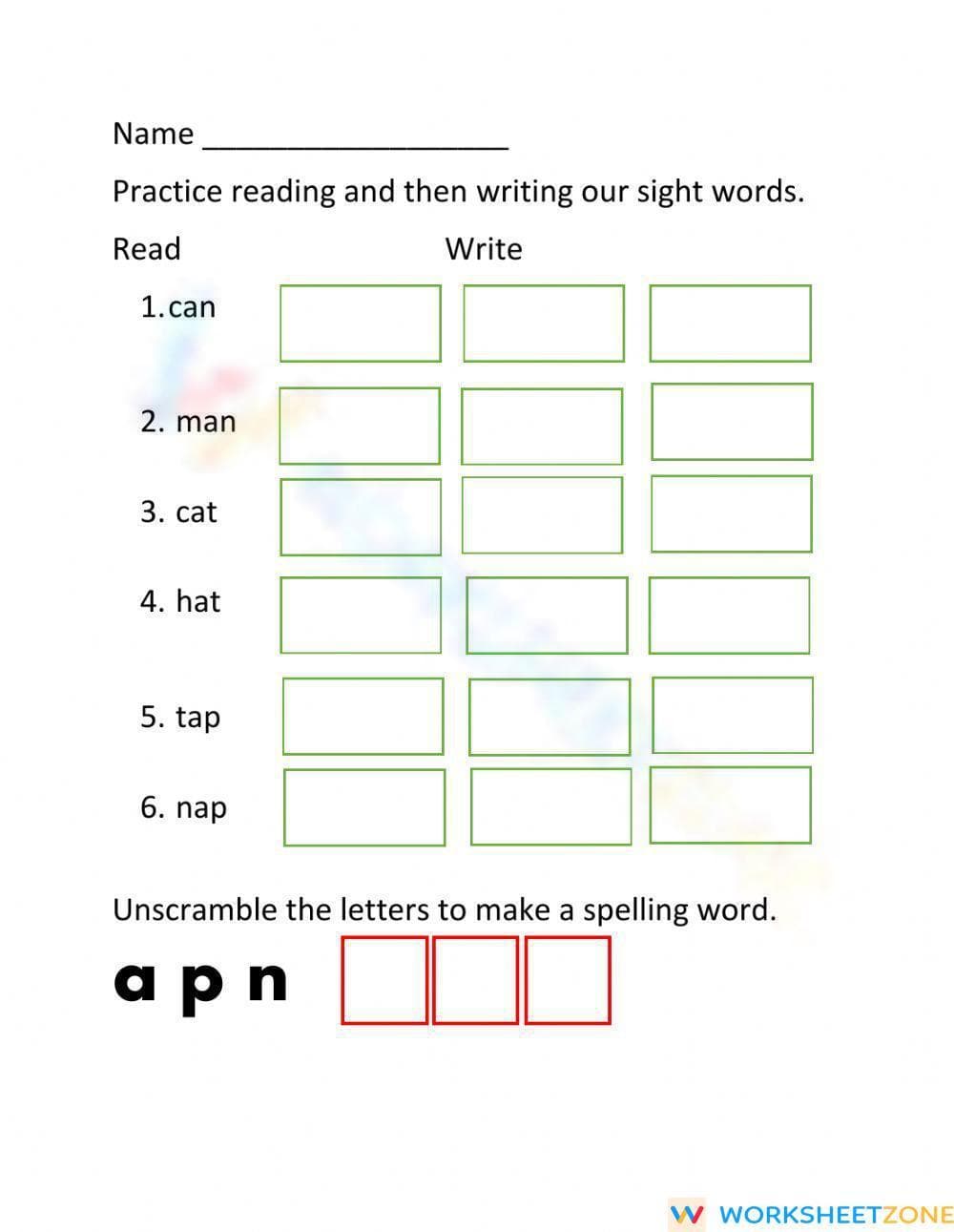

Essential Short a Spelling Worksheet | Grade 1 ELA Printable
Paste this activity's link or code into your existing LMS (Google Classroom, Canvas, Teams, Schoology, Moodle, etc.).
Students can open and work on the activity right away, with no student login required.
You'll still be able to track student progress and results from your teacher account.
This essential Grade 1 spelling worksheet focuses on the short a vowel sound through targeted CVC word practice. Students engage in repetitive writing and a letter-unscrambling challenge to solidify their phonetic understanding. By isolating the medial vowel sound in words like cat and nap, learners build a strong foundation for early literacy success.
At a Glance
- Grade: Grade 1 · Subject: English Language Arts
- Standard:
CCSS.ELA-LITERACY.L.K.2.D— Spell simple words phonetically by drawing on knowledge of sound-letter relationships in CVC patterns- Skill Focus: Short a CVC Word Spelling
- Format: 1 page · 7 problems · Answer key included · PDF
- Best For: Independent phonics practice and morning work
- Time: 10–15 minutes
What's Inside
This worksheet provides a streamlined, effective approach to phonics instruction. It features a list of six common short a sight words: can, man, cat, hat, tap, and nap. Each word is paired with writing frames to encourage correct letter formation. The final task asks students to unscramble the letters "a p n" to form a known spelling word, reinforcing phonemic awareness.
Zero-Prep Workflow
The zero-prep workflow for this resource is designed for maximum efficiency. Teachers can print the single-page PDF in seconds and distribute it immediately to students. Because the layout is intuitive, the entire setup requires less than two minutes of teacher preparation time. This makes it an ideal choice for emergency sub plans or as a quiet supplemental activity during small-group rotations.
Standards Alignment
Aligned to CCSS.ELA-LITERACY.L.K.2.D, this resource requires students to spell simple words phonetically, drawing on their knowledge of sound-letter relationships. It also supports CCSS.ELA-LITERACY.RF.1.2.C by encouraging learners to isolate and pronounce the initial, medial, and final phonemes in single-syllable words. Both standard codes can be copied directly into lesson plans, IEP goals, or district curriculum mapping tools to ensure instructional alignment.
How to Use It
Use this worksheet as a formative assessment during the independent practice phase of a literacy lesson. After modeling the short a sound, assign the page while observing student letter formation and sound blending. It serves as an excellent "quick check" to identify students needing additional support with medial vowel isolation. Completion typically takes 10 to 15 minutes, fitting perfectly into daily literacy blocks.
Who It's For
This resource is tailored for Kindergarten and Grade 1 students mastering CVC patterns. It is particularly beneficial for English Language Learners and students receiving Tier 2 intervention who require focused phonics practice. For a complete lesson, pair this worksheet with a short a decodable passage or magnetic letters to provide a multi-sensory learning experience before starting the writing tasks.
Foundational literacy instruction relies on the mastery of consonant-vowel-consonant (CVC) patterns, which serve as the building blocks for decoding. This worksheet aligns with CCSS.ELA-LITERACY.L.K.2.D by providing students with structured opportunities to spell words phonetically. According to Fisher & Frey (2014), the gradual release of responsibility is most effective when students are given focused practice that bridges the gap between teacher modeling and independent application. By focusing specifically on the short a sound in words like can and hat, this resource reduces cognitive load, allowing young learners to focus on sound-symbol relationships without the distraction of irregular spelling. Systematic phonics instruction is a proven predictor of later reading fluency. Educators can use the included seven tasks to gather empirical evidence of progress toward phonemic mastery, ensuring that every learner develops the essential skills required for academic advancement in early elementary education.


