


























Views
Downloads

Essential Spelling & Alphabetizing Worksheet | Grade 3
Paste this activity's link or code into your existing LMS (Google Classroom, Canvas, Teams, Schoology, Moodle, etc.).
Students can open and work on the activity right away, with no student login required.
You'll still be able to track student progress and results from your teacher account.
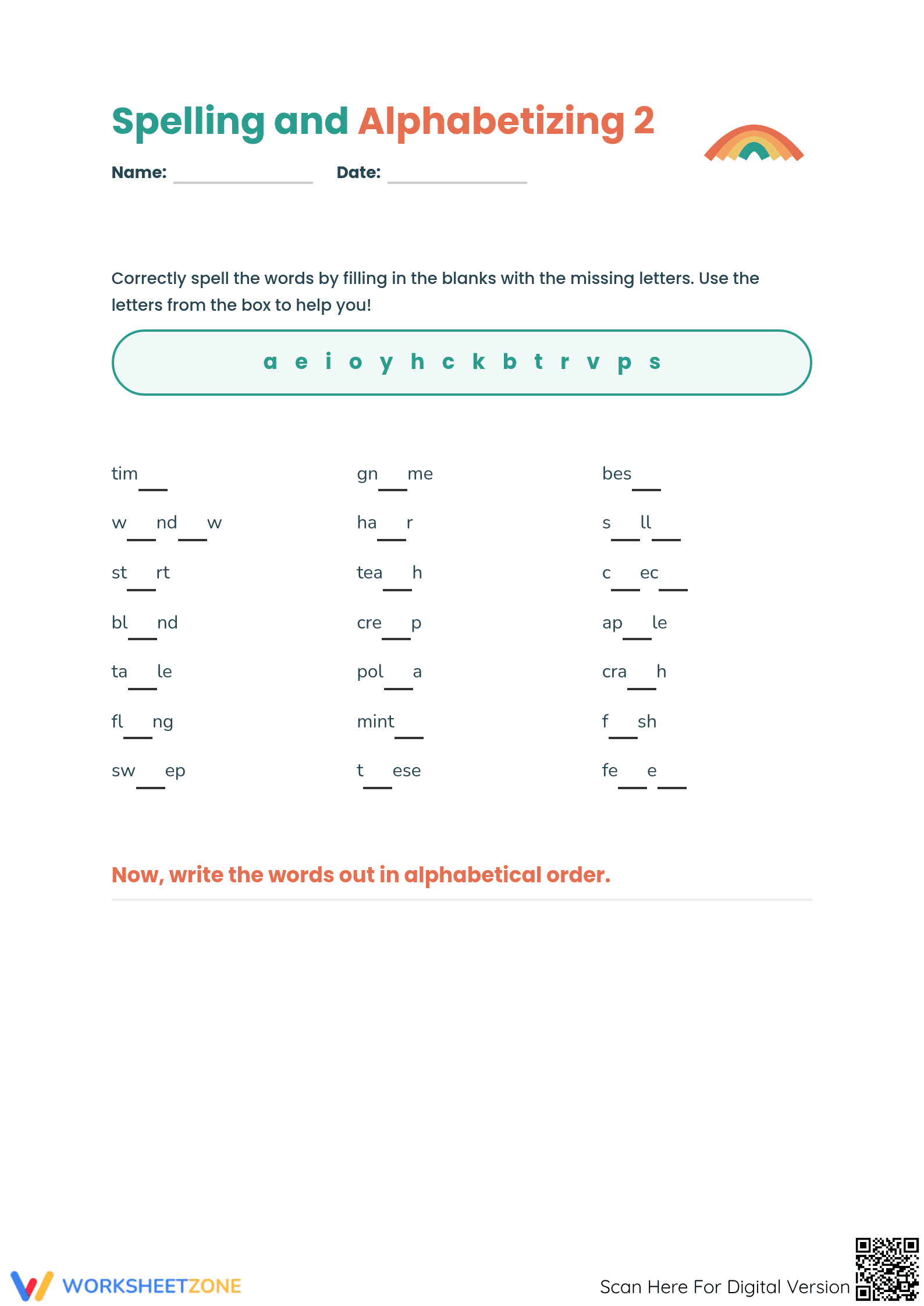
This Grade 3 spelling and alphabetizing worksheet helps students master word patterns and dictionary skills through active completion. Students identify missing letters in 21 common words before organizing the full list into alphabetical order. It provides a structured way to reinforce phonics and foundational literacy skills in a single, cohesive activity.
At a Glance
- Grade: 3 · Subject: ELA
- Standard:
CCSS.ELA-LITERACY.L.3.2.E— Use conventional spelling for high-frequency words and add suffixes to base words- Skill Focus: Spelling patterns and alphabetizing
- Format: 2 pages · 21 problems · Answer key included · PDF
- Best For: Independent practice or morning work
- Time: 15–20 minutes
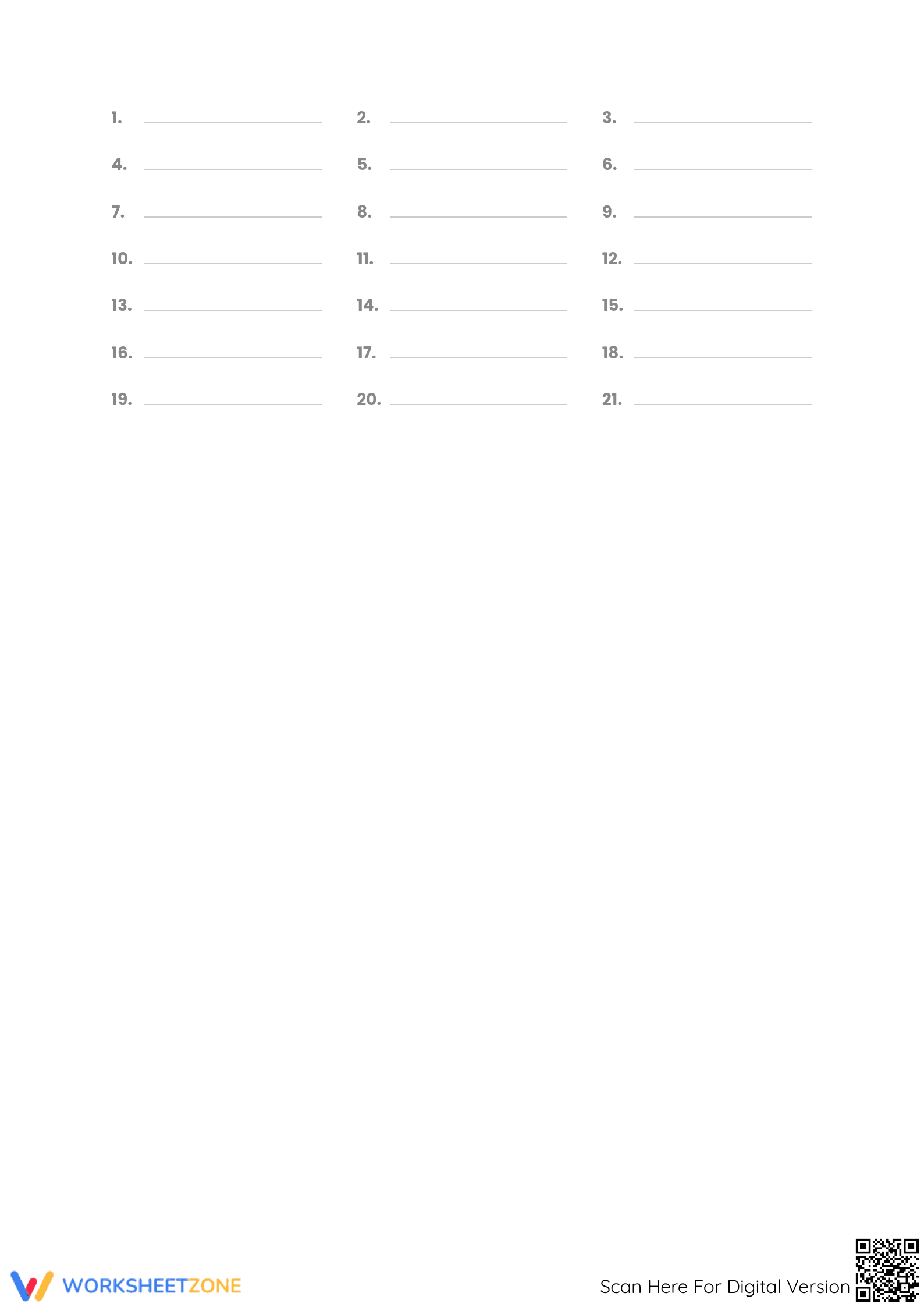
The resource consists of a two-page PDF. The first page features 21 partially spelled words with a letter bank containing vowels and consonants (a, e, i, o, y, h, c, k, b, t, r, v, p, s). The second page provides a numbered template for students to rewrite the completed words in alphabetical order. A full answer key is included for quick grading.
Skill Progression
- Guided Practice: Students use the provided letter bank to narrow down options for 21 incomplete word stems, reducing cognitive load during the initial spelling phase.
- Supported Practice: Once words are completed, students must read and recognize the full word forms to prepare for the sorting task.
- Independent Practice: Students apply alphabetizing rules to the entire 21-word list without external cues, demonstrating mastery of letter-sequence logic.
This progression follows a gradual-release model, moving from scaffolded letter selection to independent organizational thinking.
Standards Alignment
This worksheet aligns with `CCSS.ELA-LITERACY.L.3.2.E`, which requires students to use conventional spelling for high-frequency words. It also supports `CCSS.ELA-LITERACY.L.3.2.G` by requiring students to use their knowledge of the alphabet to arrange words. Both standard codes can be copied directly into lesson plans, IEP goals, or district curriculum mapping tools.
How to Use It
Use this worksheet during the independent practice phase of a spelling lesson to verify that students can apply phonics rules to incomplete words. It also serves as an excellent formative assessment for dictionary skills; observe if students struggle with the second or third letter when alphabetizing. Expected completion time is 15 to 20 minutes.
Who It's For
This resource is designed for third-grade students but is also appropriate for fourth graders needing a spelling refresher. It is ideal for English Language Learners (ELLs) who benefit from the visual support of a letter bank. Pair this with a word wall or a high-frequency word anchor chart for maximum impact.
According to the RAND AIRS 2024 report, structured spelling practice that integrates multiple literacy sub-skills—such as phonics and organizational sorting—leads to higher retention of high-frequency words. This worksheet targets CCSS.ELA-LITERACY.L.3.2.E by requiring students to actively reconstruct 21 words using a provided letter bank, a method that reinforces orthographic mapping. By following the spelling task with an alphabetizing requirement, the activity forces students to process the internal structure of words rather than just recognizing them by sight. Research from Fisher & Frey (2014) emphasizes that such integrated tasks support the gradual release of responsibility, moving students from scaffolded recognition to independent mastery. This dual-purpose design ensures that Grade 3 learners develop the mechanical accuracy and the reference skills necessary for advanced reading and writing fluency in later elementary years.


