


























Views
Downloads
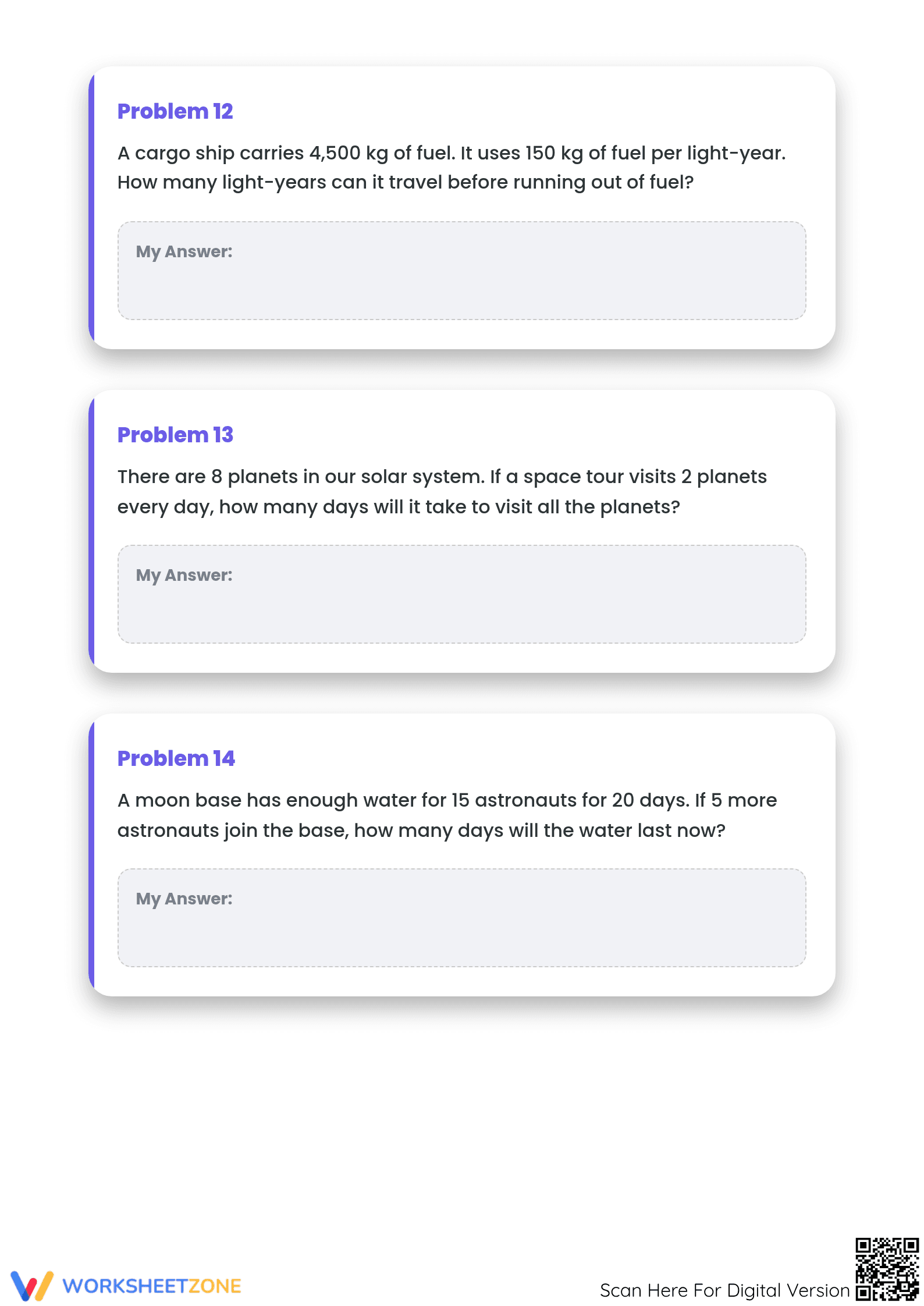

Printable Space Math Word Problems Worksheet | Grades 4-7
Paste this activity's link or code into your existing LMS (Google Classroom, Canvas, Teams, Schoology, Moodle, etc.).
Students can open and work on the activity right away, with no student login required.
You'll still be able to track student progress and results from your teacher account.
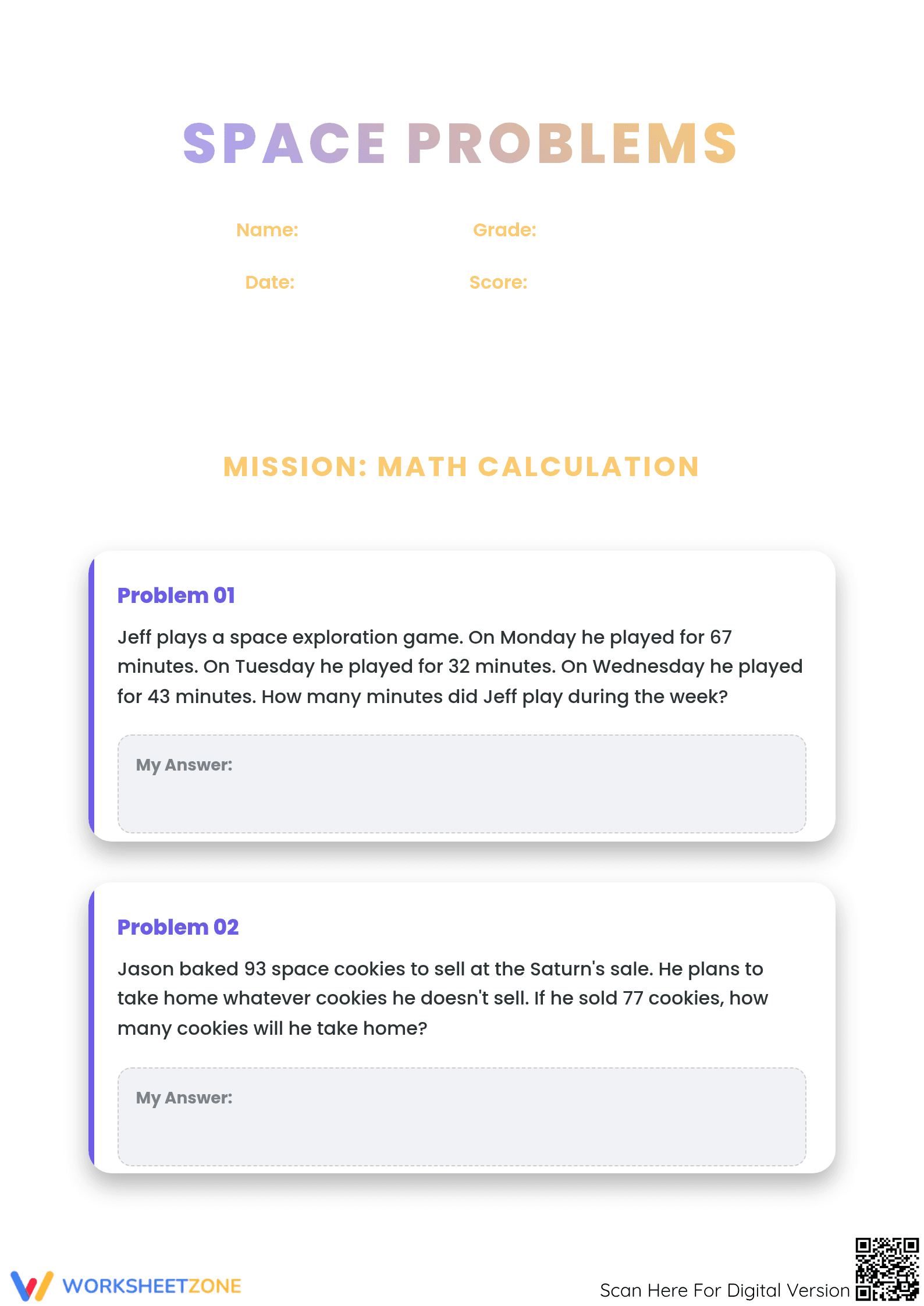
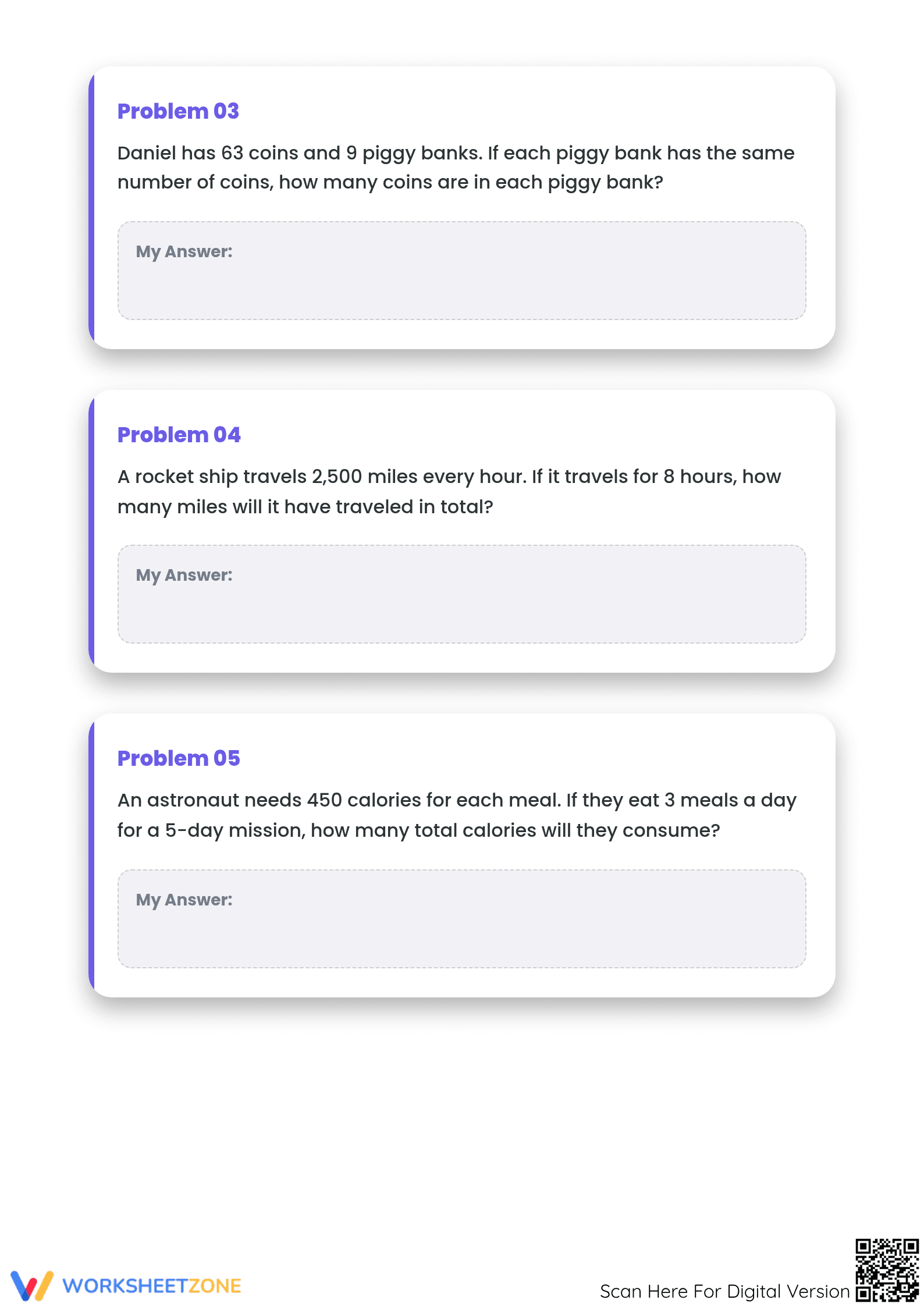
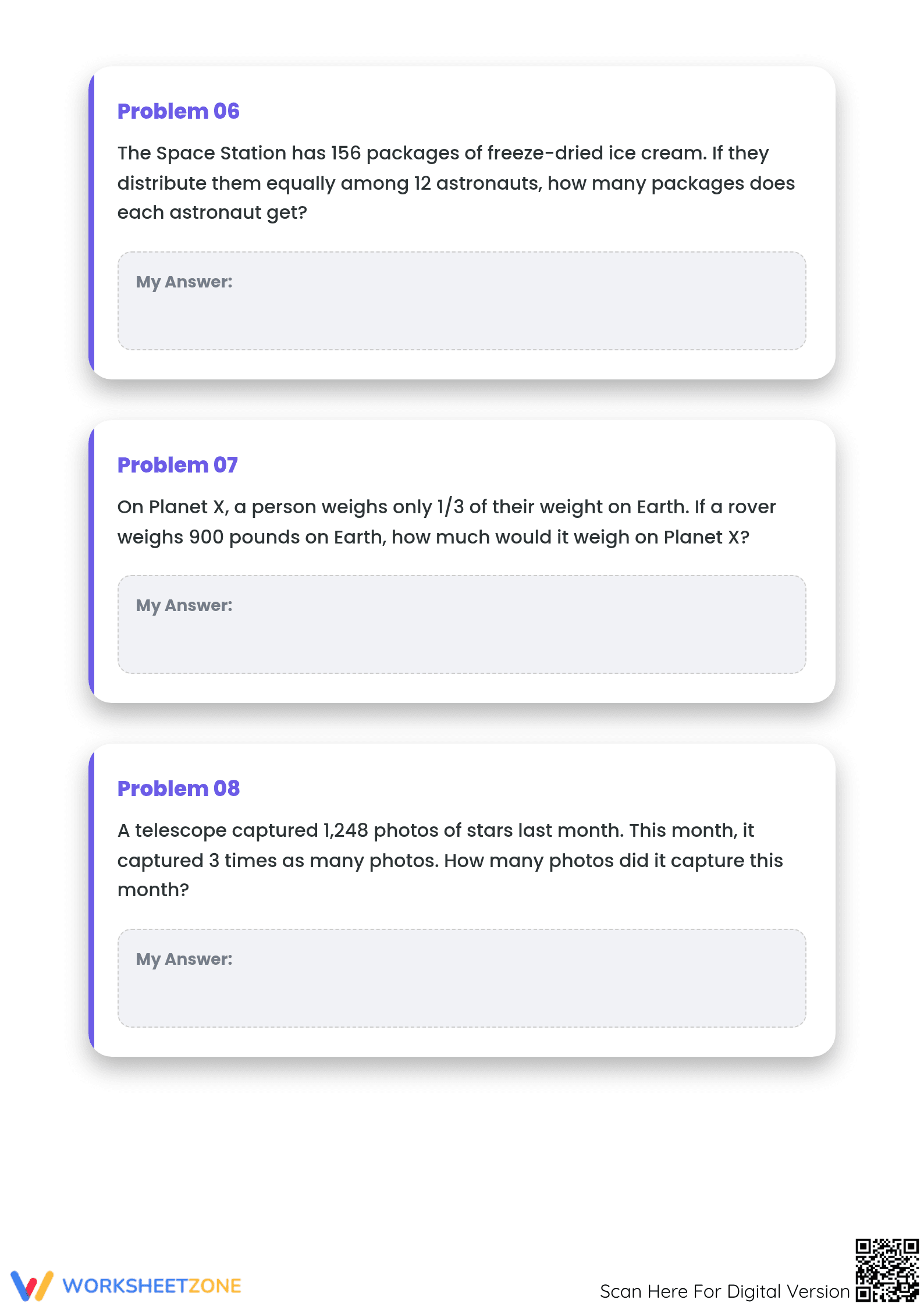
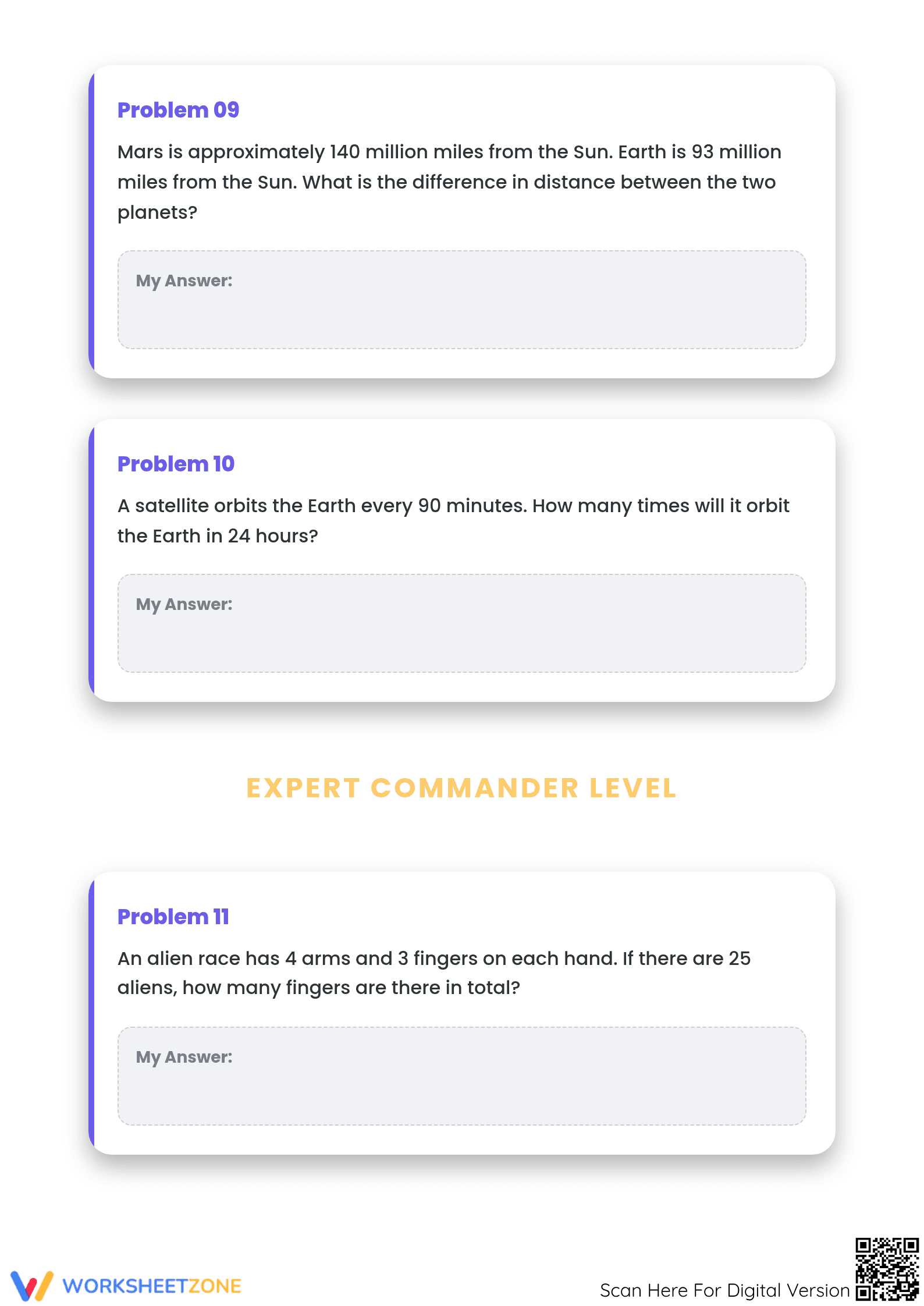
Blast off into mathematical mastery with this 5-page packet of space-themed word problems. Designed for Grades 4 through 7, these 14 tasks challenge learners to apply addition, subtraction, multiplication, and division to astronomical scenarios. From calculating rocket mileage to estimating alien biology, students develop critical thinking through rigorous multi-step logic and calculations.
At a Glance
- Grade: 4-7 · Subject: Math
- Standard:
CCSS.MATH.CONTENT.4.OA.A.3— Solve multi-step word problems using the four operations and whole numbers- Skill Focus: Multi-step Math Word Problems
- Format: 5 pages · 14 problems · Answer key included · PDF
- Best For: Independent practice or emergency sub plans
- Time: 45–60 minutes
What's Inside
This "Mission: Math Calculation" set features five pages of content with 14 unique word problems. The tasks progress in complexity, culminating in an "Expert Commander Level" for logical reasoning. Each problem provides a "My Answer" workspace for scratchpad work. The set includes a full answer key, ensuring quick grading or student self-correction during work.
Zero-Prep Workflow
Teachers can implement this resource in three steps. First, print the five-page PDF (30 seconds). Second, distribute the packets to students for individual or partner work (under 1 minute). Finally, review the completed missions using the provided answer key (5 minutes for a full class). Total preparation time is under two minutes, making this an ideal resource for sub plans.
Standards Alignment
The primary alignment for this resource is `CCSS.MATH.CONTENT.4.OA.A.3`, which requires students to "solve multistep word problems posed with whole numbers and having whole-number answers using the four operations." These problems specifically target the ability to represent these problems using equations with a letter standing for the unknown quantity. This standard code can be copied directly into lesson plans, IEP goals, or district curriculum mapping tools.
How to Use It
This packet works best as a summative review after students have mastered the four basic operations. It can be used during a "math workshop" rotation where students work through the "missions" at their own pace. Teachers should observe students during the "Expert Commander" section to see how they handle multi-step problems without explicit scaffolding. Expected completion time for the full five-page set is between 45 and 60 minutes.
Who It's For
This resource is tailored for upper elementary and middle school students who need to bridge the gap between abstract calculation and contextual application. It provides enough differentiation through natural progression to support both Grade 4 students and older learners in Grade 7 needing remedial support. It pairs perfectly with an astronomy unit or a direct instruction lesson on multi-step problem-solving strategies.
Effective mathematical instruction in the upper elementary grades depends heavily on the transition from rote computation to context-heavy problem solving. According to the RAND AIRS 2024 report on mathematical literacy, thematic integration—such as the space exploration context used in this resource—increases student engagement and persistence when tackling multi-step operations. This worksheet focuses on the CCSS.MATH.CONTENT.4.OA.A.3 standard, requiring students to synthesize their knowledge of the four operations to solve 14 distinct astronomical word problems. By providing a structured workspace and a clear thematic hook, the resource encourages students to represent unknowns and verify the reasonableness of their answers. This approach aligns with evidence-based practices that emphasize the importance of situational context in developing transferable math skills. Educators can utilize these 14 tasks to assess formative progress in logical reasoning and computational fluency, ensuring students are prepared for the increased rigor of middle school algebraic thinking.


