


























Views
Downloads
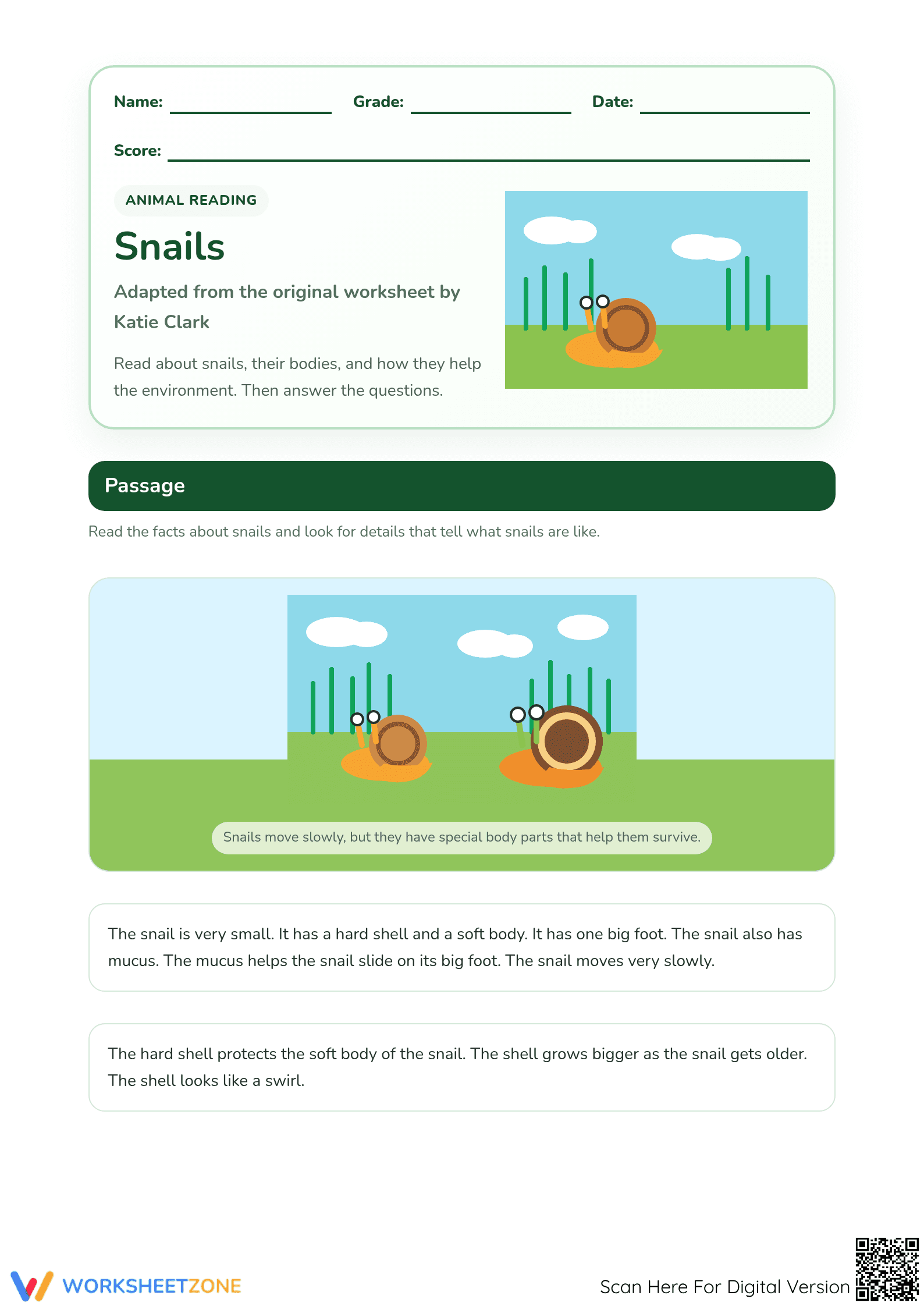


Grade 1 Snails Reading Passage — Printable No-Prep Worksheet
Paste this activity's link or code into your existing LMS (Google Classroom, Canvas, Teams, Schoology, Moodle, etc.).
Students can open and work on the activity right away, with no student login required.
You'll still be able to track student progress and results from your teacher account.
This Grade 1 reading comprehension worksheet helps young learners build foundational literacy skills by exploring the fascinating world of snails. Students will read an informational passage about snail anatomy and habitats to improve their ability to identify key details. This resource ensures students can demonstrate understanding of a text through structured, evidence-based questioning.
At a Glance
- Grade: 1 · Subject: English Language Arts
- Standard:
CCSS.ELA-LITERACY.RI.1.1— Ask and answer questions about key details in a text- Skill Focus: Informational Reading & Recall
- Format: 2 pages · 7 problems · Answer key included · PDF
- Best For: Literacy centers and independent reading practice
- Time: 15–20 minutes
What's Inside
The worksheet is divided into two clear segments. The first page features a high-interest informational passage with large, readable text and engaging illustrations that provide visual support for early readers. The second page contains a "Comprehension Check" consisting of seven fill-in-the-blank sentences. These tasks require students to refer directly back to the text to find specific facts about snail shells, movement, and diet.
Zero-Prep Workflow
- Print: Simply print the two-page PDF for your entire class (less than 1 minute).
- Distribute: Provide the materials to students for either independent work time or a guided reading group (30 seconds).
- Review: Check student progress using the provided answer key or have students self-check to reinforce factual accuracy (2 minutes).
The total teacher preparation time is minimal, making this an ideal choice for emergency sub plans, morning work, or daily warm-ups.
Standards Alignment
The primary focus of this resource is CCSS.ELA-LITERACY.RI.1.1, which requires students to "Ask and answer questions about key details in a text." By using the provided sentence stems to extract specific facts, students practice the critical skill of citing evidence from informational passages. This standard code can be copied directly into lesson plans, IEP goals, or district curriculum mapping tools.
How to Use It
Use this worksheet during the independent practice phase of instruction after a lesson on identifying main ideas. It serves as an excellent formative-assessment tool; teachers should observe if students physically point to the text when looking for answers. Completion usually takes 15 to 20 minutes, allowing it to fit into tight block schedules or literacy rotations.
Who It's For
This resource is designed for Grade 1 students but is also highly effective for Kindergarten extension or Grade 2 remediation. It pairs naturally with a classroom anchor chart about animal life cycles or a short video clip showing how a snail moves. The simple sentence structures and clear font make it accessible for English Language Learners and students with IEP accommodations.
Building reading comprehension through informational text is a cornerstone of early literacy development. According to the RAND AIRS 2024 report, providing students with structured opportunities to interact with non-fiction content significantly improves their ability to synthesize information across different subjects. This Snails worksheet is specifically designed to align with CCSS.ELA-LITERACY.RI.1.1, ensuring that students are not just reading, but actively looking for details that tell what snails are like. By engaging with seven targeted comprehension questions, learners practice the exact recall skills necessary for academic success in higher grades. The use of fill-in-the-blank tasks provides a scaffolded environment where students can focus on finding specific vocabulary words, such as "mucus" and "shell," within the passage. This evidence-based approach to literacy instruction helps close the achievement gap by offering consistent, high-quality practice that is both accessible for young readers and rigorous enough to meet state standards.


