


























Views
Downloads

Essential Grade 4 Simplifying Improper Fractions Worksheet
Paste this activity's link or code into your existing LMS (Google Classroom, Canvas, Teams, Schoology, Moodle, etc.).
Students can open and work on the activity right away, with no student login required.
You'll still be able to track student progress and results from your teacher account.
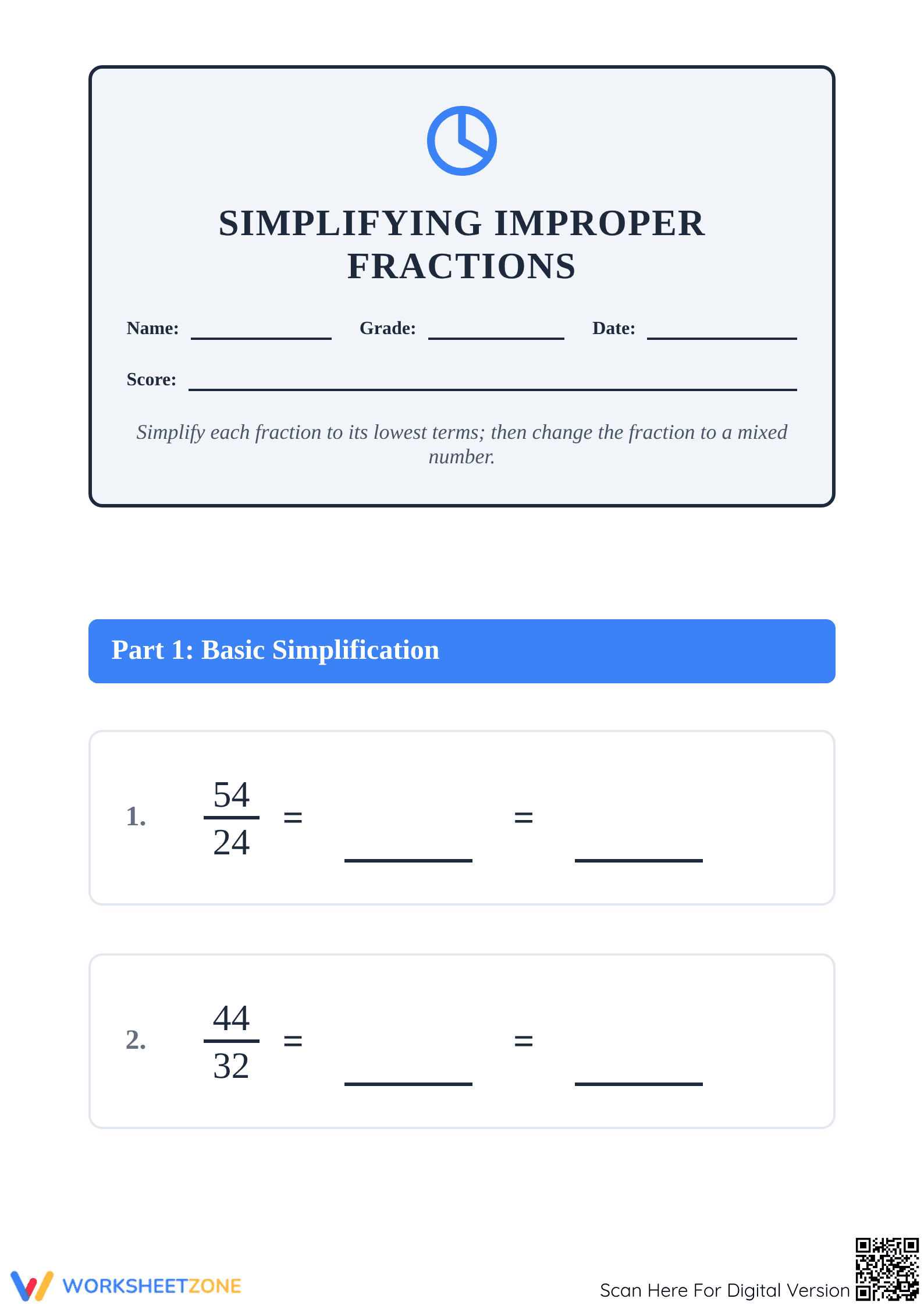
This Grade 4 math worksheet focuses on the essential skill of simplifying improper fractions and converting them into mixed numbers. Students learn to reduce fractions to their lowest terms while building a conceptual understanding of fraction equivalence. By mastering this process, learners gain the confidence needed for more complex operations involving addition and subtraction of fractions.
At a Glance
- Grade: 4 · Subject: Math
- Standard:
CCSS.MATH.CONTENT.4.NF.B.3— Convert improper fractions to mixed numbers and simplify to lowest terms- Skill Focus: Improper Fraction Conversion
- Format: 5 pages · 19 problems · Answer key included · PDF
- Best For: Independent practice and sub plans
- Time: 20–30 minutes
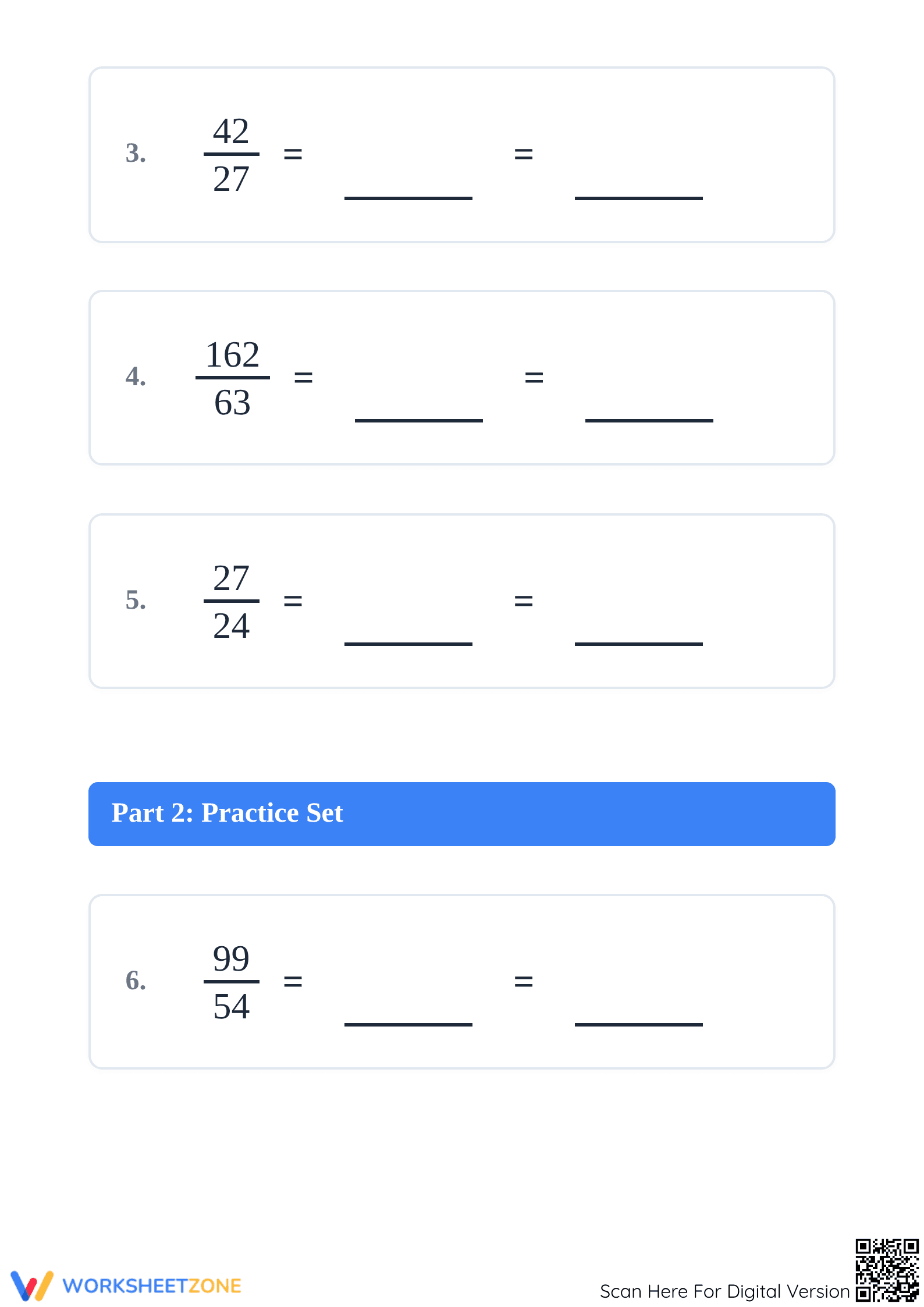
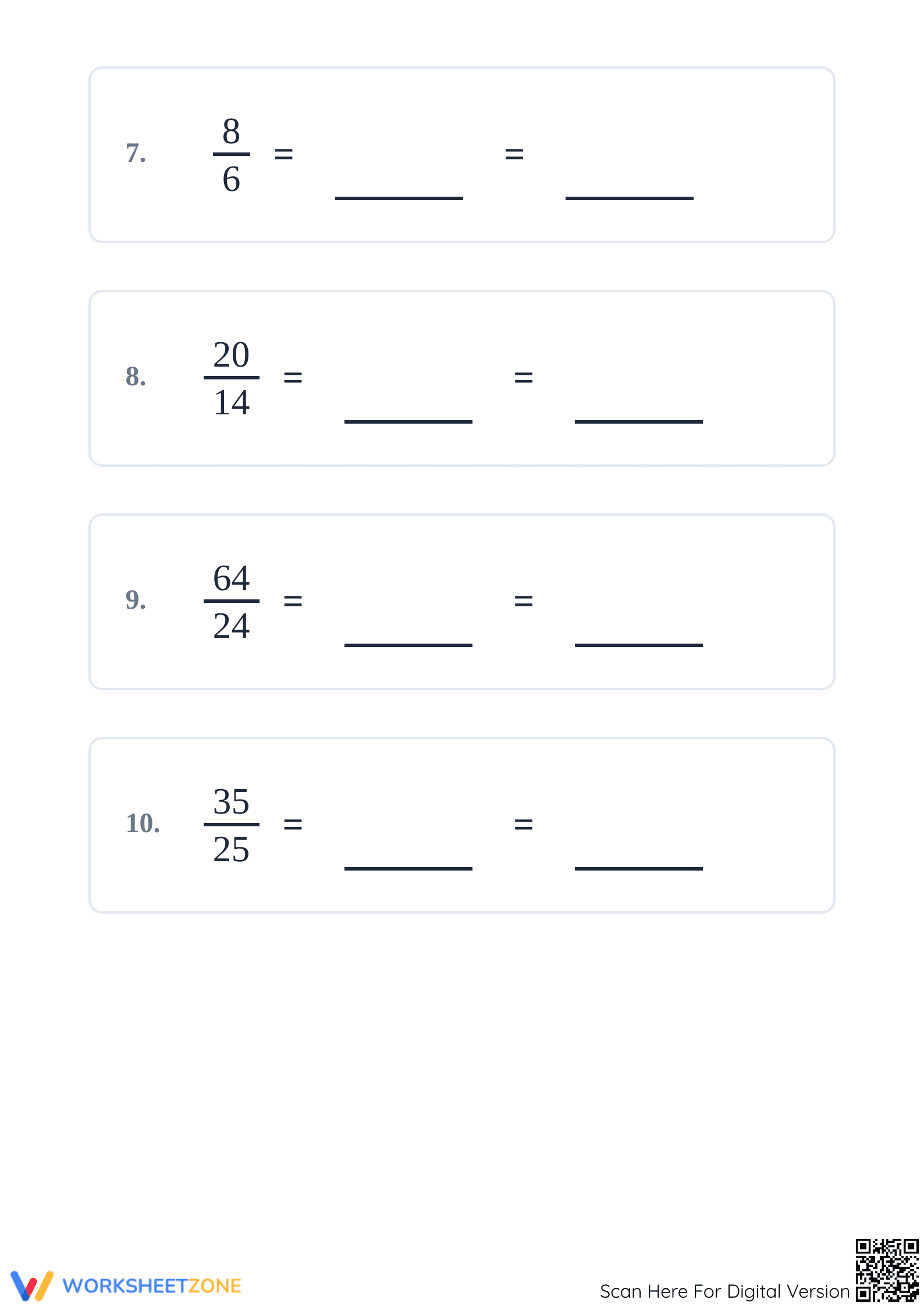
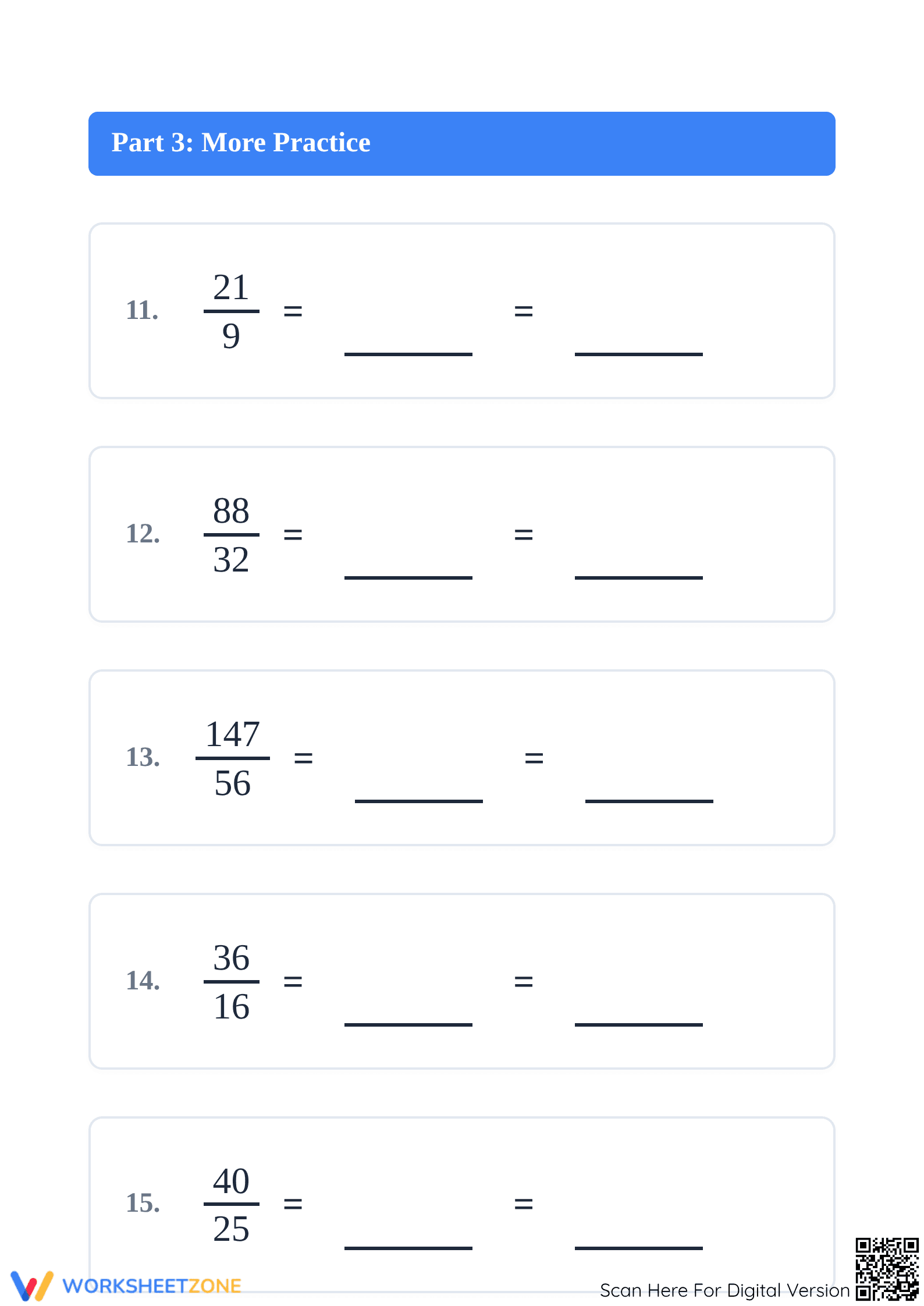
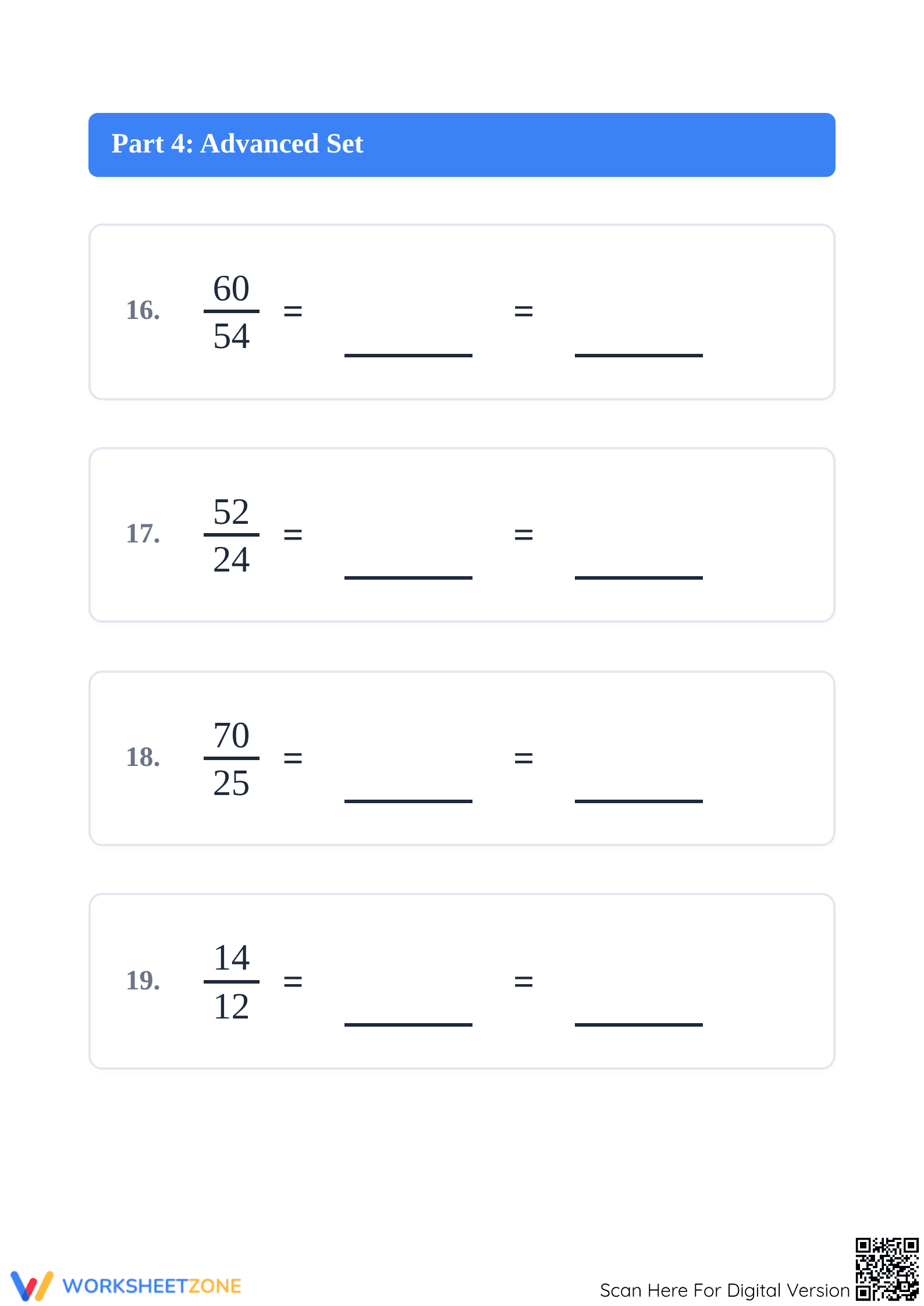
This comprehensive 5-page practice packet contains 19 structured problems divided into four progressive sections: Basic Simplification, Practice Set, More Practice, and an Advanced Set. Each problem includes dedicated workspace for both the simplified fraction and the final mixed number conversion. A complete answer key is provided to facilitate rapid grading or student self-correction during independent work.
Zero-Prep Workflow
- Step 1: Print (30 seconds). The PDF is formatted for immediate use without resizing or extra formatting.
- Step 2: Distribute (1 minute). The clear instructions allow students to start immediately without a lengthy introduction.
- Step 3: Review (30 seconds). Use the included answer key to check for accuracy or provide immediate feedback.
Total teacher prep time is under two minutes, making it an ideal choice for sub plans or morning work.
Standards Alignment
Primary Standard: CCSS.MATH.CONTENT.4.NF.B.3 — Understand a fraction a/b with a > 1 as a sum of fractions 1/b. This resource specifically targets the sub-skill of converting improper fractions to mixed numbers through simplification. This standard code can be copied directly into lesson plans, IEP goals, or district curriculum mapping tools to ensure instructional alignment.
How to Use It
Assign this packet as independent practice after a direct instruction lesson on fraction reduction to reinforce the concept of lowest terms. It also serves as an excellent formative assessment tool; observe how students handle the "Advanced Set" to identify those ready for more complex fraction concepts. Expect completion in 20–30 minutes depending on learner proficiency.
Who It's For
This resource is designed for Grade 4 and Grade 5 students who are developing fluency with fractions. It provides necessary scaffolding for learners who benefit from structured workspace and clear visual cues. Pair this worksheet with a fraction tile anchor chart or a short instructional passage on greatest common factors for a complete learning experience.
According to the RAND AIRS 2024 report on mathematical fluency, consistent practice with fraction conversions is a critical predictor of success in middle school algebra. This worksheet targets the CCSS.MATH.CONTENT.4.NF.B.3 standard by requiring students to simplify improper fractions into their lowest terms and then transform them into mixed numbers. The structured 19-problem format supports cognitive load management, allowing students to focus on the procedural steps of division and reduction. Research by Fisher & Frey (2014) emphasizes the importance of gradual release, which is mirrored here through the progression from basic to advanced problem sets. By engaging with these multi-page exercises, students internalize the relationship between numerators and denominators. This printable resource provides the necessary repetition to move beyond rote memorization toward a functional mastery of fractional values, ensuring that learners are prepared for higher-order mathematics involving unlike denominators and multi-step equations.


