


























Views
Downloads
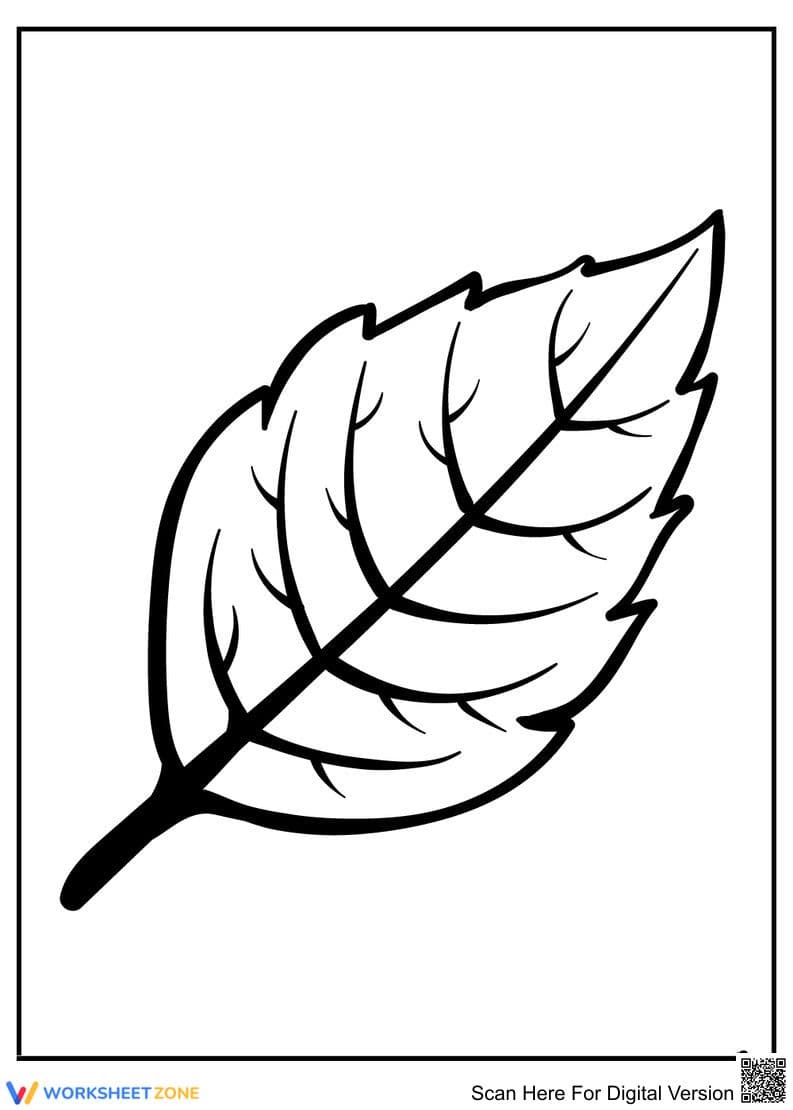

Simple Leaf Coloring Page | Essential Nature Printable
Paste this activity's link or code into your existing LMS (Google Classroom, Canvas, Teams, Schoology, Moodle, etc.).
Students can open and work on the activity right away, with no student login required.
You'll still be able to track student progress and results from your teacher account.
This simple leaf coloring worksheet provides early learners with a focused creative task to develop fine motor control and hand-eye coordination. By engaging with natural shapes, students build the foundational skills necessary for writing while exploring botanical structures. It is an ideal resource for seasonal science units or quiet time activities.
At a Glance
- Grade: Preschool–Grade 1 · Subject: Arts & Nature
- Standard:
K-LS1-1— Use observations to describe patterns of what plants need to survive- Skill Focus: Fine motor control and botanical observation
- Format: 1 page · 1 task · No answer key needed · PDF
- Best For: Morning work or science center stations
- Time: 10–15 minutes
Inside this resource, you will find a single-page PDF featuring a large, high-contrast outline of a deciduous leaf. The thick borders are specifically designed to help younger students practice staying within lines, while the internal vein structure introduces basic plant anatomy. This clean layout ensures that students are not overwhelmed by complex details.
The zero-prep workflow for this worksheet is designed for maximum efficiency. First, print the single-page PDF (30 seconds). Second, distribute the page along with crayons or colored pencils to your students (1 minute). Finally, review the completed work by asking students to identify the parts of the leaf, such as the stem and veins (1 minute).
This activity aligns with K-LS1-1, which encourages students to use observations to describe patterns in the natural world. By coloring and observing the leaf's structure, students begin to recognize the physical characteristics of plants. This standard code can be copied directly into lesson plans, IEP goals, or district curriculum mapping tools.
Use this worksheet as a hook before a nature walk to help students identify what to look for in the environment. Alternatively, use it as a formative assessment tool to observe a child's grip strength and coloring precision. Completion typically takes 10 to 15 minutes depending on the student's age and detail level.
This printable is primarily for preschool and kindergarten students, though it serves as a relaxing activity for older children. It pairs naturally with a classroom anchor chart about the seasons or a read-aloud book about trees. It is particularly effective for students requiring occupational therapy support for fine motor development.
Research from Fisher & Frey (2014) emphasizes the importance of visual literacy and fine motor engagement in early childhood development. This simple leaf coloring worksheet supports the K-LS1-1 standard by providing a tactile way for students to engage with botanical patterns. By focusing on a single, clear image, the worksheet reduces cognitive load, allowing students to concentrate on the physical act of coloring and the observation of plant structures. According to the RAND AIRS 2024 report, high-quality supplemental materials that bridge the gap between creative expression and scientific observation are vital for long-term academic success in STEM fields. This resource provides a structured yet flexible environment for students to practice the precision required for later handwriting tasks while fostering an early appreciation for the natural world through simple, effective design.


