


























Views
Downloads

Grade K Short Vowels — Printable No-Prep Worksheet
Paste this activity's link or code into your existing LMS (Google Classroom, Canvas, Teams, Schoology, Moodle, etc.).
Students can open and work on the activity right away, with no student login required.
You'll still be able to track student progress and results from your teacher account.
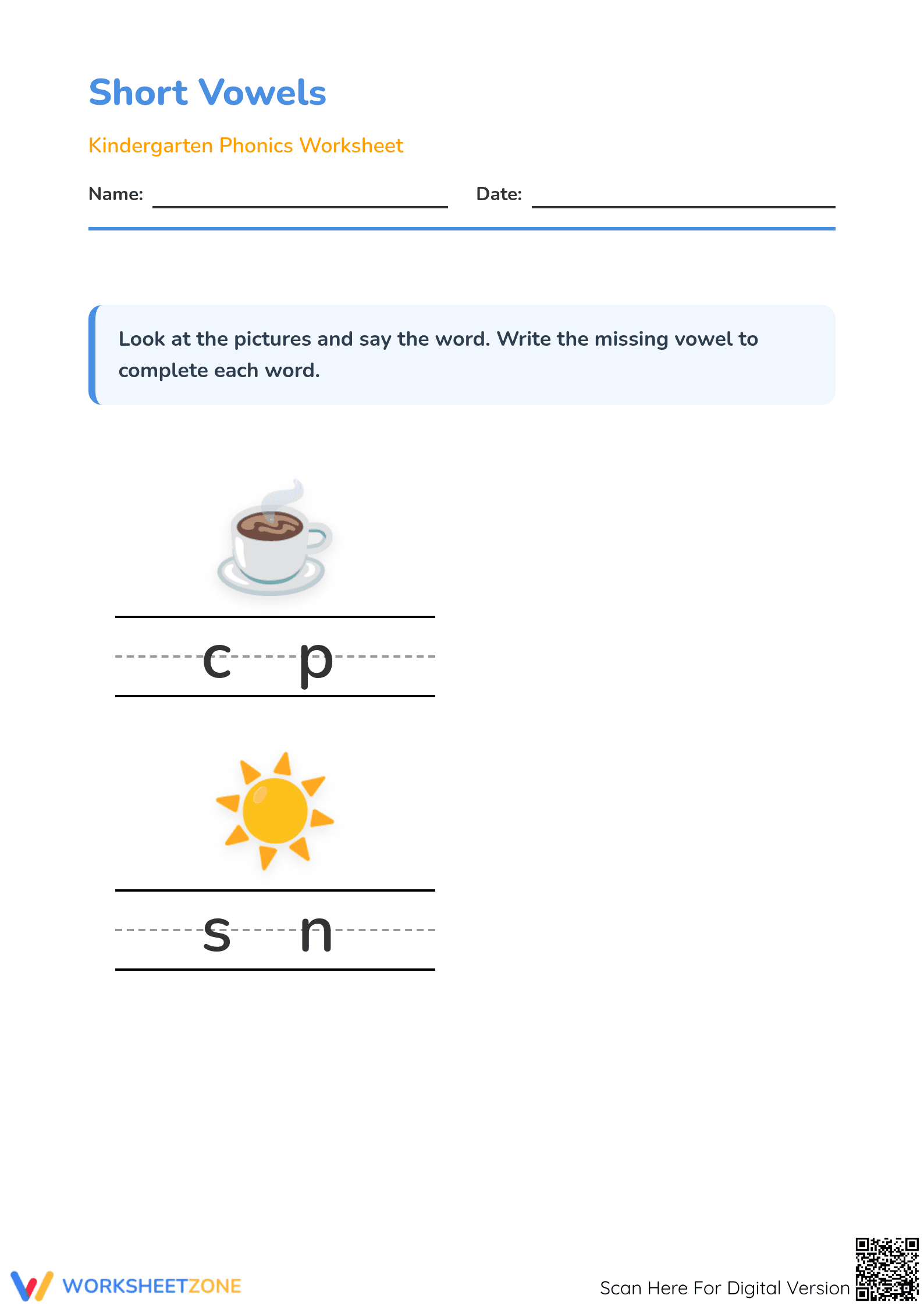
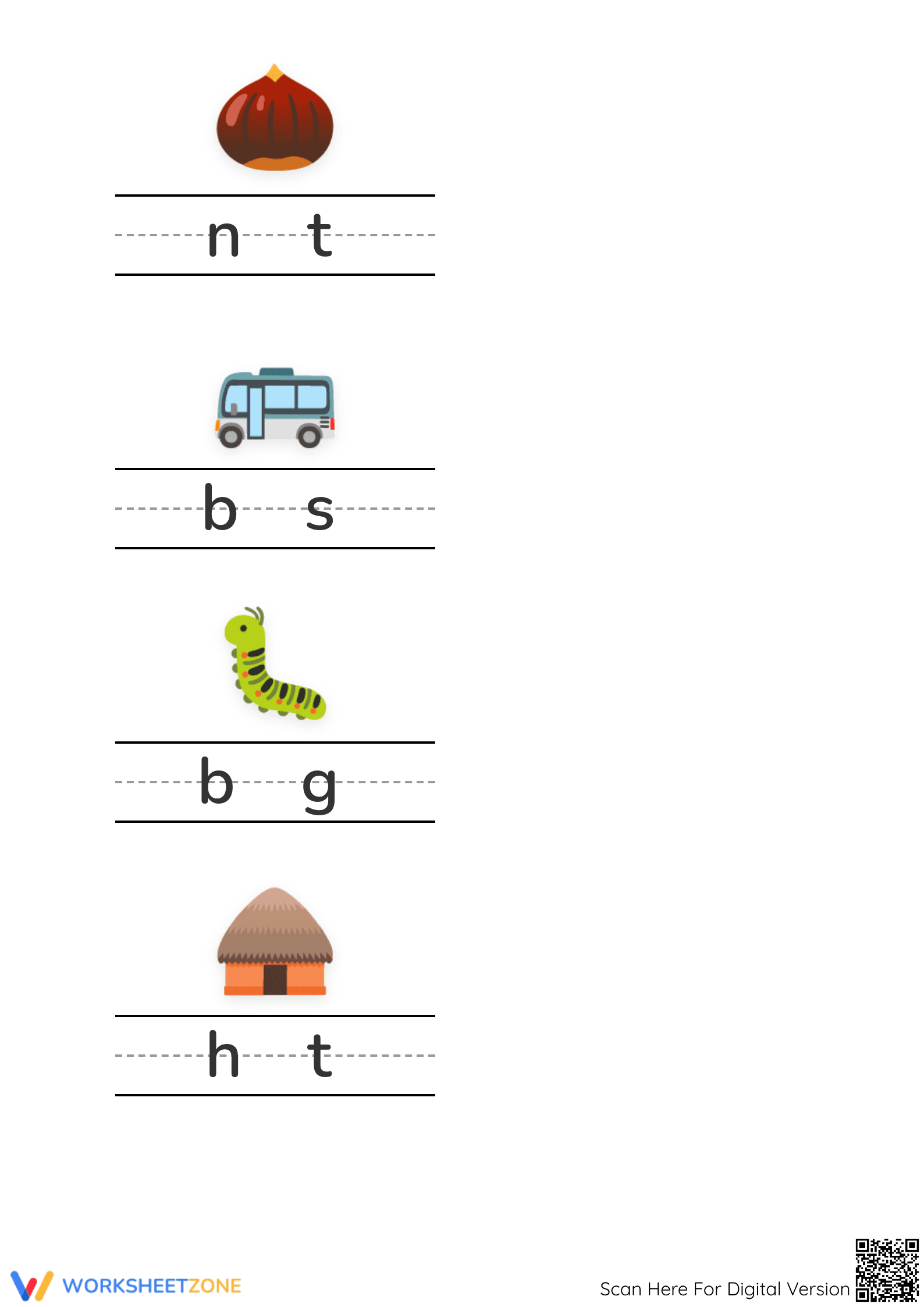
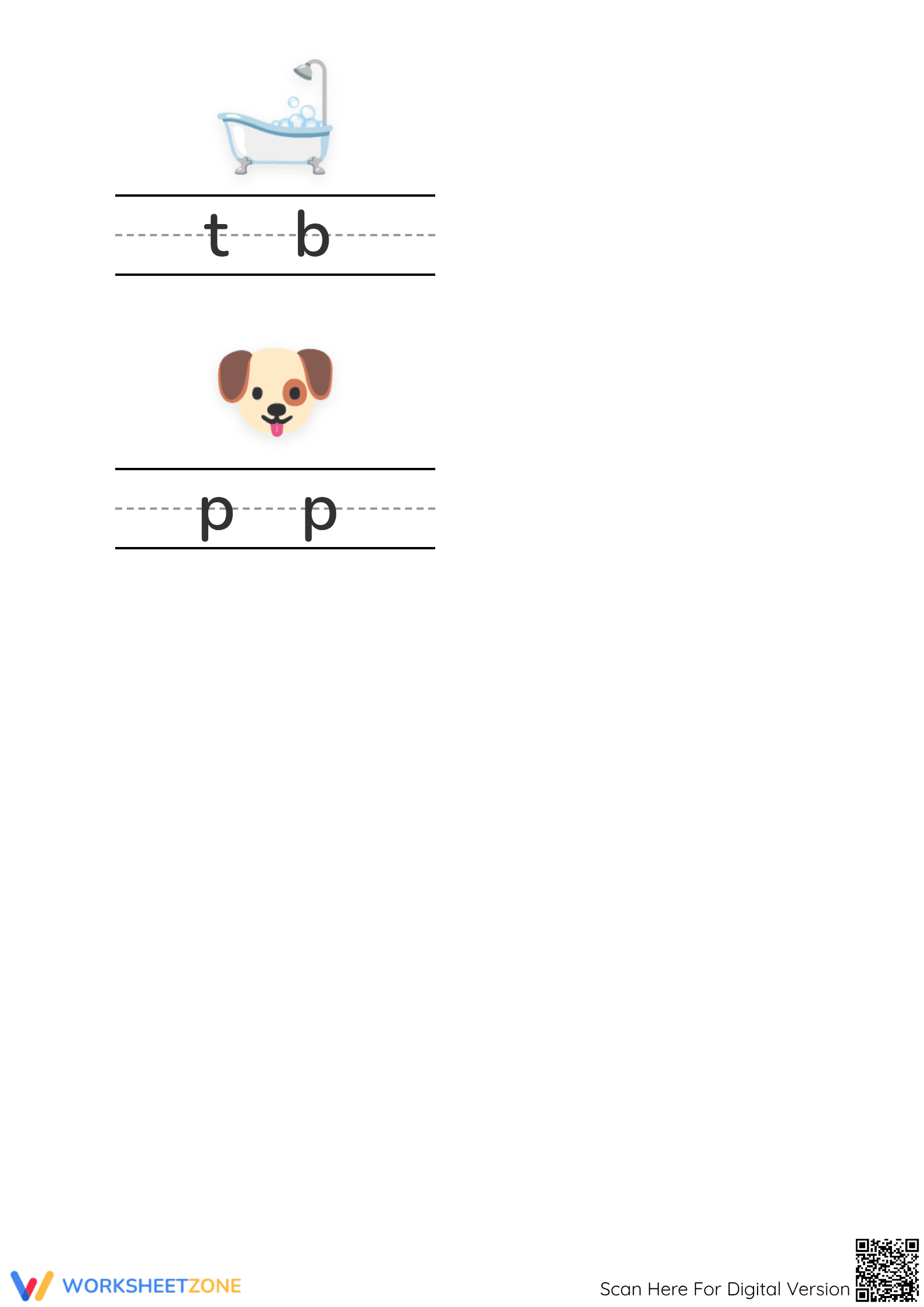
This printable Kindergarten phonics worksheet helps students isolate and write medial short vowel sounds in common CVC words. By looking at familiar pictures and saying the words aloud, early readers build essential phonemic awareness and spelling skills to strengthen their foundational reading abilities.
At a Glance
- Grade: Kindergarten · Subject: ELA
- Standard:
CCSS.ELA-LITERACY.RF.K.3.B— Associate short vowel sounds with common spellings- Skill Focus: Medial Short Vowels (CVC Words)
- Format: 3 pages · 8 problems · Answer key included · PDF
- Best For: Independent practice or centers
- Time: 10–15 minutes
This resource features three highly visual pages with a total of eight CVC word problems. Each task provides a clear, full-color illustration (such as a cup, sun, or bus) alongside a partially spelled word with primary writing lines. Students must identify the missing middle vowel and write it in the blank. A complete answer key is included for quick grading.
- Print (1 min): Simply print the three-page PDF. The large, clear graphics are ready for immediate student use.
- Distribute (1 min): Hand out to students during literacy centers or morning work. The instructions are simple and self-explanatory.
- Review (1 min): Use the provided answer key to quickly check student work or allow for peer-to-peer review.
With under two minutes of total teacher prep time, this worksheet is an excellent addition to any emergency sub plan or daily phonics routine.
Aligned to primary standard CCSS.ELA-LITERACY.RF.K.3.B, this activity requires students to associate the long and short sounds with the common spellings (graphemes) for the five major vowels. It also supports phoneme isolation as students segment the CVC words to find the missing middle sound. Both standard codes can be copied directly into lesson plans, IEP goals, or district curriculum mapping tools.
Use this worksheet as an independent practice activity after direct instruction on short vowel sounds. It works perfectly in a literacy center where students can say the words aloud without disrupting the whole class. As a formative assessment tip, observe students as they say the picture names; note whether they are stretching out the sounds to isolate the medial vowel before writing. Expected completion time is 10 to 15 minutes.
This resource is designed for Kindergarten students developing their early phonics and decoding skills. It is also appropriate for Preschoolers who are advanced in letter-sound correspondence, or First Graders needing a quick review of short vowels. Pair this worksheet with a CVC word anchor chart or physical letter tiles for students who need extra tactile support.
Integrating targeted phonics practice is essential for early literacy development and establishing a strong foundation for lifelong reading success. According to the RAND AIRS 2024 report, explicit instruction in letter-sound correspondences significantly improves decoding fluency in young readers, particularly when they are given ample opportunities to practice isolating specific phonemes in context. This worksheet aligns perfectly with the primary standard CCSS.ELA-LITERACY.RF.K.3.B by having students associate short vowel sounds with their common spellings through engaging, visually supported exercises. By systematically practicing these foundational skills with clear visual supports, educators can ensure students build the critical automaticity required for reading comprehension and spelling accuracy. Furthermore, consistent exposure to medial vowel sounds in familiar consonant-vowel-consonant words helps bridge the gap between spoken language and written text. When teachers incorporate evidence-based materials into their daily literacy routines, they empower early learners to confidently tackle more complex texts, ultimately fostering a supportive classroom environment that prioritizes measurable academic growth.


