


























Views
Downloads

Grade 2 Adjectives — Printable No-Prep Worksheet
Paste this activity's link or code into your existing LMS (Google Classroom, Canvas, Teams, Schoology, Moodle, etc.).
Students can open and work on the activity right away, with no student login required.
You'll still be able to track student progress and results from your teacher account.
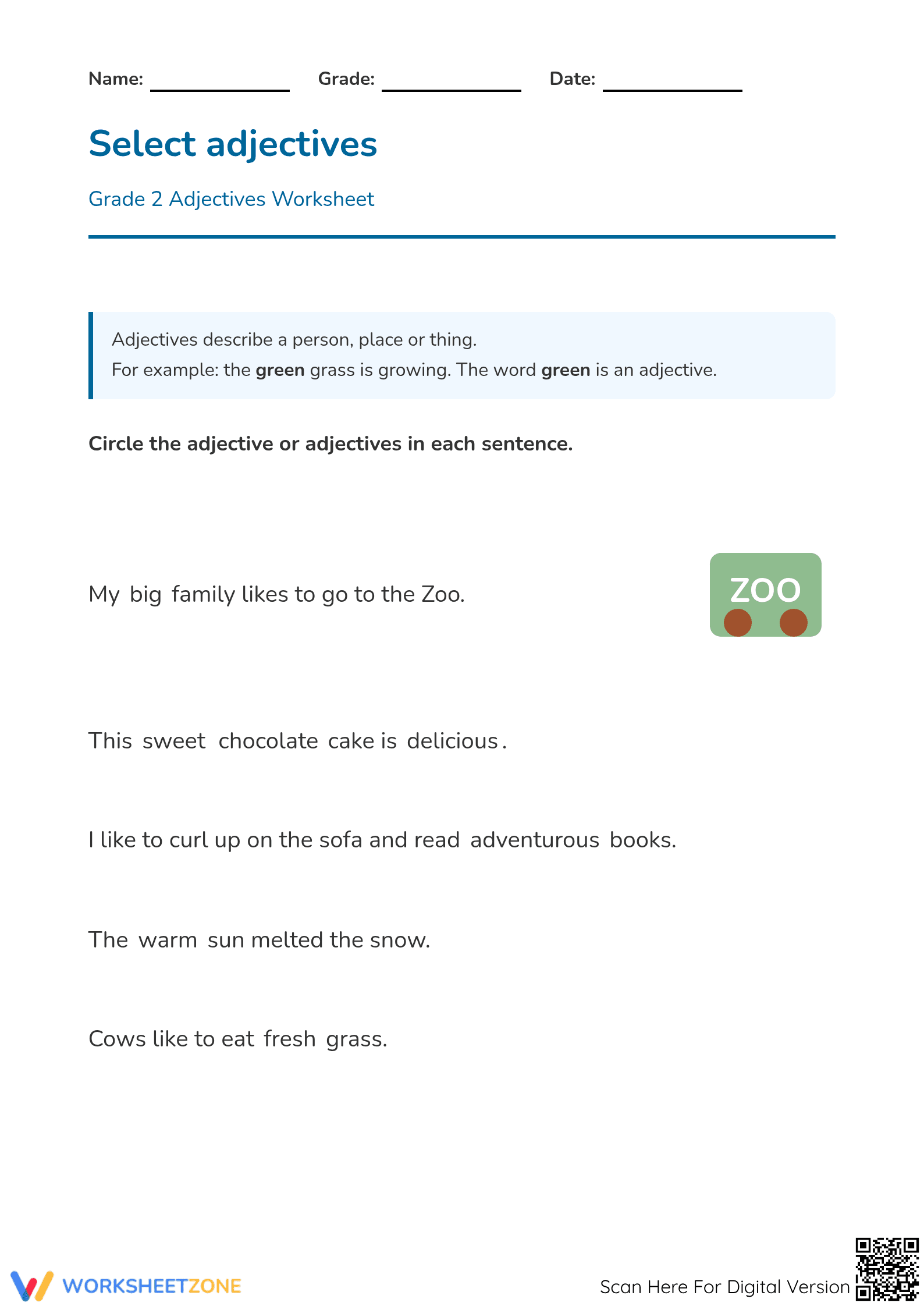
This Grade 2 adjectives worksheet helps students identify descriptive words within complete sentences to improve their reading comprehension and writing quality. By isolating adjectives that modify nouns, learners develop a stronger grasp of how language adds detail and sensory information to text. It provides immediate practice for early elementary grammar mastery.
At a Glance
- Grade: 2 · Subject: ELA
- Standard:
CCSS.ELA-LITERACY.L.2.1.E— Use adjectives and adverbs to modify nouns and verbs in sentences- Skill Focus: Identifying adjectives
- Format: 2 pages · 7 problems · Answer key included · PDF
- Best For: Independent practice or morning work
- Time: 10–15 minutes
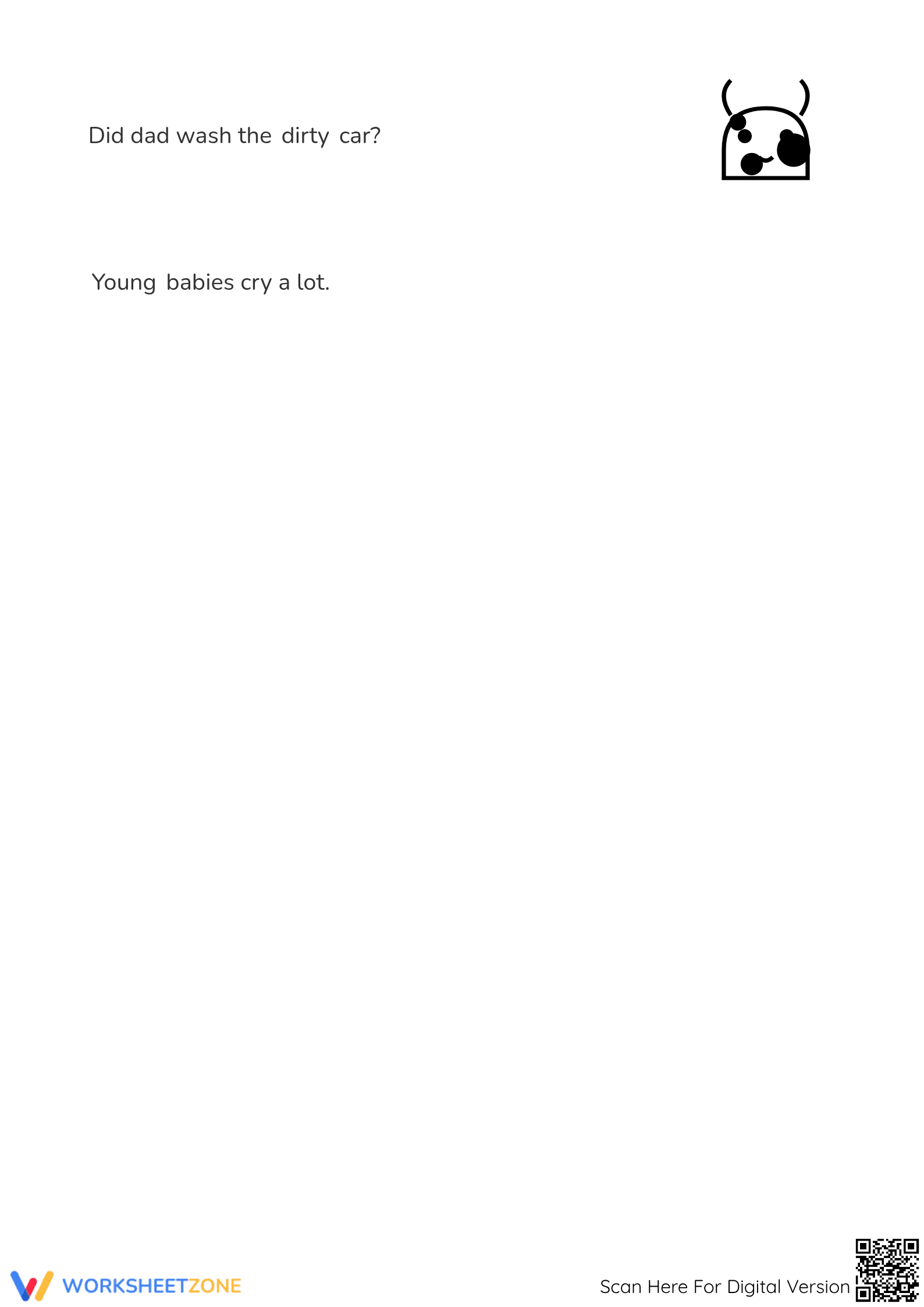
The resource contains two pages of sentence-based exercises. Each page features clear, large-print sentences with ample spacing for young learners to circle descriptive words. It includes a concise definition of adjectives at the top of the first page, a worked example involving "green grass," and a comprehensive answer key for rapid grading or student self-correction.
Zero-Prep Workflow
The workflow for this resource is designed for maximum efficiency. First, print the two-page PDF (30 seconds). Next, distribute the sheets to students during a grammar block or as a transition activity (1 minute). Finally, use the included answer key to review student work or project it for a whole-class check (1 minute). Total teacher preparation time is under 2 minutes, making it an ideal sub plan or emergency filler.
Standards Alignment
This worksheet aligns with `CCSS.ELA-LITERACY.L.2.1.E`, which requires students to use adjectives and adverbs, and choose between them depending on what is to be modified. By focusing on the identification phase, students build the prerequisite skills needed for the "use" phase of the standard. Both standard codes can be copied directly into lesson plans, IEP goals, or district curriculum mapping tools.
How to Use It
Assign this worksheet during the independent practice phase of a lesson after introducing adjectives with an anchor chart. It also serves as an effective formative assessment tool; observe if students struggle with predicate adjectives like "delicious" versus attributive adjectives like "big." Completion typically takes 10 to 15 minutes depending on reading fluency.
Who It's For
This resource is tailored for second-grade students, though it provides excellent reinforcement for first graders ready for a challenge or third graders needing a grammar refresher. It pairs naturally with a descriptive writing unit or a mentor text analysis where students hunt for descriptive words that make sentences more interesting.
Mastery of parts of speech, specifically adjectives, is a foundational component of the CCSS.ELA-LITERACY.L.2.1.E standard. Research from Fisher & Frey (2014) emphasizes that identifying how words function within the context of a sentence is significantly more effective for long-term retention than memorizing isolated word lists. This worksheet facilitates that contextual learning by requiring students to analyze seven distinct sentences for descriptive modifiers. By engaging with these tasks, students bridge the gap between basic word recognition and the sophisticated language use required for higher-level composition. The structured format supports the gradual release of responsibility, ensuring that Grade 2 learners can move from guided examples to independent identification with confidence. This alignment with evidence-based instructional practices ensures that the worksheet serves as a reliable tool for meeting state and national literacy benchmarks in early elementary classrooms.


