


























Views
Downloads
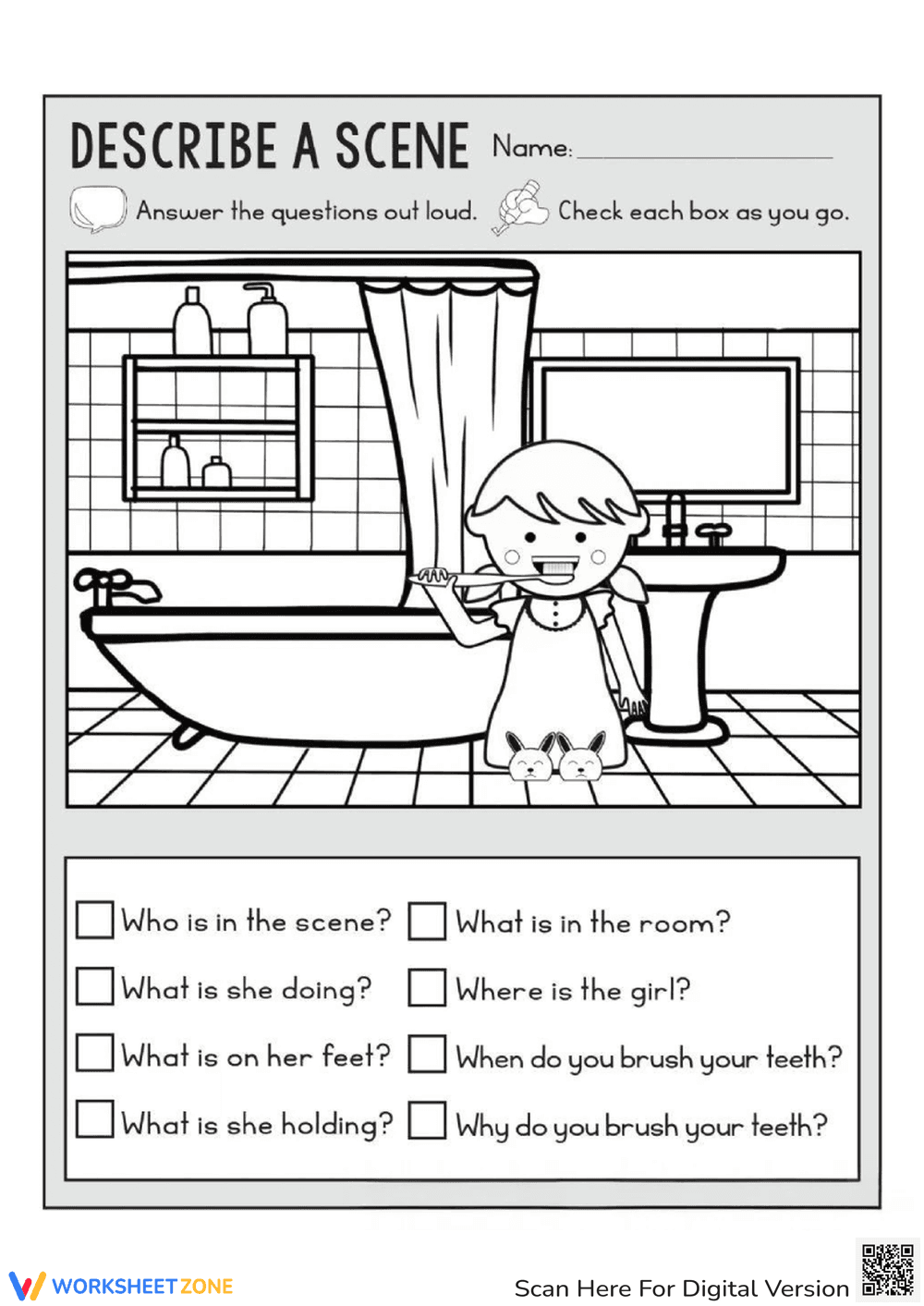

Essential Scene Observation Worksheet | Grade 1-3 ELA
Paste this activity's link or code into your existing LMS (Google Classroom, Canvas, Teams, Schoology, Moodle, etc.).
Students can open and work on the activity right away, with no student login required.
You'll still be able to track student progress and results from your teacher account.
This Essential Scene Observation Worksheet helps Grade 1-3 students build foundational oral language and critical thinking skills. By analyzing a familiar bathroom scene and answering targeted WH-questions out loud, learners practice identifying key details and expressing observations clearly. This interactive activity encourages verbal fluency and descriptive precision in an engaging, visual format.
At a Glance
- Grade: 1-3 · Subject: ELA
- Standard:
CCSS.ELA-LITERACY.SL.1.4— Describe people, places, and things with relevant details clearly.- Skill Focus: Scene Observation
- Format: 1 page · 8 problems · Answer key included · PDF
- Best For: Oral language development and verbal descriptive practice
- Time: 10–15 minutes
What's Inside
This single-page PDF features a large, detailed illustration of a child’s morning routine in a bathroom, providing rich visual cues for analysis. Below the image, students find eight checkboxes corresponding to specific observation prompts. The tasks include identifying characters, describing actions, noticing clothing details (like bunny slippers), and answering inferential "when" and "why" questions about hygiene habits.
Zero-Prep Workflow
Teachers can implement this resource in under two minutes with a simple three-step workflow. First, print the single-page document for individual students or project it for a whole-class activity. Second, distribute the sheets and have students spend three minutes silently observing the image. Third, spend ten minutes facilitating a verbal review where students check off boxes as they share their answers aloud.
Standards Alignment
This resource is primarily aligned with CCSS.ELA-LITERACY.SL.1.4, which requires students to describe people, places, things, and events with relevant details, expressing ideas and feelings clearly. It also supports CCSS.ELA-LITERACY.SL.2.2 regarding recounting details from a visual source. These standard codes can be copied directly into lesson plans, IEP goals, or district curriculum mapping tools.
How to Use It
Use this worksheet as a warm-up activity during a morning meeting to spark conversation and practice listening skills. Alternatively, it serves as an excellent formative assessment for oral language goals during small-group instruction. Teachers should observe whether students use complete sentences to determine if additional scaffolding, such as sentence frames, is needed for descriptive tasks.
Who It's For
This resource is designed for early elementary students in Grades 1 through 3, as well as English Language Learners (ELL) who benefit from visual aids to build vocabulary. It is particularly effective when paired with an anchor chart about WH-questions (Who, What, Where, When, Why) to help students categorize their observations and structure their spoken responses.
The Scene Observation Questions for Kids worksheet aligns with the standard CCSS.ELA-LITERACY.SL.1.4, focusing on the plain-English skill of describing details in a scene to build oral communication mastery. Research from Fisher & Frey (2014) emphasizes the importance of visual literacy and oral rehearsal as precursors to strong writing and reading comprehension. By requiring students to "answer the questions out loud," this resource leverages the oral-to-literacy connection, ensuring that learners can articulate what they see before they are asked to write it down. This specific instructional design supports cognitive load management by isolating observation from the mechanics of writing. According to EdReports 2024, high-quality instructional materials must provide students with regular opportunities to practice speaking and listening within the context of meaningful content, a requirement this worksheet fulfills through its structured, scene-based inquiry method.


