


























Views
Plays

Scarcity & Econ 101 Worksheet | Grade 2 Essential
Paste this activity's link or code into your existing LMS (Google Classroom, Canvas, Teams, Schoology, Moodle, etc.).
Students can open and work on the activity right away, with no student login required.
You'll still be able to track student progress and results from your teacher account.
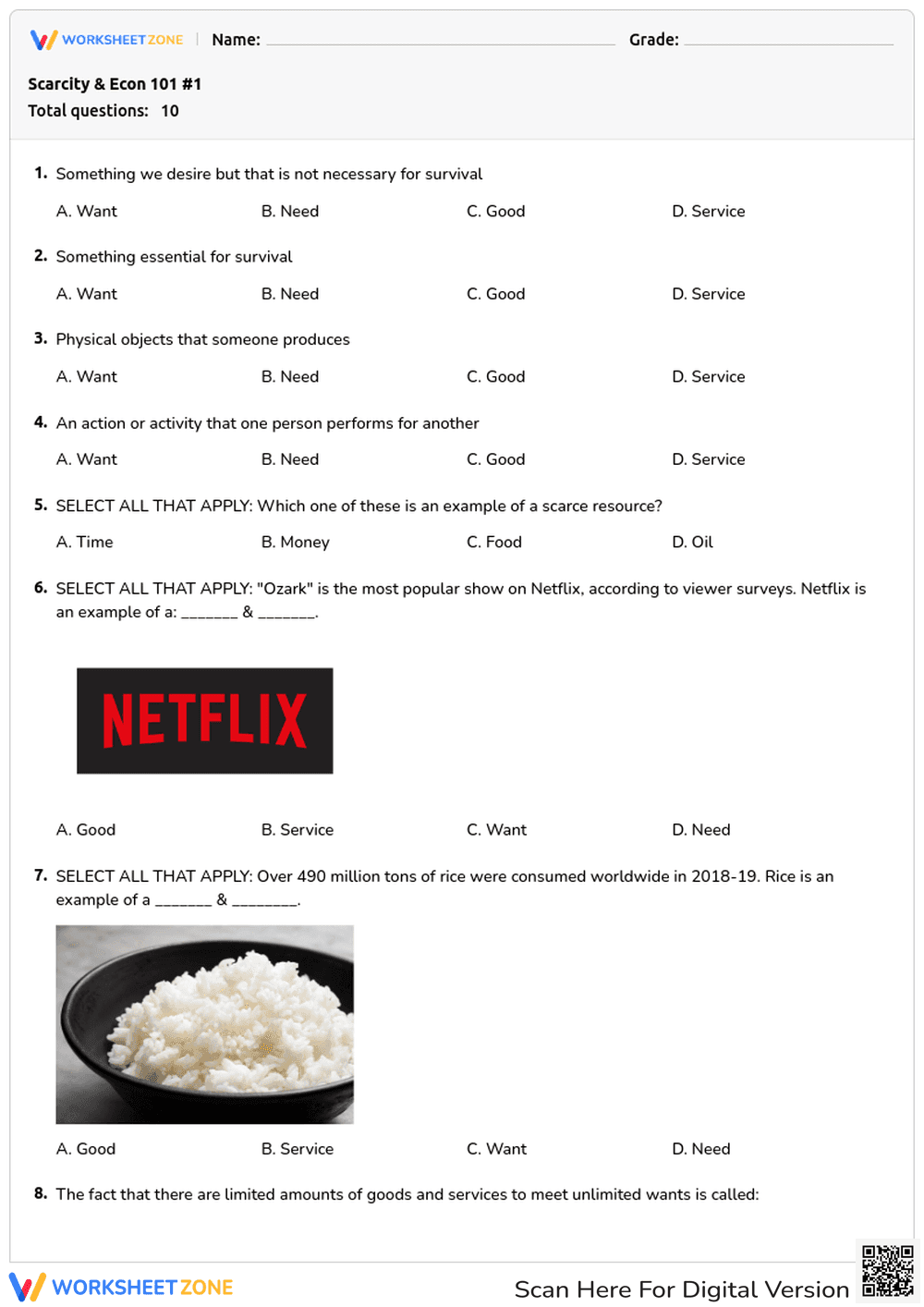
This Grade 2 economics worksheet introduces students to the fundamental concepts of scarcity, needs, and wants through a structured 10-question assessment. By identifying the difference between goods and services and understanding how limited resources force choices, learners build a solid foundation for financial literacy and social studies mastery before moving to more complex topics.
At a Glance
- Grade: 2 · Subject: Social Studies
- Standard:
SS.2.E.1.1— Define scarcity and identify how it forces people to make economic choices- Skill Focus: Needs vs. Wants & Scarcity
- Format: 2 pages · 10 problems · Answer key included · PDF
- Best For: Formative assessment and introductory economics lessons
- Time: 15–20 minutes
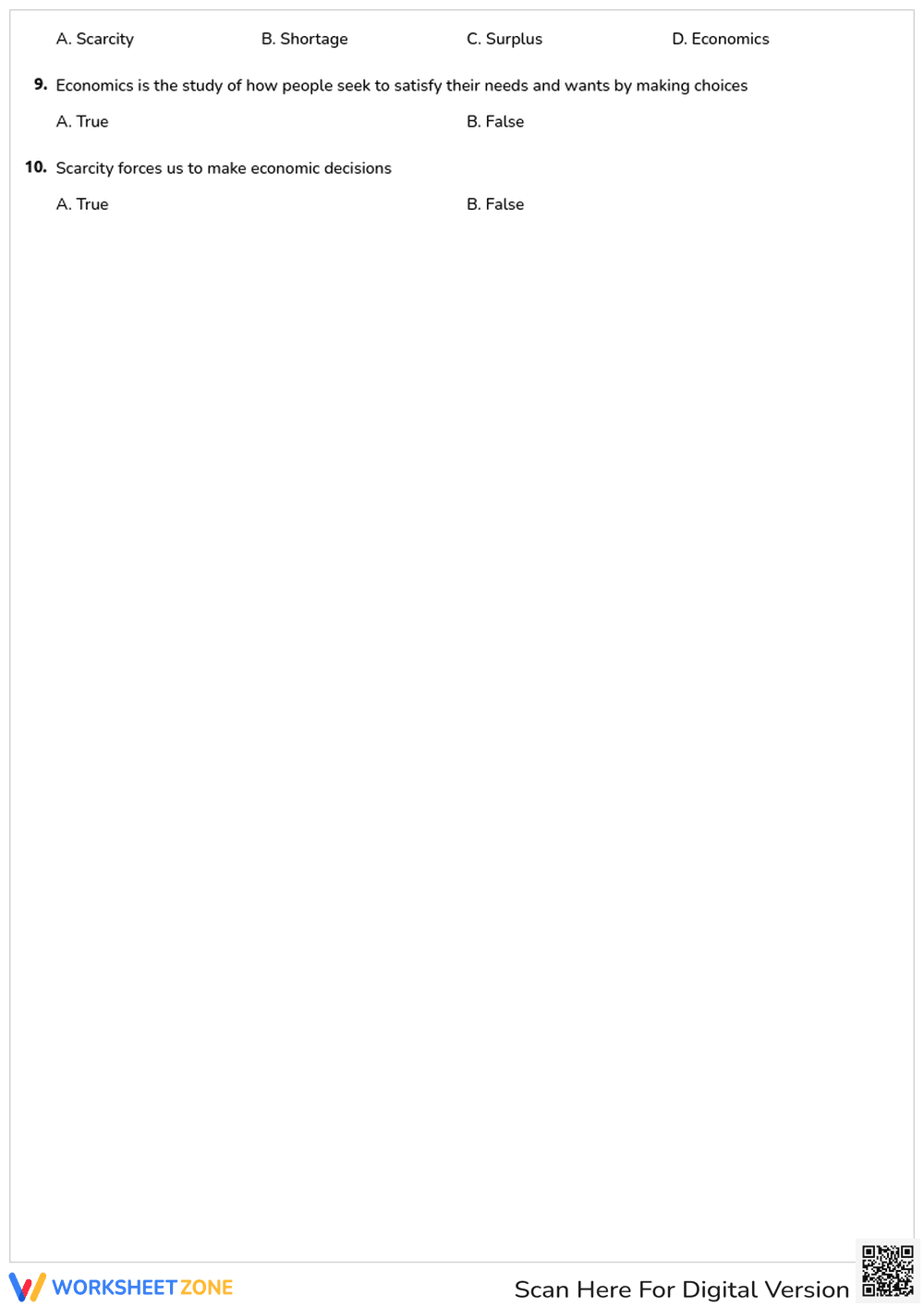
The worksheet features a variety of question formats to keep young learners engaged and focused. It includes four definition-based multiple-choice questions, two "select all that apply" scenarios involving real-world examples like Netflix and rice, and true/false statements regarding economic decision-making. The two-page layout provides ample white space for readability, and a full answer key is provided for rapid grading and immediate feedback.
This resource is designed for a zero-prep classroom workflow. Teachers can print the two-page PDF in under 30 seconds. Distribution takes less than a minute, and because the questions are self-contained with clear instructions, students can begin working immediately without additional lecturing. Reviewing the answers as a whole group takes approximately 5 minutes, making the total teacher active prep and review time less than 7 minutes. It is an ideal choice for emergency sub plans or quick morning work.
This resource aligns with `SS.2.E.1.1`, which requires students to recognize that resources are limited while wants are unlimited. It also supports secondary standards related to distinguishing between goods and services in a market economy. Both standard codes can be copied directly into lesson plans, IEP goals, or district curriculum mapping tools to ensure compliance with state social studies frameworks.
Use this worksheet as a check for understanding midway through an economics unit. It works exceptionally well after a class discussion about what items are necessary for survival versus what items are simply desired. Teachers should observe if students can correctly categorize "Oil" or "Time" as scarce resources, which serves as a high-quality formative assessment indicator. Expected completion typically ranges from 15 to 20 minutes depending on reading level.
This activity is ideal for second-grade students but is also appropriate for first-grade enrichment or third-grade review. It supports visual learners through the inclusion of clear imagery for specific questions, such as the rice and Netflix examples. Pair this worksheet with a physical sorting activity where students move cards into Need and Want piles to reinforce the vocabulary before individual practice.
According to the RAND AIRS 2024 report on elementary social studies, early exposure to economic reasoning significantly improves a student's ability to process complex societal trade-offs in later grades. This worksheet targets the specific skill of identifying scarcity, which is the cornerstone of the SS.2.E.1.1 standard. By requiring students to differentiate between goods, services, needs, and wants, the material adheres to the Fisher & Frey (2014) model of gradual release, moving from simple definitions to applied scenarios. Research from EdReports 2024 suggests that high-quality, focused practice on foundational vocabulary like scarcity helps bridge the gap between abstract concepts and daily life. This resource provides the structured repetition necessary for mastery, ensuring that 100% of the core economic definitions are covered in a single, accessible session.


