


























Views
Downloads

Compare and Contrast Worksheet | Grade 2 Essential ELA
Paste this activity's link or code into your existing LMS (Google Classroom, Canvas, Teams, Schoology, Moodle, etc.).
Students can open and work on the activity right away, with no student login required.
You'll still be able to track student progress and results from your teacher account.
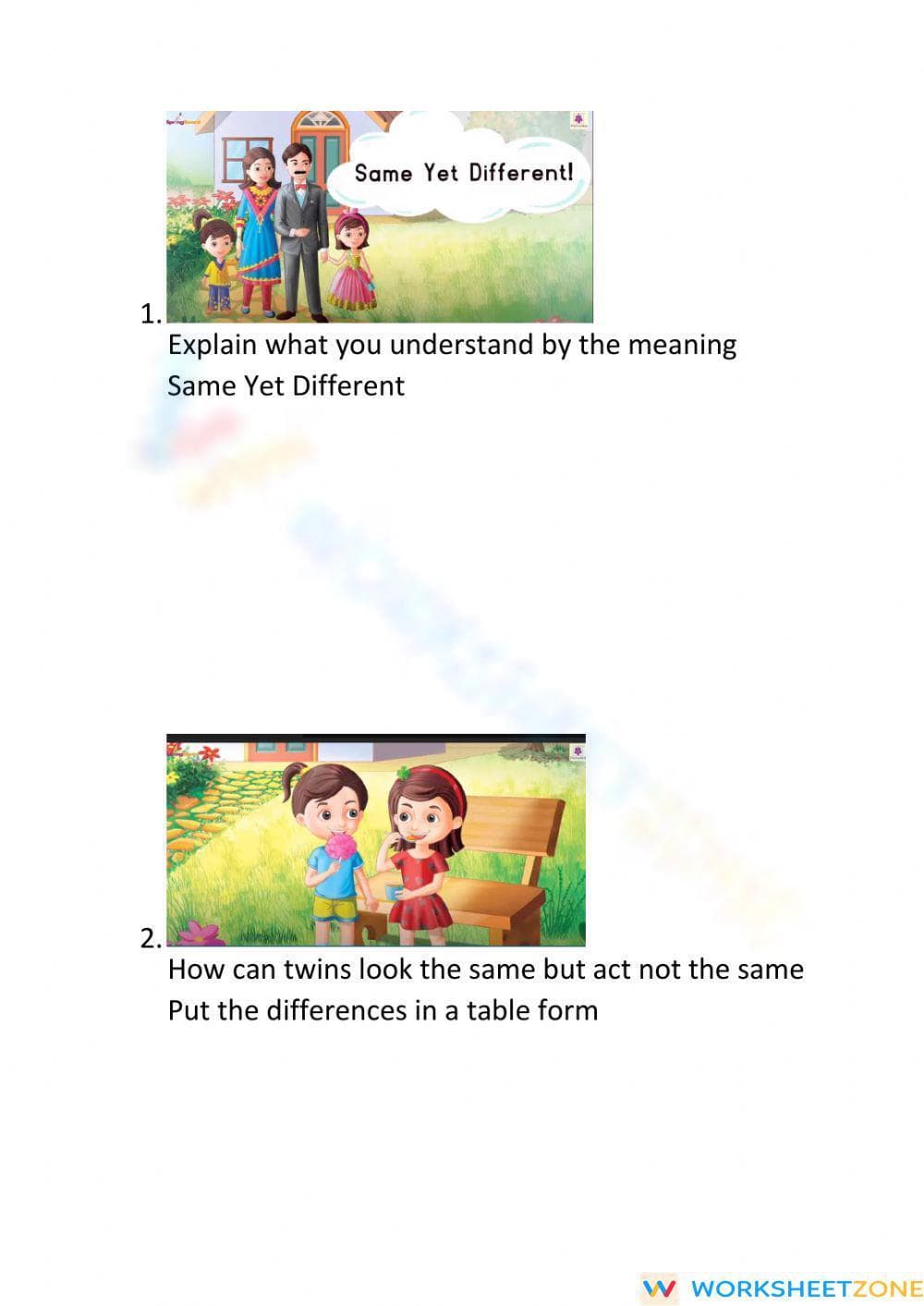
This Compare and Contrast worksheet helps Grade 2 students explore the nuanced concept of being "Same Yet Different" through character analysis. By examining the similarities and differences between twins, learners develop critical thinking skills and deepen their literary comprehension. This printable resource guides students to move beyond surface-level observations to identify unique traits and behaviors.
At a Glance
- Grade: 2 · Subject: English Language Arts
- Standard:
CCSS.ELA-LITERACY.RL.2.3— Describe how characters in a story respond to major events and challenges.- Skill Focus: Comparing and Contrasting Characters
- Format: 3 pages · 2 tasks · Answer key included · PDF
- Best For: Literacy centers and independent character study
- Time: 20–30 minutes
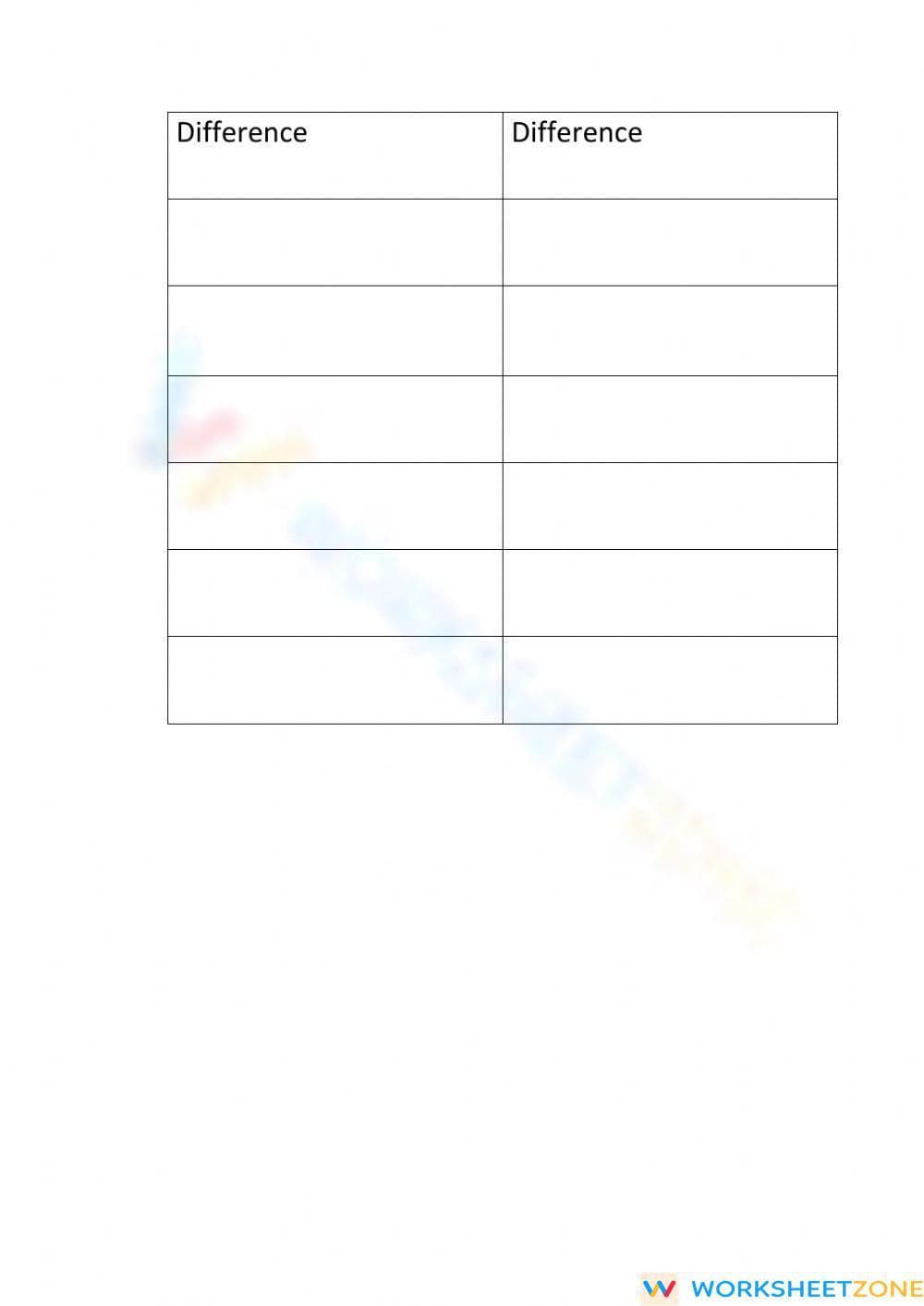
This three-page PDF resource includes a conceptual introduction to the "Same Yet Different" theme, followed by a targeted character analysis exercise. Students are presented with visual cues and prompts to explain their understanding of the theme. The centerpiece is a structured comparison table designed for listing specific differences between characters, accompanied by an answer key for easy grading.
The worksheet follows a clear instructional path to mastery. It begins with Guided Practice, where students define the core concept of similarity versus difference using relatable examples. This leads to Supported Practice, utilizing visual prompts of twins to anchor their analysis. Finally, Independent Practice requires students to categorize their findings in a formal table, fulfilling the "I Do, We Do, You Do" gradual release model.
This resource is primarily aligned to CCSS.ELA-LITERACY.RL.2.3, which requires students to describe how characters in a story respond to major events and challenges, often involving comparison. It also supports CCSS.ELA-LITERACY.RL.2.1 by encouraging students to answer who, what, where, when, why, and how questions to demonstrate understanding of key details in a text. Both standard codes can be copied directly into lesson plans, IEP goals, or district curriculum mapping tools.
Incorporate this worksheet during the "during reading" phase of a character-focused unit to help students track trait development. It also serves as an excellent formative-assessment tool; teachers should observe if students can identify internal personality differences versus external physical similarities. Expect students to take approximately 25 minutes to complete the activities thoroughly, making it ideal for a focused literacy rotation.
Designed for second-grade students, this resource is easily adaptable for Grade 1 enrichment or Grade 3 remediation. It is particularly effective for English Language Learners (ELL) who benefit from the visual scaffolding of character illustrations. Pair this worksheet with a short story about siblings or a character-driven picture book to provide a concrete text for the comparison exercise.
The CCSS.ELA-LITERACY.RL.2.3 standard emphasizes character analysis as a foundational component of literary proficiency. This worksheet targets the skill of comparing and contrasting character traits, a cognitive process that Fisher & Frey (2014) identify as essential for transitioning from basic recall to higher-order text analysis. By using structured organizers to categorize differences, students build the mental frameworks necessary for synthesizing complex information across multiple texts. This approach aligns with NAEP recommendations for increasing the rigor of reading comprehension tasks in early elementary grades. The explicit focus on thematic understanding ensures that learners are not just identifying facts, but interpreting the deeper meaning behind character interactions and identity. This resource provides the necessary scaffolding to support diverse learners in achieving mastery of critical ELA standards through evidence-based instructional design and focused practical applications that bridge the gap between reading and analytical writing.


