


























Views
Downloads

Wetland Animals Matching Worksheet | Grade 2 Essential
Paste this activity's link or code into your existing LMS (Google Classroom, Canvas, Teams, Schoology, Moodle, etc.).
Students can open and work on the activity right away, with no student login required.
You'll still be able to track student progress and results from your teacher account.
This Grade 2 science worksheet helps students identify and classify common animals found in wetland ecosystems. By focusing on visual recognition and nomenclature, students develop the ability to compare animal diversity across different habitats. This resource ensures that every learner can successfully name and recognize key species like the River Otter and Great Blue Heron.
At a Glance
- Grade: 2 · Subject: Science
- Standard:
2-LS4-1— Make observations of animals to compare the diversity of life in different habitats- Skill Focus: Wetland animal identification
- Format: 4 pages · 6 problems · Answer key included · PDF
- Best For: Habitat diversity and animal classification lessons
- Time: 15–20 minutes
What's Inside
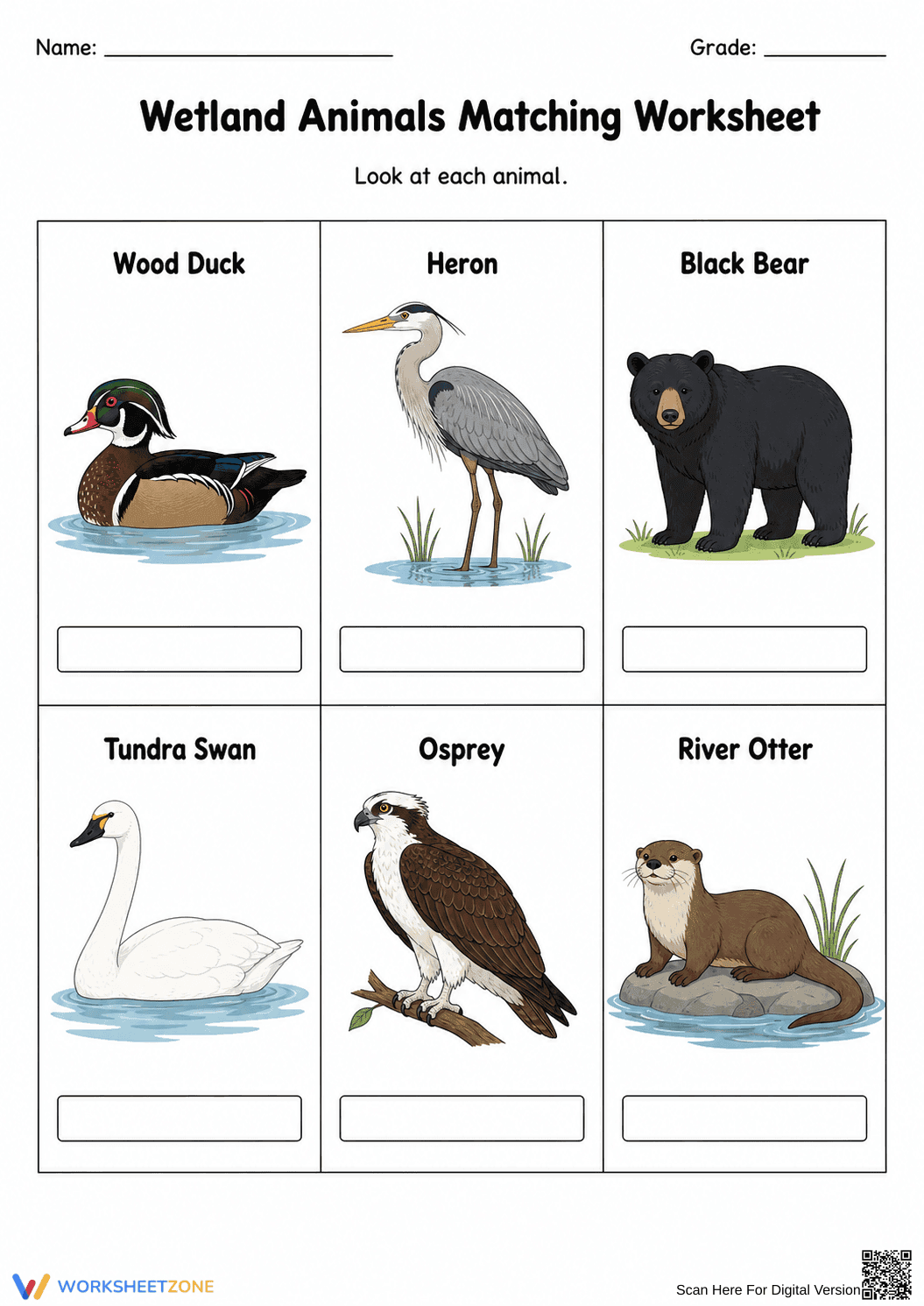
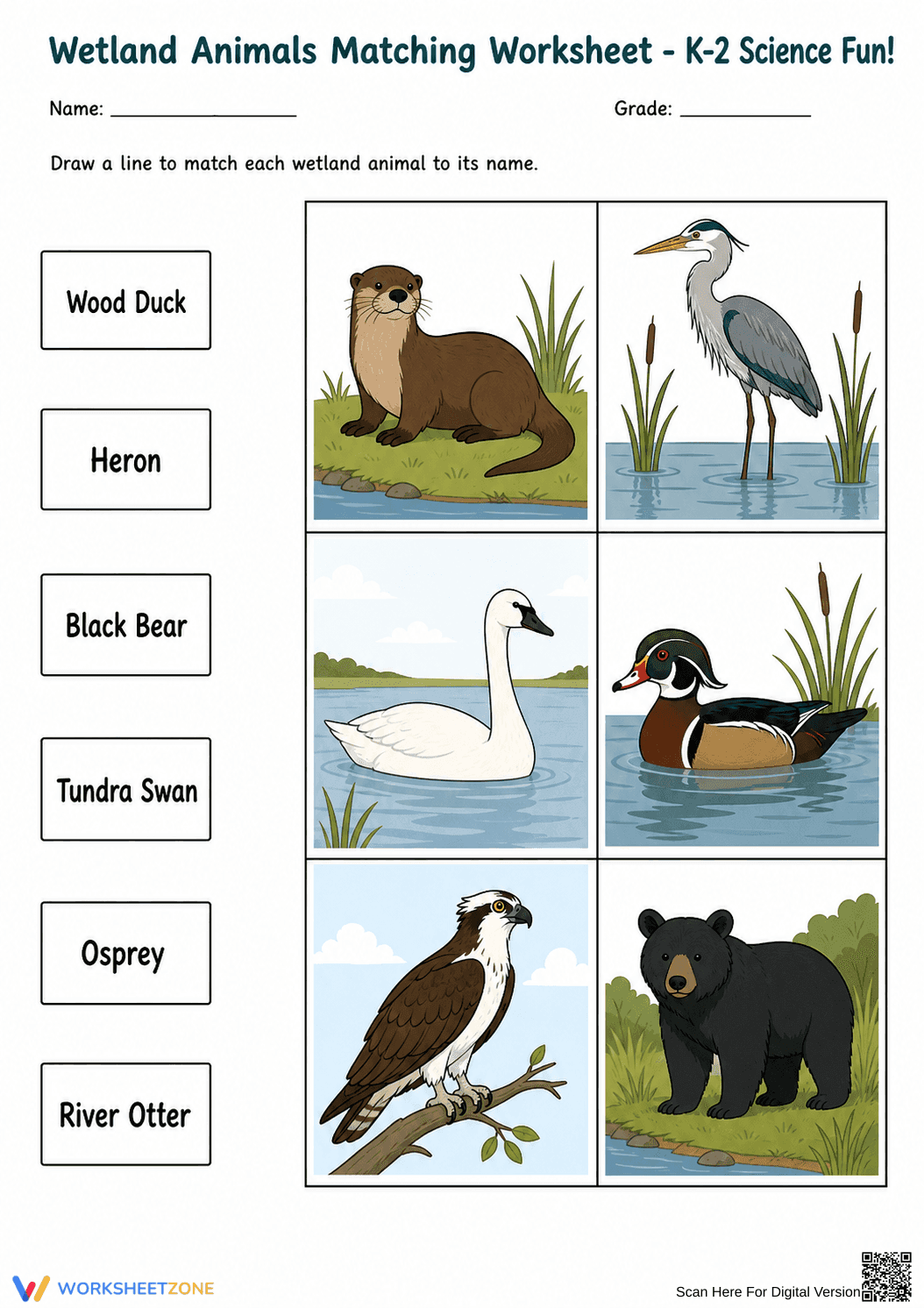
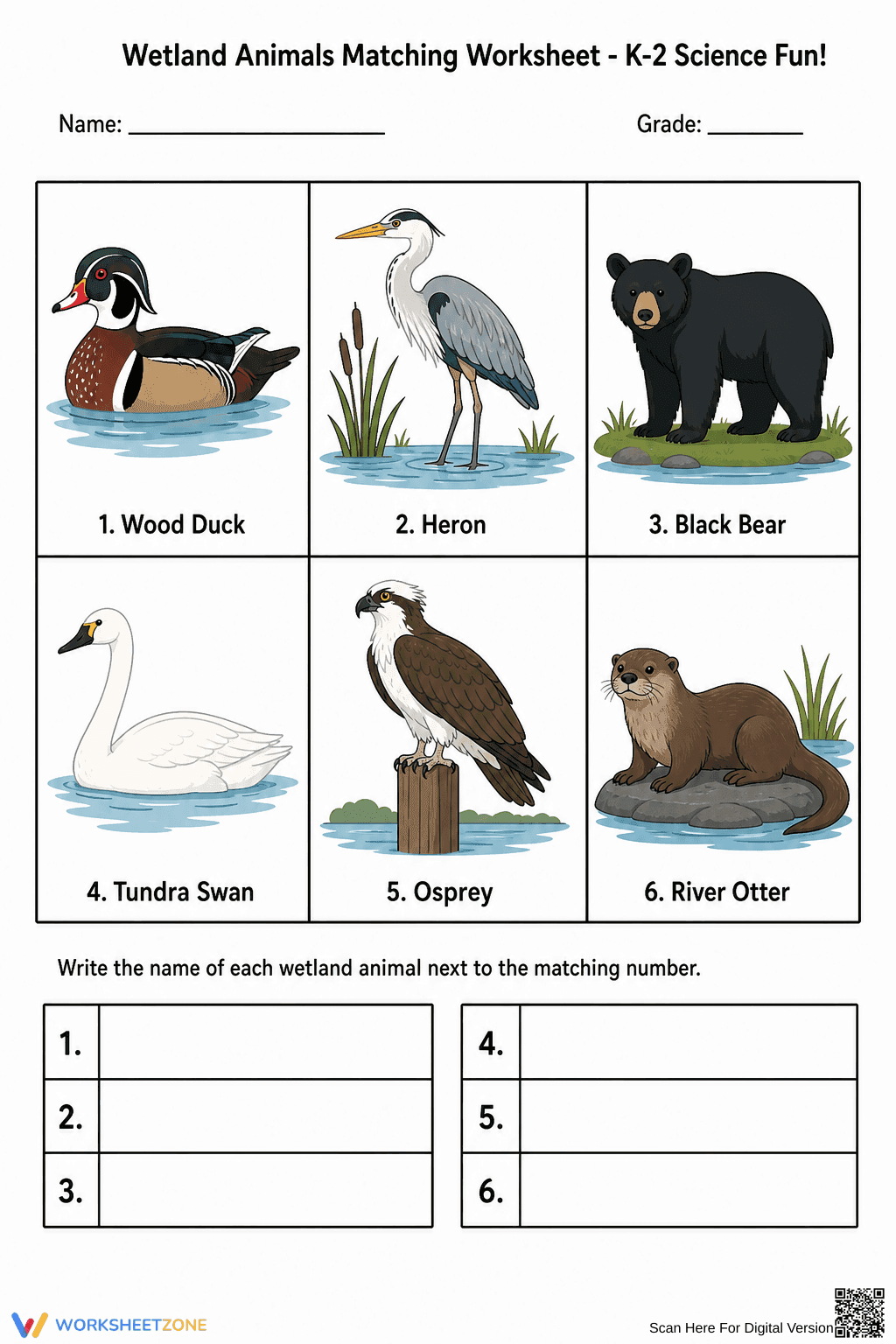
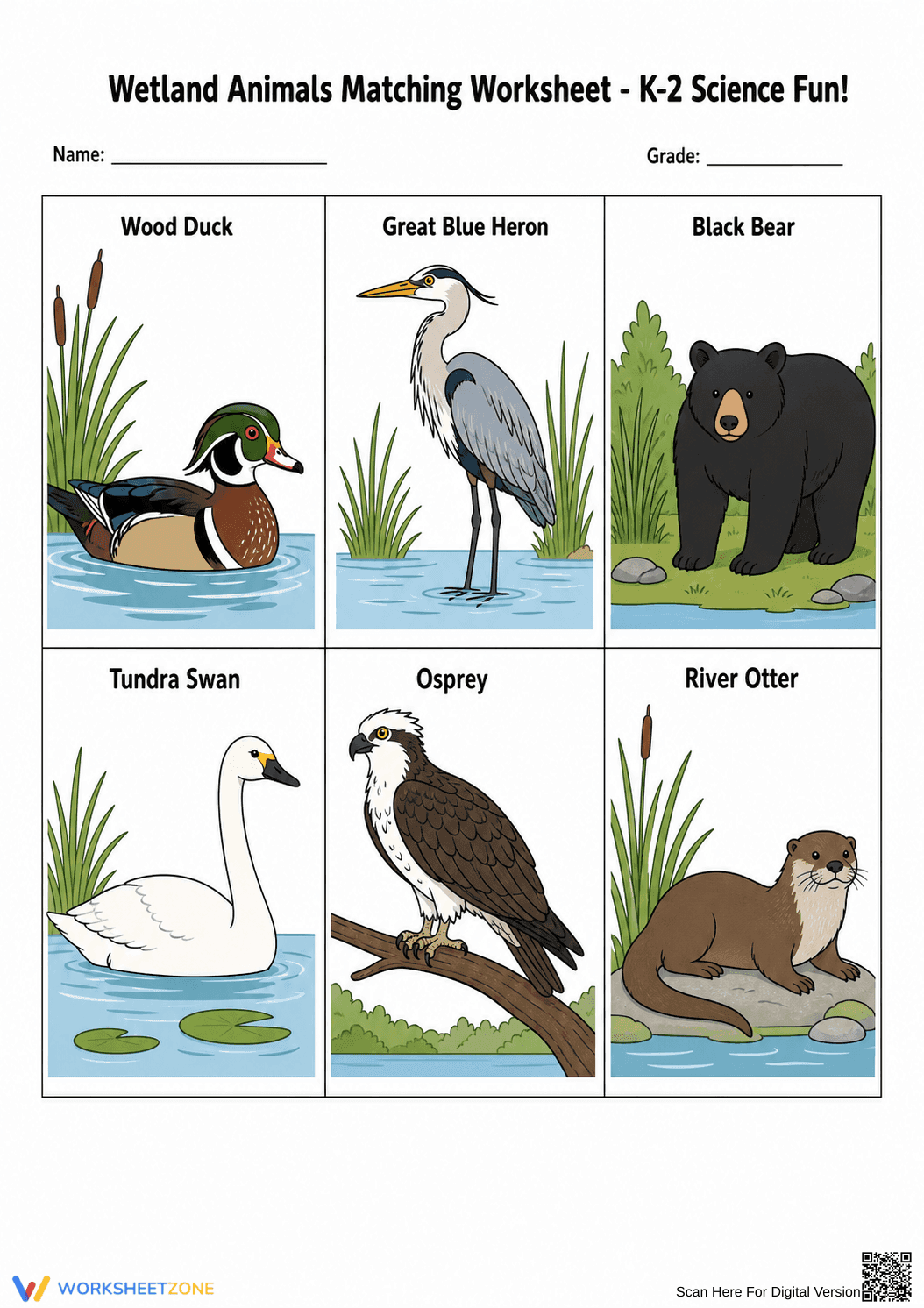
This comprehensive 4-page PDF package includes multiple versions of the same core activity to support diverse classroom needs. It features high-quality illustrations of six specific wetland animals: the Wood Duck, Heron, Black Bear, Tundra Swan, Osprey, and River Otter. The set includes a reference guide, a line-matching activity, and a labeling task to reinforce vocabulary and scientific observation.
Level Descriptions
- Below Grade Level: A visual matching page where students draw lines to connect animal images directly to their printed names, reducing the writing load while focusing on recognition.
- On Grade Level: A labeling worksheet featuring a word bank, requiring students to identify the animal and write the correct name in the provided box under each image.
- Above Grade Level: A numbered identification task where students must recall animal names and write them independently in a list format, encouraging higher-order memory and spelling accuracy.
Standards Alignment
This resource is aligned with 2-LS4-1: "Make observations of plants and animals to compare the diversity of life in different habitats." It specifically addresses the biological diversity aspect of the standard by highlighting species unique to wetland environments. This standard code can be copied directly into lesson plans, IEP goals, or district curriculum mapping tools.
How to Use It
Use this worksheet during the "Explore" phase of a 5E lesson on habitats to gather baseline data on student knowledge. It also works well as a formative assessment after a field trip or a virtual tour of a marshland. Teachers should observe if students can distinguish between the different bird species, which requires closer attention to physical characteristics. Completion typically takes 15 to 20 minutes.
Who It's For
This resource is designed for second-grade general education classrooms, but the tiered levels make it excellent for English Language Learners (ELL) and students receiving special education services. It pairs naturally with a classroom anchor chart about wetland characteristics or a non-fiction read-aloud regarding North American wildlife and their natural environments.
This Grade 2 science resource focuses on the 2-LS4-1 standard, requiring students to observe and compare animal diversity within a specific habitat. By identifying six distinct wetland species—the Wood Duck, Heron, Black Bear, Tundra Swan, Osprey, and River Otter—students build the foundational schema necessary for understanding biological diversity and ecosystem interdependence. According to Fisher & Frey (2014), the use of visual scaffolds and tiered task complexity supports the gradual release of responsibility, allowing early elementary learners to move from simple recognition to independent classification. This worksheet provides the necessary visual evidence for students to make claims about how different animals are suited for life in a wetland environment. The inclusion of three distinct difficulty levels ensures that all students, regardless of their current reading or writing proficiency, can engage with the core scientific concepts. This resource serves as a reliable tool for formative assessment and evidence-based science instruction in the K-2 classroom.


