


























Views
Downloads

Roses Doodle Coloring Page | Essential Grade 3 ELA
Paste this activity's link or code into your existing LMS (Google Classroom, Canvas, Teams, Schoology, Moodle, etc.).
Students can open and work on the activity right away, with no student login required.
You'll still be able to track student progress and results from your teacher account.
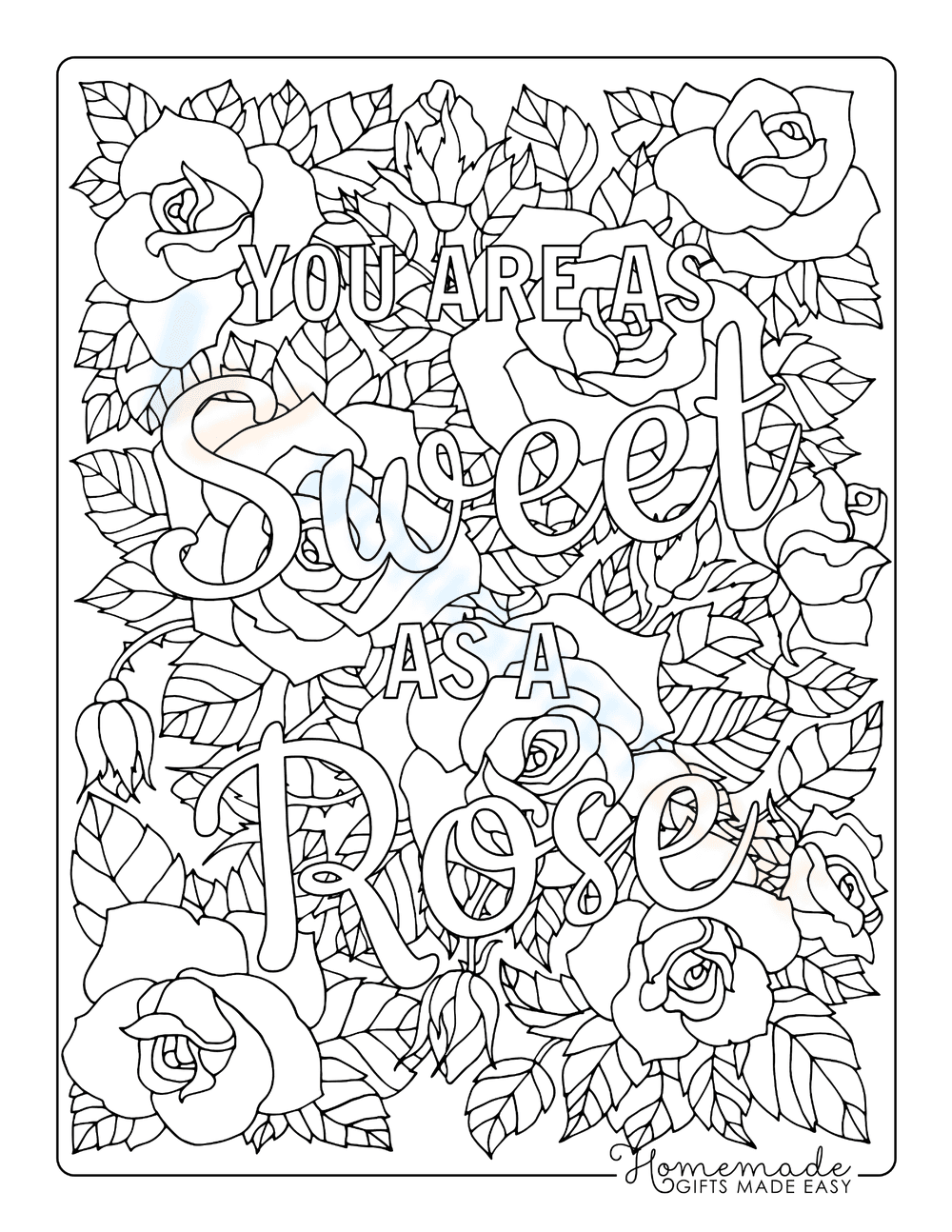
This Roses Doodle coloring page provides a creative way for students to engage with figurative language while developing fine motor control. By coloring the intricate floral patterns and the central simile, learners reinforce their understanding of nonliteral meanings in a relaxed, artistic context. It serves as an ideal bridge between creative expression and language arts mastery.
At a Glance
- Grade: 3 · Subject: English
- Standard:
CCSS.ELA-LITERACY.L.3.5.a— Distinguish literal and nonliteral meanings of words and phrases in context- Skill Focus: Fine motor skills and simile recognition
- Format: 1 page · 1 task · Answer key not applicable · PDF
- Best For: Valentine's Day morning work or early finishers
- Time: 15–25 minutes
This single-page PDF features a high-quality line-art illustration of multiple roses and leaves surrounding a central text block. The text displays the simile "You are as sweet as a rose," providing a clear example of comparative language. The design includes varying levels of detail in the petals and foliage, suitable for students practicing precision with crayons, colored pencils, or markers. No additional teacher setup is required.
Zero-Prep Workflow
- Print: Send the single-page PDF to the printer (30 seconds).
- Distribute: Hand out sheets during a transition or as a reward activity (1 minute).
- Review: Discuss the figurative language used in the text as a quick whole-class check (1 minute).
Total teacher preparation time is under 3 minutes, making it an excellent choice for emergency sub plans or holiday-themed rotations.
Standards Alignment
This worksheet aligns with CCSS.ELA-LITERACY.L.3.5.a, which requires students to distinguish between literal and nonliteral meanings of phrases. By visualizing the comparison between a person's character and the physical sweetness of a flower, students ground their understanding of similes in a concrete activity. Both standard codes can be copied directly into lesson plans, IEP goals, or district curriculum mapping tools.
How to Use It
Use this worksheet as a formative assessment tool during a unit on figurative language. Observe how students interpret the phrase while they color; those who can explain why a person might be compared to a rose demonstrate a solid grasp of the concept. It is also perfect for a mindful activity or a Valentine's Day celebration. Expected completion time ranges from 15 to 25 minutes depending on the medium used.
Who It's For
This resource is designed for elementary students, particularly those in Grade 3, though it is accessible for younger learners focusing on fine motor skills. It is an excellent fit for inclusive classrooms where students benefit from tactile engagement with academic concepts. Pair this worksheet with a short reading passage about plant biology or a direct instruction lesson on common idioms and similes.
Integrating artistic activities like this Roses Doodle worksheet into the English Language Arts curriculum supports cognitive development and engagement. According to the Fisher & Frey (2014) framework for intentional interest, providing students with creative outlets that reinforce specific linguistic structures—such as the simile found in CCSS.ELA-LITERACY.L.3.5.a—can significantly improve retention of nonliteral language concepts. Research indicates that the combination of visual-spatial tasks and verbal reasoning helps solidify the neural pathways associated with vocabulary acquisition. By focusing on the plain-English skill of identifying comparative phrases, this 1-page resource offers a low-stakes environment for students to practice complex ELA standards. Educational analysis from NAEP suggests that multi-modal learning opportunities are essential for reaching diverse learners who may struggle with traditional text-heavy assessments. This worksheet provides a structured yet flexible way to meet these pedagogical goals while maintaining high standards for student output and engagement in the classroom.


