


























Views
Downloads
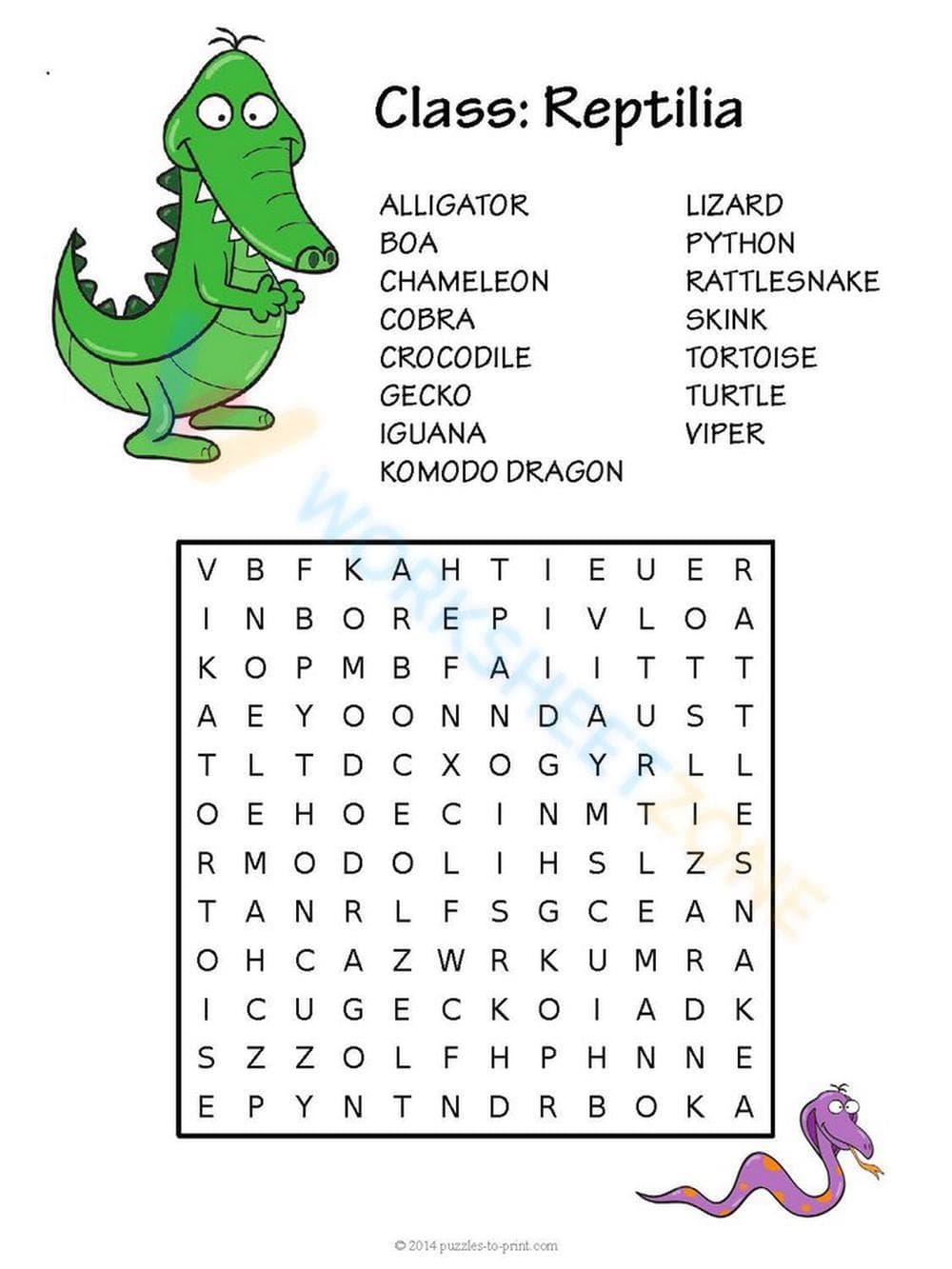

Reptile Vocabulary Word Search | Printable Grade 3 Activity
Paste this activity's link or code into your existing LMS (Google Classroom, Canvas, Teams, Schoology, Moodle, etc.).
Students can open and work on the activity right away, with no student login required.
You'll still be able to track student progress and results from your teacher account.
This printable science vocabulary worksheet helps elementary students identify and spell fifteen key reptile names. Students search the grid to locate terms like alligator, chameleon, and python, reinforcing spelling patterns and domain-specific biology terms. Use this activity to build word recognition and support life science units.
At a Glance
- Grade: Grade 3 · Subject: English Language Arts
- Standard:
CCSS.ELA-LITERACY.L.3.6— Acquire and use domain-specific words and phrases- Skill Focus: Reptile vocabulary and word recognition
- Format: 1 page · 15 problems · Answer key not included · PDF
- Best For: Morning work or early finishers
- Time: 15–20 minutes
This single-page PDF features a clean, student-friendly word search grid containing fifteen hidden reptile names. The worksheet displays clear uppercase lettering and includes engaging illustrations of a crocodile and a snake to maintain student interest. The word bank lists common and unique reptiles, including the Komodo dragon, skink, and tortoise, providing a comprehensive overview of the class Reptilia.
This resource requires zero teacher preparation, making it an ideal tool for busy classrooms or emergency substitute plans. First, print the single-page PDF document, which takes less than one minute. Next, distribute the worksheet to students during transition times. Finally, review the completed puzzles individually or display the grid on a whiteboard. Total teacher preparation time is under two minutes.
Standards Alignment
This vocabulary puzzle aligns directly with the Common Core State Standard CCSS.ELA-LITERACY.L.3.6, which requires students to acquire and use grade-appropriate domain-specific words. By identifying scientific terms, students build familiarity with biological classifications. Additionally, this activity supports spelling development under CCSS.ELA-LITERACY.L.3.2. Both standard codes can be copied directly into lesson plans, IEP goals, or district curriculum mapping tools.
How to Use It
Incorporate this worksheet as a quiet transition activity immediately following a science lesson on animal classifications. Alternatively, use it as a formative assessment tool during independent work time to observe how quickly students recognize word shapes and spelling sequences. Students typically complete this word search within fifteen to twenty minutes, making it a flexible option for various instructional blocks.
Who It's For
This worksheet is designed for students in second, third, and fourth grade who are developing their reading vocabulary and spelling skills. It serves as an excellent resource for English language learners requiring visual context for science terms. Pair this puzzle with an introductory reading passage about reptile habitats or an anchor chart detailing cold-blooded animal characteristics to deepen student comprehension.
This vocabulary worksheet supports spelling acquisition and domain-specific word recognition through structured visual search tasks. According to research from Fisher & Frey (2014) on vocabulary instruction, word play activities like puzzles reinforce orthographic mapping and help transition words to long-term storage. By focusing on fifteen distinct reptile names, the activity provides targeted exposure to scientific terminology, helping students bridge the gap between language arts and life science. The alignment with standard CCSS.ELA-LITERACY.L.3.6 ensures that the vocabulary remains grade-appropriate while challenging students to recognize complex letter patterns. Educators can integrate this tool into daily routines to support spelling accuracy and scientific literacy. The self-contained design allows for independent student engagement, making it a reliable resource for reinforcing foundational literacy skills.


