































Ready Warm Meals & Kitchen Word Search | Grades 6–7 ELA

Paste this activity's link or code into your existing LMS (Google Classroom, Canvas, Teams, Schoology, Moodle, etc.).
Students can open and work on the activity right away, with no student login required.
You'll still be able to track student progress and results from your teacher account.
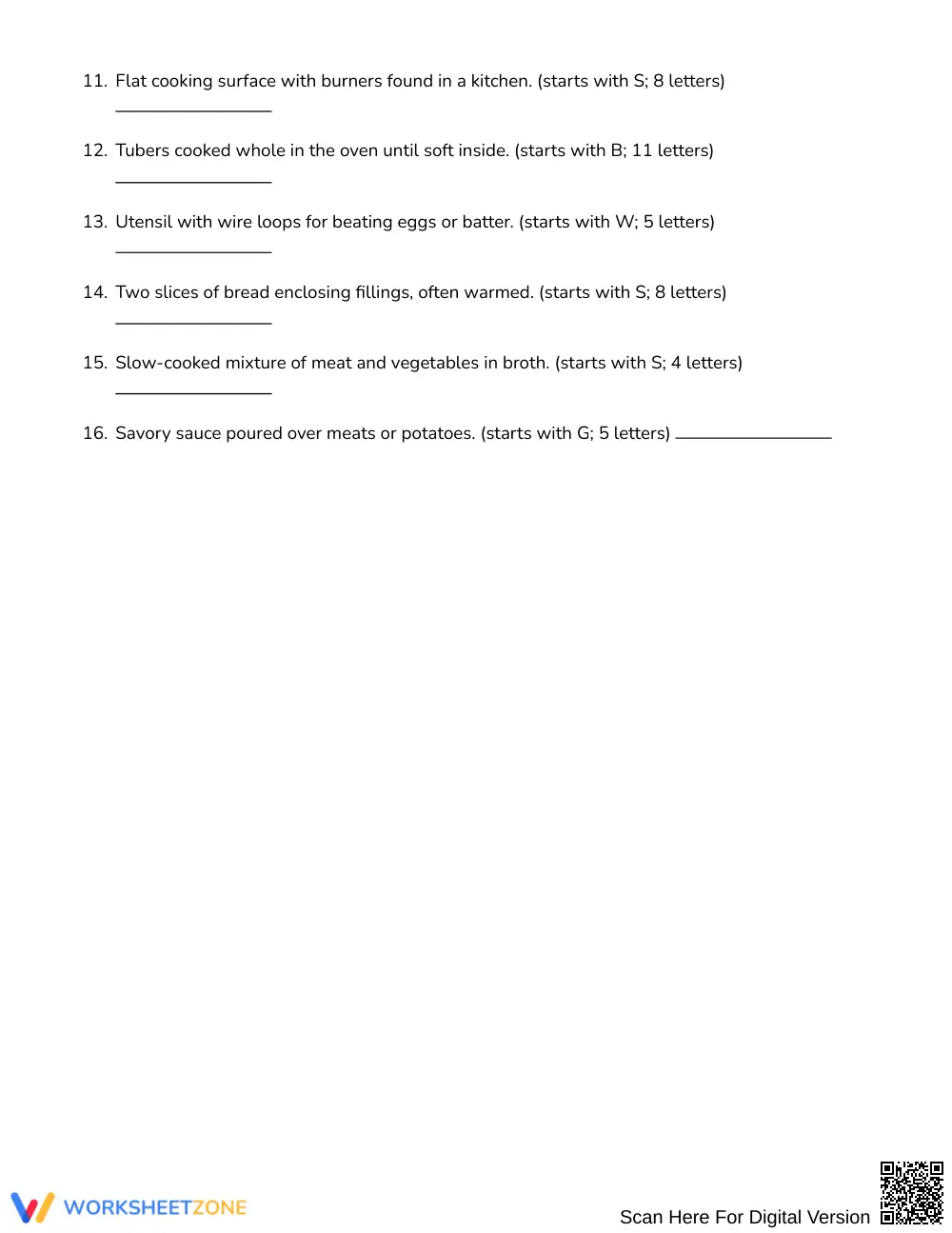
This culinary word search strengthens middle school literacy by challenging students to identify sixteen kitchen terms through context clues. Rather than scanning for words from a list, learners read functional kitchen clues, determine target terms, and locate them within the grid to reinforce seasonal vocabulary.
At a Glance
- Grade: Grades 6–7 · Subject: English Language Arts (ELA)
- Standard: Not standards-assessed — vocabulary enrichment and language extension
- Skill Focus: Warm meals and kitchen culinary vocabulary
- Format: 3 printable pages · 16 words · Full answer key included · PDF format
- Best For: Independent fast finishers, seasonal vocabulary centers, and sub plans
- Time: 20–30 minutes of focused student work
What's Inside
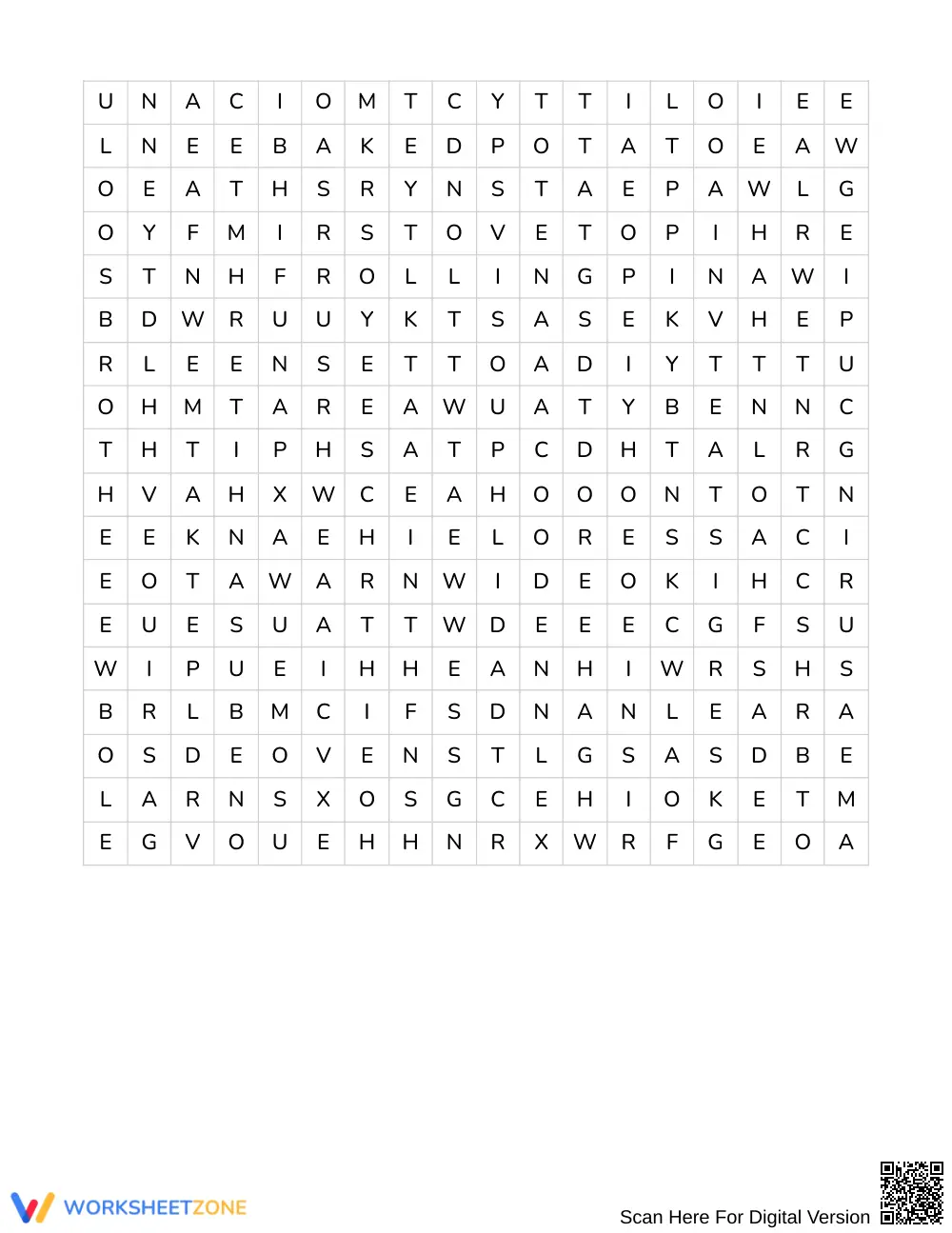
This 3-page printable activity pack features an 18 x 18 letter puzzle paired with functional culinary clues. Instead of a word bank, students read sixteen descriptive clues covering cookware and winter dishes, requiring active recall before searching. A complete 3-page solution set illustrates every word location with clear grid overlays for rapid visual checking.
Puzzle Mechanics and Structure
This activity provides an engaging vocabulary challenge through clue-based navigation and full-directional spatial orientation:
- Grid Dimensions: An 18 x 18 letter grid offers an expansive search field for systematic scanning.
- Search Directions: Target words run across all eight directions: north, northeast, east, southeast, south, southwest, west, and northwest.
- Clue-Driven Search: With no provided word bank, learners interpret sixteen culinary clues—such as defining a whisk, broth, or sauté—to deduce the hidden term before searching.
Standards Alignment
This resource is designed strictly for vocabulary enrichment and language development; it is not aligned to a specific academic standard. Instead of assessing isolated benchmarks, it reinforces domain-specific cooking vocabulary, general semantic knowledge, and reading comprehension through context clues.
How to Use It
Deploy this word search during independent station rotations after introducing context clues, or use it as a December holiday bell ringer. To conduct quick formative assessment, observe whether students identify terms from clues before searching the grid. Most learners will complete the puzzle in 20 to 30 minutes.
Who It's For
This challenge is built for students in Grades 6–7 expanding their culinary vocabulary. For students needing support, educators can provide first-letter hints for each clue, while advanced learners can write original sentences for each term. Pair this puzzle with a seasonal procedural reading passage on winter recipes to reinforce terminology in authentic text.
Contextual vocabulary enrichment supports adolescent literacy growth by requiring students to integrate word meanings with active cognitive search. While non-standards-assessed, this kitchen-themed vocabulary word search promotes domain-specific word acquisition and semantic retrieval without passive copying. According to Fisher & Frey (2014), intentional vocabulary acquisition flourishes when learners engage in meaningful word study that bridges functional definitions with deliberate language tasks rather than rote memorization. By eliminating the conventional word bank and supplying sixteen functional culinary clues, this puzzle requires middle school students to decipher contextual definitions before locating target words across an 18 x 18 grid in eight directional paths. This double-layer cognitive routine deepens vocabulary retention, improves orthographic memory, and sharpens visual discrimination skills. Educators utilizing this printable activity provide middle schoolers with an effective bridge between recreational word play and rigorous language development across varied instructional settings.


