


























Views
Downloads

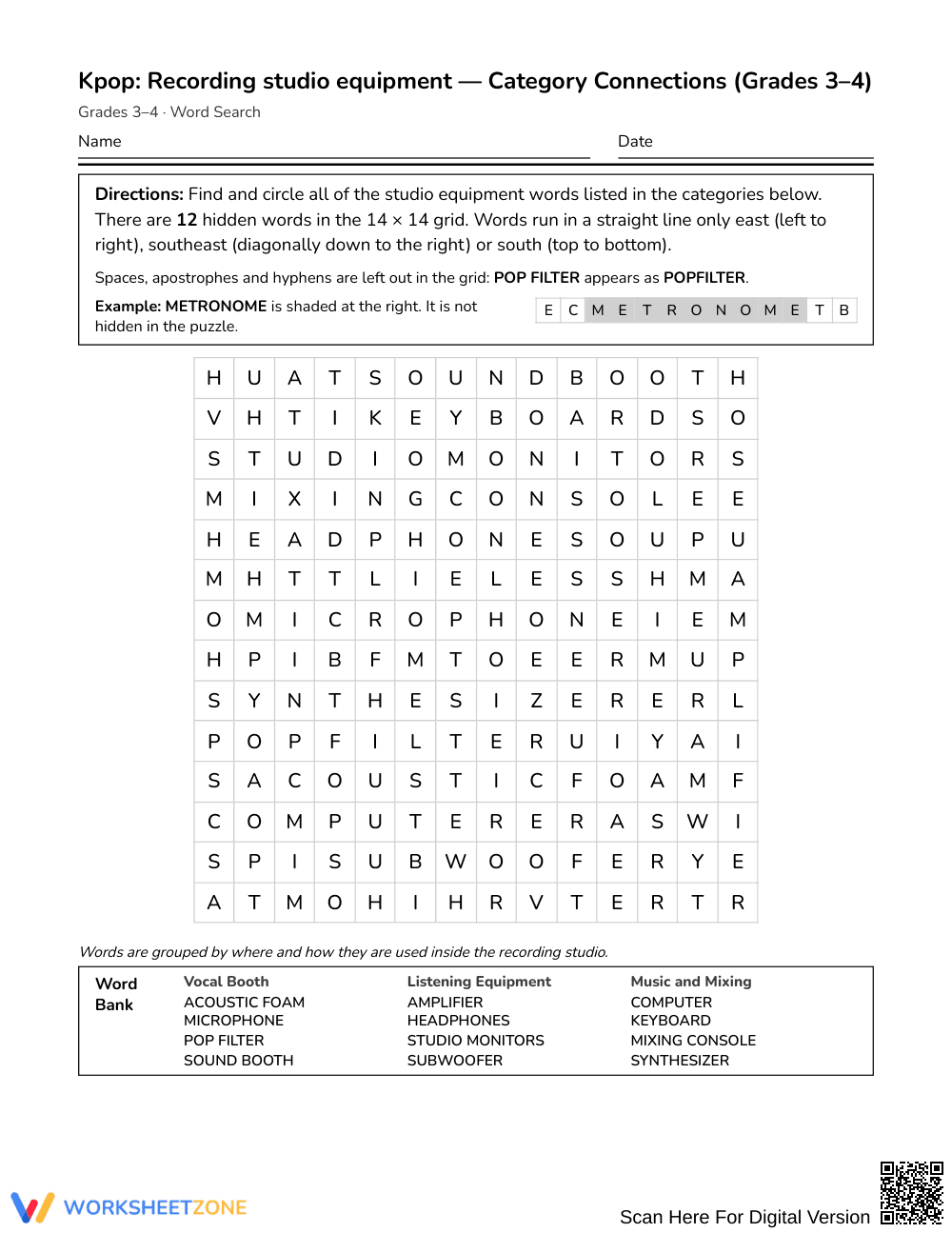

Ready Studio Equipment Word Search | Grades 3–4 Fine Art
Paste this activity's link or code into your existing LMS (Google Classroom, Canvas, Teams, Schoology, Moodle, etc.).
Students can open and work on the activity right away, with no student login required.
You'll still be able to track student progress and results from your teacher account.
This Grades 3–4 music word search introduces learners to essential recording studio equipment and modern audio production vocabulary. Students search for 12 key studio terms grouped into authentic recording categories, building domain-specific fine arts terminology while strengthening letter-recognition and visual scanning skills across a self-contained single-page activity.
At a Glance
- Grade: Grades 3–4 · Subject: Fine Art (Music)
- Standard: Not standards-assessed — music vocabulary enrichment and studio tool recognition
- Skill Focus: Recording studio equipment and production terminology
- Format: 1 page · 12 words · Answer key included · PDF printable
- Best For: General music vocabulary building and quiet study
- Time: 15–25 minutes of focused independent work
What's Inside
The printable features a single student-facing puzzle page presenting 12 studio equipment terms organized into three thematic categories: Vocal Booth, Listening Equipment, and Music and Mixing. Each vocabulary item includes a kid-friendly explanatory definition that reinforces equipment functions, complemented by a complete 3-page answer key showing clear grid letter locations for effortless verification.
Puzzle Structure and Mechanics
The activity is built on a 14 by 14 letter grid designed specifically for elementary learners. Words run exclusively in three forward-reading orientations: horizontally East (left to right), diagonally Southeast (down and right), and vertically South (top to bottom). Because letters never run backward or upward, third and fourth graders can successfully locate all 12 vocabulary terms using the categorized word bank.
Standards Alignment
This resource serves as targeted vocabulary enrichment within elementary music and fine arts instruction. It is not aligned to a specific state or national content standard, focusing instead on developing foundational audio technology vocabulary and supporting general musical literacy.
How to Use It
Deploy this word search during an introductory unit on sound recording or as an independent follow-up activity after direct instruction on modern music creation. For formative assessment, observe whether students identify equipment functions from the clues or simply hunt letters, noting learners who need extra support connecting terms like mixing consoles and studio monitors. Completion takes 15 to 25 minutes.
Who It's For
This activity is designed for Grades 3–4 general music students, fine arts classrooms, and after-school music technology clubs. It accommodates diverse readers through clear category groupings and defined word clues. Pair this puzzle with an authentic recording studio video tour or a hands-on microphone demonstration.
Explicit domain-specific vocabulary acquisition supports foundational literacy and content comprehension across specialized arts disciplines. According to Fisher & Frey (2014), structured exposure to technical terminology through contextual groupings allows upper-elementary learners to anchor unfamiliar concepts within meaningful schema before engaging in higher-order creative tasks. This word search targets 12 core recording studio equipment terms across a 14 by 14 puzzle grid, reinforcing essential music production language including microphones, sound booths, and synthesizers. By organizing words into distinct functional categories such as vocal capture and audio mixing, the resource bridges general reading mechanics with specialized musical knowledge. Students reinforce visual word recognition and conceptual understanding simultaneously without instructional cognitive overload. Incorporating guided vocabulary activities into elementary music classrooms ensures all young learners develop the descriptive language necessary to participate effectively in collaborative music production discussions and creative arts exploration.


