

































Ready Repair Unbalanced Comparison Worksheet | Grade 9 Eng

Paste this activity's link or code into your existing LMS (Google Classroom, Canvas, Teams, Schoology, Moodle, etc.).
Students can open and work on the activity right away, with no student login required.
You'll still be able to track student progress and results from your teacher account.
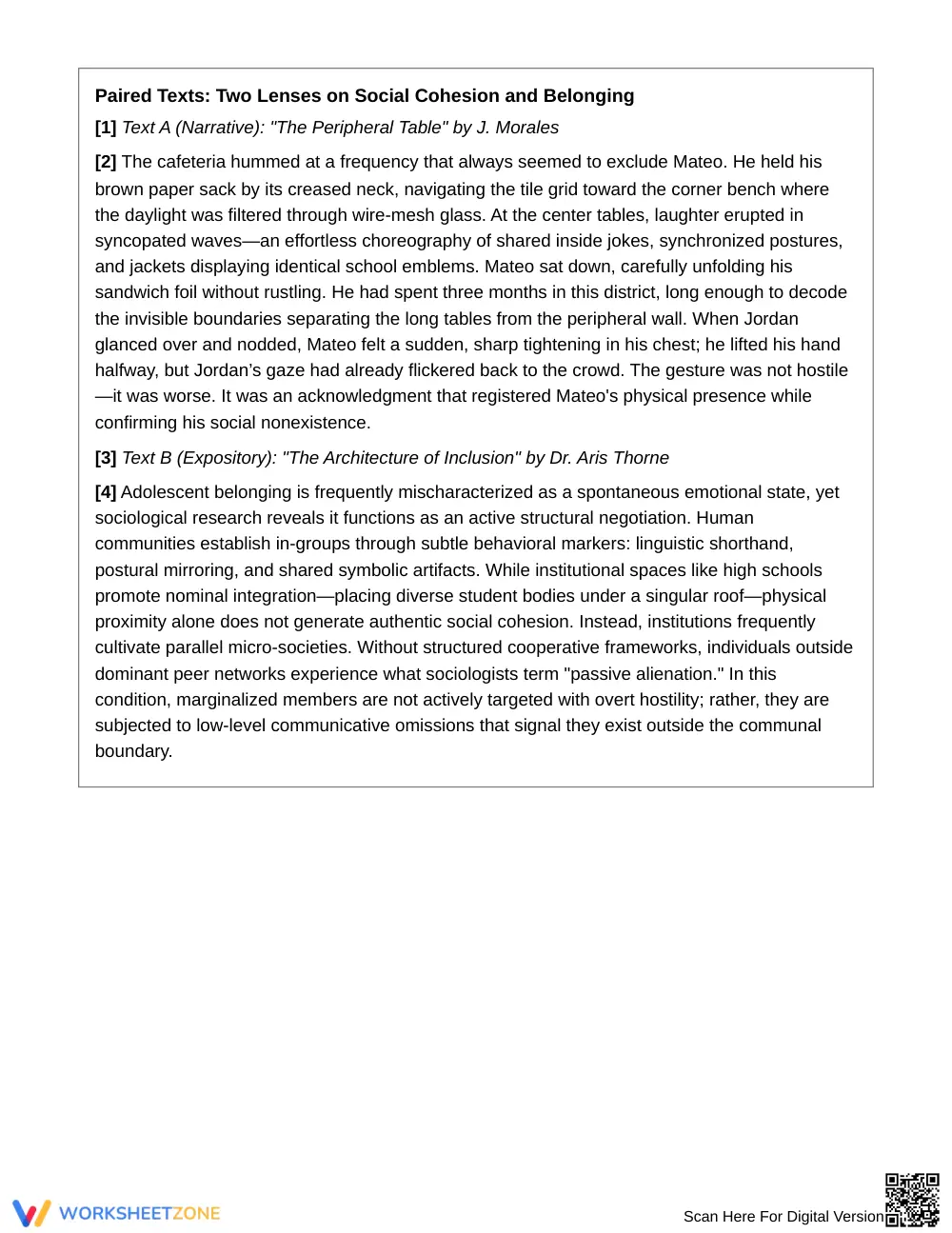
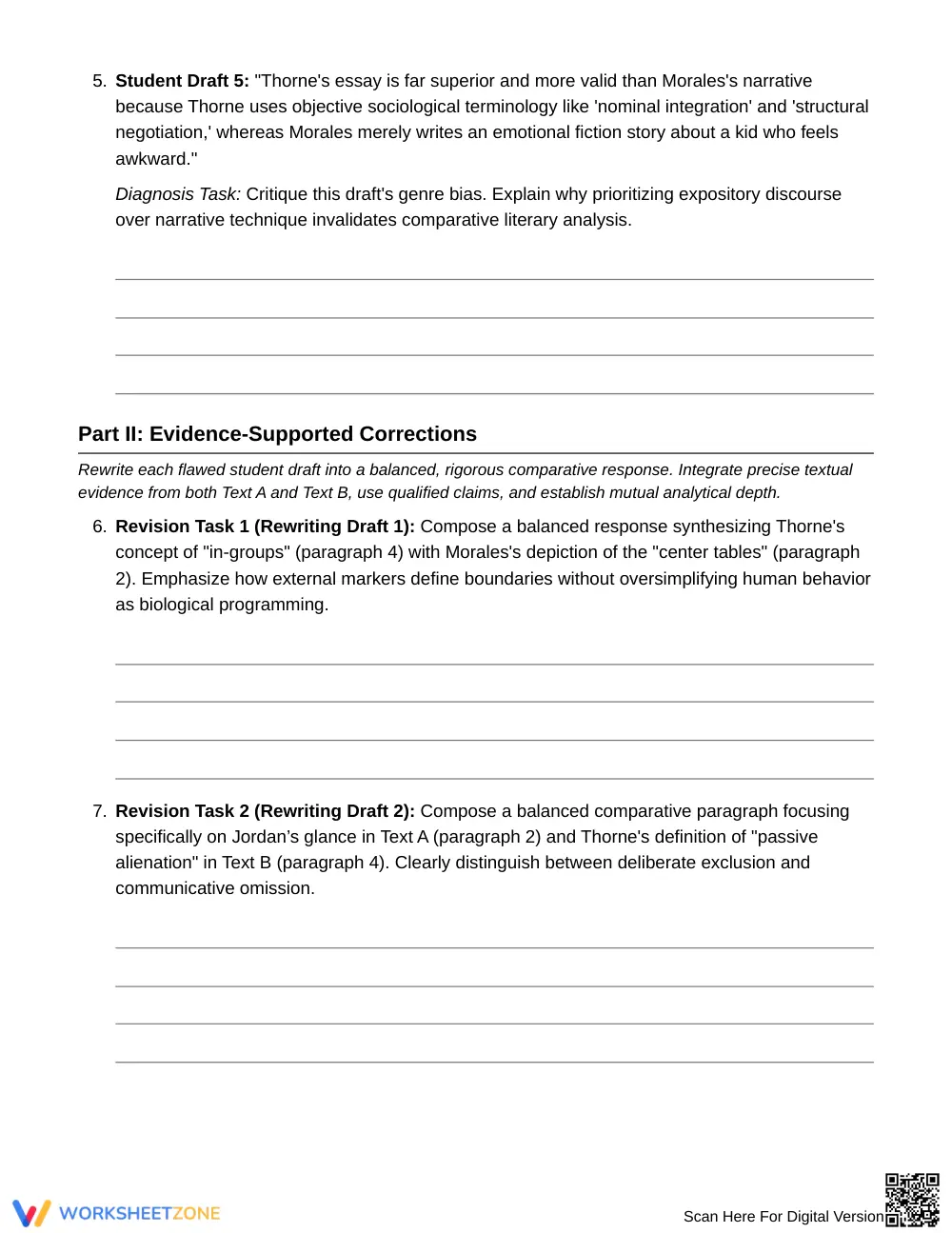
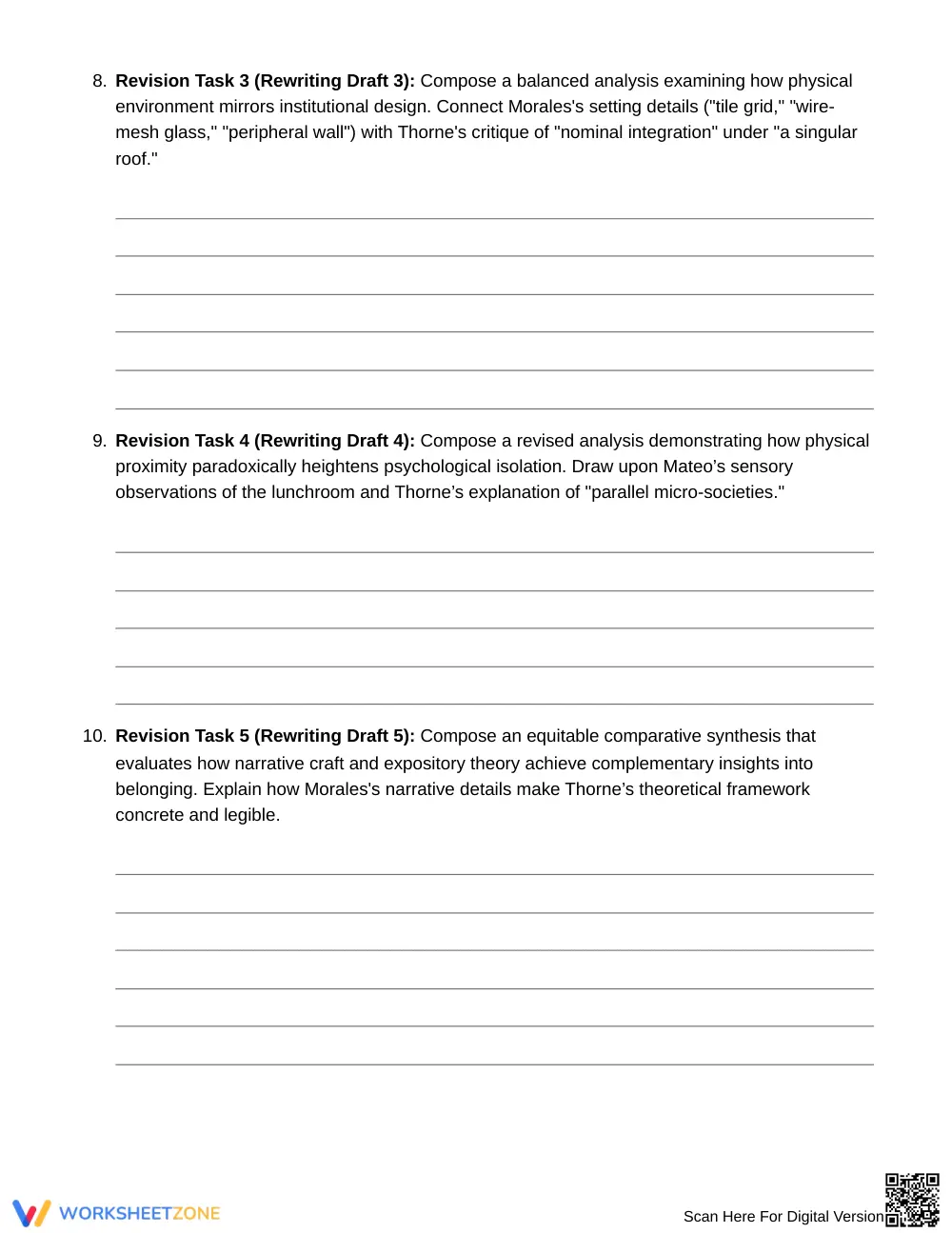
Students use this Grade 9 English I worksheet to master repairing unbalanced comparisons between narrative and expository texts. By diagnosing analytical asymmetry and revising drafts, they produce balanced, evidence‑rich essays that demonstrate deep synthesis of thematic ideas and structural mechanisms.
At a Glance
- Grade: 9 · Subject: English I Course
- Standard:
W.9-10.5— Compare texts to evaluate how authors develop ideas in context- Skill Focus: Repair an Unbalanced Comparison Writing
- Format: 6 pages · 10 problems · Answer key included &midd; PDF full
- Best For: Revision after comparative essay unit for students
- Time: 30–45 minutes class
The packet spans six pages and contains ten targeted tasks, including diagnostic prompts, guided revisions, and independent rewrite exercises. An answer key occupies three pages, and scaffolds such as a mentor model, sentence frames, and a word bank support each step.
Mastery Evidence
Each task aligns with a rubric tier—Approaching, Meeting, or Exceeding—mirroring the sub‑skills of standard W.9‑10.5. Students earn points by demonstrating balanced claim language, integrated evidence from both texts, and nuanced analytical commentary, allowing seamless entry into grade‑book or IEP progress logs.
Standards Alignment
W.9-10.5 – Compare texts to evaluate how authors develop ideas in context. This worksheet also supports CCSS.ELA-Literacy.RL.9-10.2 by requiring textual evidence for analysis. Both standard codes can be copied directly into lesson plans, IEP goals, or district curriculum mapping tools. These standards ensure that instruction remains focused on textual analysis and evidence‑based argumentation.
How to Use It
Use it as a post‑lecture activity: after teaching comparative essay structure, students diagnose five flawed drafts (10‑15 min) and then rewrite them (15‑20 min). Alternatively, employ it during a writing workshop for quick formative assessment; observe how each revision improves analytical balance.
Who It's For
Designed for ninth‑grade English I learners who need stronger synthesis skills, the worksheet also benefits honors students seeking deeper analytical rigor. No differentiated versions are included, but teachers can pair it with a genre‑focus anchor chart or the accompanying mentor model for guided instruction.
Citation Capsule: The Repair an Unbalanced Comparison worksheet aligns with CCSS W.9‑10.5, requiring students to compare texts and evaluate how authors develop ideas—a skill shown to boost higher‑order thinking (Fisher & Frey, 2014). By guiding learners through diagnostic, guided, and independent revision stages, the resource operationalizes the gradual‑release model, which research links to increased writing proficiency. The embedded mentor demonstration models expert analysis, echoing findings that explicit exemplars improve student accuracy in comparative essays. With ten scaffolded tasks across six pages, the worksheet offers measurable practice while the answer key ensures immediate feedback, supporting formative assessment cycles. Educators can integrate this tool into revision workshops or as a post‑lecture activity, confident that it meets rigorous standards and evidence‑based instructional practices. Overall, the activity promotes critical thinking and aligns with research‑backed strategies for improving comparative writing across secondary grades.


