




























Views
Downloads


Ready October Garden Word Search | Grades 6–7 ELA

Paste this activity's link or code into your existing LMS (Google Classroom, Canvas, Teams, Schoology, Moodle, etc.).
Students can open and work on the activity right away, with no student login required.
You'll still be able to track student progress and results from your teacher account.
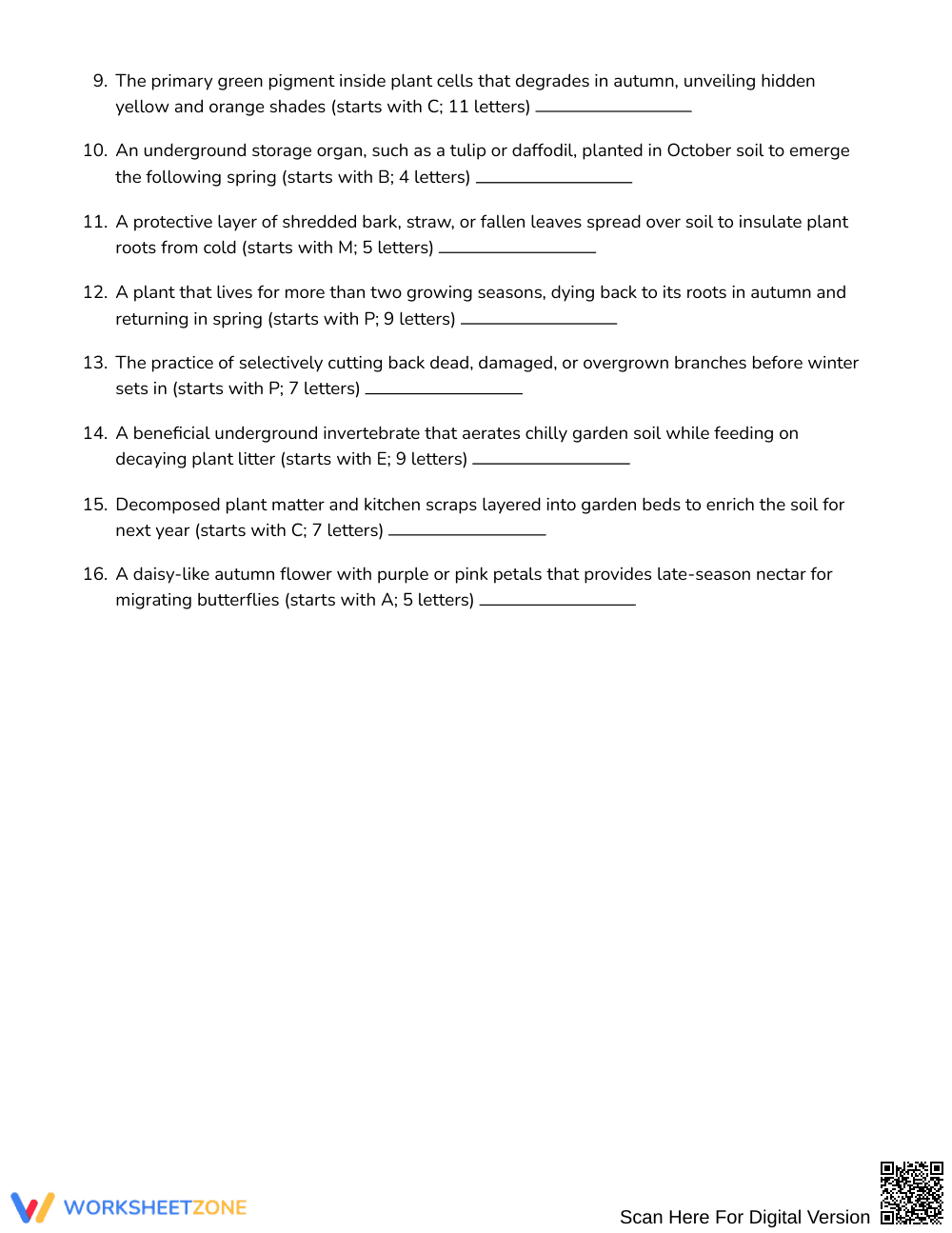
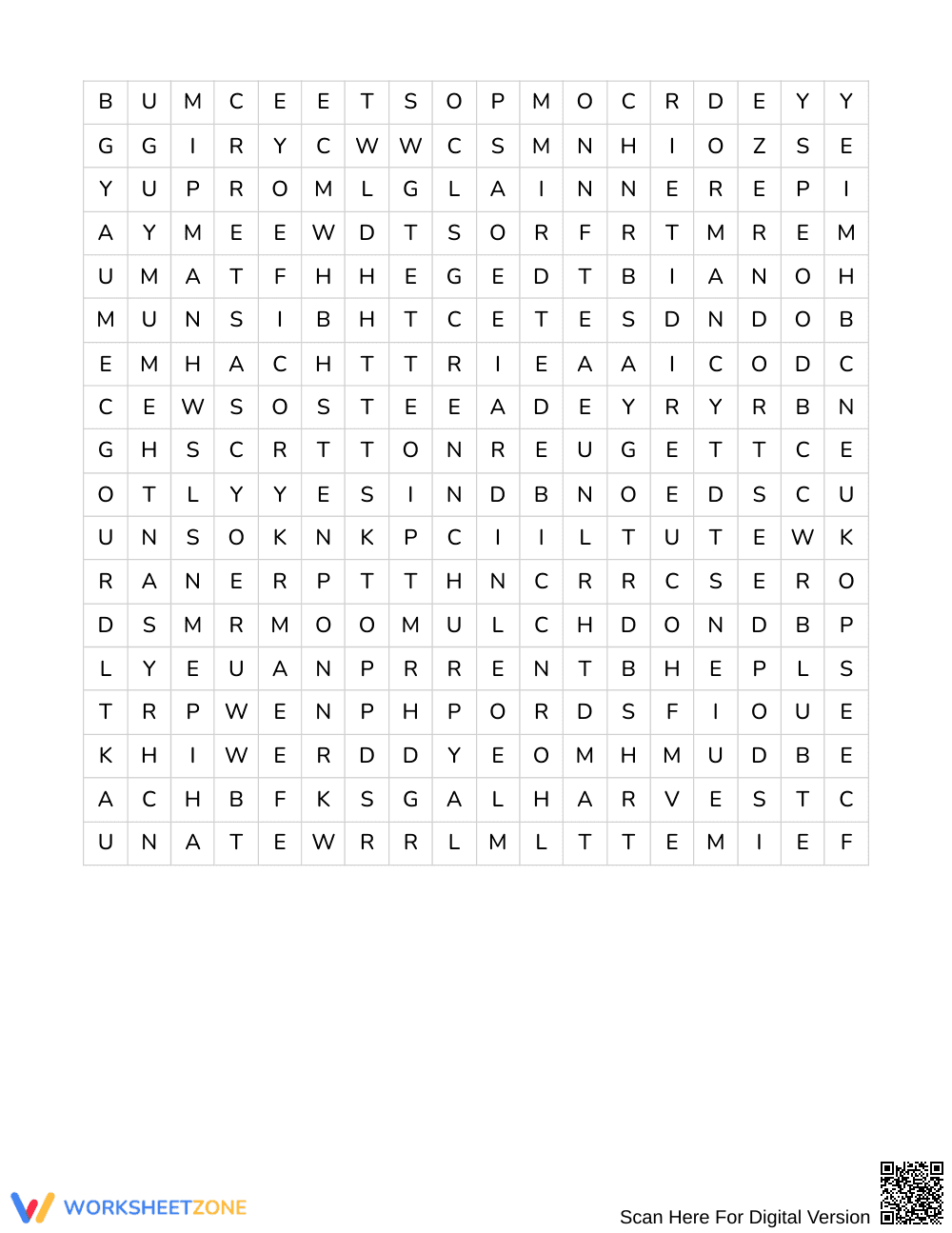
This October garden observations word search challenges Grades 6–7 ELA students to discover 16 seasonal botanical terms without a traditional word bank. Learners read detailed definitions to deduce target vocabulary before locating each term across an expansive grid. This activity strengthens context clue comprehension, autumn science vocabulary, and pattern recognition in one print-and-go resource.
At a Glance
- Grade: Grades 6–7 · Subject: English Language Arts (ELA)
- Standard: Not standards-assessed — vocabulary enrichment
- Skill Focus: October garden observations
- Format: 3 pages · 16 words · Answer key included · PDF
- Best For: Seasonal vocabulary practice and morning work
- Time: 20–35 minutes
Inside this 3-page printable activity, learners discover a challenging letter grid accompanied by 16 rigorous definition-based clues. Instead of scanning a simple word bank, students must analyze descriptions of plant life cycles, autumn garden care, and biological processes to determine each target word. A complete 4-page answer key provides clear visual solutions highlighting word locations and confirming correct terminology.
Designed as an engaging no-bank challenge, this puzzle incorporates an 18 x 18 grid housing 16 hidden terms. Words are placed in all eight possible directions: north, northeast, east, southeast, south, southwest, west, and northwest. Students read each botanical clue—spanning concepts like dormancy, chlorophyll, and perennial lifecycles—to identify the mystery term, then carefully scan intersecting letter paths to locate it.
This word search serves as targeted vocabulary enrichment and is not aligned to a specific state or national content standard. It reinforces cross-curricular botanical concepts, context-clue deciphering, and active reading strategies suitable for middle school English language arts and seasonal science units.
Deploy this activity during independent practice following a seasonal nonfiction reading lesson, or use it as an engaging sponge activity for early finishers. During direct instruction, teachers can pause to discuss key botanical vocabulary before students search the puzzle. As a formative assessment observation tip, monitor whether students accurately infer terms like dormancy and chlorophyll from clues prior to searching the grid. Students typically complete the puzzle in 20 to 35 minutes.
This resource is tailored for Grades 6–7 ELA students seeking seasonal academic enrichment and morphological engagement. For emerging readers, educators can scaffold the task by providing initial letter hints or reading clues collaboratively in small groups. Pair this puzzle naturally with an informational autumn ecology passage or a seasonal science anchor chart on plant life cycles.
Integrating definition-driven vocabulary puzzles into middle school language arts instruction supports deliberate lexical retrieval and orthographic pattern awareness. According to research synthesized by Fisher & Frey (2014), engaging students in purposeful word-solving through context clues fosters deeper semantic mapping than rote memorization tasks. When learners deduce botanical terminology like seedpods, mulch, and deciduous cycles from descriptive clues rather than copying from an explicit list, they activate cognitive retrieval pathways that strengthen reading comprehension and domain-specific knowledge retention. Furthermore, searching structured letter arrays reinforces visual tracking and orthographic processing, skills foundational to fluent text decoding across content areas. This 16-word October garden activity provides Grades 6–7 learners with rigorous, clue-based vocabulary enrichment that bridges seasonal science concepts and language acquisition, cultivating both independent inquiry and sustained academic focus within classroom literacy blocks.


