































Ready Morning Transitions Word Search | Grades 4–5 ELA

Paste this activity's link or code into your existing LMS (Google Classroom, Canvas, Teams, Schoology, Moodle, etc.).
Students can open and work on the activity right away, with no student login required.
You'll still be able to track student progress and results from your teacher account.
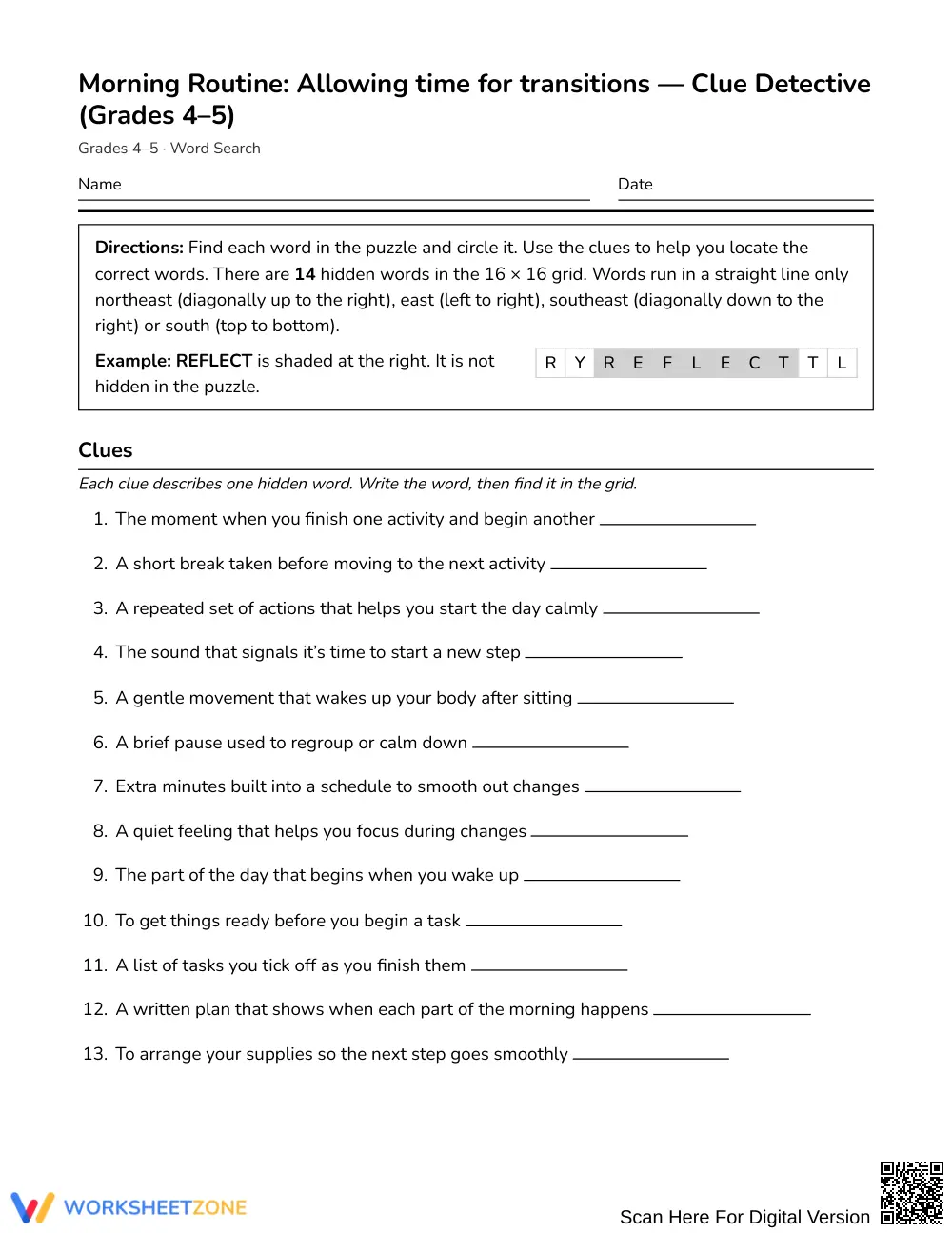
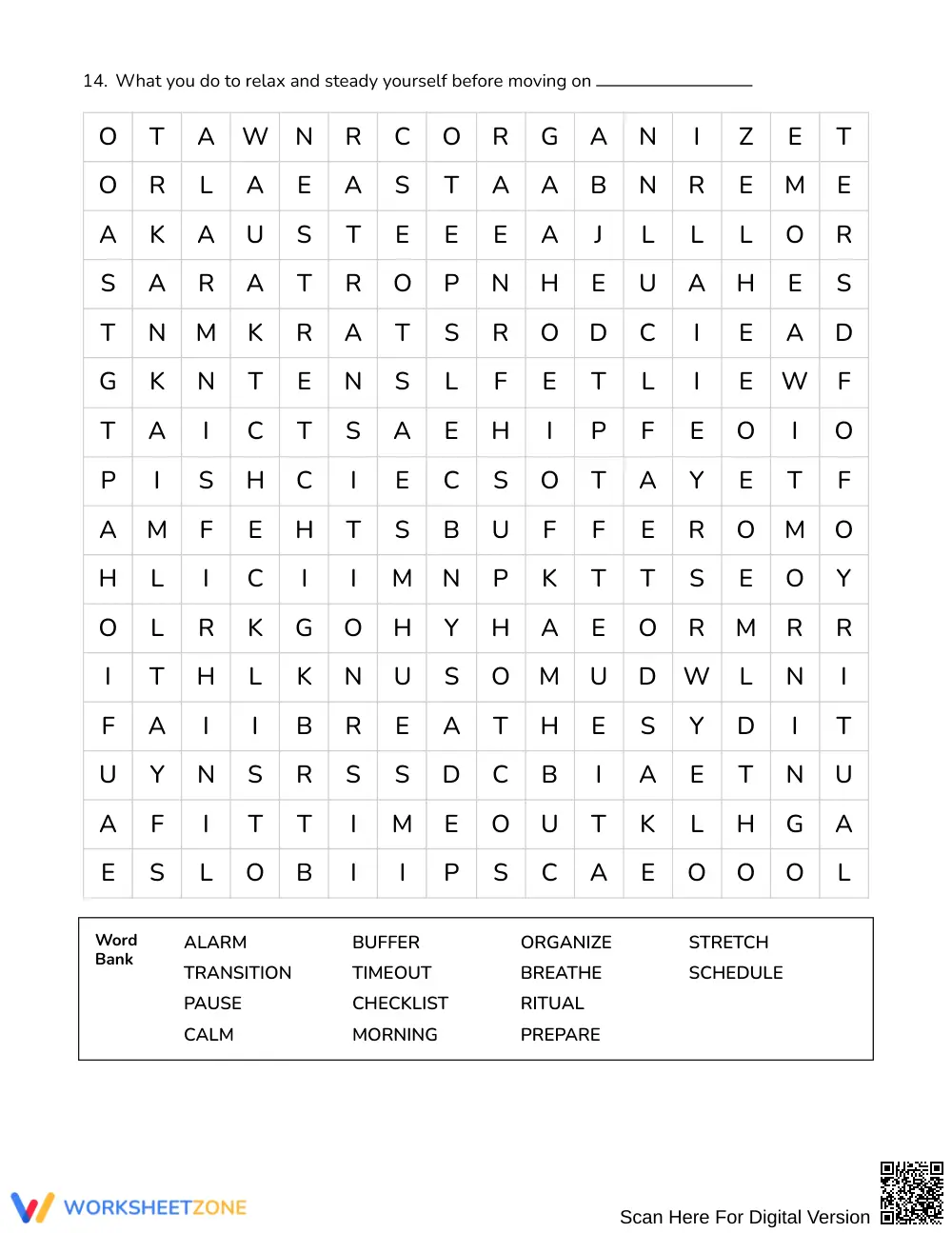
This morning routine word search helps Grades 4–5 students master 14 key transition and executive functioning terms. By pairing targeted vocabulary definitions with an engaging puzzle format, learners examine essential daily management concepts, build contextual recognition, and reinforce productive morning habits through focused word-study practice.
At a Glance
- Grade: Grades 4–5 · Subject: ELA
- Standard: Not standards-assessed — vocabulary enrichment
- Skill Focus: Allowing time for transitions
- Format: 2 pages · 14 words · Answer key included · PDF
- Best For: Morning work and routine review
- Time: 15–25 minutes
What's Inside
This 2-page vocabulary resource includes a 14-word clue sheet paired with an organized letter grid. Each entry provides a student-friendly definition describing routine habits like schedule buffers and calm pauses. A clear three-page answer key provides fast verification by highlighting complete word locations.
Puzzle Mechanics
Students search for 14 routine terms hidden within a 16 x 16 letter grid. Words run across four distinct paths: northeast, east, southeast, and south. Rather than relying on a basic alphabetized list, learners read functional clues to identify target words before locating them across the grid, encouraging active recall and contextual processing.
Standards Alignment
This activity provides targeted vocabulary enrichment and is not aligned to a formal state academic standard. It reinforces social-emotional language, daily planning skills, and functional reading comprehension for upper elementary students building independence in managing school transitions.
How to Use It
Deploy this puzzle as an independent arrival task during morning homeroom or as an intentional quiet break after energetic physical transitions like recess. Circulate during the first five minutes to observe whether students read the clue definitions before hunting letters. Most students complete the full 14-word search within 15 to 25 minutes.
Who It's For
Designed specifically for Grades 4–5 learners, this activity benefits general education classes, counseling small groups, and students developing executive functioning routines. Pair this print-and-go puzzle with a morning transition anchor chart or visual classroom checklist to reinforce predictable daily habits.
Word search puzzles that integrate explicit definitions support functional reading fluency and contextual retention in upper elementary learners. According to Fisher & Frey (2014), intentional exposure to domain-specific vocabulary through contextual clues strengthens student comprehension and builds long-term conceptual retrieval. When intermediate students analyze terminology related to time management and daily schedules—such as buffer, pause, and transition—they connect behavioral routines directly to functional language structures. This 14-word vocabulary enrichment puzzle provides focused semantic practice across a 16 x 16 grid without requiring test-driven standard constraints, making it an effective instructional bridge between language development and productive classroom self-regulation.


