




























Views
Downloads




Ready Literal & Symbolic Pattern Worksheet | Grade 8 ELA

Paste this activity's link or code into your existing LMS (Google Classroom, Canvas, Teams, Schoology, Moodle, etc.).
Students can open and work on the activity right away, with no student login required.
You'll still be able to track student progress and results from your teacher account.
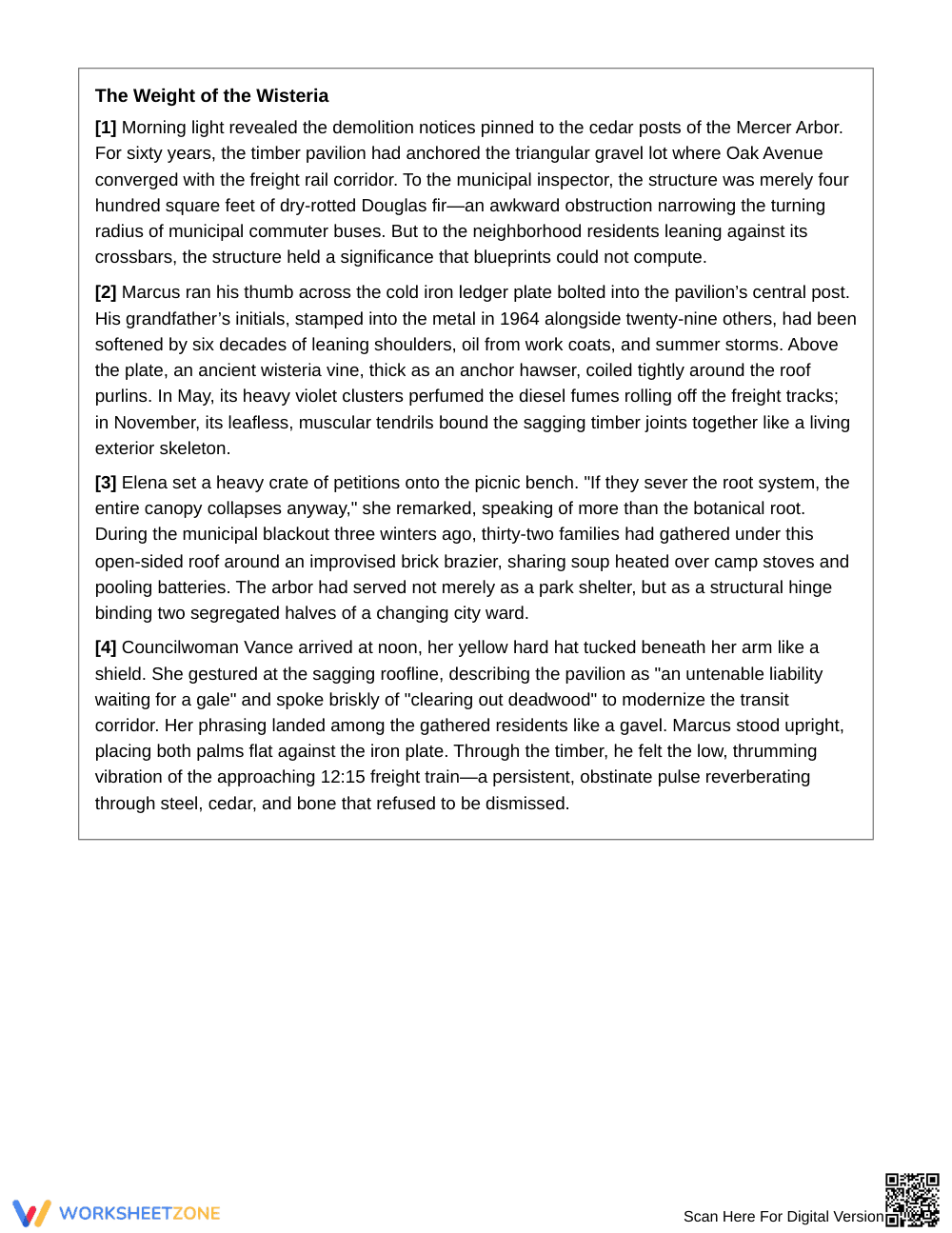
This literary analysis worksheet guides Grade 8 students to differentiate between concrete narrative facts and recurring symbolic motifs using "The Weight of the Wisteria." Students examine how authors use connotative diction to layer abstract meaning over physical objects, strengthening their critical reading and textual analysis skills.
At a Glance
- Grade: 8 · Subject: ELA
- Standard:
RL.8.4— Determine figurative and connotative meanings and analyze impact of word choices- Skill Focus: Literal Detail Versus Symbolic Pattern
- Format: 5 pages · 10 problems · Full 2-page answer key included · PDF
- Best For: Close reading and literary analysis practice
- Time: 40–50 minutes of instructional time
What's Inside
This 5-page printable instructional packet features the complete narrative passage followed by 10 structured tasks across three distinct parts. Students complete concept discrimination questions, passage-based multiple-choice items, and text-dependent short answers before tackling extended written analysis. A comprehensive 2-page answer key provides complete exemplar explanations and evidence citations.
Skill Progression
- Guided practice (Part A): 3 foundational tasks use a definitions box to help students distinguish observable facts from thematic motifs.
- Supported practice (Part B): 5 passage-based questions prompt learners to analyze connotative diction and explain how objects gain symbolic weight.
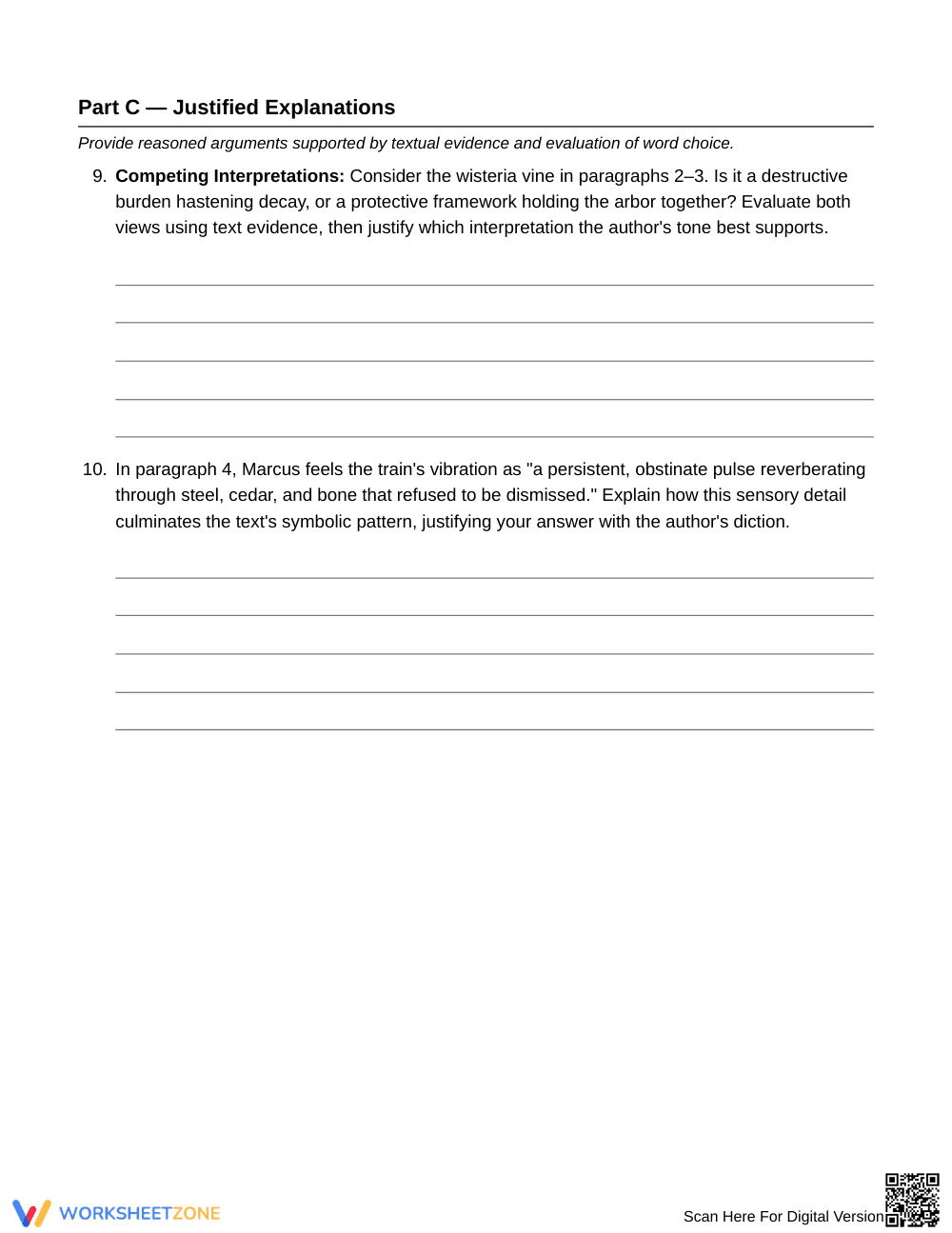
- Independent practice (Part C): 2 analytical writing prompts require students to evaluate competing interpretations using textual evidence.
This scaffolded sequence follows a gradual-release framework, preparing students to evaluate complex literary themes independently.
Standards Alignment
This resource aligns directly with RL.8.4: "Determine the meaning of words and phrases as they are used in a text, including figurative and connotative meanings; analyze the impact of specific word choices on meaning and tone." It also reinforces supporting standard RL.8.1 by requiring textual evidence for every analytical claim. Both standard codes can be copied directly into lesson plans, IEP goals, or district curriculum mapping tools.
How to Use It
Use this worksheet after direct instruction on figurative language, setting up a paired close-reading activity where students annotate diction across Parts A and B. Alternatively, assign the reading and multiple-choice questions as targeted homework before holding a text-based seminar on Part C. Formatively assess student readiness by checking Part A, Question 3 to ensure learners can explain competing interpretations before they begin writing. Expected completion time is 40 to 50 minutes.
Who It's For
This packet serves Grade 8 ELA classrooms, advanced Grade 7 readers, and high school intervention groups needing motif reinforcement. The embedded definitions box supports developing readers and English learners, while the evaluative writing prompts challenge advanced students. Pair this resource with an anchor chart on connotative tone.
Mastering the distinction between literal details and symbolic patterns is central to standard RL.8.4, which requires eighth-grade students to interpret connotative meanings and evaluate how authorial word choices establish tone and theme. According to Fisher & Frey (2014), structured close reading routines that systematically transition from guided concept definitions to text-dependent analysis and independent written justification generate significant gains in middle school reading comprehension. By anchoring abstract symbolism to concrete physical objects—such as an aging pavilion arbor and an intertwined wisteria vine—this resource enables learners to bridge literal recall and high-level literary analysis. Students learn to defend interpretive claims by examining word connotations and tracking recurring motifs across a complete literary text. The structured progression ensures that learners build the evidence-based analytical habits necessary for sustained success on standardized assessments and in high school humanities coursework.


