































Ready Keepsakes Vocabulary Word Search | Grades 6–7 ELA

Paste this activity's link or code into your existing LMS (Google Classroom, Canvas, Teams, Schoology, Moodle, etc.).
Students can open and work on the activity right away, with no student login required.
You'll still be able to track student progress and results from your teacher account.
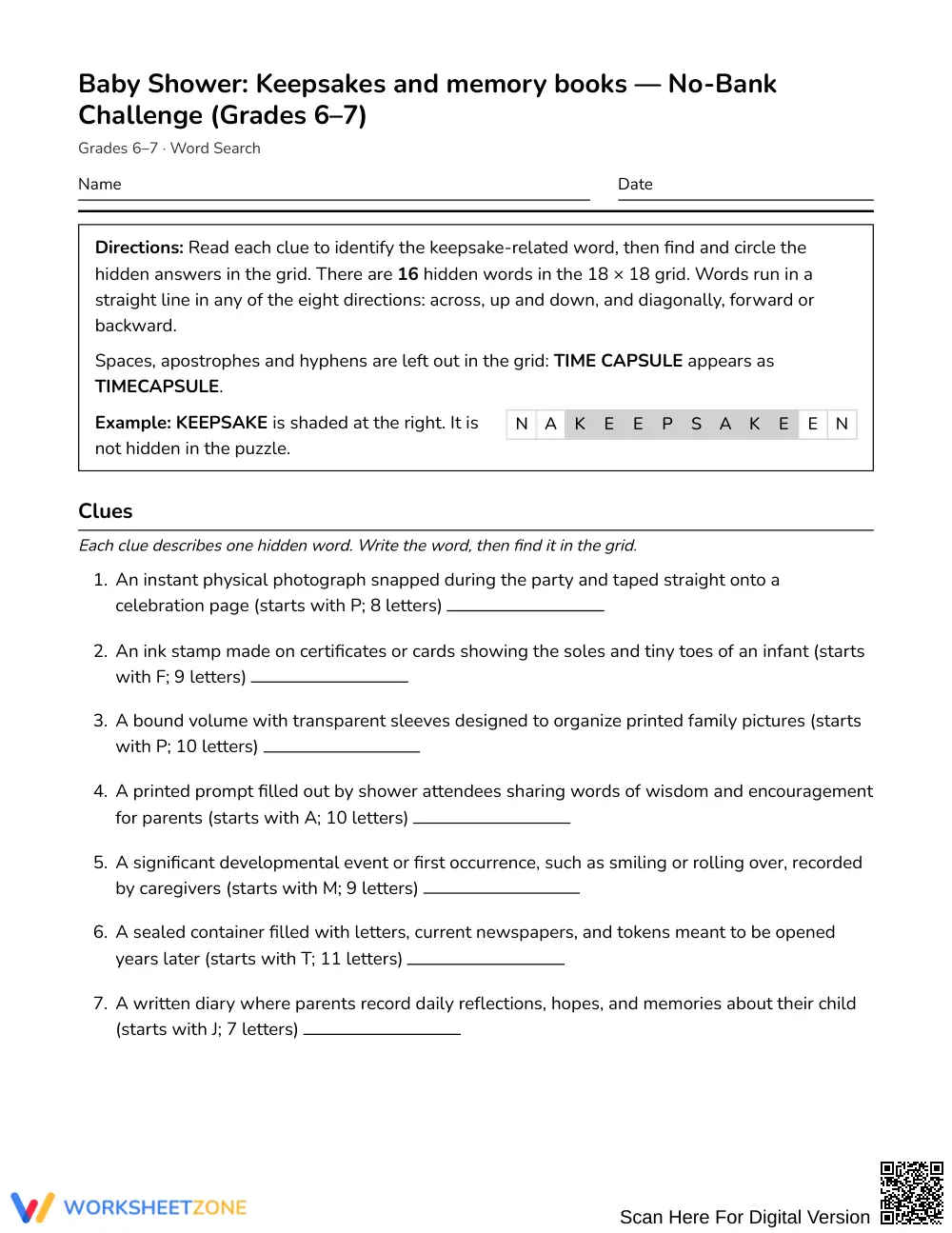
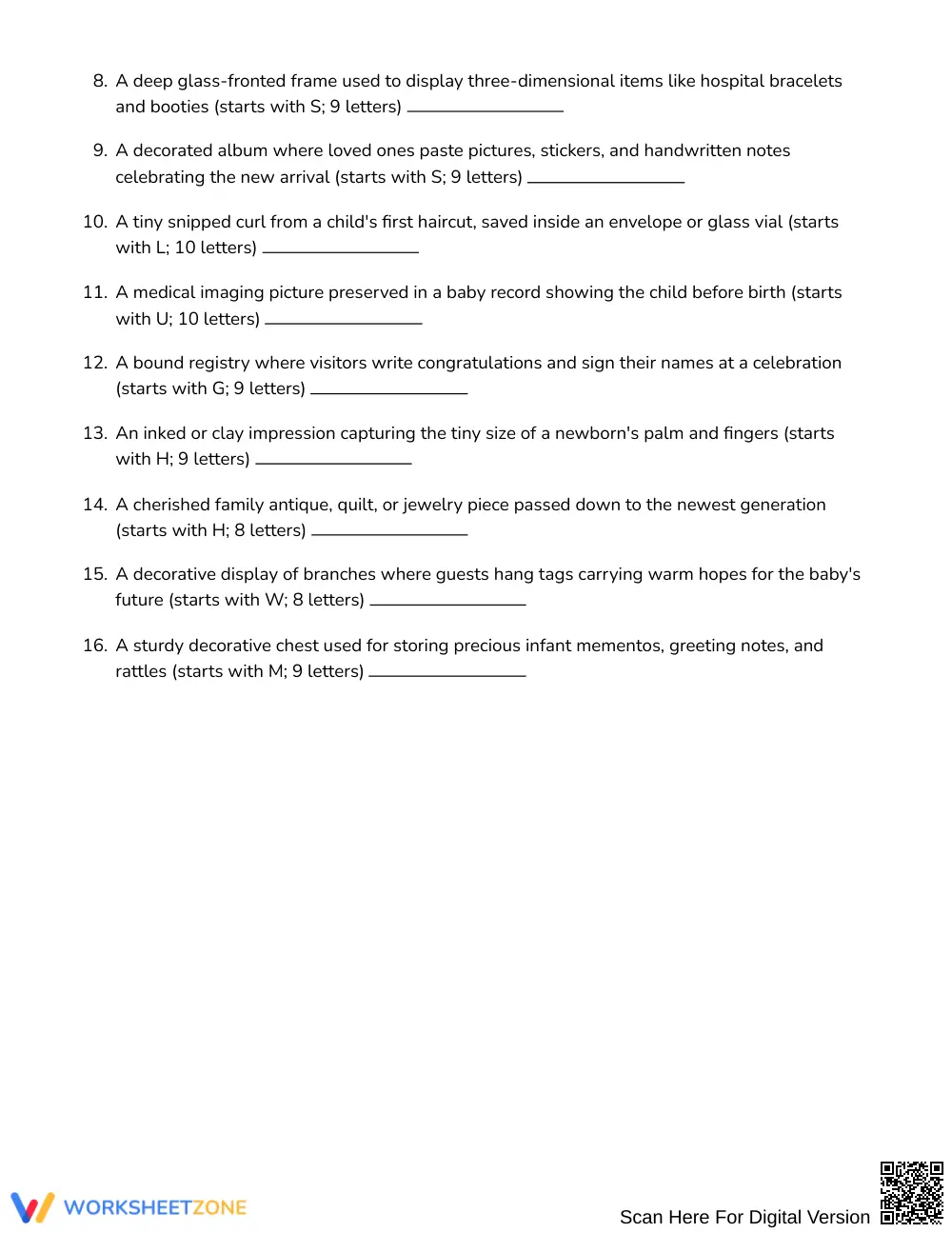
This vocabulary word search reinforces keepsake and memory book terminology for Grades 6–7 English Language Arts learners. Students read 16 contextual clues to determine targeted terms such as scrapbook, heirloom, and milestone before searching the puzzle grid. The activity strengthens contextual inference, word recognition, and spelling retention through an engaging thematic challenge.
At a Glance
- Grade: Grades 6–7 · Subject: English Language Arts (ELA)
- Standard: Not standards-assessed — vocabulary enrichment
- Skill Focus: Keepsakes, mementos, and memory books vocabulary
- Format: 3 printable pages · 16 hidden words · Complete answer key included · PDF
- Best For: Thematic vocabulary enrichment, independent practice, and emergency sub plans
- Time: 20–30 minutes
This 3-page printable word search contains 16 hidden keepsake vocabulary words paired with descriptive clues instead of a word bank. Students read definitions for items like shadow boxes, time capsules, and guest books before locating them in the grid. A complete 4-page answer key provides visible letter placements for rapid teacher verification and student self-checking.
Puzzle Mechanics and Design
The puzzle features an 18 x 18 letter grid designed to provide rigorous vocabulary practice for middle school students. Words run across all eight compass directions: north, northeast, east, southeast, south, southwest, west, and northwest, including backward and diagonal configurations. Because this is a no-bank challenge, students cannot merely hunt for letter sequences; they must read each clue, determine the matching term, and locate it within the grid.
Standards Alignment
This resource serves as targeted vocabulary enrichment and contextual reading practice rather than a formal standards-based assessment. Because it focuses on cultural keepsake terms and clue-based deduction, it is not aligned to a specific standard. Teachers can integrate the activity into broader English Language Arts thematic studies, personal narrative sequences, or seasonal lessons to build expressive word knowledge.
How to Use It
Introduce this word search before direct instruction in a personal narrative writing unit to activate background knowledge about family keepsakes and traditions. Alternatively, assign it after direct instruction on context clues as an engaging independent practice task. During work time, observe whether students identify terms from the clues before searching the grid to formatively assess reading deduction. Expected completion time is 20 to 30 minutes.
Who It's For
This activity is built for students in Grades 6–7 developing thematic vocabulary and contextual analysis skills. For differentiated support, pair emerging readers with a partner to decode challenging clues or provide first-letter cues for students needing extra scaffolding. It pairs naturally with an autobiographical writing project or a family history interview assignment.
Word search puzzles that require students to solve definitional clues build contextual vocabulary retrieval and orthographic memory far more effectively than passive word-bank searches. According to Fisher & Frey (2014), intentional word exposure embedded within meaningful definitions strengthens adolescent semantic networks and reinforces morphological recognition across diverse texts. By eliminating the traditional word bank, this 16-word activity requires middle school students in Grades 6–7 to process detailed semantic descriptions of keepsake and memento concepts before visually locating the terms across an 18 x 18 grid. This dual cognitive process—synthesizing meaning from descriptive context clues and scanning across eight directional orientations—enhances spelling accuracy, verbal fluency, and schema building. The printable format provides targeted, low-stakes vocabulary enrichment that actively engages learners while deepening conceptual understanding during thematic English Language Arts units, creative writing workshops, or independent classroom rotations.


