




























Views
Downloads


Ready Estimation & Precision Word Search | Grades 3–4 Math

Paste this activity's link or code into your existing LMS (Google Classroom, Canvas, Teams, Schoology, Moodle, etc.).
Students can open and work on the activity right away, with no student login required.
You'll still be able to track student progress and results from your teacher account.
This Grades 3–4 math word search strengthens measurement vocabulary by challenging students to identify terminology connected to estimation and precision. Learners read definitions to deduce key terms before locating them, reinforcing conceptual understanding of tools, units, and accuracy across elementary measurement topics.
At a Glance
- Grade: Grades 3–4 · Subject: Math
- Standard: Not standards-assessed — vocabulary enrichment
- Skill Focus: Estimation and precision vocabulary
- Format: 3 pages · 16 words · Answer key included · PDF
- Best For: Math vocabulary enrichment and early finishers
- Time: 20–30 minutes
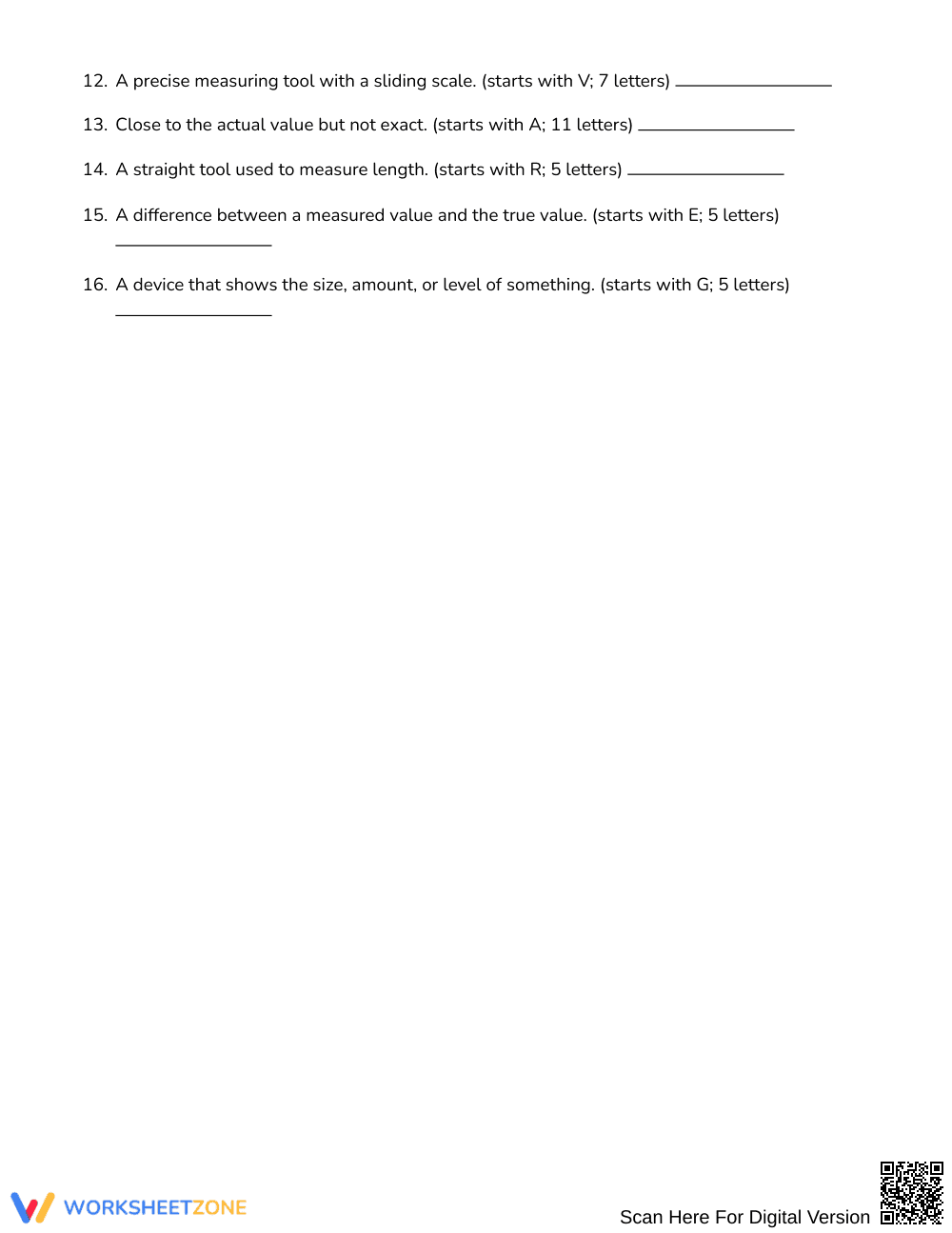
What's Inside: This 3-page printable activity features a full 16-word puzzle challenge without an explicit word bank, compelling students to read contextual definitions for terms like calibrate, vernier, and precision. A matching 3-page solution key shows the exact coordinate placements of every hidden word, enabling rapid student self-checking or teacher grading.
Puzzle Mechanics & Structure
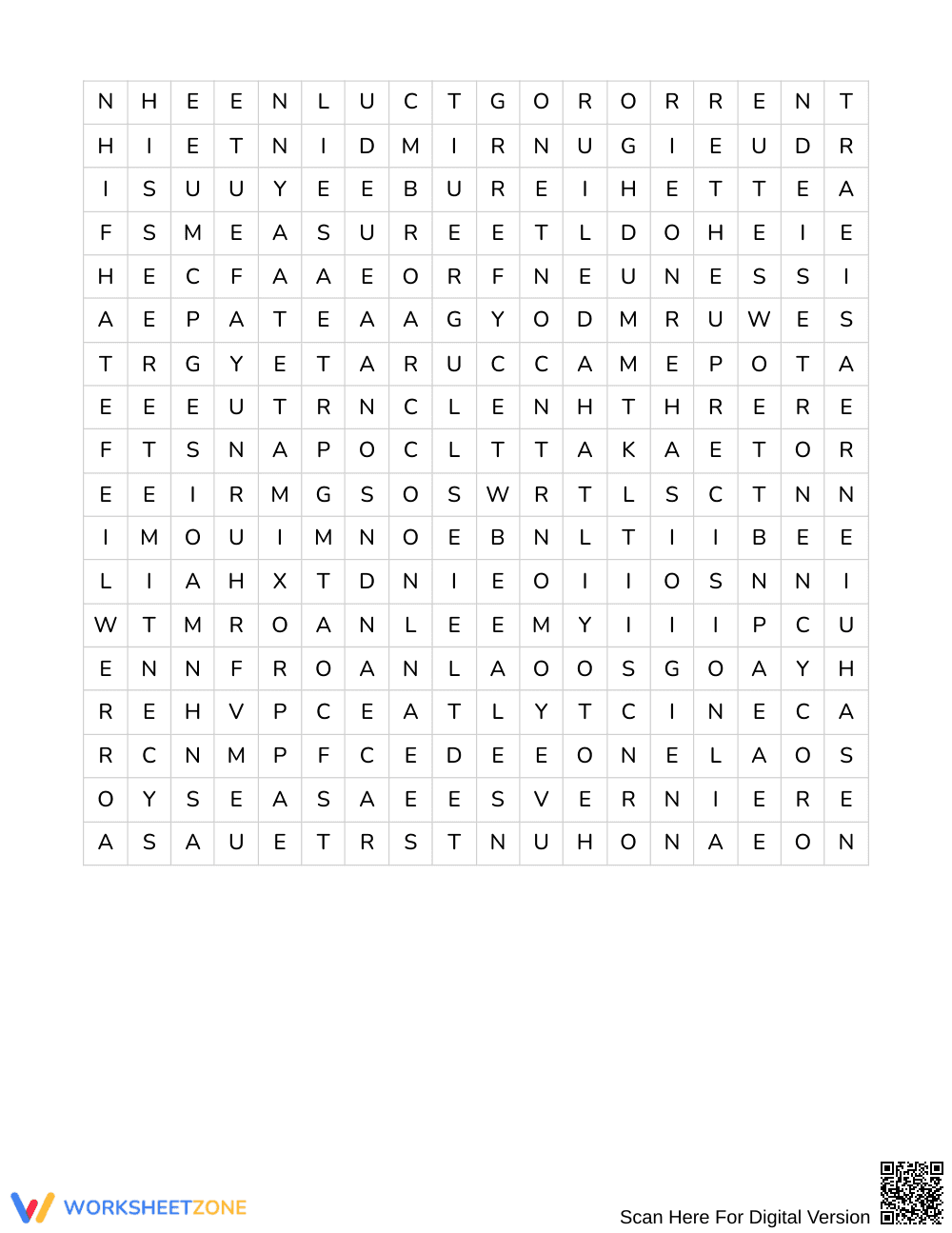
- Grid Dimensions: An 18 × 18 letter matrix provides an expansive search area that requires sustained visual scanning and focus.
- Search Directions: Words run across all 8 possible orientations: North, Northeast, East, Southeast, South, Southwest, West, and Northwest, including forward, backward, and diagonal paths.
- Clue-Based Identification: Rather than relying on a simple word bank, students analyze 16 structured definition clues to retrieve domain-specific vocabulary before locating the terms in the grid.
Standards Alignment
This activity provides targeted vocabulary enrichment and is not aligned to a specific academic standard. It reinforces essential academic language that supports measurement units, data analysis, and laboratory investigations across elementary mathematics curricula.
How to Use It
Introduce this word search after direct instruction on measurement tools and error margins to reinforce academic terminology. For formative assessment, observe whether students correctly match clues to terms such as vernier or precision before finding them in the letter grid. Expect the full activity to take approximately 20 to 30 minutes during independent seatwork, math centers, or partner practice.
Who It's For
This activity is designed for students in Grades 3–4 learning fundamental concepts of physical measurement. Teachers can support developing readers by reviewing the clue list together, while advanced learners complete the grid independently without assistance. Pair this activity directly with a hands-on measurement lab using rulers, tape measures, and balance scales.
According to Fisher & Frey (2014), systematic vocabulary acquisition within content areas directly enhances conceptual comprehension and reading fluency across STEM disciplines. This word search provides focused exposure to 16 foundational terms related to estimation and precision, prompting learners to connect formal mathematical definitions with technical terms like calibrate, approximate, and gauge. By requiring students to determine terms from descriptive clues rather than copying an exposed list, the activity encourages active cognitive retrieval rather than passive letter matching. The multi-directional search grid promotes sustained visual discrimination and orthographic mapping. As a self-contained enrichment resource, it reinforces measurement literacy, supports collaborative discussion, and equips upper-elementary learners with the precise academic language required for formal laboratory tasks and quantitative reasoning.


