































Ready Conservation Word Search | Grades 6–7 Social Studies

Paste this activity's link or code into your existing LMS (Google Classroom, Canvas, Teams, Schoology, Moodle, etc.).
Students can open and work on the activity right away, with no student login required.
You'll still be able to track student progress and results from your teacher account.
This Grades 6–7 geography activity reinforces critical terminology surrounding African wildlife conservation and protected biomes. Students locate 16 vocabulary terms across a large grid using detailed contextual clues rather than a standard list, strengthening geographic literacy and reading comprehension as they connect key African ecosystems to modern environmental preservation practices.
At a Glance
- Grade: Grades 6–7 · Subject: Social Studies
- Standard: Not standards-assessed — vocabulary enrichment
- Skill Focus: Protected landscapes and conservation
- Format: 3 pages · 16 words · Answer key included · PDF
- Best For: Geography unit review and vocabulary enrichment
- Time: 20–30 minutes
What's Inside
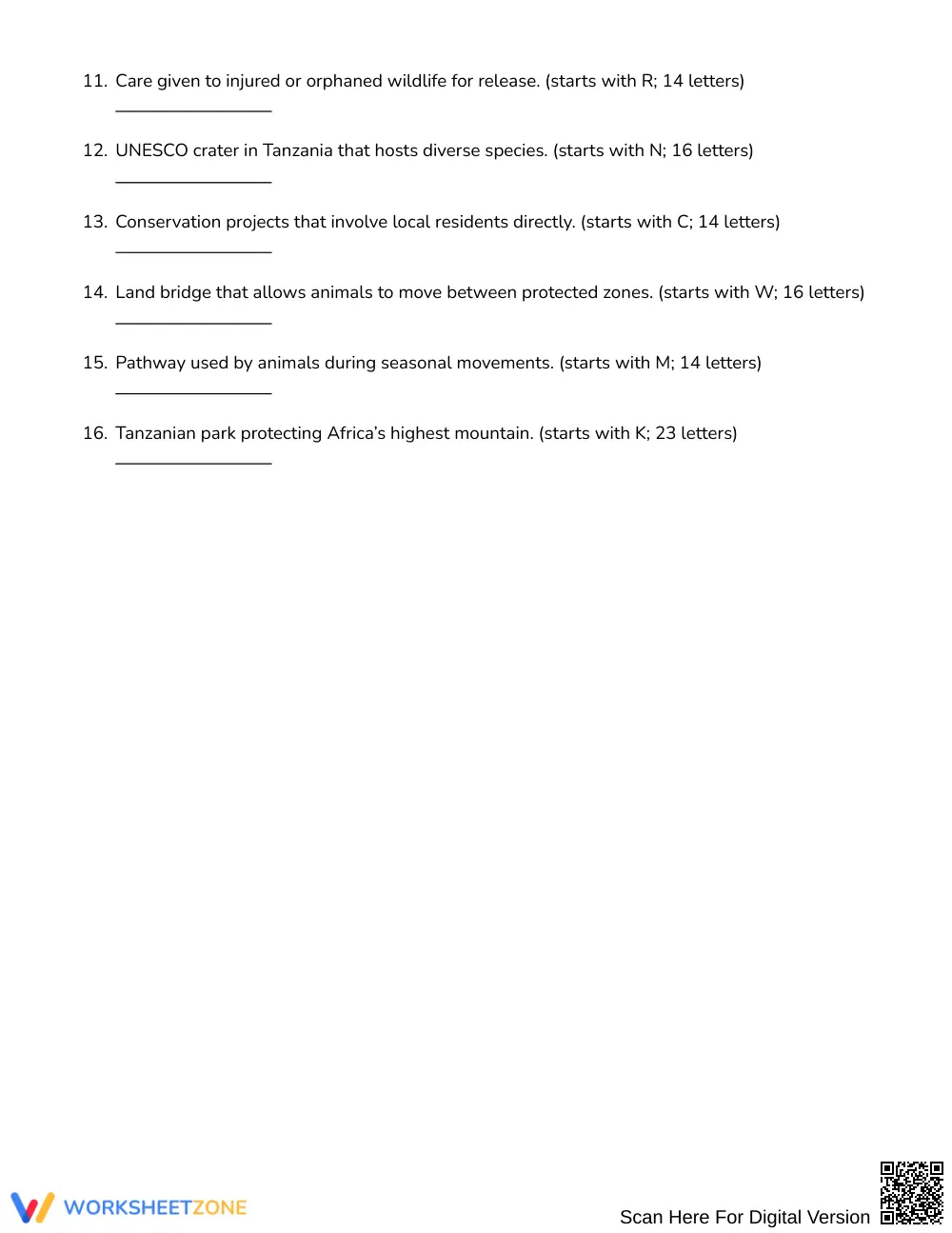
This 3-page printable resource features an African geography word search with a complete 3-page solution key. Instead of scanning a simple word bank, students read 16 informational clues that define vital ecological concepts and famous African reserves, including the Serengeti, Kruger National Park, and the Okavango Delta, before finding each target term.
Puzzle Mechanics and Structure
The puzzle is built on a dense 23 x 23 letter grid designed to encourage careful spatial scanning and orthographic recognition. The 16 target words run in all eight possible directions: north, northeast, east, southeast, south, southwest, west, and northwest. Because this challenge omits an explicit word bank directly inside the grid area, students rely on the included clue list to verify the exact terms they are seeking, increasing the cognitive demand above a conventional word search.
Standards Alignment
This activity serves as supplemental vocabulary enrichment and is not aligned to a formal academic content standard. It reinforces interdisciplinary content knowledge across regional African geography, environmental science, and social studies terminology without requiring standardized assessment tracking.
How to Use It
Deploy this activity after introducing African biomes and modern conservation efforts to consolidate student retention of core vocabulary. Alternatively, use it as an engaging independent task during station rotations or as a zero-prep emergency sub plan. During seatwork, circulate to observe whether students use the descriptive clues to recall concepts before searching the letter grid. The entire puzzle requires approximately 20 to 30 minutes to finish.
Who It's For
This puzzle is structured for middle school learners in Grades 6–7 studying world regional geography, ecology, or African history. For differentiated support, encourage striving readers to highlight key terms within the clue sentences prior to hunting in the grid. Pair this activity directly with an African biome map or a nonfiction reading passage detailing community-based anti-poaching initiatives.
According to Fisher & Frey (2014), intentional vocabulary exposure embedded within content-area reading significantly accelerates informational text comprehension and concept retention for middle grade students. This word search activity targets protected landscapes and conservation vocabulary, requiring learners to read 16 domain-specific clues and locate hidden terms within a complex grid. Research underscores that non-standard word hunts that omit immediate word banks prompt deeper semantic processing, as learners must connect substantive definitions—such as ecotourism, wildlife corridors, and biodiversity—directly to lexical targets rather than performing passive letter matching. By integrating geography, environmental science, and orthographic recognition across an eight-direction matrix, this educational material reinforces foundational domain knowledge while supporting sustained attention and independent problem-solving. Educators can confidently implement this resource during regional geography units to solidify critical conservation concepts through active, contextual vocabulary acquisition.


