





























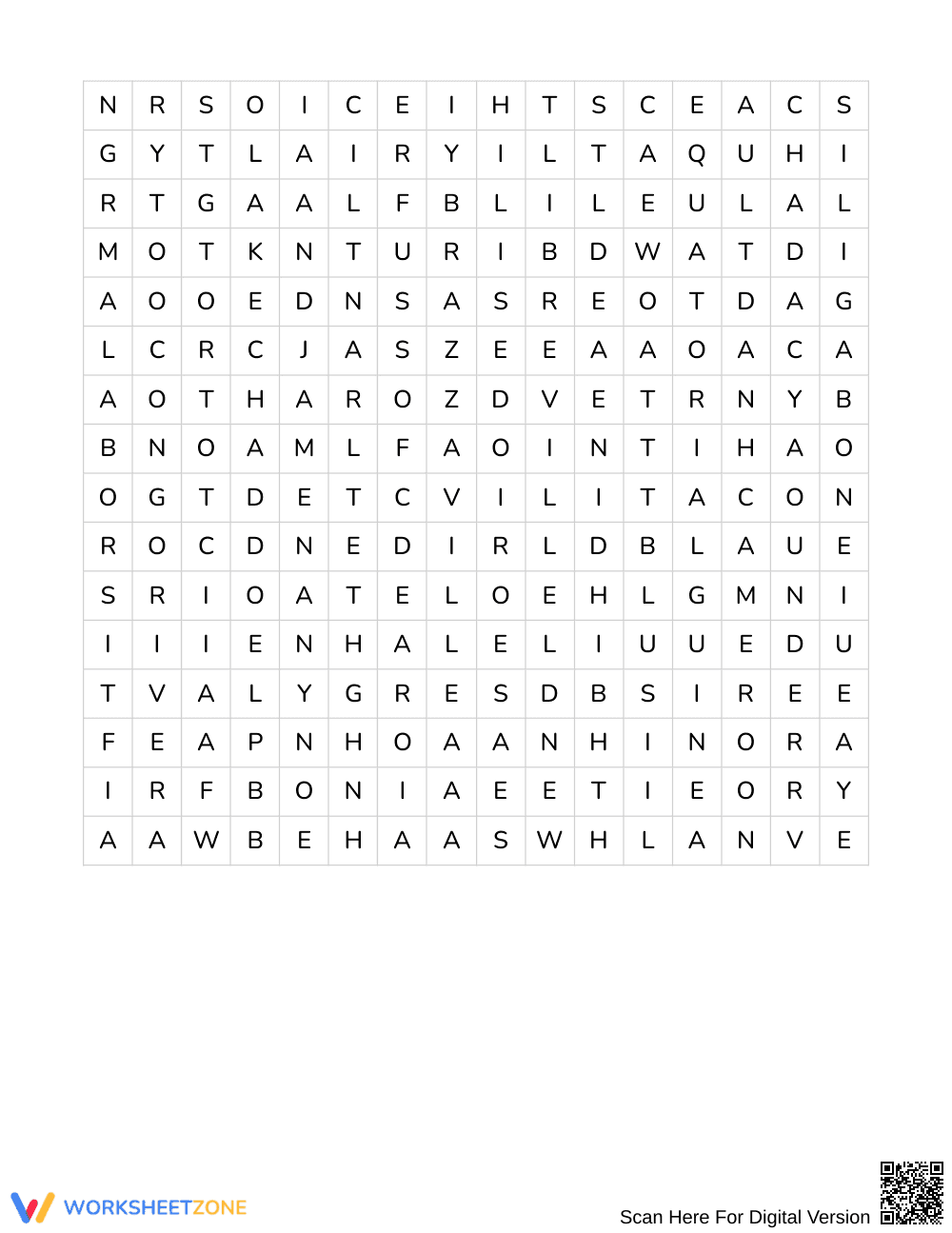


Ready Central Africa Word Search | Grades 5–6 Social Studies

Paste this activity's link or code into your existing LMS (Google Classroom, Canvas, Teams, Schoology, Moodle, etc.).
Students can open and work on the activity right away, with no student login required.
You'll still be able to track student progress and results from your teacher account.
This Grades 5–6 social studies word search reinforces Central African country names, capitals, and landmarks through focused vocabulary retrieval. Students locate 12 regional terms across a themed grid, strengthening spatial recognition and place-name familiarity. The activity supports independent practice, providing upper-elementary learners with an engaging entry point to African geography.
At a Glance
- Grade: Grades 5–6 · Subject: Social Studies
- Standard: Not standards-assessed — vocabulary enrichment
- Skill Focus: Central African country names
- Format: 2 pages · 12 words · Answer key included · PDF
- Best For: Vocabulary reinforcement and early finishers
- Time: 15–25 minutes
What's Inside
This 2-page printable activity features a 16 by 16 letter grid containing 12 hidden geography words. The word bank is arranged into three categories: Countries, Capitals, and Geographic Features. Descriptive clues accompany each term, detailing nations like Cameroon, capitals such as Yaounde, and features like the Congo River. A 3-page answer key provides clear solution paths for checking.
How the Puzzle Works
The activity challenges students to search a 16 by 16 letter matrix for 12 hidden terms. Target words run in three directions: East (horizontally), Southeast (diagonally down), and South (vertically down). Students reference the categorized word bank and accompanying factual clues to connect Central African nations and geographic features with their spelling patterns before finding them in the letter grid.
Standards Alignment
This activity provides dedicated vocabulary enrichment and geography reinforcement rather than formal standards-assessed evaluation. It builds foundational knowledge of world regions and place names, complementing middle-grades social studies curricula that explore African geography and global cultures.
How to Use It
Deploy this word search during an introductory unit on Central Africa to build familiarity with regional terminology before atlas activities. Alternatively, assign it after direct instruction as an engaging review station or warm-up. During completion, circulate to observe whether students use category headings to verify unfamiliar spellings. Most students finish locating all 12 words within 15 to 25 minutes.
Who It's For
This resource is designed for Grades 5–6 social studies classes studying African geography. The categorized word bank and factual clues support visual learners and developing readers by offering clear semantic context. Pair this puzzle with a Central African political map or regional atlas study for an extended lesson sequence.
Domain-specific vocabulary acquisition forms the cornerstone of geographic literacy in the middle grades, establishing the cognitive schema required for higher-order spatial reasoning. According to Fisher & Frey (2014), intentional exposure to disciplinary terminology through categorized word study significantly strengthens content retention and conceptual comprehension. This educational puzzle directly targets central African country names, capital cities, and prominent geographic landmarks, guiding students through twelve curated terms within a structured matrix. Rather than encountering isolated vocabulary words, learners interact with regional terminology organized by clear conceptual categories—Countries, Capitals, and Geographic Features. Research documented by Fisher & Frey (2014) emphasizes that contextual clues and structured vocabulary retrieval accelerate student familiarity with complex, non-native geographical designations. Incorporating focused word searches into social studies routines provides upper-elementary students with repeated visual exposure, reinforcing accurate spelling and geographic awareness essential for subsequent map analysis, regional case studies, and global studies curriculum units.


