































Ready Candy Shapes & Textures Word Search | Grades 4–5 ELA

Paste this activity's link or code into your existing LMS (Google Classroom, Canvas, Teams, Schoology, Moodle, etc.).
Students can open and work on the activity right away, with no student login required.
You'll still be able to track student progress and results from your teacher account.
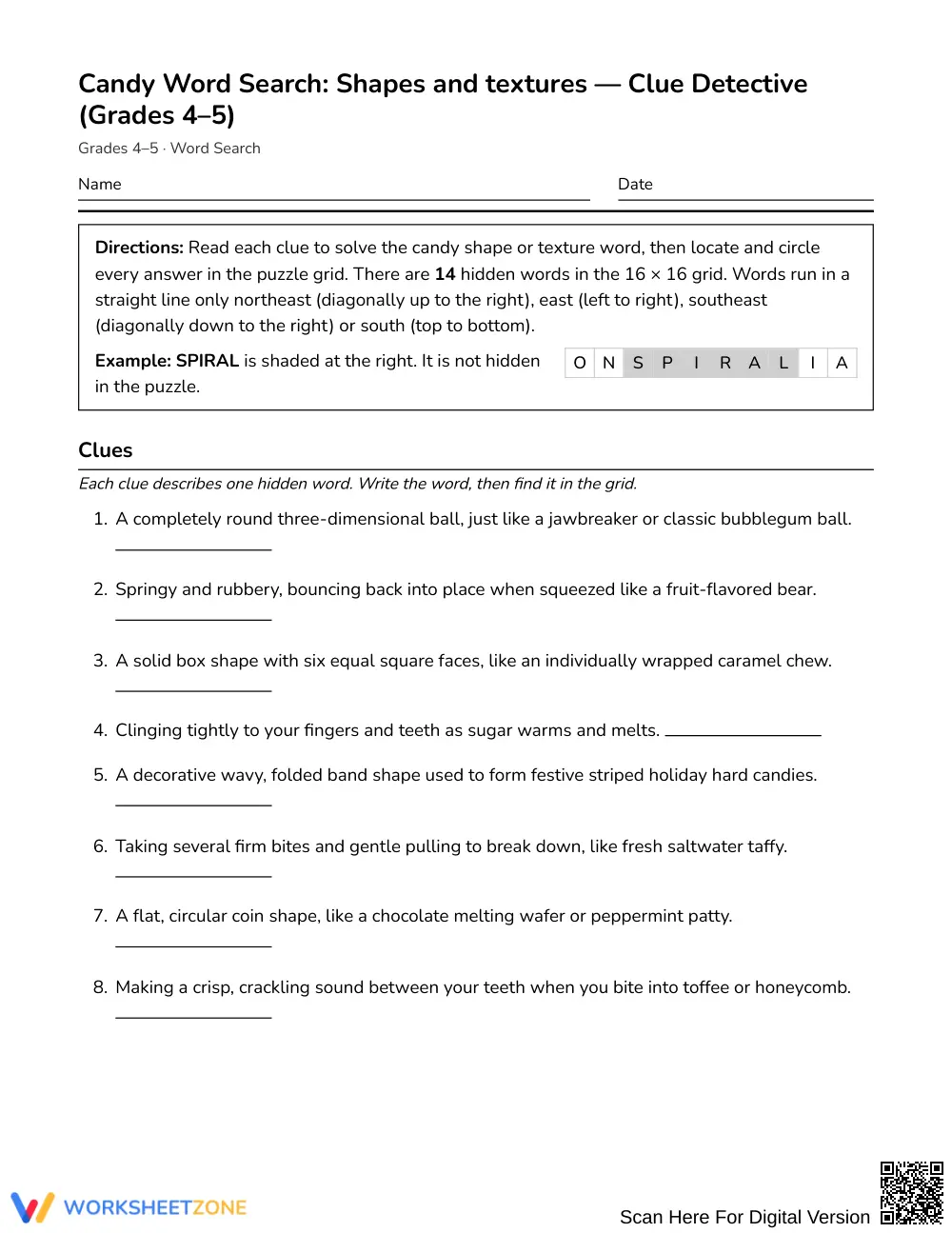
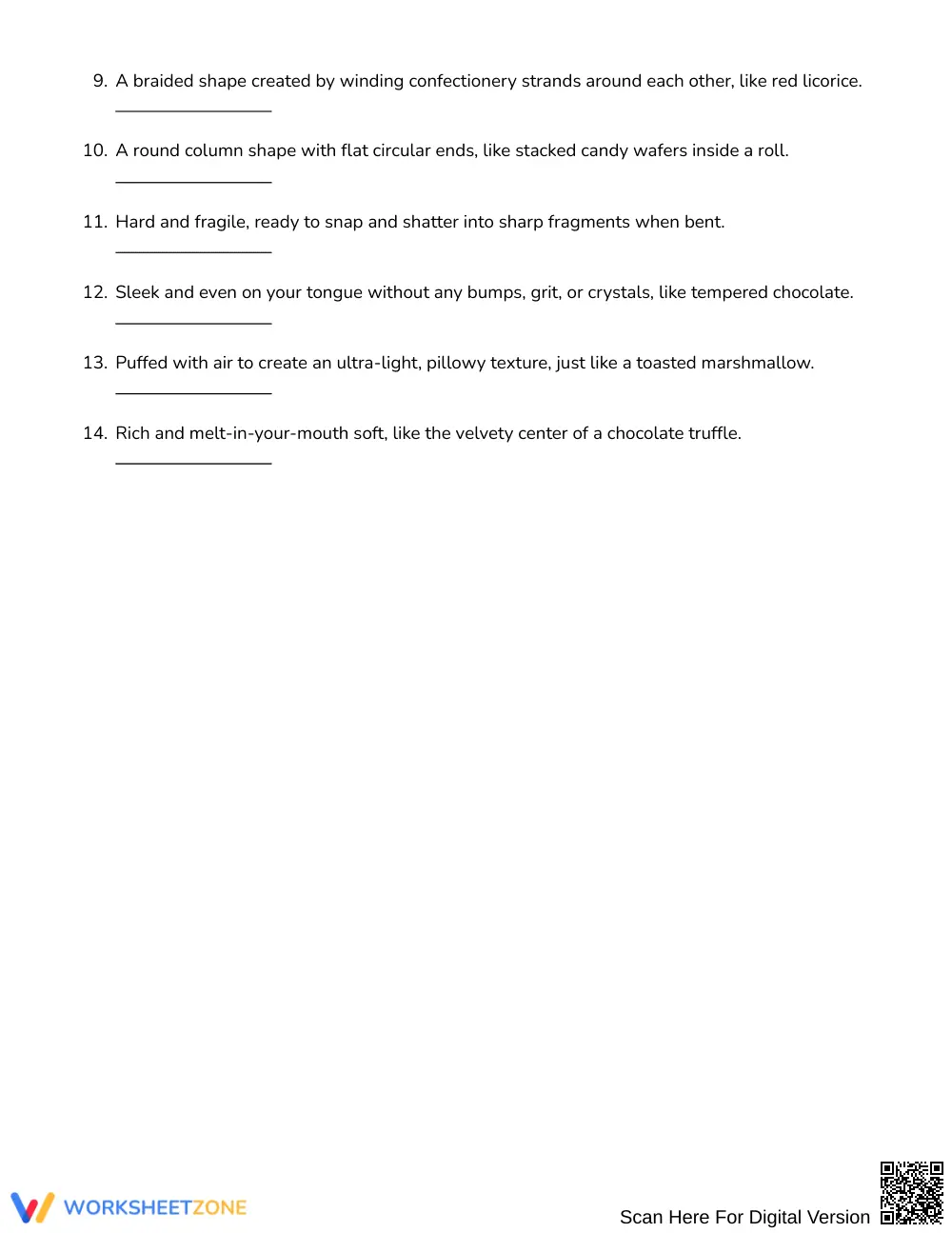
This candy word search builds upper elementary vocabulary by challenging students to identify and locate 14 sensory and geometric terms. Learners read descriptive clues highlighting confectionery shapes and textures, strengthening their understanding of precise language before finding each target term hidden in the puzzle grid.
At a Glance
- Grade: Grades 4–5 · Subject: English Language Arts (ELA)
- Standard: Not standards-assessed — vocabulary enrichment
- Skill Focus: Candy shapes and textures descriptive vocabulary
- Format: 3 activity pages · 14 words · Complete answer key included · PDF
- Best For: Vocabulary enrichment, independent literacy stations, and early finishers
- Time: 20–30 minutes
What's Inside
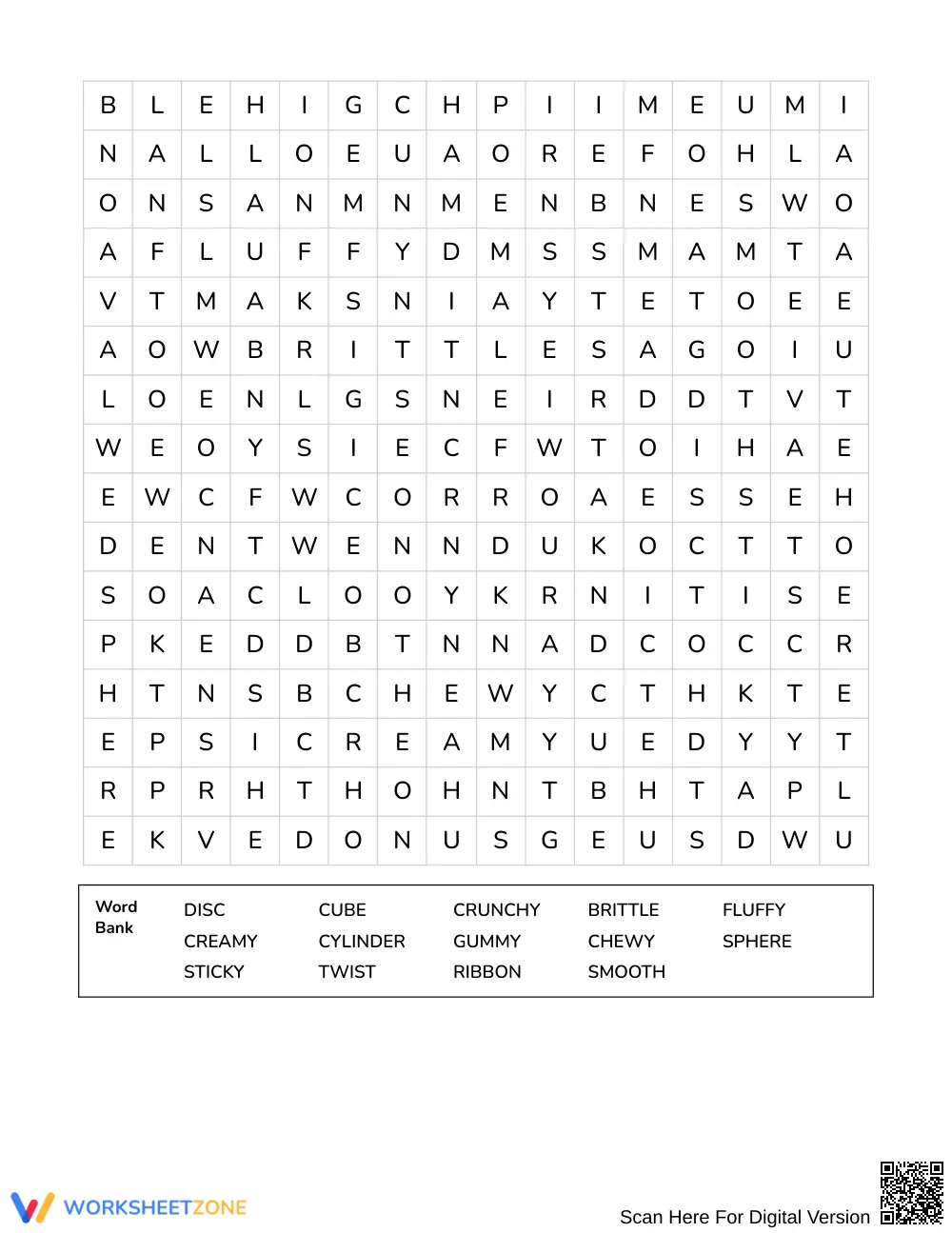
This 3-page printable resource pairs clue-based word study with a search grid. Students read 14 riddle-style clues defining sensory textures such as chewy, brittle, and creamy, alongside geometric shapes like sphere, cylinder, and cube. A shuffled word bank accompanies the activity, supported by 3 full answer key pages that illustrate exact word placements.
How the Puzzle Works
Students operate as clue detectives rather than passive searchers. They read each contextual definition to determine the correct candy shape or texture before searching a 16 x 16 grid. The 14 target words run in four distinct directions: northeast, east, southeast, and south, promoting visual scanning while keeping the search accessible.
Standards Alignment
This activity serves as vocabulary enrichment and is not aligned to a formal standard. Rather than assessing a discrete testing benchmark, the puzzle reinforces descriptive adjective and geometric terminology that supports students' descriptive writing and reading comprehension across general upper elementary literacy units.
How to Use It
Introduce this word search after direct instruction on sensory imagery or descriptive adjectives. Assign the puzzle during independent word study, asking students to highlight sensory clues in each definition, or use it as an engaging literacy center task. To formatively assess understanding, observe whether students can explain the difference between geometric shapes like cylinders and discs or describe brittle versus chewy textures. Expected completion time is 20 to 30 minutes.
Who It's For
This resource supports Grades 4–5 learners expanding their descriptive vocabulary for writing. For students needing support, suggest highlighting key descriptor words in each clue before scanning the grid. Pair this activity with a sensory writing lesson or an anchor chart of physical property adjectives.
According to Fisher & Frey (2014), intentional word exposure embedded in context-rich tasks substantially enhances vocabulary acquisition and reading comprehension compared to isolated rote memorization. This Grades 4–5 word search reinforces 14 high-utility shapes and textures vocabulary terms through descriptive confectionery clues, requiring learners to connect sensory and geometric definitions with orthographic representations in a 16 by 16 letter grid. Although designed as vocabulary enrichment rather than a formal benchmark assessment, the activity provides deliberate cognitive practice in semantic analysis and visual scanning across four cardinal and diagonal orientations. By engaging students in meaningful clue deduction, the exercise helps intermediate elementary readers solidify precise descriptive words like brittle, chewy, cylinder, and sphere across varied literacy tasks. The accompanying 3-page answer key supports rapid verification during independent practice, small-group rotations, or structured vocabulary centers, ensuring immediate feedback.


