



























Ready Animation Terms Word Search | Grades 4–5 ELA
Paste this activity's link or code into your existing LMS (Google Classroom, Canvas, Teams, Schoology, Moodle, etc.).
Students can open and work on the activity right away, with no student login required.
You'll still be able to track student progress and results from your teacher account.
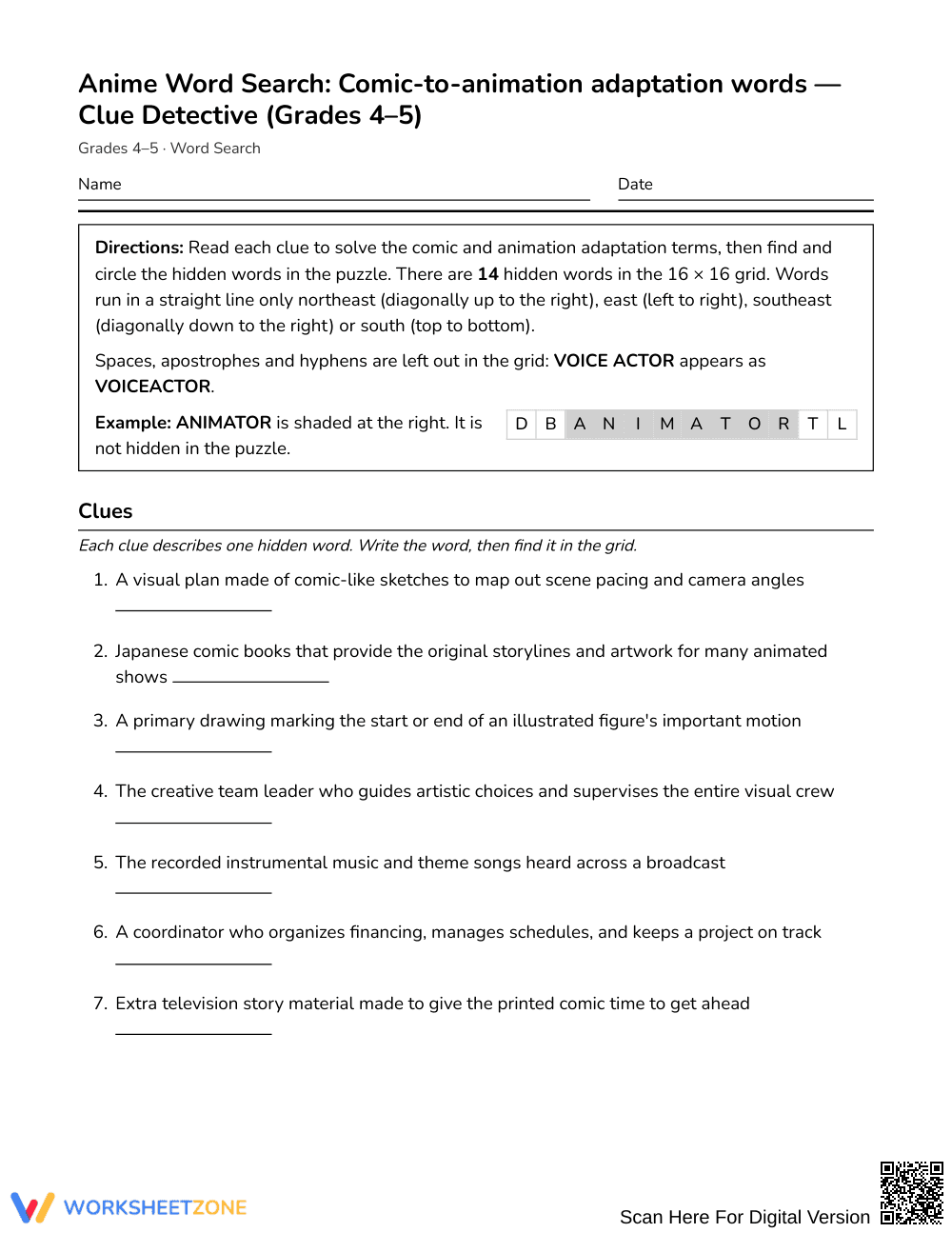
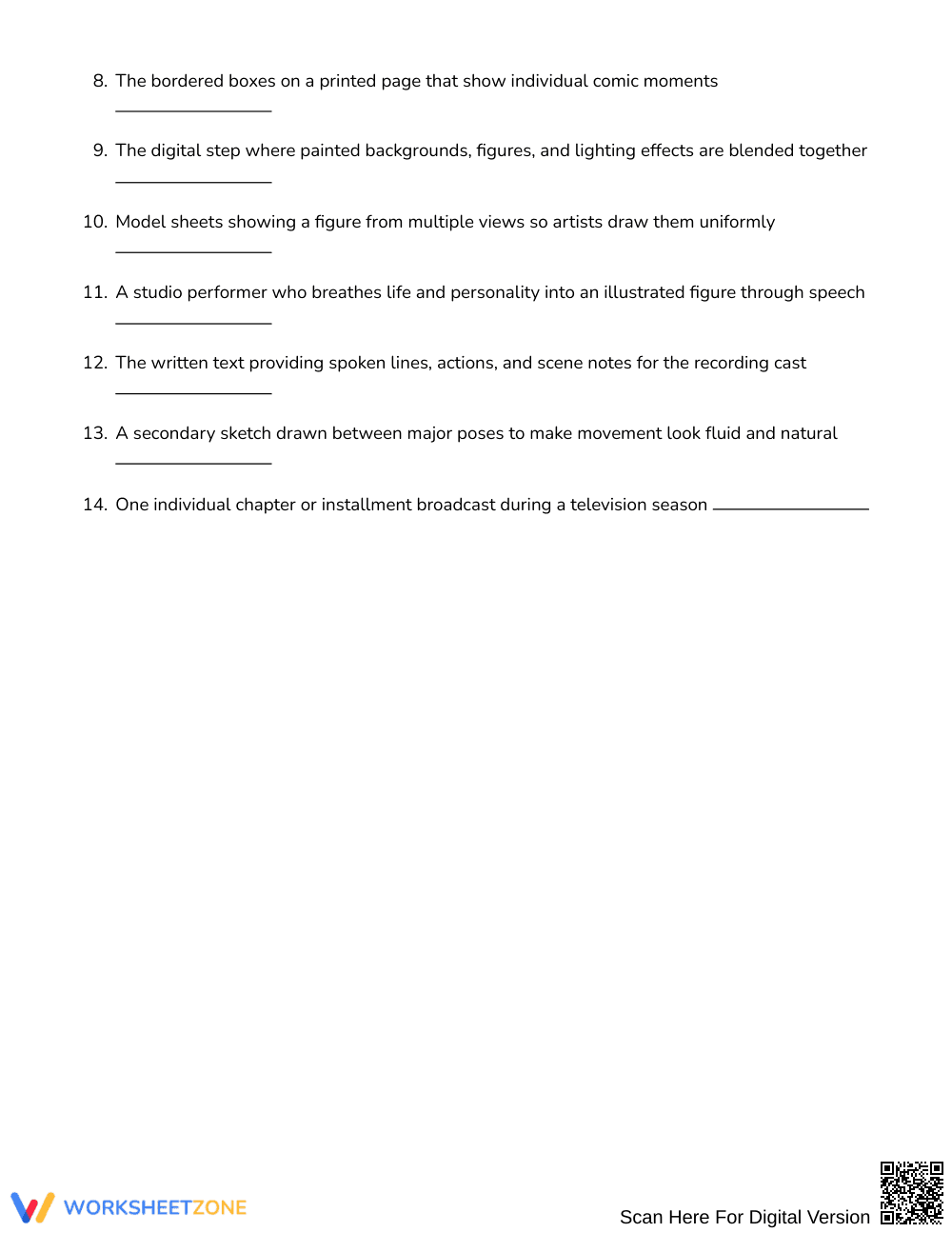
This vocabulary word search introduces Grades 4–5 students to specialized media terminology through an engaging Clue Detective format. Learners analyze descriptive definitions for 14 industry terms—including storyboard, keyframe, and voice actor—before locating them within the puzzle grid. The activity strengthens domain-specific reading comprehension and contextual vocabulary retention.
At a Glance
- Grade: Grades 4–5 · Subject: English Language Arts
- Standard: Not standards-assessed — targeted vocabulary enrichment and media literacy concepts
- Skill Focus: Comic-to-animation adaptation words and contextual definitions
- Format: 3 pages · 14 words · Full answer key included · PDF printable
- Best For: Independent vocabulary enrichment, literacy centers, and fast finishers
- Time: 20–30 minutes
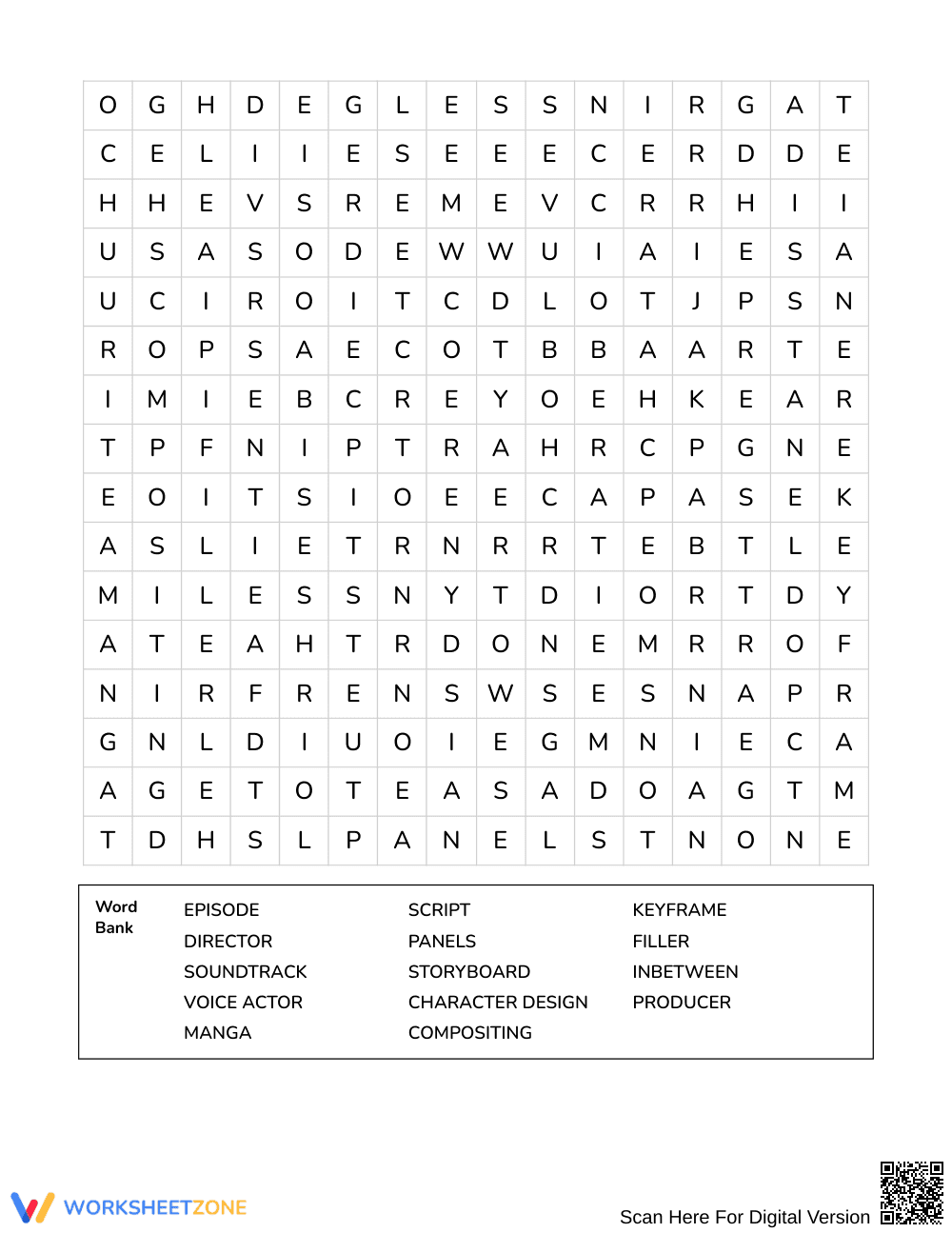
Across 3 printable pages, students explore behind-the-scenes animation concepts using clues rather than a simple search list. The resource contains 14 hidden words to find, paired with complete definitions covering artistic roles, production stages, and visual storytelling mechanics. A shuffled word bank provides reference support, while the accompanying 3-page answer key displays clearly highlighted solution paths for rapid checking.
Puzzle Mechanics and Structure
The activity organizes term discovery through structured puzzle parameters:
- Grid Dimensions: A 16 x 16 letter grid creates an appropriately challenging density for upper elementary readers.
- Word Orientations: Hidden terms are placed across four precise directions: northeast (NE), east (E), southeast (SE), and south (S).
- Clue Detective Format: Students read detailed clue descriptions before matching terms from the shuffled word bank to find them in the grid.
Standards Alignment
This word search serves strictly as vocabulary enrichment and is not aligned to a formal standard. Instead of assessing specific state standards, the lesson broadens student awareness of creative media disciplines by connecting comic art to animated film production.
How to Use It
Deploy this activity after direct instruction on multimedia adaptations or narrative storytelling elements. First, use it as an engaging independent task during literacy rotations, allowing learners to reinforce technical media terminology. Second, assign it as a collaborative partner review where students take turns reading definitions aloud before searching. During work time, circulate to observe whether students use the definition clues to deduce unfamiliar words or merely scan for letter patterns. Most learners complete the activity within 20 to 30 minutes.
Who It's For
This resource is designed for Grades 4–5 students interested in visual media, graphic novels, and animation arts. For students needing support, pair the puzzle with an anchor chart showing visual diagrams of storyboards and keyframes. For advanced learners, encourage them to write original sentences incorporating each term after locating it. It naturally pairs with a graphic novel reading passage or an introductory storyboarding unit.
Designed for Grades 4–5 English Language Arts, this 3-page word search delivers targeted vocabulary enrichment centered on comic-to-animation adaptation words rather than assessing a formal standards code. Through 14 clue-based vocabulary tasks, learners define and identify critical media production terms such as keyframe, storyboard, and compositing within a 16 by 16 letter grid. According to research by Fisher & Frey (2014), intentional exposure to domain-specific academic vocabulary across diverse media formats significantly enhances student reading comprehension, conceptual categorization, and language acquisition. By integrating definitional clues directly alongside word recognition exercises, this print-ready resource reinforces linguistic understanding through active retrieval practice. The format effectively bridges informational reading and creative arts instruction, making complex cinematic terminology accessible to upper elementary students during independent literacy blocks, structured partner work, or dedicated vocabulary enrichment sessions.


