


























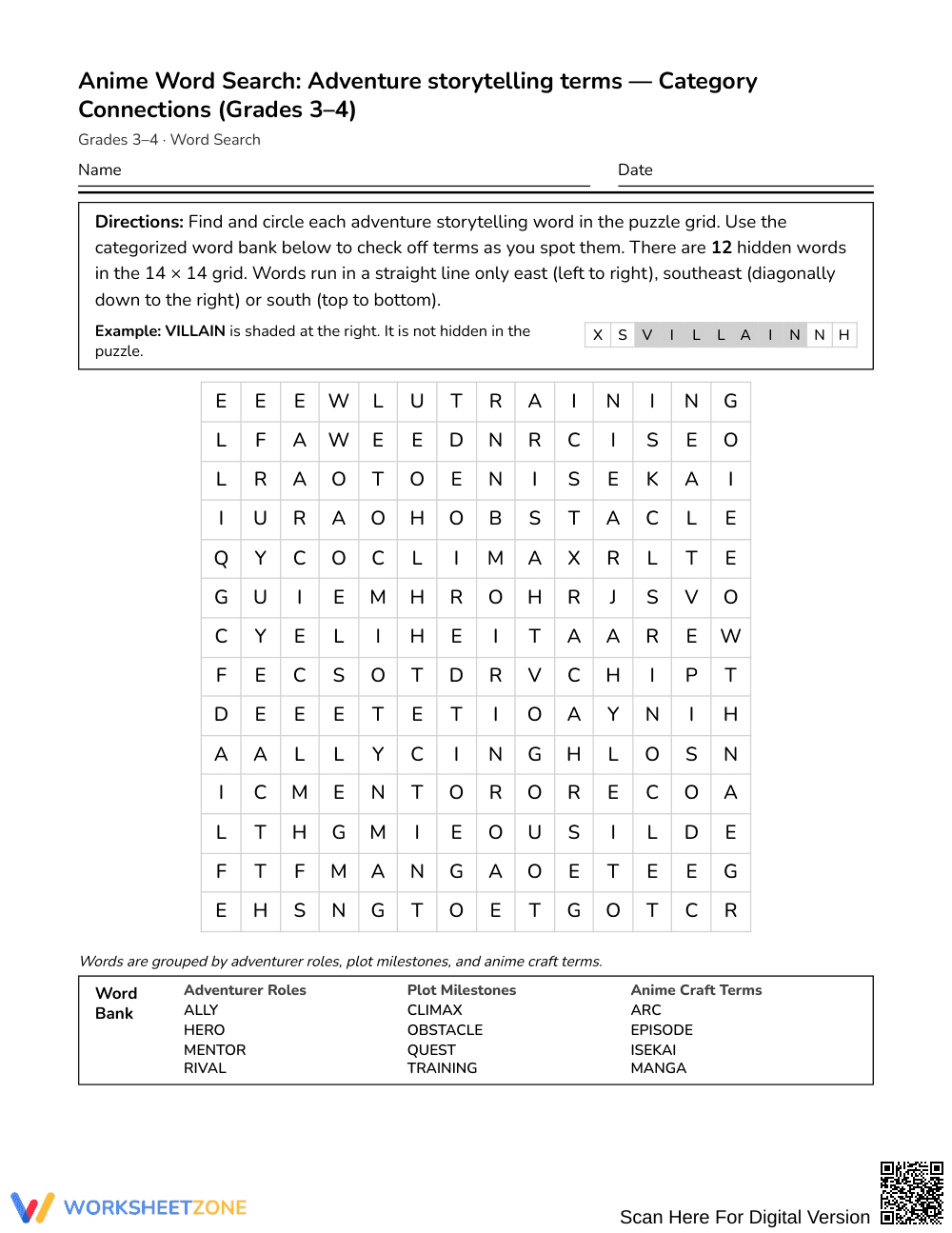

Ready Adventure Story Terms Word Search | Grades 3–4 ELA
Paste this activity's link or code into your existing LMS (Google Classroom, Canvas, Teams, Schoology, Moodle, etc.).
Students can open and work on the activity right away, with no student login required.
You'll still be able to track student progress and results from your teacher account.
This Grades 3–4 ELA word search builds narrative vocabulary by challenging students to find 12 adventure storytelling terms. Learners strengthen word recognition and thematic understanding as they identify key character roles, plot milestones, and story craft vocabulary. The activity promotes language acquisition, making literary concepts concrete and engaging during reading and writing instruction.
At a Glance
- Grade: Grades 3–4 elementary learners · Subject: English Language Arts (ELA) Vocabulary Study
- Standard: Not standards-assessed — vocabulary enrichment
- Skill Focus: Adventure storytelling terms and core narrative story elements
- Format: 1 printable student page · 12 hidden words · 3 comprehensive answer key pages · PDF
- Best For: Vocabulary enrichment and fast finisher work
- Time: 15–25 minutes of independent classroom work
What's Inside
This single-page vocabulary puzzle features a clean 14 by 14 letter grid alongside 12 themed words arranged into three storytelling categories: Adventurer Roles, Plot Milestones, and Anime Craft Terms. Clear definitions reinforce word meanings as learners search, connecting terms like mentor, obstacle, and climax directly to narrative structure. A comprehensive three-page answer key provides complete puzzle solutions with highlighted letter placements.
Puzzle Structure and Mechanics
The word search is built on a 14 by 14 grid designed for Grades 3–4 visual scanning abilities. Target words run in three directions: East (horizontal forward), South (vertical downward), and Southeast (diagonal downward). The categorized word bank groups terms into clear conceptual clusters, allowing learners to check off items systematically as they explore the grid.
Standards Alignment
This activity serves strictly as vocabulary enrichment and is not aligned to a formal standard. It supplements general elementary literacy instruction by introducing narrative craft terminology, supporting story comprehension, and fostering independent word-study habits without prescriptive assessment criteria.
How to Use It
This word search fits two instructional moments. First, use it before direct instruction during a narrative writing launch to activate schema around character roles and plot hurdles. Second, deploy it after direct instruction as an early-finisher station. While students work, observe whether learners recognize category relationships or rely only on letter-by-letter scanning. Most learners finish within 15 to 25 minutes.
Who It's For
This printable puzzle is designed for general education students in Grades 3–4 exploring fiction, creative writing, or story structure. For students needing visual support, suggest color-coding category headers before searching the grid. Pair this activity with a story-mountain anchor chart or an adventure read-aloud lesson to reinforce how characters face obstacles on their journey toward the climax.
Categorized word searches support vocabulary enrichment by providing repeated visual exposure to specialized domain terms within structured learning contexts. Rather than targeting an assessed standards code, this Grades 3–4 adventure storytelling activity strengthens essential narrative vocabulary through deliberate orthographic scanning across twelve key literary terms. Landmark educational research by Fisher & Frey (2014) highlights that purposeful word play, contextual sorting, and categorized vocabulary practice reinforce word consciousness and deepen long-term lexical retention across elementary classrooms. When intermediate learners encounter high-interest terms categorized by story milestones, character roles, and narrative craft, they connect abstract literary definitions with engaging thematic concepts. As students trace vocabulary terms across East, South, and Southeast directional orientations on the 14 by 14 puzzle grid, they build focused attention, pattern recognition, and positive literacy associations that enrich broader reading comprehension and creative storytelling routines.


