


























Views
Downloads

Essential 5-Minute Intervals Worksheet | Grade 2 Math
Paste this activity's link or code into your existing LMS (Google Classroom, Canvas, Teams, Schoology, Moodle, etc.).
Students can open and work on the activity right away, with no student login required.
You'll still be able to track student progress and results from your teacher account.
Master telling time with precision using this comprehensive practice pack. Students transition from basic hour recognition to fluent 5-minute interval reading across four structured pages. By combining visual clock reading with word-based scenarios, learners build the cognitive bridges necessary for real-world time management and daily scheduling.
At a Glance
- Grade: 2 · Subject: Math
- Standard:
CCSS.MATH.CONTENT.2.MD.C.7— Tell and write time from analog and digital clocks to the nearest five minutes- Skill Focus: 5-Minute Time Intervals
- Format: 4 pages · 15 problems · Answer key included · PDF
- Best For: Independent practice and time-telling mastery
- Time: 20–30 minutes
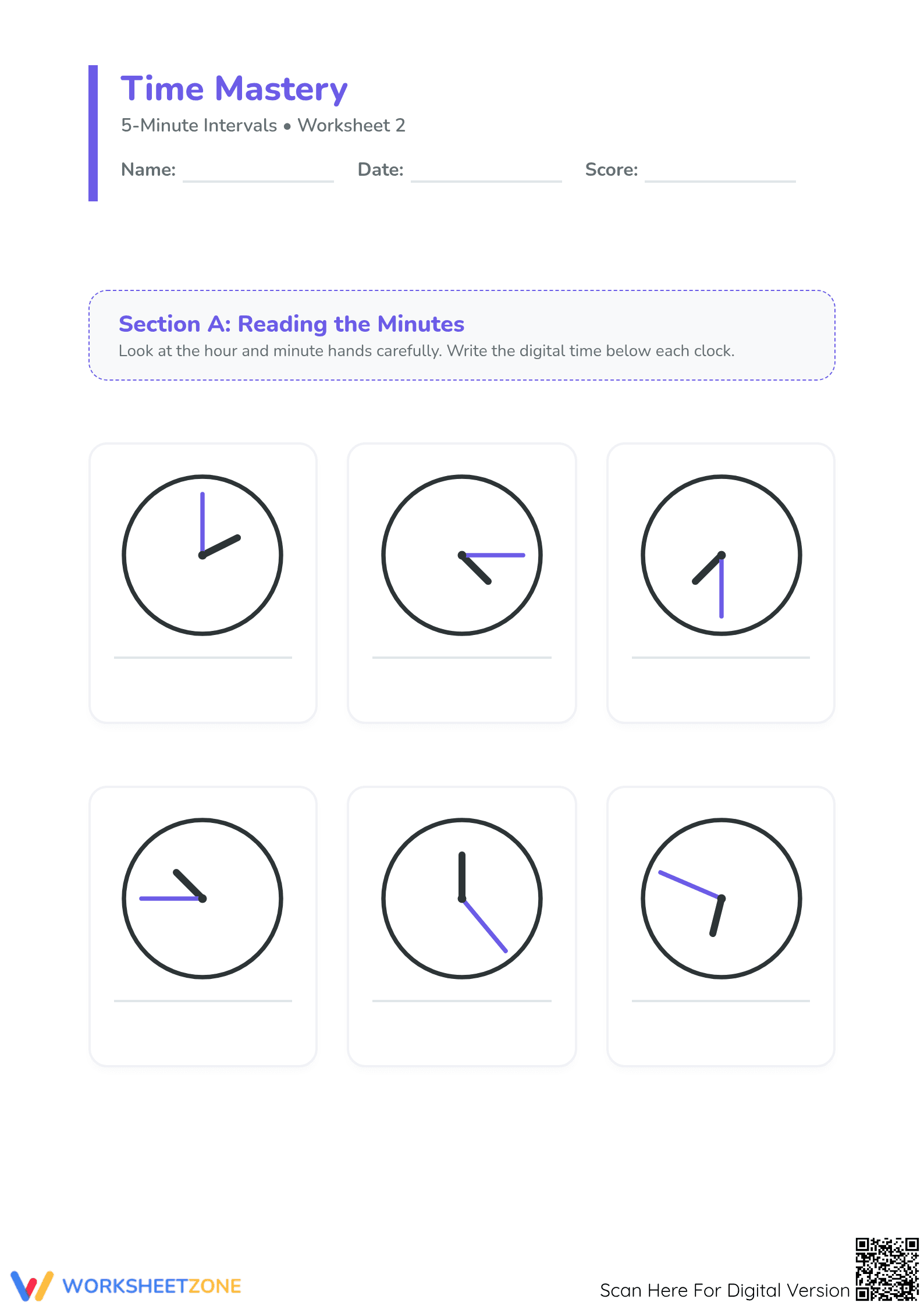
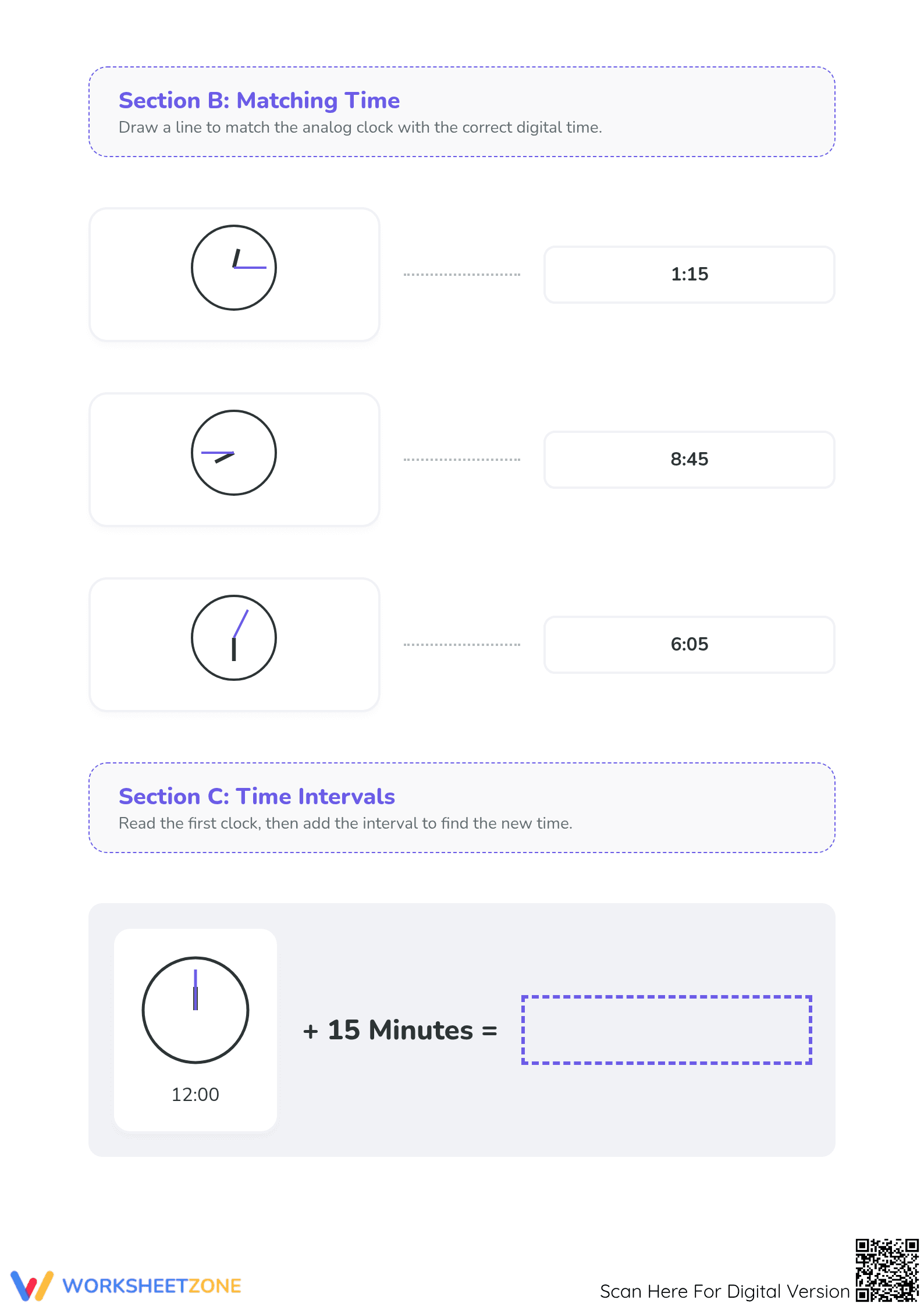
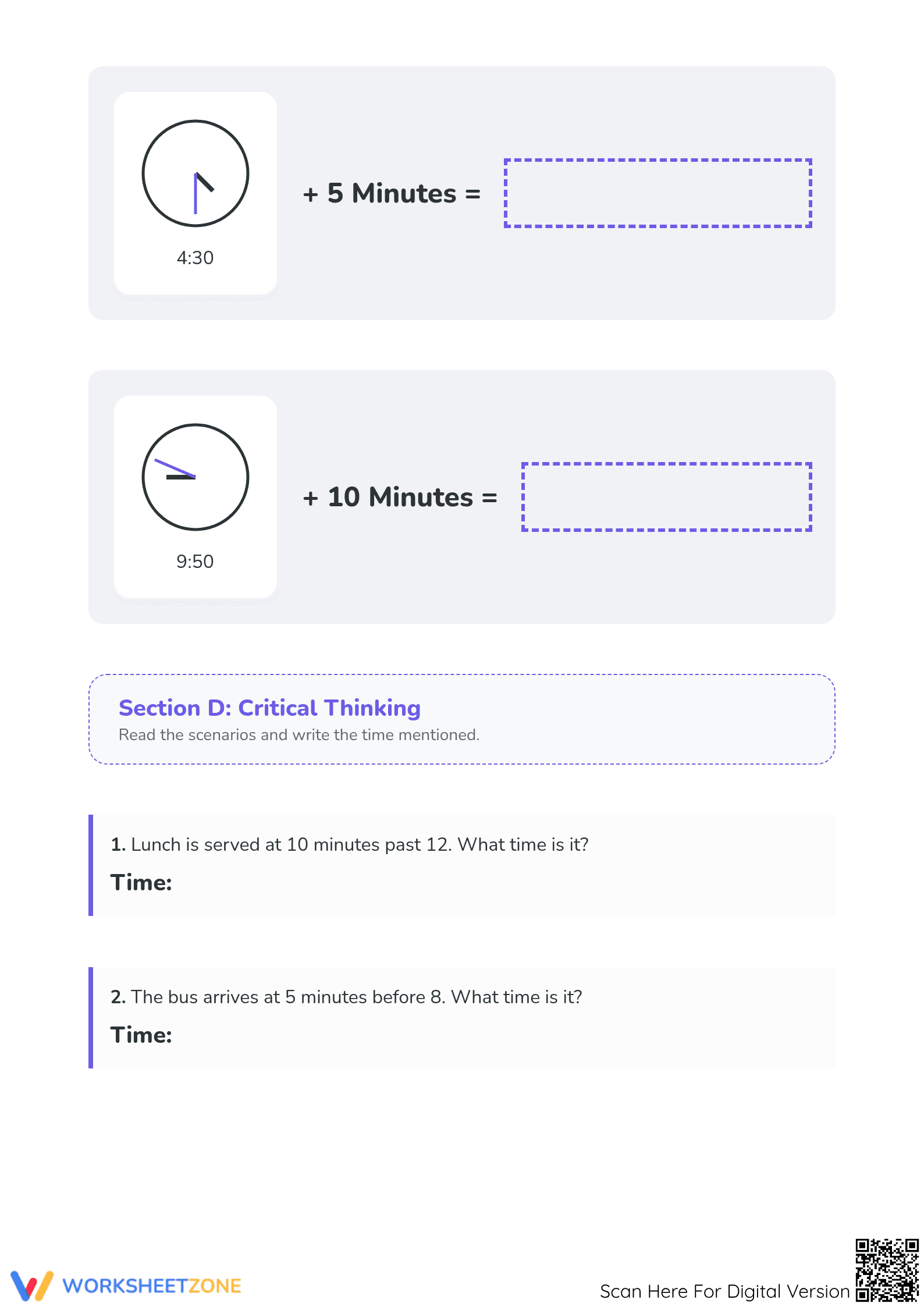
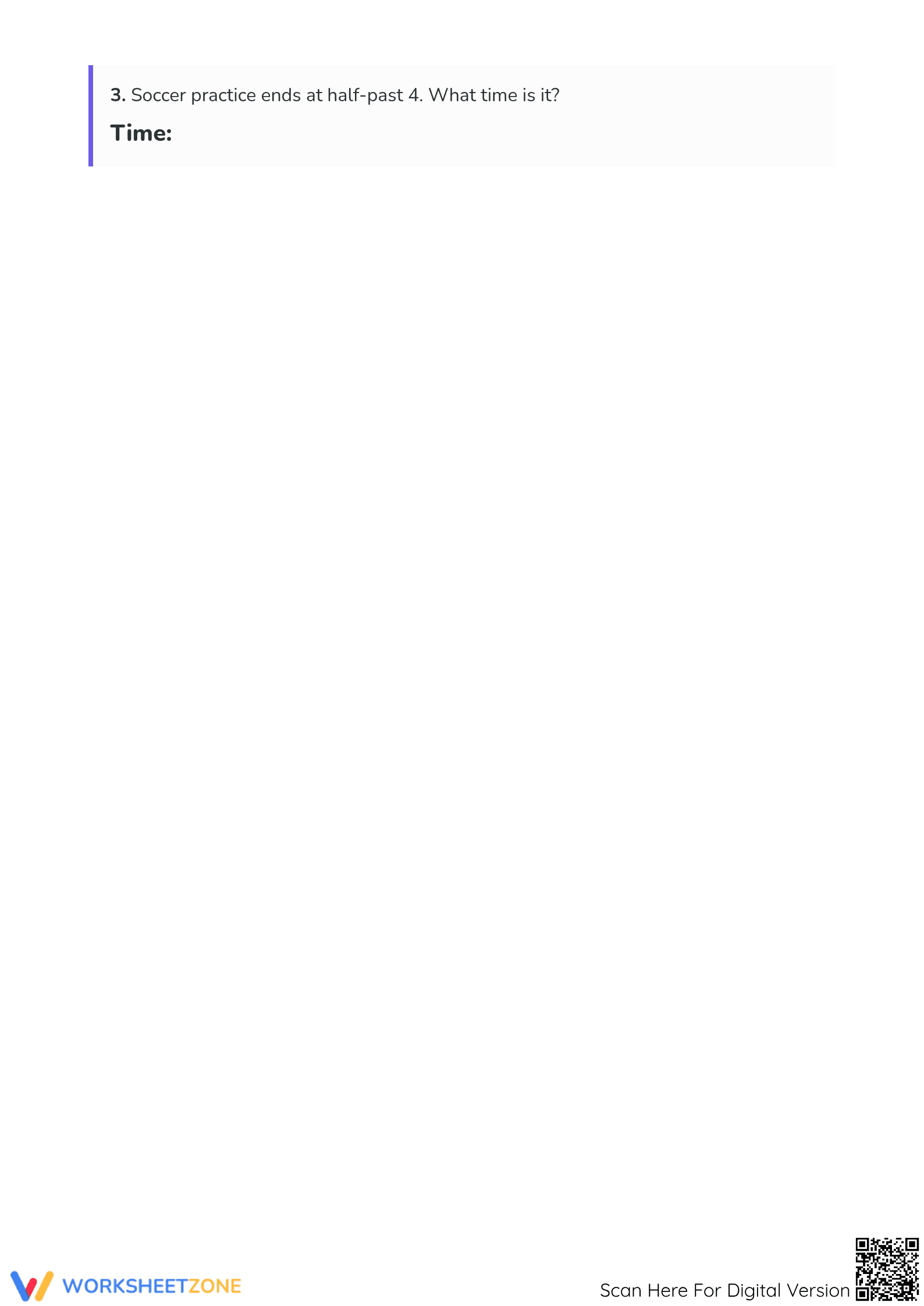
This four-page download features a logical progression of tasks. Section A includes 6 clocks for digital transcription. Section B matches 3 analog faces to digital times. Section C offers 3 interval calculation problems, and Section D provides 3 word problems using phrases like "half-past." A complete answer key ensures immediate feedback.
Skill Progression
- Guided Practice: Students read 6 analog clocks, focusing on minute hand placement at 5-minute markers to build visual recognition.
- Supported Practice: Matching tasks and interval addition problems provide scaffolds as students connect visuals to mathematical values.
- Independent Practice: Final word problems require translating phrases like "5 minutes before 8" into digital time without visual aids.
This gradual-release model follows the I Do, We Do, You Do framework.
Standards Alignment
This resource aligns with CCSS.MATH.CONTENT.2.MD.C.7, requiring students to tell and write time to the nearest five minutes. It also supports measurement skills as students navigate hourly increments. Both standard codes can be copied directly into lesson plans, IEP goals, or district curriculum mapping tools.
How to Use It
Use this as a summative assessment or rigorous homework. During instruction, observe how students handle the "minutes before" problems in Section D to check for conceptual mastery. Expect completion within 25 minutes for Grade 2 students.
Who It's For
This is for second-grade students, but serves as intervention for older learners. It pairs naturally with classroom clock manipulatives to provide a tactile bridge during Section A.
Proficiency in telling time to the five-minute interval is a critical Grade 2 developmental milestone. Research from NAEP indicates that students mastering these increments early demonstrate higher accuracy in later elapsed time calculations. This worksheet addresses the gap between visual recognition and verbal phrasing by decoding both analog faces and linguistic cues. A RAND AIRS 2024 analysis shows that structured repetition with varying formats—matching, calculating, and interpreting word problems—is more effective for long-term retention than isolated drill practice. By providing 15 tasks mapping to CCSS.MATH.CONTENT.2.MD.C.7, this resource ensures students move beyond identification toward functional time literacy. This self-contained practice set is optimized for teachers seeking materials that bridge the gap between abstract numbers and the physical clock face.


